


This article was automatically translated from the original Turkish version.

Türkiye Space Agency (TUA)
Company Name | Türkiye Space Agency | ||||||||
|---|---|---|---|---|---|---|---|---|---|
English Document Name | Turkish Space Agency | ||||||||
Date of Establishment | 13 December 2018 | ||||||||
Establishment Decision | Presidential Decree No. 23 (Official Gazette, 30624) | ||||||||
Affiliated Institution | Ministry of Industry and Technology | ||||||||
Headquarters | Ankara, Türkiye | ||||||||
Legal Status | A public institution with legal personality, administrative and financial autonomy, and a special budget | ||||||||
Governing Body | Board of Directors Presidency | ||||||||
Board of Directors | Mustafa Arif Karabeyoğlu Elvan Kuzucu Hıdır Alper Güzel İsmail Doğan Mustafa Mehmet Nefes Chairman of the Board Yusuf Kıraç Alper Gezeravcı | ||||||||
Agency Head | Yusuf Kıraç (start date of duty: October 2023) | ||||||||
Employment Status | Subject to the provisions of Decree-Law No. 375 and Presidential Decrees | ||||||||
Announcement Date of the National Space Program (2022–2030) | 2021 (public awareness), 2022 (official strategy document) | ||||||||
Major Projects | UTAS-R HALE GÖKTÜRK-1 and 2 RASAT LAGARİ İMECE MUFS TÜRKSAT 6A AYAP-1 | ||||||||
Memberships | COSPAR United Nations Committee on the Peaceful Uses of Outer Space (COPUOS) Asia-Pacific Space Cooperation Organization (APSCO) Islamic Countries Space Network (ISNET) International Astronautical Federation (IAF) Eurisy IAA | ||||||||
Bilateral Collaborations | Pakistan Japan China Kazakhstan Azerbaijan Hungary | ||||||||
Private Sector Meetings | Blue Origin SpaceX Axiom Space Rocket Lab | ||||||||
2024 Budget | Approximately 1.57 billion TL | ||||||||
The Space Agency of Türkiye (TUA) is a state institution established by Presidential Decree No. 23 on December 2018. The agency is tasked with determining and implementing Türkiye’s space strategies. TUA’s three main areas of activity are the National Space Program, education and social awareness initiatives, and international cooperation. Each of these areas is planned and executed with its own sub-components.
The Space Agency of Türkiye (TUA) was established by Presidential Decree No. 23 dated 13 December 2018. Under this decree, TUA operates as a public institution with legal personality, administrative and financial autonomy, and a separate budget, under the Ministry of Industry and Technology. The agency’s headquarters are in Ankara. Since its establishment, TUA has assumed the responsibility of preparing and implementing the National Space Program in accordance with space policies determined by the President of Türkiye, as well as defining medium- and long-term strategies in space and aerospace science and technology. While TUA’s history includes numerous national initiatives such as indigenous satellite development and space technology projects, its official legal establishment date is 2018.

Space Agency of Türkiye Corporate Identity Logo, (Source: TUA)
TUA’s establishment and authorities are regulated by Presidential Decree No. 23. According to this decree, TUA is an organization under the Ministry of Industry and Technology, with a separate budget and autonomous structure. The decree defines TUA’s functions and responsibilities, listing as primary authorities the preparation of the National Space Program in alignment with government policies, the formulation of strategic plans, and the establishment of human resource infrastructure. This decree, which has the force of law, also regulates budgetary principles, personnel employment, and scholarship and support programs. TUA is also mandated to coordinate obligations arising from international space agreements, such as the United Nations Outer Space Treaties, as published in the Official Gazette.

Ministry of Industry and Technology and TUA Corporate Identity Logo Set, (Source: TUA)
TUA’s organs and units include the Board of Directors and the Presidency, as well as service units to be established as needed. The Board of Directors is the highest decision-making body of the agency and consists of seven members including the Chair. The Chair of the Board is also the Director of the Agency. Board members serve three-year terms and may be reappointed upon expiration. The Board convenes at least once a month; a quorum of four members is required for decisions. The Board of Directors carries out responsibilities including approving strategic plans, performance programs, budgets and activity reports; determining organizational charts of units; formulating human resources policies; evaluating operational outcomes; and deciding on the establishment of new offices domestically or internationally. The Presidency consists of the Director and two Deputy Directors. The Director of the Agency is responsible for representing the Agency externally, chairing the Board of Directors, and managing the day-to-day operations of the Agency in accordance with Board decisions. Deputy Directors are responsible for carrying out tasks assigned by the Director. Directors and senior personnel of TUA are appointed and granted rights in accordance with the supplementary provisions of Decree-Law No. 375. As of November 2023, Yusuf Kıraç serves as Director of the Space Agency of Türkiye; he was appointed by Presidential Decree published in the Official Gazette No. 32332 on 7 October 2023.
Chair of the Board
Board Members
TUA’s functions span a broad range of areas. Its principal authorities and responsibilities, as outlined in the decree, can be summarized as follows:
Preparing and implementing the National Space Program in accordance with policies determined by the President of Türkiye; developing strategic plans containing medium- and long-term goals, performance indicators, and resource allocations in space and aerospace science and technology. The Board of Directors approves and monitors these plans and programs.
Establishing domestic regulations beyond frequency and orbit allocations under the framework of the International Telecommunication Union (ITU) and the Information Technologies Authority; defining procedures and principles for the utilization of space rights; signing necessary agreements to fulfill national obligations.
Conducting or coordinating operations such as commercial, scientific or research-oriented satellite and rocket launches, and crewed or uncrewed space missions; granting permissions and ensuring coordination for the orbital placement, launch, and return of satellites belonging to public and private sectors. Recording notifications of launches and placements abroad is also within TUA’s responsibilities.
Supporting and directly planning and financing projects for the design, production, integration, and testing of hardware and software such as spacecraft, ground systems, launch vehicles, and simulators. Issuing calls for and supporting R&D projects in space and aerospace technologies in cooperation with TÜBİTAK.
Regulating, monitoring, and, when necessary, authorizing all activities related to the design, production, testing, and integration of space and aerospace technologies and ground systems developed by public and private sectors. Coordinating with relevant institutions for the use of space-derived data for public purposes such as disaster management, security, agriculture, and the environment.
Increasing public interest in space sciences, leading initiatives to develop qualified human resources through education and events; organizing publications, seminars, and activities related to the Agency’s operations. Additionally, one of the Agency’s responsibilities is to issue scholarship calls through TÜBİTAK to support young researchers via scholarships and doctoral programs.
Monitoring developments in space law, cooperating with international organizations and networks; representing Türkiye in international bodies such as the United Nations Committee on the Peaceful Uses of Outer Space (COPUOS); conducting bilateral and multilateral agreements and projects within TUA’s areas of activity.
Within the scope of its duties, TUA operates in technical areas such as organizing satellite and rocket launches, developing space technologies, establishing satellite communication and observation systems, and operating ground control stations. Additionally, the operation of ground systems observing space for public benefit, the use of space data for national defense and security, the conduct of space law studies, and the determination of national standards are also within the Agency’s purview. Developing human resources in STEM fields through education and capacity-building activities, organizing public space programs, and supporting young scientists are other important areas included in the Agency’s activity program.
TUA is a budget-autonomous institution whose income is largely covered by allocations from the General Budget. Sources of income include fees for permits granted for space activities, revenue from consultancy services, patent and licensing income, and donations and aid. Additionally, supplementary support is provided to the Agency’s budget, including 20 percent of the previous year’s revenue from the TÜBİTAK Space Technologies Research Institute (UZAY) and 20 percent transferred from the General Directorate of Civil Aviation. Unspent allocations may be carried forward to the following year. For example, TUA’s 2024 budget estimate was set at approximately 1.57 billion Turkish Lira. The Board of Directors approves and implements the budget prepared by the Presidency.
Agency personnel are primarily provided through temporary assignments from existing public institutions; under necessary circumstances, domestic or foreign experts may also be employed in accordance with the conditions stipulated in Decree-Law No. 375. A 2019 regulation added the titles Space Technology Expert and Assistant Space Technology Expert to the Agency’s cadre. The salaries of the Director and Deputy Directors are deemed equivalent to those of senior-level managers as defined in the relevant Decree-Laws. TUA, in cooperation with TÜBİTAK, organizes scholarship programs and issues calls for R&D projects to meet its human resource needs, thereby contributing to the training of experts and the development of qualified engineers and scientists.
The National Space Program (NSP) is a roadmap outlining Türkiye’s vision, strategy, goals, and projects in space policy for the next decade. The National Space Program Strategy Document, prepared by TUA for the period 2022–2030, has been published in the Official Gazette, and the program’s objectives and components are detailed therein. The program’s fundamental aims include developing emerging space technologies and infrastructure in Türkiye, reducing external dependency, utilizing space activities as tools for national development, converting existing achievements into national technologies, contributing to humanity’s scientific heritage, and increasing public awareness of space.
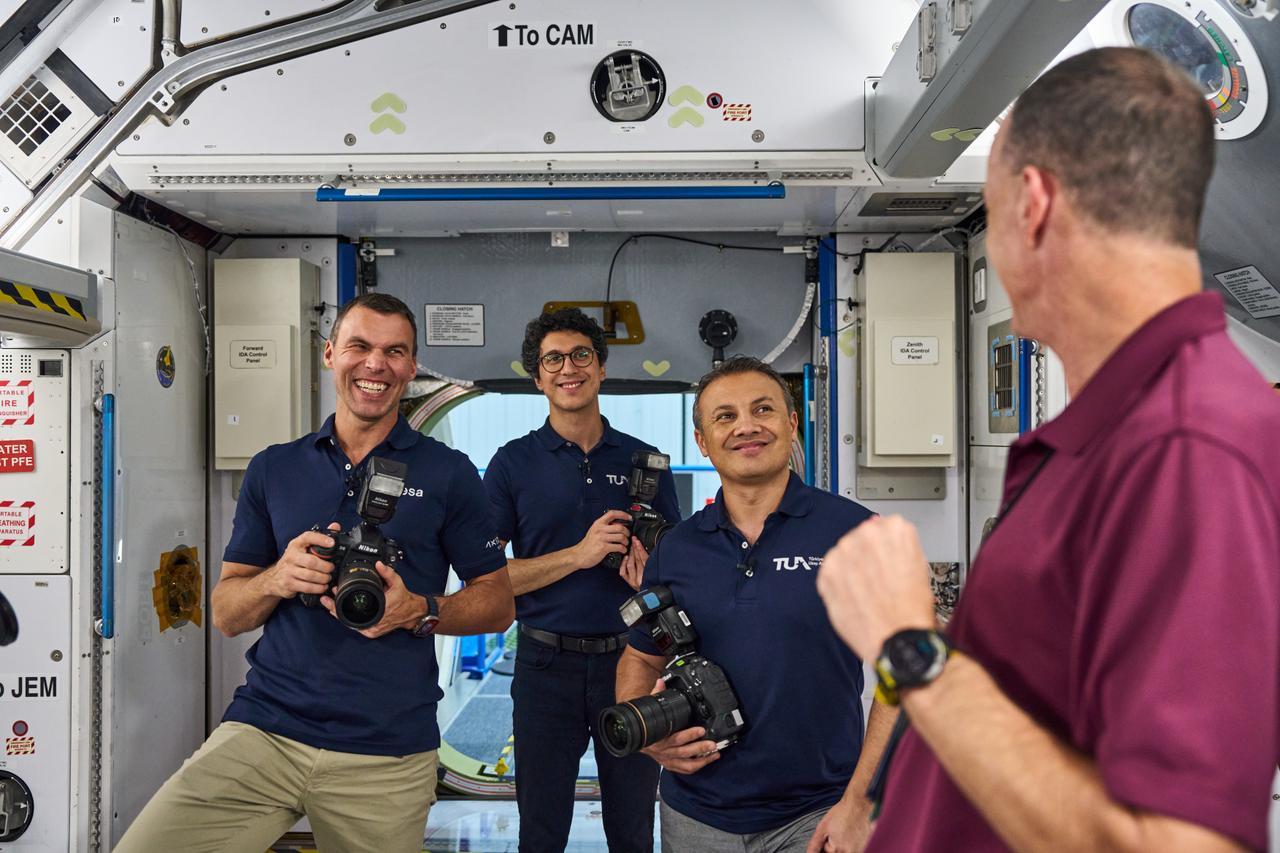
National Space Program, (Source: TUA)
The main projects planned under the National Space Program include:
The official document of the National Space Program was published at the end of 2022, and its details are accessible on the TUA website. The program encompasses a comprehensive ecosystem approach, covering diverse components ranging from human capital to technology, international cooperation to infrastructure facilities.
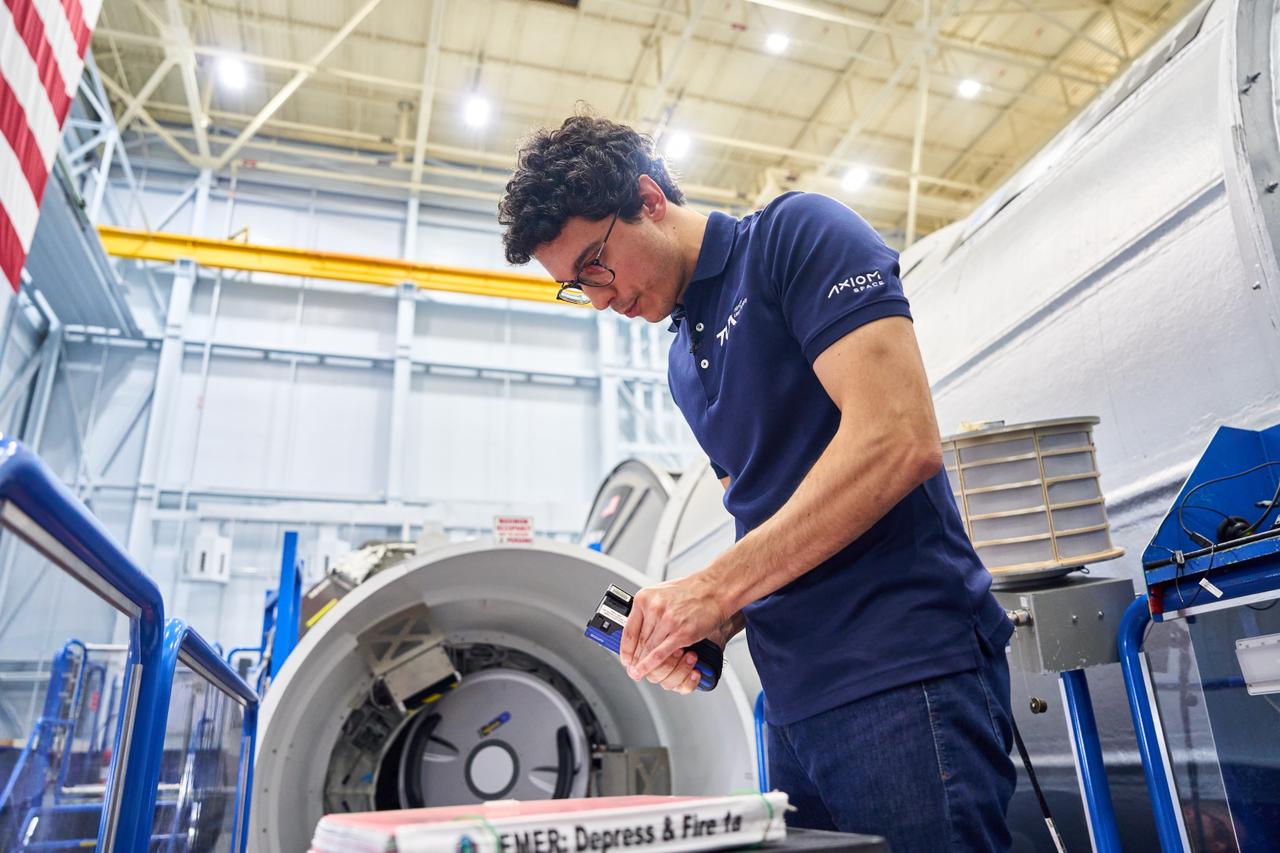
National Space Program - Tuva Cihangir Atasever, (Source: TUA)
The photograph shows Tuva Cihangir Atasever, an engineer, engaged with a device or equipment in an engineering or aerospace environment. The image documents a technical preparation or simulation process.
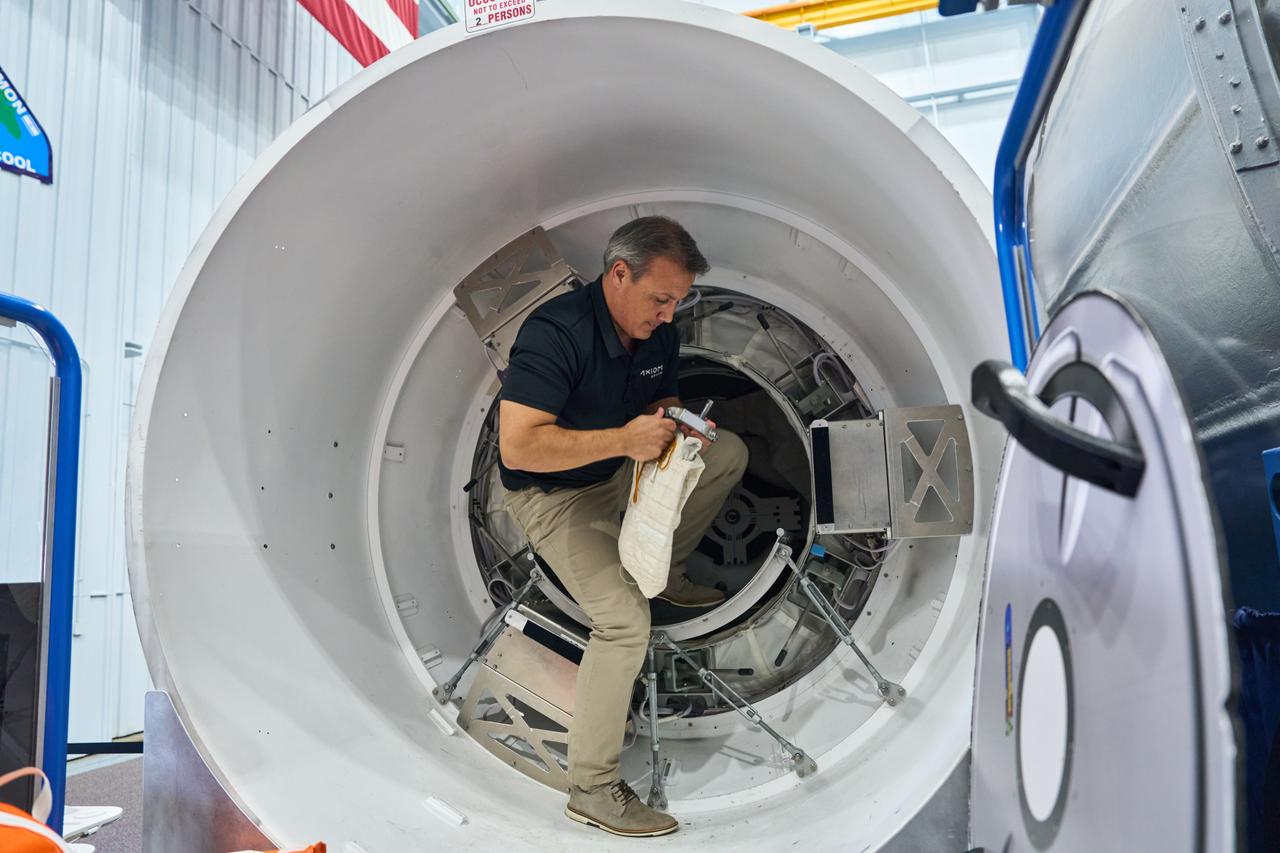
National Space Program - Alper Gezeravcı, (Source: TUA)
In the photograph, Alper Gezeravcı is inside a spacecraft module simulator. The image documents an educational, testing, or procedural application activity, indicating preparation for space missions.
Preparation for Space Mission: Images of Training and Testing Processes, (Source: TUA)
The Space Agency of Türkiye (TUA) has published this video to document various stages of the preparation process for space missions. The footage includes practical training conducted by astronaut candidates in simulation environments, coordination efforts with ground support teams, and technical testing moments. The video is considered part of pre-mission procedures, equipment usage, and adaptation to environmental conditions, providing visual content on the operational preparation process.
TUA conducts various education and awareness activities to increase public interest in space and aerospace topics and to guide future generations toward these fields. The Agency’s official website provides space resources prepared for students and educators (STEM-focused educational materials and activity suggestions). For example, space-themed coloring books for different age groups, small rocket and satellite projects that can be done at home (e.g., paper rocket construction, star atlas creation, CubeSat design guides), and project idea documents for high school and university students have been provided. The purpose of these materials is to foster positive attitudes toward space sciences and encourage youth to pursue STEM fields such as aerospace engineering. TUA also supports competitions and events. For instance, in 2024, in cooperation with the Ministry of National Education, Türkiye held a painting competition titled “My First Human Spaceflight” (for primary school students) and a composition competition titled “I Should Be the Next Astronaut” (for middle school students). These competitions aim to increase young people’s interest in space. Scholarship and education programs are also part of social awareness initiatives. Through its membership in APSCO (Asia-Pacific Space Cooperation Organization), TUA provides Türkiye with graduate and doctoral scholarship programs. For example, in 2022, graduate scholarship applications were accepted from Beihang University in China in the fields of space communication, remote sensing, and small satellite technologies under a joint program between APSCO and the Chinese Government. Similarly, in 2024, TUA issued a call for applications for graduate and doctoral scholarships at the Beijing Institute of Technology. Successful candidates in these programs receive funding support from APSCO.
In addition, TUA plans to contribute to seminars in schools, observatories, summer camps, and science festivals, and continues to inform the public about space topics through social media and publications. The goal of education and awareness activities is to enhance human resource capacity and promote public understanding of space technologies.
Activities:
While implementing Türkiye’s space policies, TUA collaborates with numerous institutions and organizations. Domestically, joint projects are conducted with TÜBİTAK, TUSAŞ, ROKETSAN, TÜBİTAK UZAY, defense industry companies, and universities. Internationally, the Space Agency of Türkiye is a member of various organizations, including the Asia-Pacific Space Cooperation Organization (APSCO); Türkiye is one of the founding members of APSCO along with China, Pakistan, Indonesia, Bangladesh, Peru, Iran, Mongolia, and Thailand. Additionally, Türkiye became a member of the International Astronautical Federation (IAF) in 2009 and actively participates in global platforms such as COPUOS and COSPAR to represent the country’s space endeavors. Through these international collaborations, TUA aims to benefit from global opportunities in knowledge sharing, technology transfer, and human resource development.
The main international organizations of which TUA is a member are as follows: United Nations Committee on the Peaceful Uses of Outer Space (COPUOS); Asia-Pacific Space Cooperation Organization (APSCO) – Türkiye is one of the nine founding members and signed the accession agreement on 1 June 2006; Islamic Countries Space Science Network (ISNET) – Türkiye was among the founding members of this network established among IIO countries in 1987; European Space Year Organization (Eurisy) – Türkiye joined Eurisy in 2007 through TÜBİTAK; International Astronautical Federation (IAF) – Türkiye became a member in 2009 represented by TÜBİTAK; and cooperation also exists with scientific organizations such as COSPAR and IAA. These memberships provide platforms that enable Türkiye to participate in international space projects and enhance information and technology sharing.
In addition, TUA is developing direct cooperation with various countries. Bilateral space cooperation agreements have been signed with Ukraine, Hungary, and Kazakhstan since 2020; similar memoranda of understanding have been prepared with Japan, Pakistan, Azerbaijan, Russia, Indonesia, and China. Furthermore, project-based discussions have been held with international space companies such as SpaceX, Blue Origin, Axiom, Lockheed Martin, and Rocket Lab, evaluating collaboration opportunities in technology development and joint missions. Meanwhile, relations with the European Space Agency (ESA) are also on TUA’s agenda: a study report examining the feasibility of ESA membership was prepared in 2020 with sector stakeholders.
As a member of COPUOS (United Nations Committee on the Peaceful Uses of Outer Space), Türkiye has been a party to five space treaties since 1977. TUA participates in COPUOS meetings to coordinate Türkiye’s positions on space law and cooperation matters.
In addition, the main international organizations of which TUA is a member include: Asia-Pacific Space Cooperation Organization (APSCO) – Türkiye is one of the nine founding members and signed the accession agreement on 1 June 2006; Islamic Countries Space Science Network (ISNET) – Türkiye was among the founding members of this network established among IIO countries in 1987; European Space Year Organization (Eurisy) – Türkiye joined Eurisy in 2007 through TÜBİTAK; International Astronautical Federation (IAF) – Türkiye became a member in 2009 represented by TÜBİTAK; and cooperation also exists with scientific organizations such as COSPAR and IAA. These memberships provide platforms that enable Türkiye to participate in international space projects and enhance information and technology sharing.
In addition, TUA is developing direct cooperation with various countries. Bilateral space cooperation agreements have been signed with Ukraine, Hungary, and Kazakhstan since 2020; similar memoranda of understanding have been prepared with Japan, Pakistan, Azerbaijan, Russia, Indonesia, and China. Furthermore, project-based discussions have been held with international space companies such as SpaceX, Blue Origin, Axiom, Lockheed Martin, and Rocket Lab, evaluating collaboration opportunities in technology development and joint missions. Meanwhile, relations with the European Space Agency (ESA) are also on TUA’s agenda: a study report examining the feasibility of ESA membership was prepared in 2020 with sector stakeholders.
These comprehensive international collaborations enhance Türkiye’s scientific knowledge in space and enable the development of mutually beneficial projects with other countries and international organizations. Through TUA’s coordinated efforts, Türkiye strengthens its position as an active member of the global space community.
The Agency is planning lunar missions under the Lunar Research Program (AYAP-1), developing space-qualified atomic clocks under the UTAS-R project, and enhancing high-resolution Earth observation capacity through the İMECE satellite. Additionally, the Micro Satellite Launch System (MUFS) project aims to give Türkiye independent satellite launch capability. Projects such as TÜRKSAT 6A, GÖKTÜRK-1, and GÖKTÜRK-2 are developing communication and observation satellites. Other projects including the LAGARİ microsatellite, HALE electric propulsion system, and RASAT are advancing various space technologies. Through these projects, TUA aims to establish Türkiye as an independent and sustainable presence in space.
AYAP-1 (Lunar Research Program, Phase 1) is a mission led by the Space Agency of Türkiye with the goal of sending a national rover to the lunar surface. TUA serves as the coordinating institution, with domestic industry and research organizations (TUSAŞ, ROKETSAN, TÜBİTAK SAGE, etc.) collaborating on spacecraft design and integration. Technically, a lunar vehicle is envisioned, although detailed technical specifications have not yet been disclosed. In terms of development progress, risk analyses have been completed and preliminary design work finalized; the project has entered the critical design phase. The first phase aims to place the spacecraft into orbit and achieve a successful landing. International cooperation details have not yet been specified.
The UTAS-R project, conducted jointly by the Space Agency of Türkiye and TÜBİTAK UME, aims to adapt and test a domestically produced rubidium-based atomic clock for space environments. TÜBİTAK UME has developed a laboratory-grade rubidium atomic clock; TUA is responsible for qualifying the clock for space and validating its performance under real conditions. This enables the adaptation of the TÜBİTAK-developed atomic clock to withstand space conditions, followed by its launch and performance testing. Advanced optical clocks are also being developed under the project. Currently, the project is in the design and testing phases; the launch date has not yet been announced.
The MUFS project is a micro satellite launch vehicle developed by ROKETSAN at the request of the Presidency of Defense Industries. The project aims to establish a fully indigenous launch vehicle and infrastructure capable of placing microsatellites up to 100 kg into Low Earth Orbit at an altitude of 400 km. Under the project, ROKETSAN engineers are working on multi-stage solid and liquid propellant rocket technologies and conducting relevant tests. According to the development schedule, four sounding rocket tests were successfully completed by 2020; a test flight carrying a 100 kg satellite to 300 km altitude was conducted in 2023, with the final vehicle configuration capable of placing a 100 kg satellite into 400 km orbit targeted for 2026.
Technical specifications (estimated): 100 kg payload capacity, ~400 km orbital altitude, multi-stage solid/liquid rocket motors. The development process is rapid; indigenous sounding rocket tests were conducted between 2017 and 2020, achieving controlled flight beyond orbit and rocket staging capability. The current status indicates that MUFS is in the conceptual design phase, with initial launch tests planned for future years. The project is conducted entirely with national capabilities, without international cooperation.
HALE is an infrastructure project conducted at TÜBİTAK UZAY. The goal is to establish test facilities capable of original research and development in Hall effect (electric) propulsion systems. The project has been implemented with support from the Ministry of Industry and Technology (formerly the Ministry of Development), and an electric propulsion technology test infrastructure is being constructed under the TÜBİTAK UZAY Institute. Upon completion, the facility aims to meet Türkiye’s short- and long-term national propulsion system needs using domestic resources. Technical details and completion status have not been publicly disclosed.
LAGARİ is a high-resolution micro Earth observation satellite developed by the Defense Technologies Engineering Inc. (STM). Its mission targets civil-military applications such as tactical imaging, general mapping, forest and vegetation monitoring, agricultural surveys, and disaster tracking. Technical specifications include: approximately two-year mission life, Sun-synchronous low Earth orbit, electronic optical camera (black-and-white and color band imaging), daily imaging downlink capacity of at least 50 images, high-precision attitude sensors, and Li-Fe batteries. The satellite is designed to be lightweight and compact, with daily access planned for the region including Türkiye. The project is currently in development and will be launched into space via a future satellite launch campaign. No public information is available regarding international cooperation for LAGARİ.
TÜRKSAT 6A is Türkiye’s first domestically developed communication satellite. The project began on 15 December 2014 and has been supported by Türksat A.Ş., TÜBİTAK, and relevant ministries. TÜBİTAK UZAY, TUSAŞ, ASELSAN, and CTech played collaborative roles in the project. The satellite is designed for Ku-band transmissions and has the following technical characteristics: Inclined (GEO) orbit, 42° East position, approximately 4250 kg mass, 8.4 kW end-of-life power capacity, >15-year design life, Ku-band transponders. Satellite assembly, integration, and testing were conducted at TUSAŞ’s USET center; it was launched on 8 July 2024 aboard a Falcon 9 rocket from Cape Canaveral and placed into orbit at an altitude of 35,786 km. The operator of the satellite after launch is planned to be Türksat A.Ş. in Türkiye.
GÖKTÜRK-1 is a high-resolution optical observation satellite developed through joint production between TELESPAZIO (Italy) and TUSAŞ under the coordination of the Ministry of National Defense and the Presidency of Defense Industries. A Satellite Assembly, Integration, and Test Center (UMET) was established within TUSAŞ for the satellite. GÖKTÜRK-1 was launched on 5 December 2016 and placed into orbit; it remains operational. It provides detailed military-grade Earth observation data using its high-resolution optical camera. Its mission life is seven years and it continues to perform its operational mission as planned.
GÖKTÜRK-2 is an optical remote sensing satellite developed by TÜBİTAK UZAY and TUSAŞ under the leadership of the Ministry of National Defense and the Presidency of Defense Industries. The satellite, capable of high-resolution photography, was launched in 2012 and remains operational. It was designed to provide extremely high-resolution imagery for military purposes (technically better than 2 m resolution) and has provided various geo-spatial data to military and security units throughout its mission life. Currently, operational services continue to be derived from the project.
RASAT is Türkiye’s second micro remote sensing satellite developed after the BILSAT satellite. The satellite, equipped with an optical (electro-optical) imaging sensor, was launched from Russia on 17 August 2011 and is currently operational. It provides high-resolution imagery for various civil and military applications, primarily mapping, disaster monitoring, agriculture, and environmental surveillance. Technically, RASAT weighs approximately 100 kg and operates in low Earth orbit. Its mission continues uninterrupted, and image data are used by government institutions.
İMECE is a remote sensing satellite project developed by TÜBİTAK UZAY for optical imaging. Under this project, the following subsystems will be designed and manufactured domestically: hyperspectral satellite camera, electro-optical imaging camera, communication system, star tracker, sun sensor, reaction wheel (attitude mechanism), and next-generation flight computer. These subsystems will form the core components of the İMECE satellite and enable autonomous operation in orbit. The project is currently in the development phase, and the next step (satellite integration and launch) is expected to be reached soon.
Presidency. Presidential Decree No. 23: Presidential Decree on the Turkish Space Agency. Official Gazette, December 13, 2018, No. 30624.
Roketsan A.Ş. "Mikro Uydu Fırlatma Sistemi (MUFS)." Accessed May 2025.https://www.roketsan.com.tr/urunler/mikro-uydu-firlatma-sistemi.
Savunma Teknolojileri Mühendislik A.Ş. "LAGARİ – Yüksek Çözünürlüklü Mikro Yer Gözlem Uydusu." Accessed May 2025.https://www.stm.com.tr/tr/cozumlerimiz/uydu-ve-uzay/lagari.
TBMM (Grand National Assembly of Türkiye). Budget Committee Minutes, November 7, 2024, p. 19. Parliamentary Minutes Services Directorate.
Turkish Aerospace Industries Inc. (TUSAŞ). "TÜRKSAT 6A." Accessed May 2025.
Türkiye Uzay Agency. "AYAP-1." Accessed May 2025.https://tua.gov.tr/tr/proje/ayap-1-2.
Türkiye Uzay Agency. "Kurumsal." Accessed May 2025.https://tua.gov.tr/tr/kurumsal.
Türkiye Uzay Agency. "Projects: Other Projects." Accessed May 2025.https://tua.gov.tr/tr/projeler/diger-projeler.
Türkiye Uzay Agency. "UTAS-R." Accessed May 2025.https://tua.gov.tr/tr/proje/utas-r.
Türkiye Uzay Agency. "Uzay Tarihçemiz." Accessed May 2025.https://tua.gov.tr/tr/kurumsal/uzay-tarihcemiz.

Türkiye Space Agency (TUA)
Company Name | Türkiye Space Agency | ||||||||
|---|---|---|---|---|---|---|---|---|---|
English Document Name | Turkish Space Agency | ||||||||
Date of Establishment | 13 December 2018 | ||||||||
Establishment Decision | Presidential Decree No. 23 (Official Gazette, 30624) | ||||||||
Affiliated Institution | Ministry of Industry and Technology | ||||||||
Headquarters | Ankara, Türkiye | ||||||||
Legal Status | A public institution with legal personality, administrative and financial autonomy, and a special budget | ||||||||
Governing Body | Board of Directors Presidency | ||||||||
Board of Directors | Mustafa Arif Karabeyoğlu Elvan Kuzucu Hıdır Alper Güzel İsmail Doğan Mustafa Mehmet Nefes Chairman of the Board Yusuf Kıraç Alper Gezeravcı | ||||||||
Agency Head | Yusuf Kıraç (start date of duty: October 2023) | ||||||||
Employment Status | Subject to the provisions of Decree-Law No. 375 and Presidential Decrees | ||||||||
Announcement Date of the National Space Program (2022–2030) | 2021 (public awareness), 2022 (official strategy document) | ||||||||
Major Projects | UTAS-R HALE GÖKTÜRK-1 and 2 RASAT LAGARİ İMECE MUFS TÜRKSAT 6A AYAP-1 | ||||||||
Memberships | COSPAR United Nations Committee on the Peaceful Uses of Outer Space (COPUOS) Asia-Pacific Space Cooperation Organization (APSCO) Islamic Countries Space Network (ISNET) International Astronautical Federation (IAF) Eurisy IAA | ||||||||
Bilateral Collaborations | Pakistan Japan China Kazakhstan Azerbaijan Hungary | ||||||||
Private Sector Meetings | Blue Origin SpaceX Axiom Space Rocket Lab | ||||||||
2024 Budget | Approximately 1.57 billion TL | ||||||||
No Discussion Added Yet
Start discussion for "Türkiye Space Agency" article
Establishment
Legal and Institutional Foundation
Organizational Structure
Board of Directors
Corporate Structure and Management
Functions and Authorities
Strategic Planning and Program Development
Legal Regulations and Standards
Spacecraft and Licensing
Technological and Scientific R&D
Infrastructure and System Management
Education, Communication, and Support
International Cooperation and Law
Areas of Activity
Budget and Financial Resources
Human Resources
National Space Program
Education and Social Awareness Activities
National and International Cooperation
Projects of the Space Agency of Türkiye
Major Projects Included:
AYAP-1
UTAS-R
MUFS (Micro Satellite Launch System)
HALE (Hall Effect Propulsion Development Project)
LAGARİ
TÜRKSAT 6A
GÖKTÜRK-1
GÖKTÜRK-2
RASAT
İMECE