+1 More

Year of Birth | 1897 | ||||||||
|---|---|---|---|---|---|---|---|---|---|
Year of Death | 1954 | ||||||||
Specialization Area | Dry Farming Techniques | ||||||||
Profession(s) | Agricultural Engineer | ||||||||
Contribution | and farmer education to increase agricultural productivity the promotion of modern agricultural practices Studies on the development of dry farming techniques | ||||||||
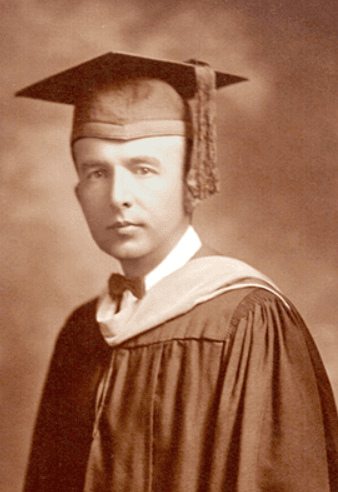
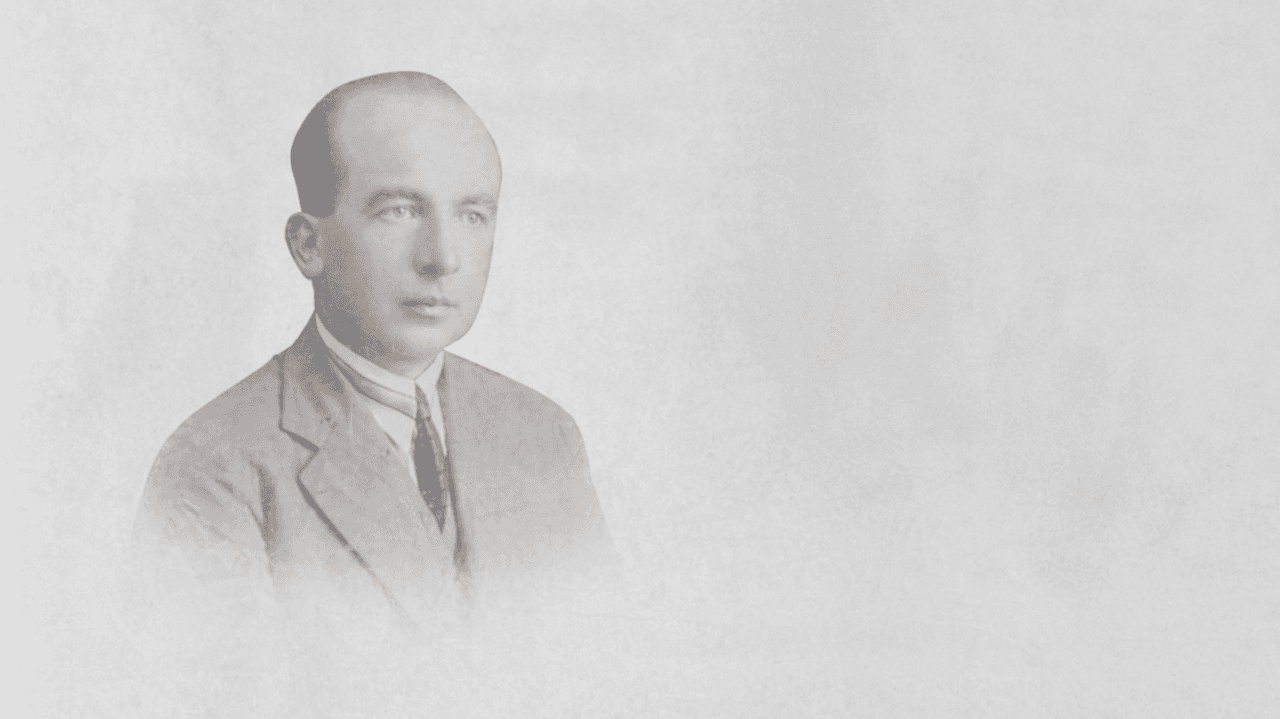
Ali Numan Kıraç (1897–1954) was an agricultural engineer who played a pivotal role in developing agricultural production in arid and semi-arid regions of Türkiye on scientific principles. He contributed to early Republican-era efforts to modernize agriculture and is particularly recognized for promoting dry farming methods.
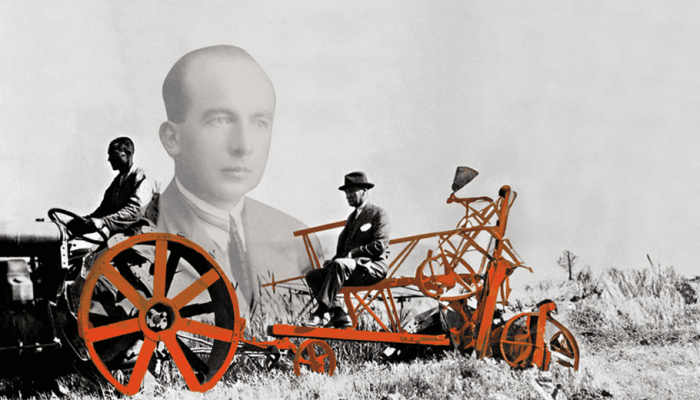
Ali Numan Kıraç - Turkish Agriculture and Forestry Journal
Ali Numan Kıraç (1897–1954) was an agricultural engineer who played a decisive role in developing and implementing agricultural techniques suited to Türkiye’s arid and semi-arid climatic conditions. Among the field implementers of policies aimed at increasing and modernizing agricultural production during the early years of the Republic, he made significant contributions to transforming dry farming methods into a systematic production model.
Witnessing the structural transformation of the agricultural sector from the Ottoman Empire to the Republic, Kıraç emerged as one of the leading figures among early Republican agricultural cadres through his approach that integrated scientific knowledge with practical application.
Ali Numan Kıraç received his education in agriculture and became an engineer thoroughly versed in the modern agricultural science of his time. During his training, he became familiar with advanced agronomic methods, soil tillage techniques, and crop cultivation systems developed in Europe, and specialized in adapting these to the unique ecological conditions of Anatolia.
A key feature of his professional formation was his rejection of purely theoretical knowledge in favor of experimental and practical methods. This approach distinguished him from the classical bureaucratic engineer profile and established him as a field-based expert.
With the proclamation of the Republic, the agricultural sector was recognized as one of the fundamental pillars of economic development. Under the leadership of Mustafa Kemal Atatürk, policies were pursued to increase production, popularize modern techniques, and transform rural structures.
In this context, Kıraç served on the implementation side of agricultural modernization, acting as a technical expert in state-led projects. Guided by the understanding that improving agricultural productivity required not only tools and technologies but also fundamental changes in production systems, he conducted extensive work in this area.
Kıraç’s most significant contribution was the development of dry farming as a viable production model for Türkiye’s vast arid and semi-arid regions. This approach is based on conserving limited rainfall and enhancing soil fertility.
The core principles of dry farming, as articulated in Kıraç’s work, included maximizing the retention of existing soil moisture, applying surface tillage techniques that reduced evaporation, organizing fallow systems in a planned and scientific rather than random manner, adopting deep tillage methods that supported root development, and selecting resilient crop varieties suited to regional climatic conditions. Within this framework, dry farming was conceived not merely as a set of techniques but as a holistic production system.
Kıraç’s work did not remain theoretical; it was directly tested in practical application areas. Experiments conducted especially in central Anatolia demonstrated the real-world effectiveness of the methods he developed.
These applications examined the impact of soil tillage timing on crop yields, studied the optimization of fallow periods, compared the outcomes of different planting techniques, and observed crop performance under drought conditions. The findings provided empirical support for adopting dry farming as a planned, rather than haphazard, production model.
Kıraç was involved in activities linked to Atatürk Forest Farm, one of the key institutions representing the Republic’s modern agricultural vision. Established to demonstrate modern techniques and serve as a model for farmers, this site functioned as both a production and research center for agriculture.
Activities carried out there included demonstrations of modern agricultural techniques, promotion of mechanization, implementation of planned production and yield analysis, and agricultural education and outreach initiatives. Kıraç’s contributions helped shape such institutions not merely as production units but as centers for knowledge transfer.
One of the most notable aspects of Ali Numan Kıraç’s work was the direct transfer of his developed techniques to producers. The activities undertaken for this purpose are among the foundational examples of agricultural extension in the early Republican period.
Practical training was provided to farmers, new techniques were demonstrated in field trials, and the adoption of scientific methods in place of traditional practices was actively encouraged. This process demonstrated that modernization in agriculture was not merely a technical transformation but also a social one.
Kıraç’s dry farming model contributed significantly to reshaping production strategies in Türkiye’s rain-dependent agricultural regions. This approach is important for the more efficient use of natural resources and the sustainability of agricultural output.
The institutionalization of dry farming led to the recognition of regional differences in agricultural policy, elevated climate factors to a central role in production planning, and promoted the widespread adoption of scientific approaches aimed at increasing productivity.
Ali Numan Kıraç stands out as a practitioner-engineer who played a critical role in Türkiye’s agricultural modernization. His work is regarded as one of the successful examples of transferring theoretical knowledge into practical application.
His pioneering role in dry farming represented not only a technical innovation but also the development of a production model adapted to Türkiye’s climatic conditions. In this regard, Kıraç occupies a foundational position among the key figures of Republican-era agricultural history.
Bilir, Mehmet. "Türk mucizesi olarak nitelenen kuru tarımın öncüsü: Ali Numan Kıraç." *Türk Tarım Orman Dergisi*. Accessed March 23, 2026. https://www.tarimorman.gov.tr/Haber/1312/turk-mucizesi-olarak-nitelenen-kuru-tarimin-oncusu-ali-numan-kirac
Eskişehir Büyükşehir Municipality. “ESKİŞEHİR TARIMIN ÖNCÜSÜ VE GÖZBEBEĞİDİR” Accessed March 23, 2026. https://www.eskisehir.bel.tr/icerik-detay.php?icerik_id=8114&cat_icerik=1&menu_id=24
Kıraç, İnan. “Babam Ali Numan Kıraç.” ETONET. Accessed March 23, 2026. https://www.etonet.org.tr/uploads/bolgesel-sektorel
Pera Müzesi. "Atatürk’s Agricultural Engineer Ali Numan Kıraç." Accessed March 23, 2026. https://www.peramuzesi.org.tr/yayin/ataturk%E2%80%99un-ziraat-muhendisi-ali-numan-kirac/2276

Year of Birth | 1897 | ||||||||
|---|---|---|---|---|---|---|---|---|---|
Year of Death | 1954 | ||||||||
Specialization Area | Dry Farming Techniques | ||||||||
Profession(s) | Agricultural Engineer | ||||||||
Contribution | and farmer education to increase agricultural productivity the promotion of modern agricultural practices Studies on the development of dry farming techniques | ||||||||
Identity and Historical Context
Education and Professional Formation
Role in Republican Agricultural Policies
Dry Farming Approach and Theoretical Framework
Application Areas and Experimental Studies
Atatürk Forest Farm and Institutional Work
Farmer Education and Outreach Activities
Impact on Agricultural Policies and Production Structure
Scientific and Historical Significance