


This article was automatically translated from the original Turkish version.
+2 More
Aigai Ancient City
Location | Manisa/Yunusemre | ||||||||
|---|---|---|---|---|---|---|---|---|---|
Foundation | 8th century BC | ||||||||
Important Structure | Demeter Sacred Water Area Agora Ancient Theatre Rock Tombs Aqueducts | ||||||||
The ancient city of Aigai, located in the Yunusemre district of Manisa within the Yunt Mountains region, is one of the significant settlements of the Hellenistic period. This ancient city, whose history extends back to the 8th century BCE, was founded by the Aeolian people. Situated in a mountainous area, Aigai held considerable economic and strategic importance in antiquity due to its position along major trade routes.
.jpg&w=1280&q=75)
Aigai Ancient City (Source: https://www.kulturportali.gov.tr/turkiye/manisa/gezilecekyer/aigai)
In the 3rd century BCE, Aigai came under the control of the Kingdom of Pergamon and developed into an important center of trade and culture. The ancient city was surrounded by strong walls and preserves significant traces of the social and commercial life of its time. Notably, the agora, theatre, temples, and aqueducts reveal the architectural understanding of the period.
One of the most striking structures in Aigai is the Ancient Theatre, built into a rocky slope with a wide panoramic view of a valley. Additionally, the Sanctuary of Demeter, regarded as one of the city’s most sacred areas, sheds light on the religious rituals of ancient Greek cities.

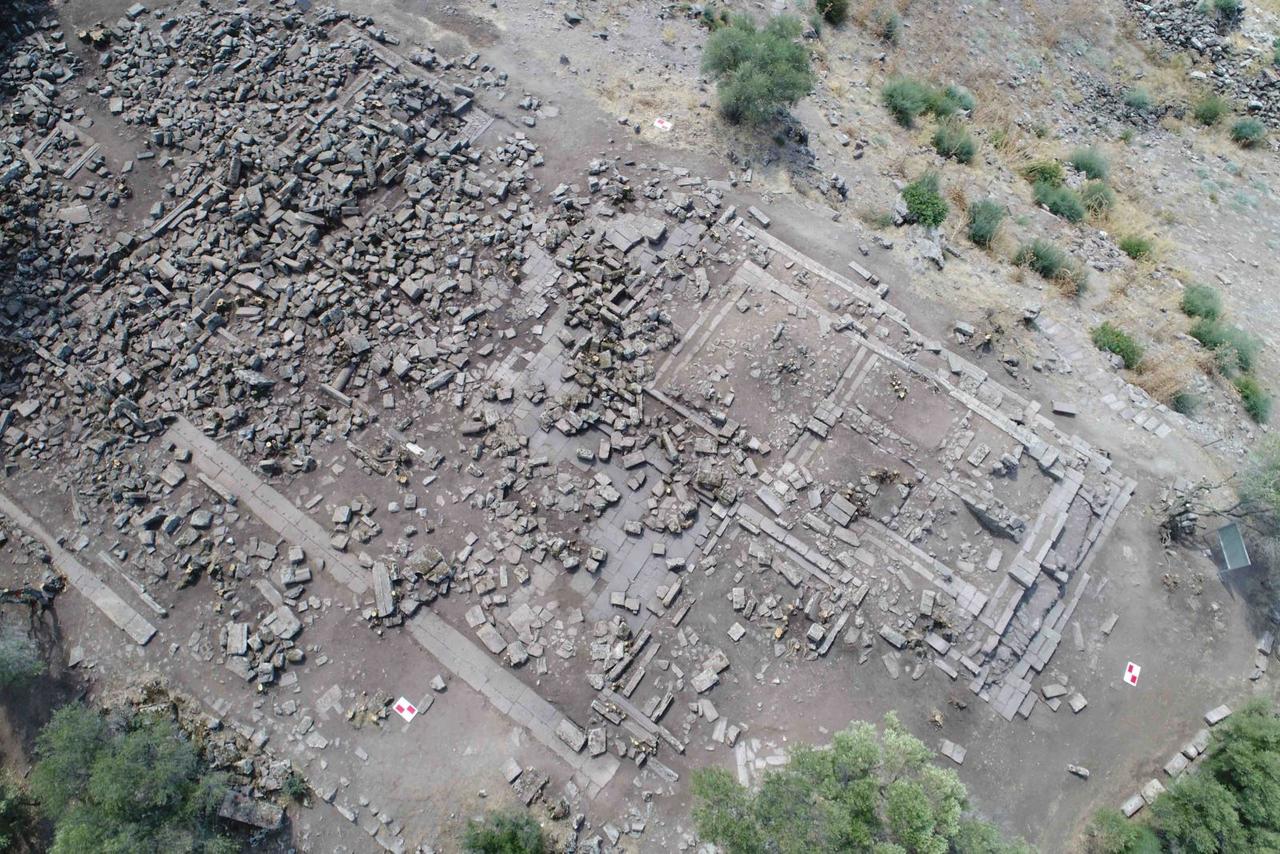
Overhead view of Aigai City (Source: https://www.kulturportali.gov.tr/turkiye/manisa/gezilecekyer/aigai)
Excavations at Aigai Ancient City have demonstrated its importance as a center of trade and art. The colonnaded streets, temple remains, necropolises, and rock-cut tombs uncovered during excavations provide valuable information about the city’s social life.

Marble statue found during Aigai excavations (Source: https://www.kulturportali.gov.tr/turkiye/manisa/gezilecekyer/aigai)
Aigai Ancient City offers an appealing exploration route for history and nature enthusiasts. Walking trails within the ancient site enable visitors to engage closely with its historical remains. In addition, the nearby Yunt Dağı Yaylası, with its clean air and unspoiled natural landscape, serves as a suitable resting area for both domestic and international tourists.
Aigai is located approximately 49 kilometers from the center of Manisa, within the boundaries of Köseler Village in the Yunusemre district. It is easily accessible by private vehicle, and guided tourist tours departing from Manisa are also available.
Manisa İl Directorate of Culture and Tourism. "Aigai Antik Kenti." 2024.
T.C. Kültür ve Turizm Bakanlığı. "Aigai Antik Kenti." 2024.

Aigai Ancient City
Location | Manisa/Yunusemre | ||||||||
|---|---|---|---|---|---|---|---|---|---|
Foundation | 8th century BC | ||||||||
Important Structure | Demeter Sacred Water Area Agora Ancient Theatre Rock Tombs Aqueducts | ||||||||
Historical and Cultural Significance
Archaeological Discoveries and Structures
Touristic and Recreational Areas
Access