


This article was automatically translated from the original Turkish version.

Those who remember the unique scent of old streets, the creak of shop doors, even the unlocked shop fronts and the warm, familiar greetings exchanged among tradespeople, understand perfectly well why they now feel like strangers in today’s markets. Once, trade was not merely an exchange of goods but a field of character, upbringing, and above all, a test of humanity. Yet today, that door of moral education has given way to greed, and ethical standards have been abandoned for the logic of “whatever I can take is mine.” Meanwhile, buried in the soil of these lands lies a vast culture—forgotten today but containing lessons on every page. What is the name of this culture, and of the very door that served as its school? Ahiilik.
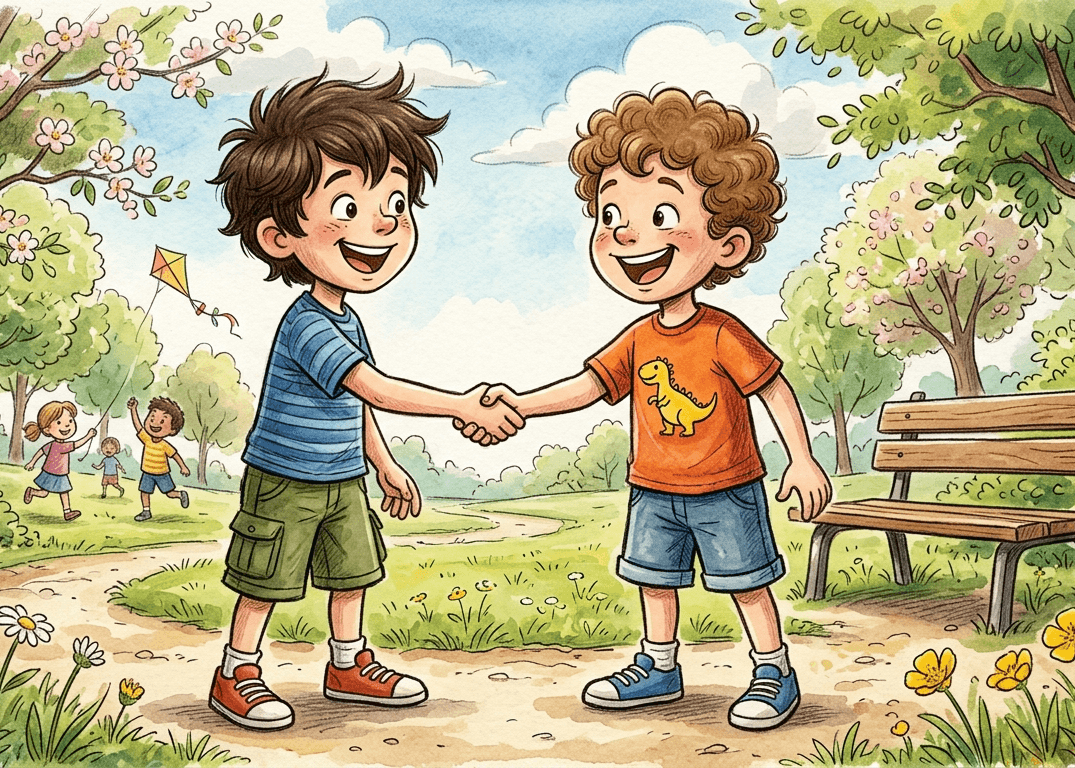
Children With Never a Missing Smile (Illustrated with AI)
Ahiilik is not merely an organization of tradespeople. It is the very name of a brotherhood, valor, honesty, and generosity etched into the soul of this nation, stitched thread by thread into the hearts of its people like a sacred embroidery. In today’s competitive environment under the banner of “trade,” the perception of honesty as mere “naivety” reveals just how deeply the pure blood in our society’s veins has been polluted. Yet this culture is, in truth, a philosophy centered on the human being and grounded in conscience as the common foundation of social life.
The scene we witness today when we step into the marketplace is heartbreaking. Seeing the same product priced differently in every shop, each price more outrageous than the last, noticing hidden flaws beneath labels, or watching traders hide behind the excuse of rising costs while chasing exorbitant profits—this burns the soul. In the Ahiilik tradition, solidarity and sharing were the foundation. For instance, when a tradesperson held a sale, he would generously direct his customers to a neighbor who had not yet held one. Today, however, a new breed has emerged: those who try to steal customers from their neighbor’s shop by claiming “my goods are better,” enriching their pockets through fraudulent scales and deceptive advertising.
Yet the principles established by the founder of Ahiilik, Ahi Evran, remain life lessons that every tradesperson today should hang above their shop door. Trade ethics are not merely a set of rules—they are a way of life. The amoral tradespeople of today do not only betray their customers; they sell their own future and the peace of society. Yet Ahiilik was one of the most vital values that made this nation a state and a people. When this bond breaks, it is not only the economy that trembles, but social peace as well.
Is a future in the footsteps of Ahi Evran still possible? Is there still hope? Of course. In some ancient cities, particularly where traces of the tradition have not yet vanished, one can still find the spirit that strives to keep these principles alive—from traditional artisans to modern industrialists.Ahiilik Week is not merely a celebration; it is a renewed commitment to remembering these universal values and the determination to pursue lawful earnings. Therefore, these ideals must be conveyed to the new generation not as mere entertaining events, but as essential lessons.
In today’s world, everything has a price, yet nothing seems to have any true value. Yet that old “Ahiilik” spirit sought a gain beyond money—a gain in social harmony. A true tradesperson must see every customer who enters his shop as a trust and a brother. Because Ahiilik, in its purest definition, means brotherhood.
Finally, I wish to emphasize that today we longingly remember the old tradespeople of these lands, whose integrity and ethics were their banner, whose very presence carried the scent of tradition. If we seek social healing, we must begin first with our scales, our words, and our conscience. Prosperity and abundant earnings are measured not only by numbers but also by how lawful that gain is and how much love and tolerance it contains. Until we rekindle the precious light of Ahiilik to illuminate our streets once more, no glitter in our shop windows will be enough to mask the darkness within us.
Şahin, İlhan. "Ahî Evran." TDV İslam Ansiklopedisi. Accessed March 26, 2026. https://kureansiklopedi.com/tr/detay/ahi-evran-3
Şahin, İlhan. "Ahîlik." TDV İslam Ansiklopedisi. Accessed March 26, 2026. https://kureansiklopedi.com/tr/detay/ahilik-5