


This article was automatically translated from the original Turkish version.
+1 More
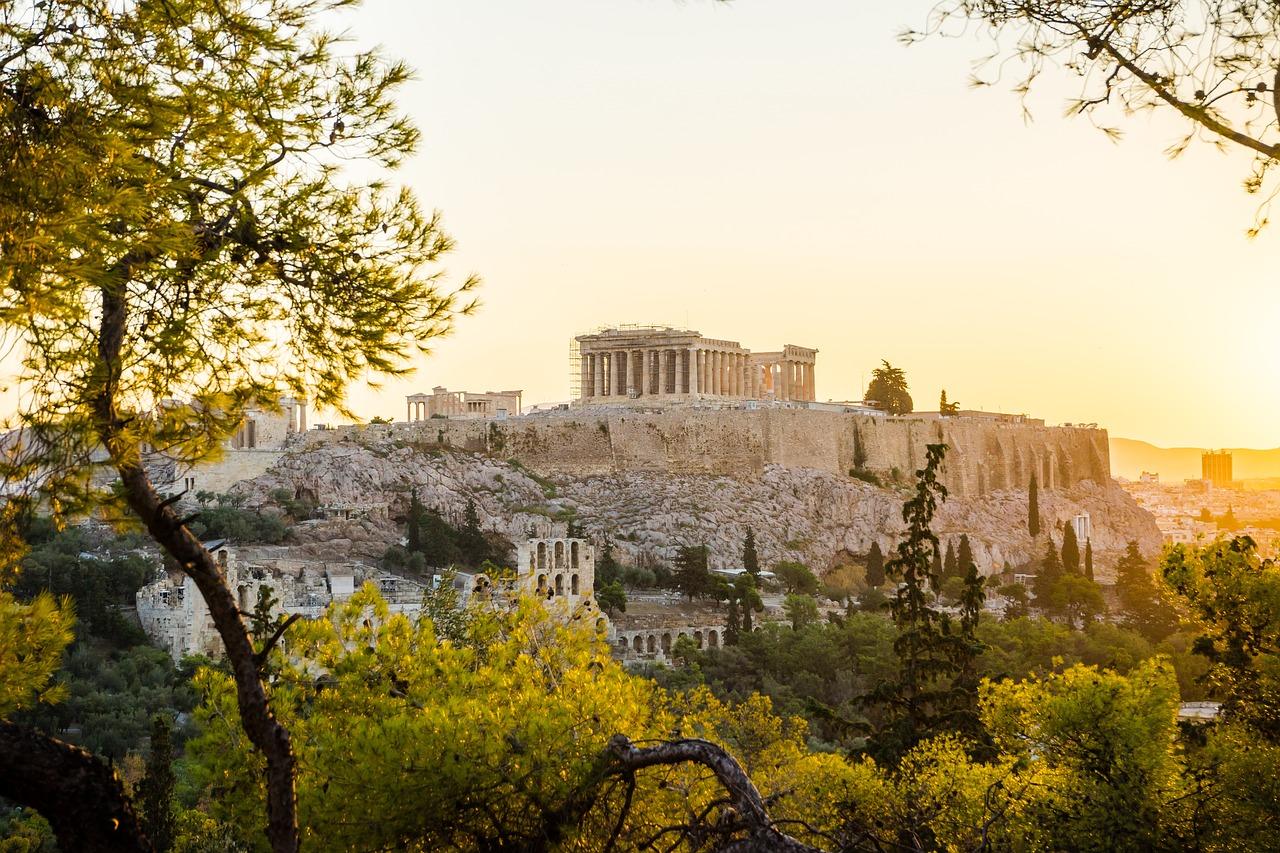
Acropolis (Athens Acropolis)
Location | Athens / Greece | ||||||||
|---|---|---|---|---|---|---|---|---|---|
Date | 5th century BC (Classical Period) | ||||||||
Most Famous Structure | Parthenon | ||||||||
Feature | Hill Where Ancient Greek Temples and Structures Are Concentrated | ||||||||
Height | 156 meters | ||||||||
Area | Approximately 170 x 350 meters | ||||||||
UNESCO Category | Cultural Heritage | ||||||||
UNESCO Status | World Heritage (1987) | ||||||||
UNESCO Criteria | Masterpiece of universal creativity, cultural interaction, exceptional universal value | ||||||||
Main Structures | Parthenon Erechtheion Propylaia Temple of Athena Nike Statue of Athena Promachos (demolished) | ||||||||
Acropolis of Athens is a complex of temples and monumental structures dedicated to the goddess Athena, recognized as one of the cultural and architectural legacies of Ancient Greece. Located on a rocky outcrop approximately 156 meters high, the site was rebuilt in the 5th century BCE under the leadership of Pericles during Athens’ political and artistic golden age. Throughout history, the Acropolis has served various functions under different civilizations and was inscribed on the UNESCO World Heritage List in 1987.
While the term “Acropolis” generally refers to the fortified high areas of ancient Greek cities, it is most commonly associated with the Acropolis of Athens.
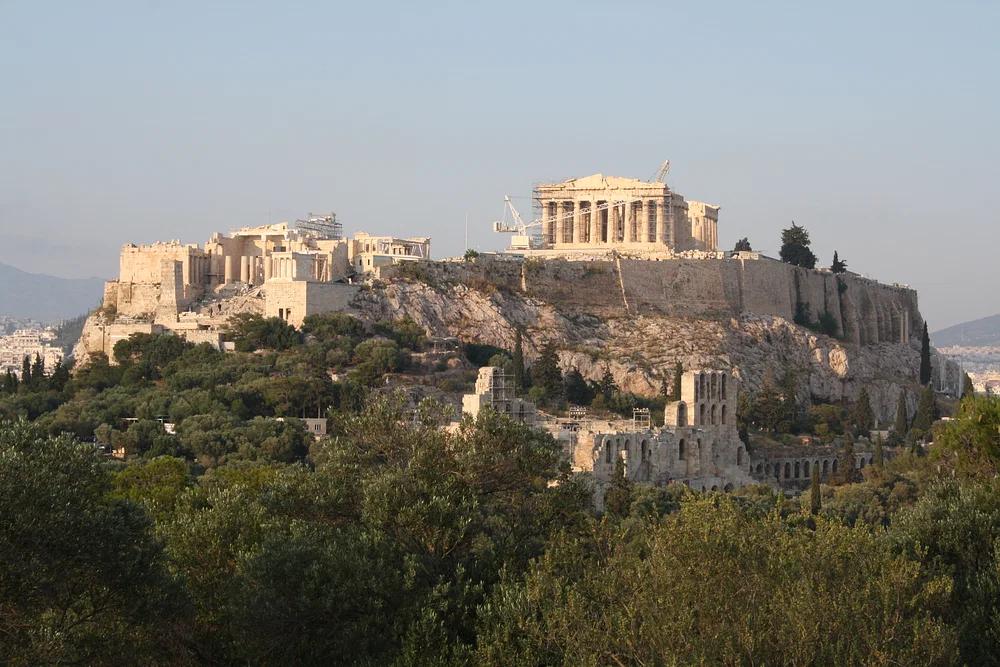
Atina Akropolisi (WorldHistory)
In the second half of the 5th century BCE, following victories over the Persians, Athens established a democratic system and rose to a leading position among the city-states of the ancient world. During this golden age of thought and art, under the leadership of Pericles, the Acropolis of Athens was transformed into a monument to intellectual and artistic achievement. Pericles appointed the architects Iktinos, Kallikrates and Mnesikles, and the sculptors Phidias, Alkamenes and Agorakritos for this reconstruction project.
The most important structures on the site include the Parthenon, designed by Iktinos; the Propylaia, the monumental entrance designed by Mnesikles; the Erechtheion; and the small Temple of Athena Nike. At the entrance to the Acropolis stood a colossal bronze statue of Athena Promachos. Standing approximately 9 meters tall, this statue elevated the goddess as both protector and symbol of military power.
The Acropolis of Athens spreads across an area of approximately 170 by 350 meters on a rocky outcrop 156 meters high. The earliest fortifications were built in the 13th century BCE and served as a royal residence during the Mycenaean period. From the 8th century BCE onward, it became the center of the cult of Athena and gained particular sacred significance during the Archaic period. Remains of the earliest altar and temple dedicated to the goddess have been identified in the area where the Erechtheion now stands.
The architectural composition of the Acropolis of Athens consists of monumental structures built in the 5th century BCE. The complex, situated on a high hill, covers an area of approximately 170 by 350 meters. The buildings reflect the architectural styles of the period, incorporating Doric and Ionic elements.
The Parthenon is constructed in the Doric order, with Ionic columns used internally. The Erechtheion stands out for its asymmetric plan and its Caryatid columns. The Propylaia is a symmetrical gateway structure serving as the monumental entrance. The Temple of Athena Nike is a small building in the Ionic order. All structures were built using white marble quarried from Mount Pentelicus, and ancient stone-working techniques were applied to the architectural elements.
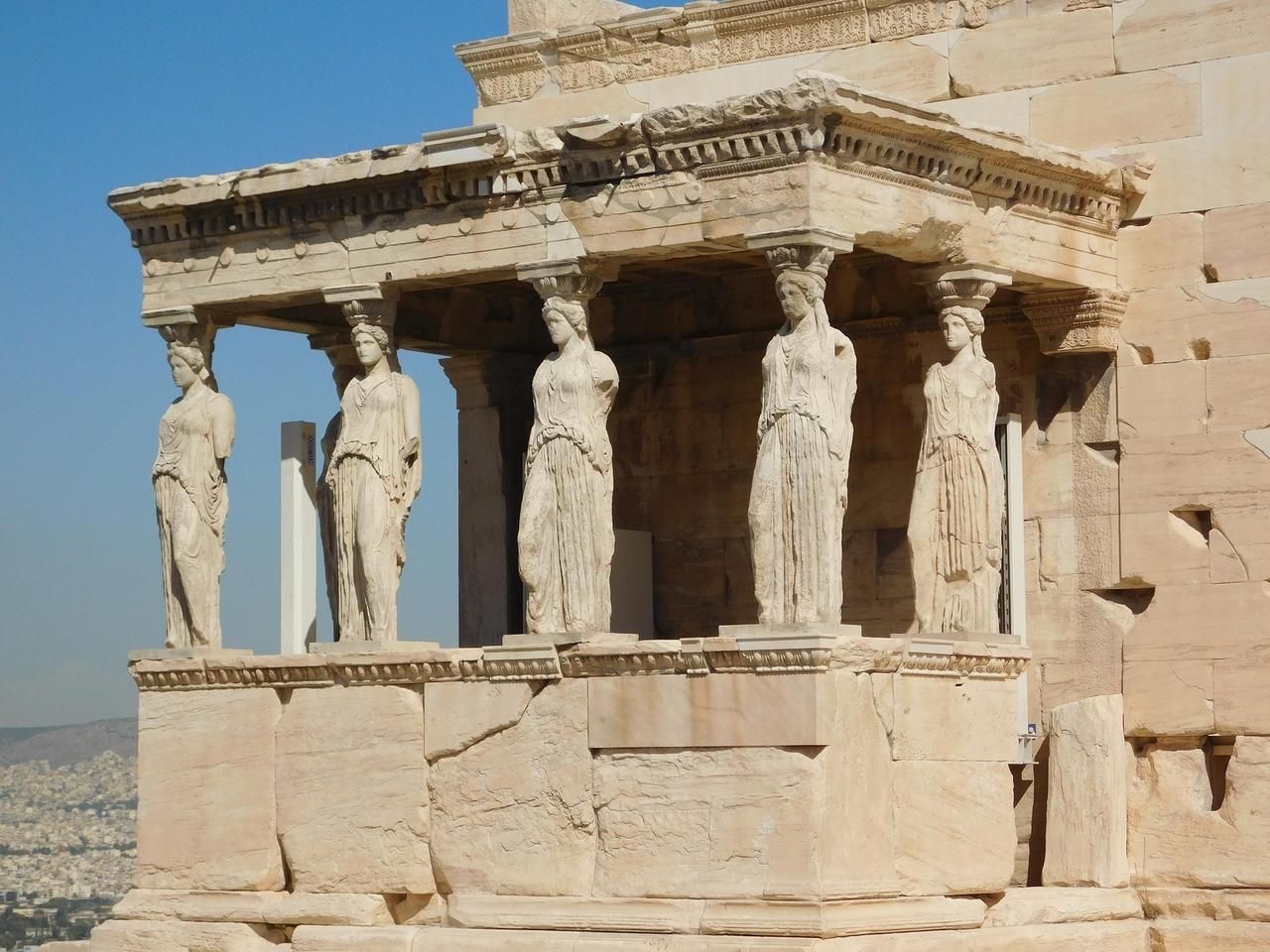
Atina Akropolisi Karyatid Heykelleri (Pixabay)
The Acropolis of Athens is a cultural site reflecting ancient Greek religious beliefs and mythological narratives. The city’s patron goddess Athena was represented here under various epithets: Athena Polias, Athena Promachos, Athena Nike, and Athena Ergane. The structures on the Acropolis were not only architectural achievements but also venues for religious rituals and public ceremonies. These different identities were embodied in specific temples and cult objects: Athena Polias was honored in the Erechtheion, Athena Nike in her namesake small temple, and Athena Ergane as protector of craftsmen through various votive offerings.
The Acropolis of Athens has been largely preserved despite natural disasters, wars, and structural interventions over nearly 2,500 years. It has been shaped over successive periods by the influence of different civilizations, religious practices, and mythological narratives. Since 1833 it has been protected as an archaeological site, and since 1975 restoration work has been carried out under the supervision of the Greek Ministry of Culture and the Ephorate of Antiquities of Athens.
The restoration process follows the principles of the Venice Charter, using original Pentelic marble and techniques consistent with ancient methods. The Committee for the Conservation and Restoration of the Acropolis Monuments (ESMA), established in 1975, and the Acropolis Restoration Service (YSMA), established in 1999, oversee this process. Restorations are planned to preserve structural integrity and are designed to be reversible.
The Acropolis was inscribed on the UNESCO World Heritage List in 1987. Protection measures, including flight restrictions and urban development controls, have been implemented in accordance with legislation enacted in 2002. During the Ottoman period, the Parthenon was used as a mosque; it suffered severe damage in 1687 during a Venetian siege when a gunpowder explosion occurred. At the same time, materials from the Temple of Athena Nike were reused in defensive structures. The New Acropolis Museum, opened in 2009, is responsible for preserving and displaying the original sculptures and architectural elements from the complex.
Mark, Joshua J. "Akropolis." *World History Encyclopedia*. Accessed May 15, 2025.https://www.worldhistory.org/trans/tr/1-478/akropolis/
Pixabay. "Akropolis, Mermer, Parthenon görseli JPG." Accessed May 15, 2025.https://pixabay.com/tr/photos/akropolis-mermer-parthenon-2756485/
Pixabay. "Atina, Gün batımı, Akropolis görseli JPG." Accessed May 15, 2025.https://pixabay.com/tr/photos/atina-g%C3%BCn-bat%C4%B1m%C4%B1-akropolis-7402123/
Pixabay. "Parthenon, Atina, Mimari görseli JPG." Accessed May 15, 2025.https://pixabay.com/tr/photos/parthenon-atina-mimari-kal%C4%B1nt%C4%B1lar-6819902/
UNESCO World Heritage Centre. "Acropolis, Athens." UNESCO World Heritage Centre. Accessed May 15, 2025.https://whc.unesco.org/en/list/404/

Acropolis (Athens Acropolis)
Location | Athens / Greece | ||||||||
|---|---|---|---|---|---|---|---|---|---|
Date | 5th century BC (Classical Period) | ||||||||
Most Famous Structure | Parthenon | ||||||||
Feature | Hill Where Ancient Greek Temples and Structures Are Concentrated | ||||||||
Height | 156 meters | ||||||||
Area | Approximately 170 x 350 meters | ||||||||
UNESCO Category | Cultural Heritage | ||||||||
UNESCO Status | World Heritage (1987) | ||||||||
UNESCO Criteria | Masterpiece of universal creativity, cultural interaction, exceptional universal value | ||||||||
Main Structures | Parthenon Erechtheion Propylaia Temple of Athena Nike Statue of Athena Promachos (demolished) | ||||||||
No Discussion Added Yet
Start discussion for "Acropolis of Athens" article
History
Architectural Features
Religious and Cultural Significance
Conservation Status and UNESCO Designation