This article was automatically translated from the original Turkish version.
+2 More
Definition | Indigenous peoples living in the Australian mainland and surrounding islands | ||||||||
|---|---|---|---|---|---|---|---|---|---|
Cultural Continuity | A history extending over 65,000 years | ||||||||
Belief System | The Dreamtime concept refers to sacred narratives about the origins of the universe and life | ||||||||
Country Concept | Water Spiritual connections established with ancestors and spirits Animals Land | ||||||||
Social Structure | Elders transmit knowledge across generations; kinship systems regulate all aspects of life | ||||||||
Language and Culture | More than 250 indigenous languages | ||||||||
Material Culture | Rock art and boomerangs | ||||||||
Colonialism | British colonization led to forced land loss, displacement, and the Stolen Generations | ||||||||
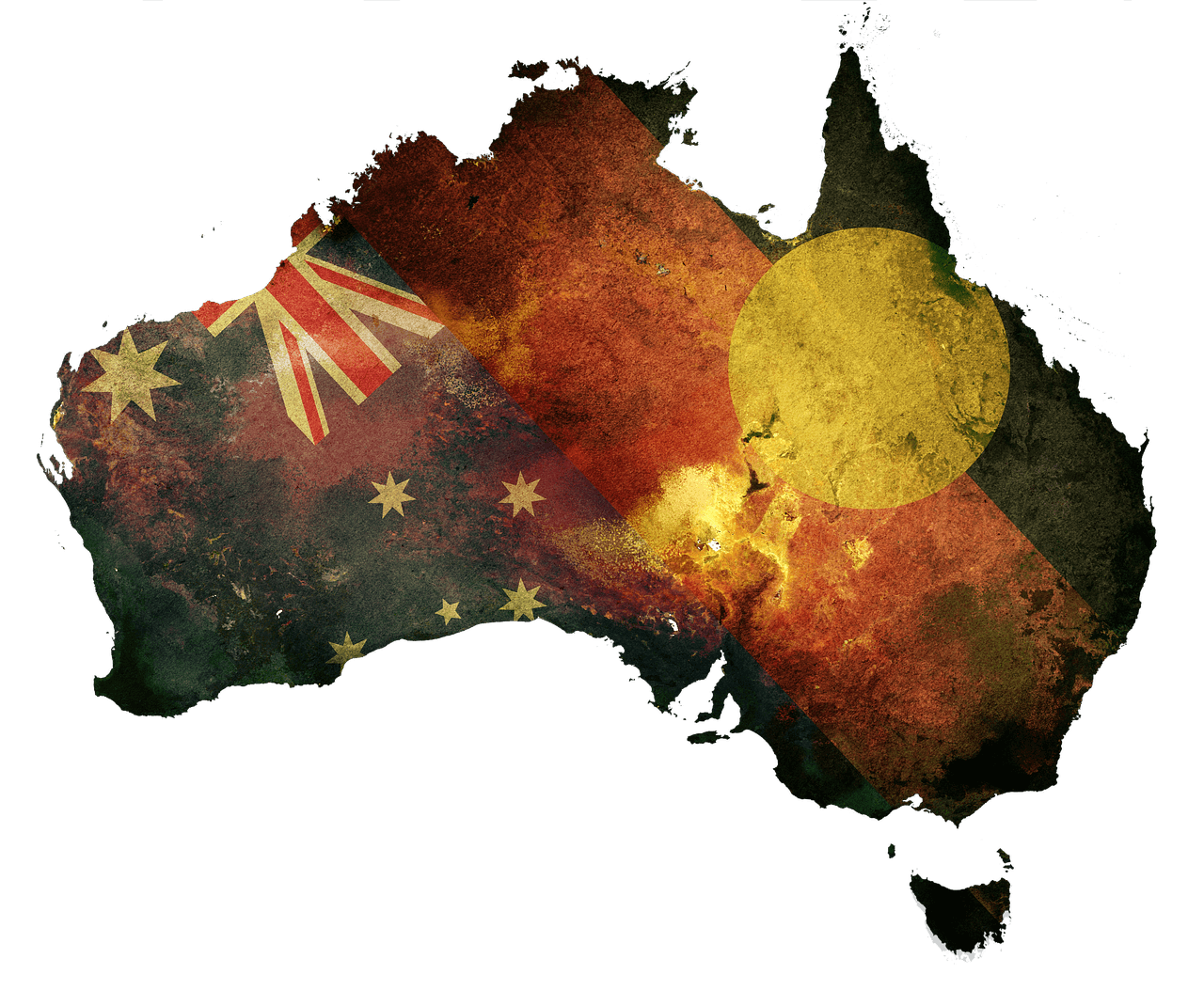
Aboriginal peoples are communities representing the Indigenous inhabitants of the Australian mainland, embodying a continuous historical and cultural presence spanning thousands of years across the continent. Under this umbrella, hundreds of distinct communities are included, each with unique geographic regions, languages, and self-identifications. In Australia, Indigenous peoples are generally categorized into two main groups: Aboriginal peoples and Torres Strait Islander peoples. Aboriginal peoples are associated with the Australian mainland and its adjacent islands, while Torres Strait Islander peoples are linked to the islands located in the north, between Australia and Papua New Guinea. Nevertheless, both groups share a common framework within the nation as “First Peoples,” united by historical precedence and distinctive legal and cultural rights.【1】
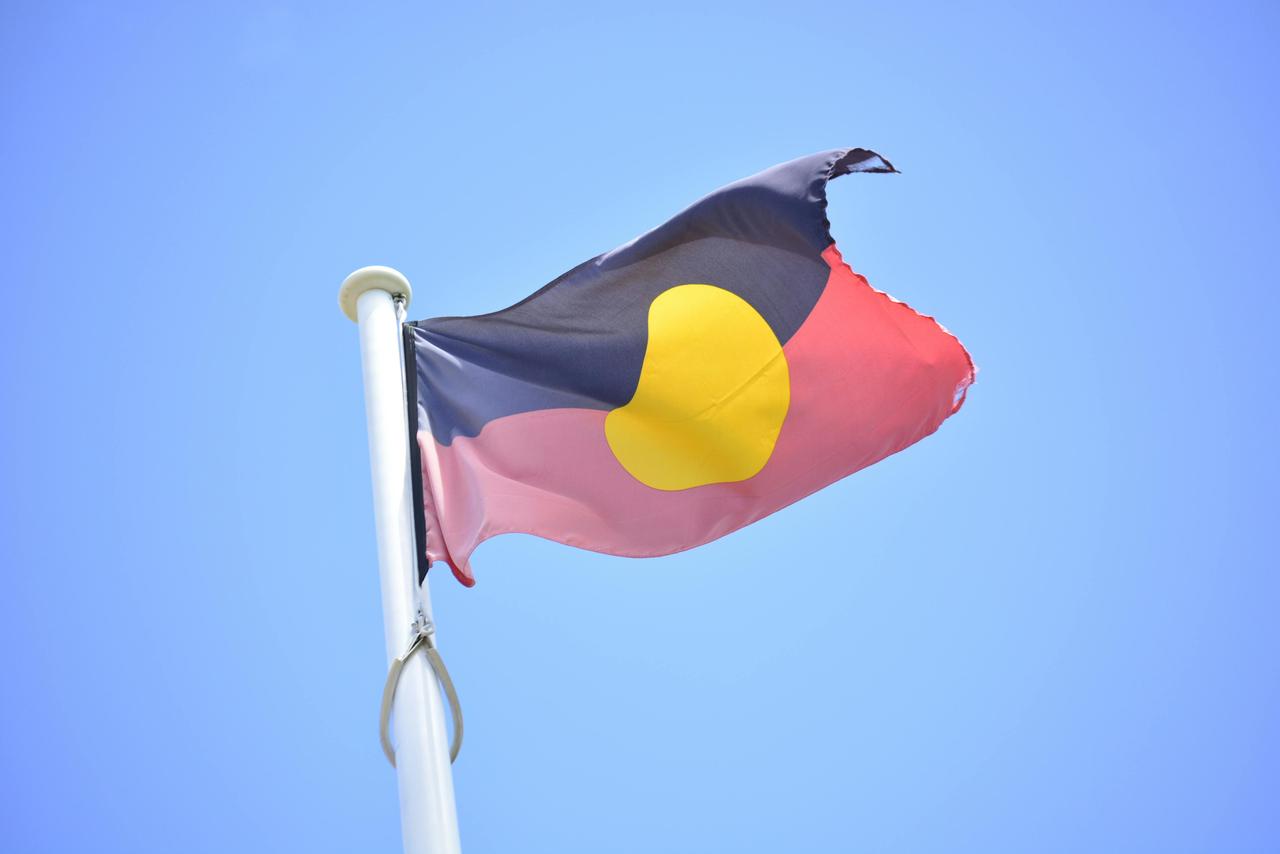
Aboriginal Flag (Pexels)
The terms used to refer to Indigenous peoples in Australia vary both in official language and within the communities’ own self-definitions. The term “Indigenous Australians” is commonly used as an umbrella term encompassing both Aboriginal peoples and Torres Strait Islander peoples. In addition, the expressions “Aboriginal people” and “Torres Strait Islander people” have become established as distinct group names.
Aboriginal communities often define themselves through regional and linguistic affiliations. In some areas, designations such as “Koori,” “Murri,” and “Nunga” are prominent; at more local levels, names like Gunditjamara, Gadigal, or Yawuru denote both language and a specific “country.” These identifiers illuminate each community’s historical territory and its relationship with ancestors and land.【2】
Torres Strait Islander peoples frequently identify themselves by the names of their specific islands, such as Meriam or Saibai, which reflect both spatial origin and cultural affiliation. These self-identifications demonstrate that Indigenous identity is not merely a racial or ethnic category but a holistic unity of land, language, and kinship ties.
Archaeological evidence of the earliest human presence on the Australian continent dates back at least 65,000 years, with new discoveries suggesting this timeline may extend even further. Rock shelters, settlement sites, stone tools, and figurative artifacts across northern and inland regions indicate human habitation and a long-term, ecologically adapted way of life from very early periods. This deep temporal depth demonstrates that Aboriginal peoples are not only the First Peoples of Australia but also among the holders of the world’s oldest continuous cultural traditions.
Historical continuity is not only evident in archaeological findings but also in oral traditions, rituals, dances, and religious-mythological narratives. Academic studies on Aboriginal peoples analyze this continuity through the axis of “time-space-belief,” aiming to understand how the past and present are interwoven in Aboriginal worlds.
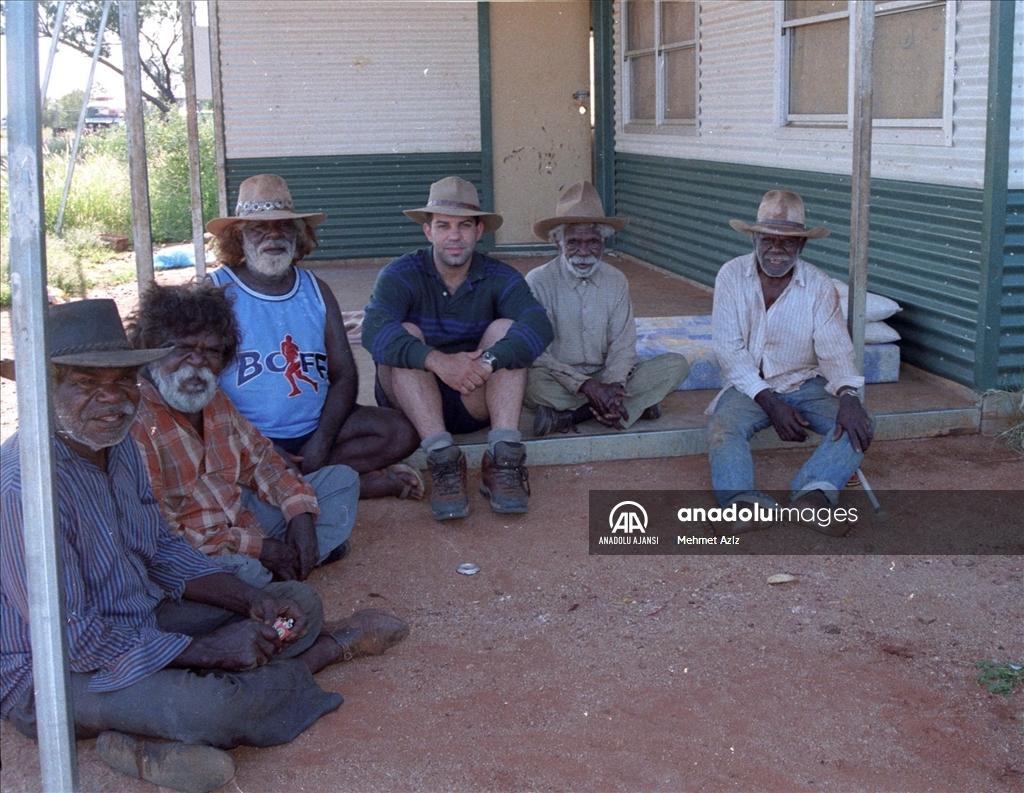
Aboriginal peoples, Australia (Anadolu Ajansı)
At the heart of Aboriginal belief systems lies a concept often translated into Western languages as “Dreaming” or “Dreamtime.” In Turkish literature, this concept is referred to as “Düş Zamanı” or “Rüya Zamanı.” Beyond being a collection of narratives about the origins of the universe, humans, animals, and landscapes, Dreamtime constitutes an ongoing framework that establishes and sustains present-day order.
Dreamtime stories explain how mountains, rivers, cliffs, animals, and humans came into being; which clan is connected to which land; and which paths belong to which ancestors. These narratives guide both mystical heritage and contemporary social relationships. Time is not understood merely as a linear progression but as embedded within ritual cycles and the enduring continuity of Dreamtime stories.
These stories are transmitted across generations through songs, dances, ceremonial performances, and visual arts. Children grow up immersed in these narratives from a very young age, thereby entering a world of cultural memory that encompasses moral principles as well as geographic and ecological knowledge.
In Aboriginal worlds, the concept of “country” encompasses not only physical land but also waterways, vegetation, animals, ancestors, spirits, and the relationships among all these elements. The bond with country forms the foundation of identity, history, and responsibility. For this reason, many communities describe themselves using terms such as “saltwater people,” “freshwater people,” or “desert people,” which reflect both ecological environments and the Dreamtime narratives associated with them. Country is not merely a place of residence; it is perceived as a living entity to be cared for, governed by specific rituals, prohibitions, and duties—not owned but stewarded.【3】
The perception of place also carries a temporal dimension. A particular rock, cave, or water source is not merely a monument referencing a past event; it remains an active focal point that guides ritual and social behavior today. Thus, rock paintings and other visual markers serve simultaneously as historical and contemporary “memory maps.”
Aboriginal social structure exhibits a complex organization based on extended family and kinship ties. The concept of family extends beyond the nuclear unit to include aunts, uncles, grandparents, and broader kinship networks across multiple generations. Childcare is viewed as the collective responsibility of the entire community, not solely that of biological parents. This principle manifests in daily life through division of labor, child-rearing practices, participation in ceremonies, and transmission of knowledge. From a very young age, children learn the histories of their families and clans, their relationship to country, and the foundational principles of ceremony.
Elders hold a privileged position within the social structure due to their accumulated experience and knowledge. They are the transmitters of Dreamtime stories, songs, rituals, and traditional legal codes, and play decisive roles in decision-making processes. Certain ritual knowledge is transmitted only to specific age groups and individuals who have undergone initiation rites. Kinship systems contain detailed rules governing marriage, inheritance, participation in ceremonies, and intergroup relations. Who may marry whom, which relationships are taboo, and which individuals assume specific roles in ceremonies are all determined within these systems.【4】
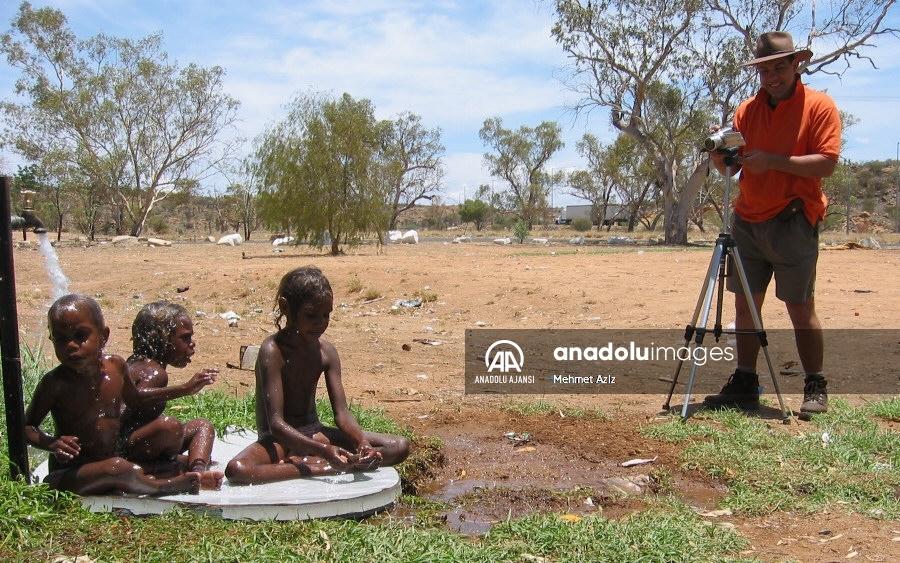
Aboriginal peoples, Australia (Anadolu Ajansı)
It is estimated that over 250 distinct languages and dialect groups were spoken by Indigenous peoples in Australia prior to colonization. The majority belong to Aboriginal language families, while others are part of the Torres Strait Islander languages. Each language is tied to a specific region, community, and “country.” Place names, kinship terms, Dreamtime narratives, and environmental knowledge are concentrated within these languages. Language loss therefore entails the loss of specific place-based narratives, ceremonial knowledge, and traditional ecological understanding. As a result, documenting, revitalizing, and incorporating Indigenous languages into education has become a priority for many communities. Recent census data indicate that a significant number of households still speak at least one Indigenous language at home, though many languages remain endangered.
Aboriginal material culture encompasses a wide range of artifacts, from rock art and tools to ceremonial objects and textiles. Rock art is one of its most prominent features. Across many regions of Australia, particularly in areas such as Kakadu National Park, thousands of rock art sites exist. These artworks feature a rich iconography of animal figures, human depictions, hunting scenes, ceremonial events, and mythological beings.
Rock paintings are not merely aesthetic expressions; they can also be understood as visual texts that record the historical experiences, Dreamtime narratives, and relationships with the environment of communities. In many locations, new figures have been painted over older ones, creating layered, long-term narratives embedded in the landscape.
The boomerang is a significant object in both hunting and ceremonial contexts. Archaeological findings indicate that boomerang-like tools have been used in Australia for thousands of years. These objects are employed in hunting, warfare preparation, games, and rituals. Certain rituals involving the embedding of boomerangs into the ground or their arrangement in specific patterns are seen as symbolic expressions of the relationship between people and country.
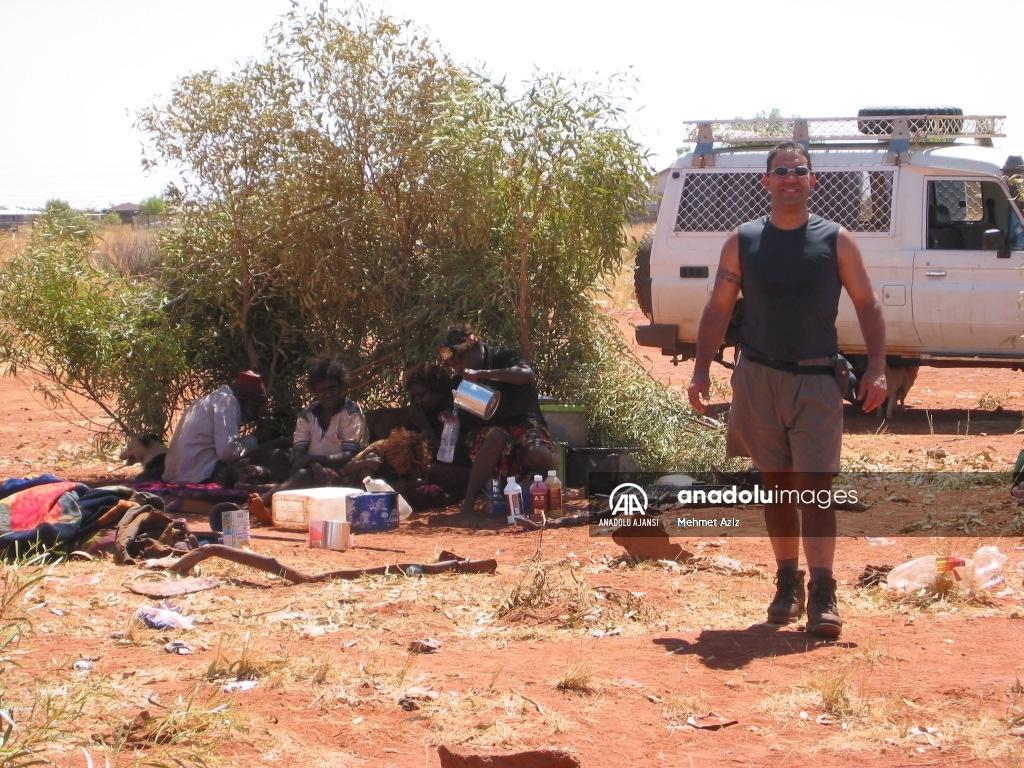
Aboriginal peoples, Australia (Anadolu Ajansı)
With the establishment of British rule in Australia, Aboriginal and Torres Strait Islander communities faced land dispossession, forced relocation, violence, epidemics, and various restrictive regimes. Colonial and post-colonial state policies led to the separation of many communities from their traditional countries and their forced relocation to reserves or mission settlements.
During this period, practices such as the fragmentation of families, the removal of children from their families, and their placement in institutions or other households became widespread. These practices gave rise to what later became known as the “Stolen Generations.” Many of these children were denied the opportunity to learn their own languages and cultures.
Today, many individuals are working to reconstruct their family histories by accessing archives such as birth, death, and marriage records, mission documents, police files, and court records in order to trace their roots, family connections, and ties to traditional country. These efforts constitute not only personal quests for identity but also integral components of broader processes of historical justice, recognition, and healing.
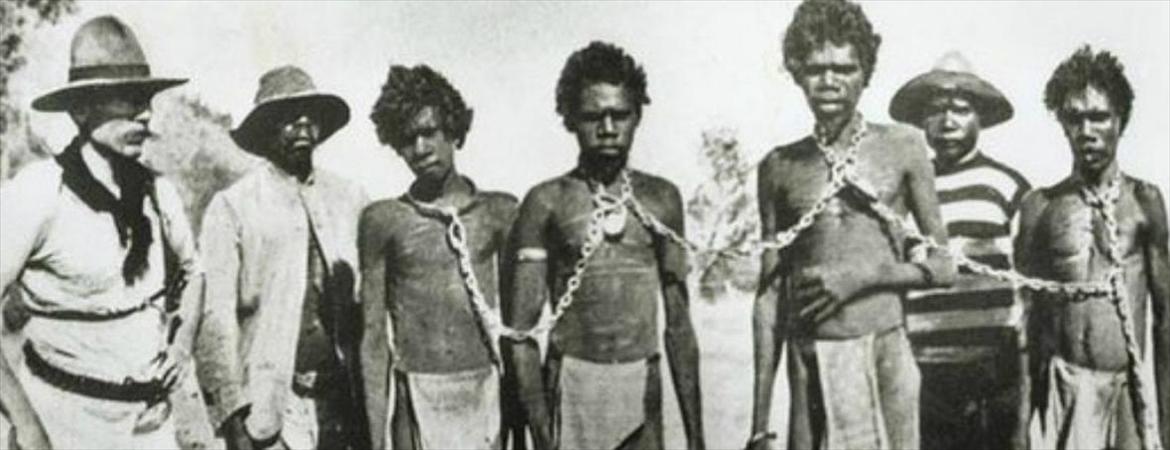
Aboriginal peoples (Anadolu Ajansı)
Recent census data show that the number of people identifying as Aboriginal and/or Torres Strait Islander constitutes a significant portion of the national population. The 2021 data indicate that the proportion of this population within the total population has increased and that it has a significantly younger age structure compared to the general population.【5】
According to the data, approximately one-third of this population is under the age of 15, and the median age is markedly lower than the national average. The majority reside in states such as New South Wales, Queensland, and Western Australia; however, settlements exist both in major urban centers and in remote “remote” regions.
Census and other statistical studies reveal not only demographic distribution but also disparities in education, employment, health, and housing conditions. Indigenous peoples are historically disadvantaged across many of these indicators. To reduce these inequalities, various programs, targets, and strategies are being developed, with self-determination, cultural safety, and the inclusion of Indigenous communities in decision-making processes placed at the center of these initiatives.
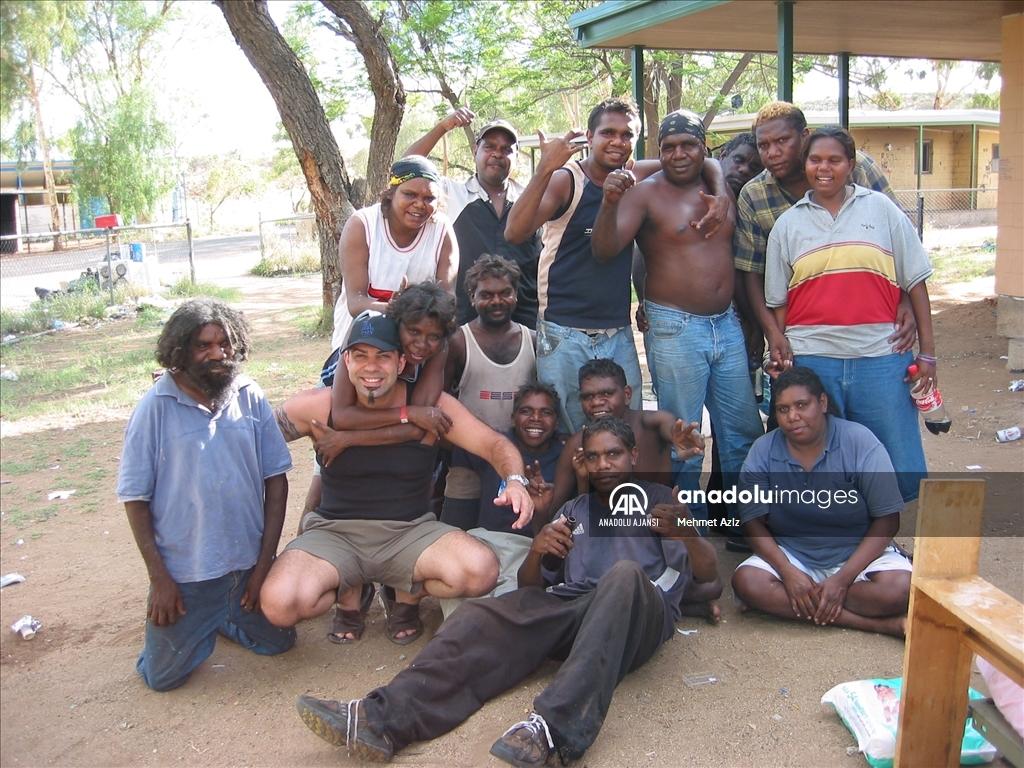
Aboriginal peoples, Australia (Anadolu Ajansı)
Torres Strait Islander peoples are an Indigenous group distinct from Aboriginal peoples, residing on islands between Australia and Papua New Guinea. While they share cultural and ancestral connections with Aboriginal peoples, they possess unique traditions in language, belief, and ceremony. Nevertheless, they share with Aboriginal peoples a common political and legal position within the framework of Indigenous rights in Australia. This group is sometimes identified as “saltwater people.” Island life, relationships with the sea, reef ecosystems, and inter-island navigation are central to their social and cultural existence.
Clan structures, sea-related rituals, dances, and songs are fundamental to their identity. Torres Strait Islander peoples live both on their islands and in major cities on the mainland. This dual presence necessitates the simultaneous maintenance of island-based belonging and flexible identity strategies required by urban life. Census data also highlight individuals who identify solely as Torres Strait Islander, as well as those who identify as both Aboriginal and Torres Strait Islander.
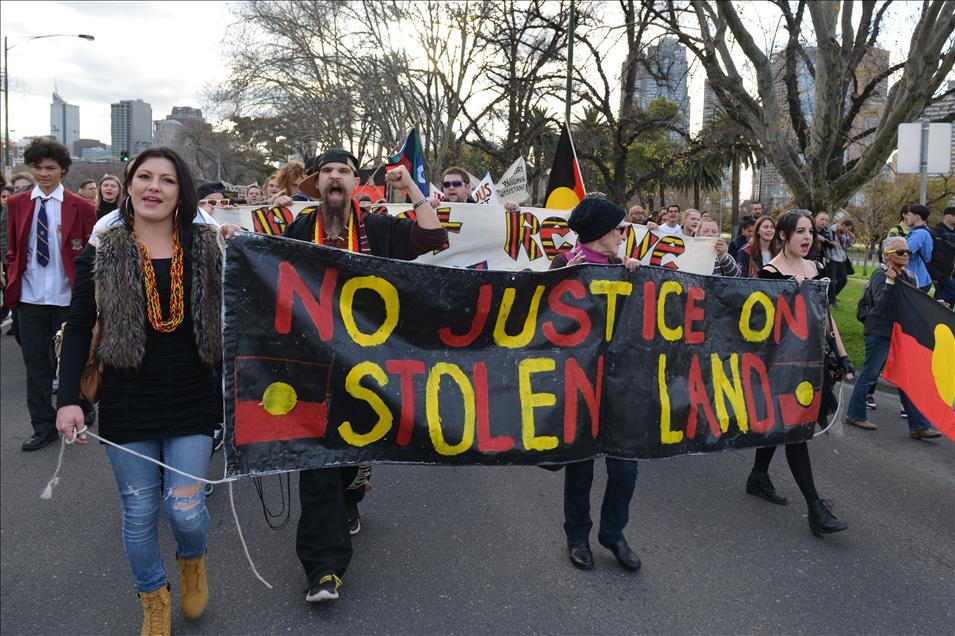
Melbourne, Protest for Aboriginal Rights (Anadolu Ajansı)
The rights of Indigenous peoples are addressed within both national law and international human rights instruments. In this context, the right to self-determination, participation in decision-making, the right to maintain and develop cultures, and rights related to land and resources are emphasized. The United Nations Declaration on the Rights of Indigenous Peoples outlines principles for sustaining Indigenous economic, social, and cultural development, and for protecting and strengthening their institutions, cultures, and traditions. These principles form the reference framework for many debates in Australia.
In the country, long-standing discussions have centered on constitutional recognition of Indigenous peoples, the establishment of permanent representative mechanisms in parliament and executive processes, treaties, and truth-telling processes. A recent referendum brought forward proposals for constitutional recognition and representative mechanisms for Indigenous peoples but was not accepted nationwide. Nevertheless, some states and territories are developing alternative models based on agreements with Indigenous communities, truth commissions, and Indigenous representation. These debates are linked to goals of confronting past colonial practices, addressing inequalities, and ensuring Indigenous peoples are recognized as subjects within the nation’s political and legal structures.
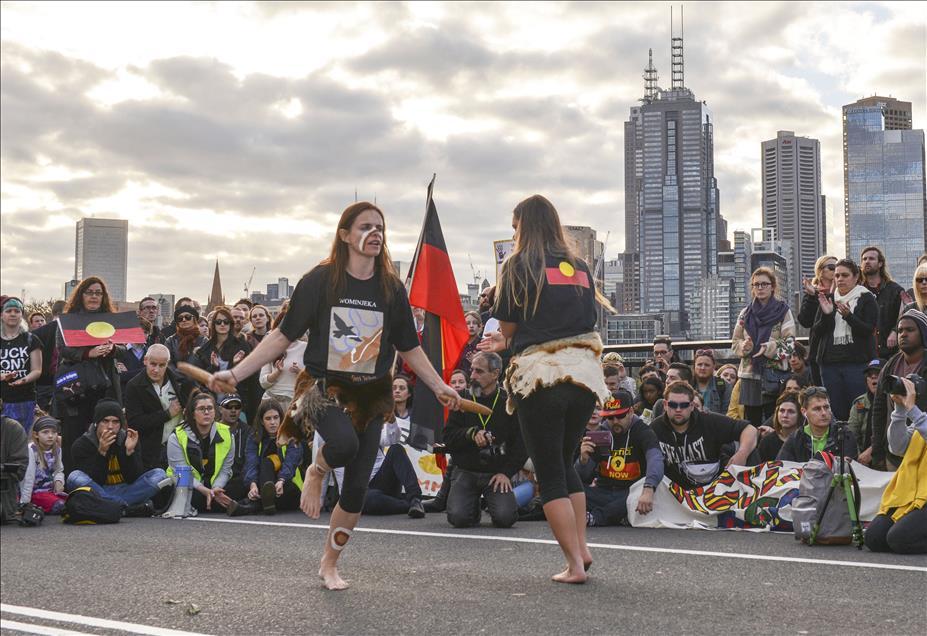
Melbourne, Protest for Aboriginal Rights (Anadolu Ajansı)
Canada’s Constitution Act of 1982 includes Section 35, which recognizes “Aboriginal peoples of Canada”—comprising First Nations, Inuit, and Métis—as Indigenous peoples and affirms that their “existing Aboriginal and treaty rights” are constitutionally protected. This provision explicitly states that these rights derive not only from historical treaties but also from Indigenous traditions and practices.【6】
Section 35 enables the constitutional recognition of a comprehensive set of rights, including land rights, hunting and fishing rights, agreements regarding land and natural resource use, and forms of self-government. The scope and content of these rights are concretized according to each community’s historical treaties, practices, and court rulings; within this framework, Section 35 serves as the foundational constitutional provision for interpreting Indigenous rights.
Anadolu Ajansı. “Aborjinler Melbourne’de Gösteri Düzenledi.” Foto Galeri. Accessed January 10, 2026.https://www.aa.com.tr/tr/pg/foto-galeri/aborjinler-melbournede-gosteri-duzenledi
Anadolu Ajansı. “Avustralya’da Aborjinlerle 10 Yıl Yaşayan Mehmet Aziz: Onlar Benim Ailem Gibi.” Foto Galeri. Accessed January 10, 2026.https://www.aa.com.tr/tr/pg/foto-galeri/avustralyada-aborjinlerle-10-yil-yasayan-mehmet-aziz-onlar-benim-ailem-gibi-
Anadolu Ajansı. “Tazmanya’da Aborjinler, Atalarına Ait Kemiklerin Torbalarda Teslim Edilmesine Tepki Gösterdi.” Accessed January 10, 2026.https://www.aa.com.tr/tr/ayrimcilikhatti/ayrimcilik/tazmanyada-aborjinler-atalarina-ait-kemiklerin-torbalarda-teslim-edilmesine-tepki-gosterdi/1820071.
Australian Bureau of Statistics. "Aboriginal and Torres Strait Islander People: Census." Accessed January 10, 2026.https://www.abs.gov.au/statistics/people/aboriginal-and-torres-strait-islander-peoples/aboriginal-and-torres-strait-islander-people-census/latest-release.
Australian Electoral Commission. *Report on the 2023 Referendum*. Accessed January 10, 2026.https://www.aec.gov.au/About_AEC/Publications/files/referendum-report-2023.pdf.
Australian Human Rights Commission. “EMRIP – Australia Has Not Signed Federal Treaty with Indigenous Peoples.” July 11, 2024. Accessed January 10, 2026.https://humanrights.gov.au/about-us/media-centre/speeches/aboriginal-and-torres-strait-islander-peoples/emrip-australia-has-not-signed-federal-treaty-indigenous-peoples
Australian Human Rights Commission. “UN Declaration on the Rights of Indigenous Peoples.” 2021. Accessed January 10, 2026.https://humanrights.gov.au/resource-hub/by-resource-type/projects2/un-declaration-rights
Australian Institute of Aboriginal and Torres Strait Islander Studies (AIATSIS). "Family History Kit." Accessed January 10, 2026.https://aiatsis.gov.au/sites/default/files/2020-10/aiatsis-family-history-kit.pdf.
Australian Institute of Aboriginal and Torres Strait Islander Studies (AIATSIS). “Indigenous Australians: Aboriginal and Torres Strait Islander People.” Last updated December 7, 2020. Accessed January 10, 2026.https://aiatsis.gov.au/explore/indigenous-australians-aboriginal-and-torres-strait-islander-people
Immigration, Refugees and Citizenship Canada. “INAN – Section 35 of the Constitution Act 1982 – Background – Jan 28, 2021.” Accessed January 10, 2026.https://www.canada.ca/en/immigration-refugees-citizenship/corporate/transparency/committees/inan-jan-28-2021/inan-section-35-consitution-act-1982-background-jan-28-2021.html
National Museum of Australia. “Earliest Evidence of the Boomerang in Australia.” Accessed January 10, 2026.https://www.nma.gov.au/defining-moments/resources/earliest-evidence-of-the-boomerang-in-australia
National Museum of Australia. “Evidence of First Peoples.” Accessed January 10, 2026.https://www.nma.gov.au/defining-moments/resources/evidence-of-first-peoples.
National Museum of Australia. “First Rock Art.” Accessed January 10, 2026.https://www.nma.gov.au/defining-moments/resources/first-rock-art.
New South Wales Government. “Easy Read – About This Website.” Accessed January 10, 2026.https://www.nsw.gov.au/easy-read
Pexels. “Australian Aboriginal Flag Against Clear Blue Sky.” Accessed January 10, 2026.https://www.pexels.com/photo/australian-aboriginal-flag-against-clear-blue-sky-28840846/.
Tabar, Ümit. “Zaman, Mekân ve İnanç Ekseninde Avustralya Aborijinleri.” 7, no. 59 (2020): 2585-2601. Accessed January 10, 2026.https://www.academia.edu/44140619/Zaman_mek%C3%A2n_ve_inan%C3%A7_ekseninde_Avustralya_Aborijinleri
TÜBİTAK. “Avustralya ve Aborjin Kültürü Üzerine.” *Bilim Çocuk* 26, no. 1171. Accessed January 10, 2026.https://services.tubitak.gov.tr/edergi/yazi.pdf?dergiKodu=8&cilt=26&sayi=1171&sayfa=10&yaziid=48020
Victoria Public Sector Commission. “Aboriginal and Torres Strait Islander culture and history.” Accessed January 10, 2026.https://www.vpsc.vic.gov.au/workforce-programs/aboriginal-cultural-capability-toolkit/aboriginal-culture-and-history.
[1]
AIATSIS (Australian Institute of Aboriginal and Torres Strait Islander Studies). “Indigenous Australians: Aboriginal and Torres Strait Islander People.” Erişim 10 Ocak 2026. https://aiatsis.gov.au/explore/indigenous-australians-aboriginal-and-torres-strait-islander-people.
[2]
AIATSIS (Australian Institute of Aboriginal and Torres Strait Islander Studies). “Indigenous Australians: Aboriginal and Torres Strait Islander People.” Erişim 10 Ocak 2026. https://aiatsis.gov.au/explore/indigenous-australians-aboriginal-and-torres-strait-islander-people.
[3]
AIATSIS (Australian Institute of Aboriginal and Torres Strait Islander Studies). “Indigenous Australians: Aboriginal and Torres Strait Islander People.” Erişim 10 Ocak 2026. https://aiatsis.gov.au/explore/indigenous-australians-aboriginal-and-torres-strait-islander-people.
[4]
AIATSIS (Australian Institute of Aboriginal and Torres Strait Islander Studies). “Family History Kit.” Erişim 10 Ocak 2026. https://aiatsis.gov.au/sites/default/files/2020-10/aiatsis-family-history-kit.pdf.
[5]
Australian Bureau of Statistics. “Aboriginal and Torres Strait Islander People: Census.” Erişim 10 Ocak 2026. https://www.abs.gov.au/statistics/people/aboriginal-and-torres-strait-islander-peoples/aboriginal-and-torres-strait-islander-people-census/latest-release.
[6]
Canada. Immigration, Refugees and Citizenship Canada. “INAN – Section 35 of the Constitution Act 1982 – Background – Jan 28, 2021.” Erişim 10 Ocak 2026. https://www.canada.ca/en/immigration-refugees-citizenship/corporate/transparency/committees/inan-jan-28-2021/inan-section-35-consitution-act-1982-background-jan-28-2021.html.
Definition | Indigenous peoples living in the Australian mainland and surrounding islands | ||||||||
|---|---|---|---|---|---|---|---|---|---|
Cultural Continuity | A history extending over 65,000 years | ||||||||
Belief System | The Dreamtime concept refers to sacred narratives about the origins of the universe and life | ||||||||
Country Concept | Water Spiritual connections established with ancestors and spirits Animals Land | ||||||||
Social Structure | Elders transmit knowledge across generations; kinship systems regulate all aspects of life | ||||||||
Language and Culture | More than 250 indigenous languages | ||||||||
Material Culture | Rock art and boomerangs | ||||||||
Colonialism | British colonization led to forced land loss, displacement, and the Stolen Generations | ||||||||
Terminology and Self-Identification
Historical Roots of Aboriginal Peoples
Dreamtime and Cosmology
Country, Place, and Orientation
Social Structure, Family, and Kinship
Linguistic and Cultural Diversity
Material Culture: Rock Art, Boomerangs, and Other Elements
Colonialism, Forced Displacement, and Family Histories
Aboriginal Peoples Today: Population, Age Structure, and Distribution
Torres Strait Islander Peoples
Rights, Constitutional Debates, and International Frameworks
Section 35 in Canada