

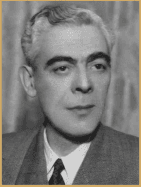

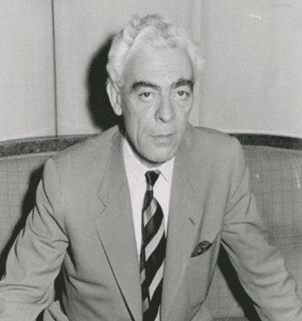
Abdullah Nuri Aker
Birth-Death | 1905, Yakova, Kosovo – 27 February 1977, Ankara | ||||||||
|---|---|---|---|---|---|---|---|---|---|
Education | Istanbul Male High School Istanbul Higher School of Economics and Commerce (1927) | ||||||||
Professional Positions | Teaching/Administration (1928-1936), Accounting Instructor at the School of Political Sciences (1941-1954), Director of Commercial Education at the Ministry of National Education (1944), Head of the Inspection Board at the Ministry of Economy and Commerce (1950) | ||||||||
Political Positions | DP Member of Parliament for İzmir (1954-1957), Minister of Economy and Commerce (1956-1957), Minister of Commerce (1957-1958), Minister of State (1958-1959), Minister of Coordination (1959-1960) | ||||||||
Yassıada Trials | 5 Years Imprisonment (1960-1962), Released by Amnesty in 1962 | ||||||||
Abdullah Nuri Aker, born in 1905 in Yakova, Kosovo, served as a teacher, accounting academic, politician, and statesman from the final years of the Ottoman Empire through the mid-period of the Republic. He graduated from Istanbul High School for Boys and in 1927 from the Istanbul Higher School of Economics and Commerce. He worked as a teacher and director in commercial schools in Eskişehir, Ankara, Samsun, and İzmir. Between 1941 and 1954, he taught accounting courses at the School of Political Sciences, held positions as Director of the Commercial Education Branch and then Director of Commercial Education at the Ministry of National Education, and served as Chairman of the Inspection Board and Acting Undersecretary at the Ministry of Economy and Commerce. He was elected as a member of parliament for İzmir from the Democrat Party (DP) in the 1954 and 1957 elections, holding posts in the Ministries of Economy and Commerce, Commerce, State, and Coordination. After the 27 May 1960 coup, he was tried on Yassıada, sentenced to five years in prison, and released in 1962 under amnesty. He authored several works in the field of accounting and commercial education, including Vesikalar ve Muhasebe (1933), Logismografı (1943), and Ticaret Muhasebesi (1946), and was among the founders of the Association of Expert Accountants and the Turkish Economic Society. Aker, who knew German, died in Ankara on 27 February 1977.
Abdullah Nuri Aker was born in 1905 in Yakova, Kosovo, to Yakup Efendi, a farmer and merchant, and Ziba Hanım. After the early death of his older brother Ömer, Abdullah received special attention from the family. In 1909, due to unrest in Rumelia, he moved to Istanbul with his mother Ziba Hanım; shortly afterward, his father Yakup Efendi passed away. He completed his primary and secondary education in Istanbul, graduating from Istanbul High School for Boys. In 1927, he graduated from the Economics Department of the Istanbul Higher School of Economics and Commerce (Ulûm-i Âliyye-i Ticâriyye Mektebi). In 1934, he adopted the surname “Aker,” derived from the family’s use of the word “Bartha,” meaning “Ak” in Yakova.
Aker began his professional life as a revenue clerk at the Istanbul Mafsuh Tramway Company. In 1928, he transitioned to teaching, serving successively as an accounting teacher and director in commercial schools in Eskişehir (March 1928), Ankara (September 1929), Samsun (October 1930), İzmir (October 1931), and again in Ankara (August 1936). In İzmir, he contributed with the support of Governor Kazım Dirik to the 1935 expansion of the Lisan and Ticaret Mektebi, originally established in 1924 in the Sait Paşa Mansion, to include a high school section. In May 1940, he joined the Reserve Officers School and completed his military service as a reserve second lieutenant, being discharged in September 1941 with the rank of lieutenant. In 1941, he began teaching “General Accounting” and “Public Accounting” at the School of Political Sciences, a position he held until his election as a member of parliament in 1954. He worked to transform the school into a faculty affiliated with Ankara University. From 1950 to 1951, he served as an instructor in the Business Economics and Accounting Chair at the Faculty of Political Sciences alongside Professor Roy G. Blakey and assistant Cumhur Ferman.
Aker also held administrative roles. In July 1942, he became Director of the Commercial Education Branch at the Ministry of National Education, and in August 1944, he was promoted to Director of Commercial Education. On 10 May 1943, he chaired a commission convened to standardize the ten-finger keyboard layout, aiming to improve the efficiency of typewriting instruction in commercial schools and establish market-wide standards. In December 1950, he became Chairman of the Inspection Board at the Ministry of Economy and Commerce, and from 1952, he served for approximately 18 months as Acting Undersecretary. He was a member and supervisor of the Turkish Cooperative Society, a founder and supervisor of the Turkish Economic Society, a founding member of the Association of Expert Accountants of Turkey, a member of the National Economy and Development Authority board, and a member of the Association of Graduates of the Higher School of Economics and Commerce. He attended the 1948 Economic Congress on behalf of the Association of Expert Accountants and Business Organizers and the Turkish Economic Institution. In 1942, he co-founded the Association of Expert Accountants with Nihat Kiver, Osman Fikret Arkun, and İsmail Otar; the association was renamed the Turkish Association of Accounting Experts (TMUD) in 1967.
Aker was elected as a member of parliament for İzmir from the Democrat Party (DP) in the elections of 2 May 1954. During the Tenth Term, he worked on the Economic and Budget Committees and served as Vice-Chair of the Budget Committee. He participated in temporary commissions on issues such as the Petroleum Law, Turkish Steel Enterprises, Cellulose Paper Mills, the Central Bank, and the Foodstuffs State Trading Organization. He served as Minister of Economy and Commerce from 30 November 1956 to 25 November 1957. He was re-elected as a deputy for İzmir in the 1957 elections. During the Eleventh Term, he held positions as Minister of Commerce (25 November 1957–4 September 1958), Acting Minister of Industry (8 February–10 May 1958), Minister of State (4 September 1958–14 December 1959), Acting Minister of Press, Publication, and Tourism (18 February–14 November 1959), and Minister of Coordination (14 December 1959–27 May 1960). He presided over Cabinet meetings in the absence of Prime Minister Adnan Menderes.
During the Tenth Term, he submitted one bill, four motions, and one written question motion, and spoke 17 times in the General Assembly, focusing on financial and economic matters. During the Eleventh Term, he submitted one motion and spoke 27 times, expressing views on the cost of living, goods unavailable in the market, ministry budgets, and legislative proposals. He emphasized the importance of agriculture for development and advocated for expanding agricultural land and modernizing agricultural equipment.
At the time of the 27 May 1960 coup, Aker was Minister of Coordination. He was tried before the High Court of Justice on Yassıada on charges related to the “Events in Ankara and Istanbul,” “Radio,” and “Abuse of Office,” all consolidated under the case of “Violation of the Constitution.” The prosecution demanded the death penalty under Article 146/1 of the Turkish Criminal Code (TCK), citing Aker’s affirmative votes on laws deemed unconstitutional. In his defense, Aker stated that he had carried out his duties conscientiously, opposed antidemocratic practices, and worked to remove repressive measures against the opposition. The court sentenced him under Article 146/3 of the TCK to five years of aggravated imprisonment, permanent disqualification from public service, one year and eight months of police supervision in İzmir, and a fine of 182 lira and 50 kuruş — one of the lightest sentences among cabinet members. He was transferred from Yassıada to Kayseri Prison. Harsh prison conditions affected his health, leading to claustrophobia and psychological issues. He was released on 18 October 1962 under Amnesty Law No. 78, published in the Official Gazette.
After his release, it took time for him to recover his health. He retired from academic and professional activities. The political ban against him was lifted by the amnesty of 22 April 1974; he declined Süleyman Demirel’s offer to return to politics. He spent the remainder of his life with his family.
He married Fatma Zübeyde Hanım on 15 September 1937; their son Önder Aker was born on 14 October 1940. Fatma Zübeyde Hanım died on 12 August 1943. On 6 September 1945, he married Fatma Mükerrem Hanım; their daughter Ayşe Tülin was born on 10 January 1949. Mükerrem Aker was the first woman member of the Ministry of National Education’s Directorate of Instruction and the General Director of Girls’ Technical Education. Önder Aker became the Chief Legal Advisor of Türk-İş and a member of the International Labour Organization (ILO); Tülin Aker Aburga became a painter and linguist. Aker, who knew German and some English, took up painting as a hobby, enjoyed swimming and wrestling, and supported Fenerbahçe Sports Club. He died on 27 February 1977 and was buried in Ankara Karşıyaka Cemetery.
Aker published five books in the field of accounting and commercial education: Vesikalar ve Muhasebe (1933), Logismografı (1943), Ticaret Muhasebesi (1946), Defter Tutma ve Malolma Hesabı (1949), and Orta Okullar İçin Ticaret İşleri (1952). He also published articles titled “Logismografı” (1943) and “Üç Hesaplı Yevmiye” (1944) in İşletme Ekonomisi ve Organizasyonu Mecmuası. His works supported standardization in accounting education and practice. He contributed to the development of İzmir Commercial High School, the founding of the Association of Expert Accountants, and the standardization of the ten-finger keyboard.
Aslan, Muhsin. “Cumhuriyet’in İlk Döneminde Muhasebe Düşüncesine Katkı Verenler: Abdullah Nuri Aker (1905-1977).” *Muhasebe ve Finans Tarihi Araştırmaları Dergisi*, no. 12 (January 2017): 206-211. https://dergipark.org.tr/tr/download/article-file/319827.
Demir, Şerif. “Abdullah Aker (1905-1977).” *Atatürk Ansiklopedisi*. Accessed May 31, 2025. https://ataturkansiklopedisi.gov.tr/detay/1074/Abdullah-Aker-(1905-1977).
Abdullah Nuri Aker
Birth-Death | 1905, Yakova, Kosovo – 27 February 1977, Ankara | ||||||||
|---|---|---|---|---|---|---|---|---|---|
Education | Istanbul Male High School Istanbul Higher School of Economics and Commerce (1927) | ||||||||
Professional Positions | Teaching/Administration (1928-1936), Accounting Instructor at the School of Political Sciences (1941-1954), Director of Commercial Education at the Ministry of National Education (1944), Head of the Inspection Board at the Ministry of Economy and Commerce (1950) | ||||||||
Political Positions | DP Member of Parliament for İzmir (1954-1957), Minister of Economy and Commerce (1956-1957), Minister of Commerce (1957-1958), Minister of State (1958-1959), Minister of Coordination (1959-1960) | ||||||||
Yassıada Trials | 5 Years Imprisonment (1960-1962), Released by Amnesty in 1962 | ||||||||
Early Life and Education
Professional Career: Teaching and Academic Work
Political Career: The Democrat Party Era
Yassıada Trials and Later Years
Personal Life
Publications and Contributions