

+2 More

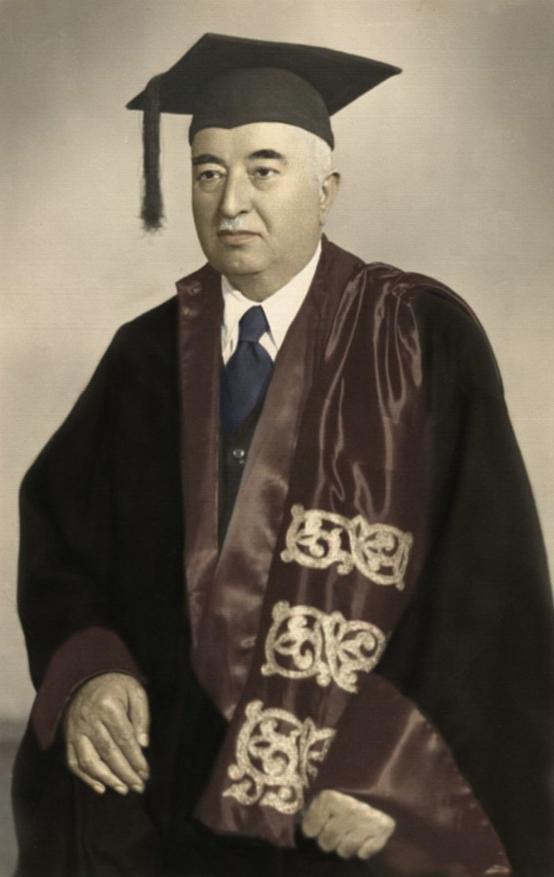
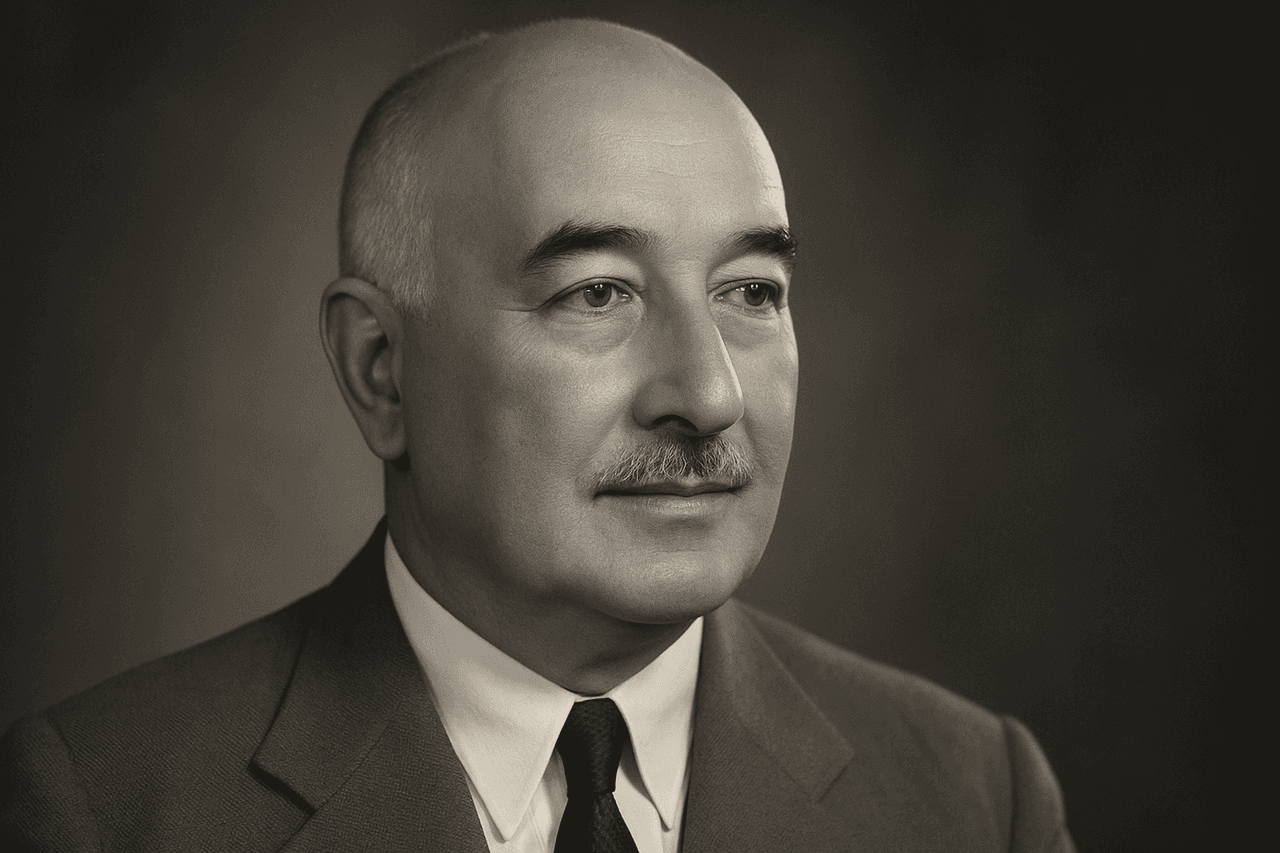
Abdülkadir Lütfi Noyan
Birth-Death | 6 March 1886 Sivas, 5 September 1977 Ankara | ||||||||
|---|---|---|---|---|---|---|---|---|---|
Education | Mekteb-i Tıbbiye-i Şahane (1910 second cohort) Gülhane Tatbikat Mektebi | ||||||||
Military Duties | Tripolitania, Balkan Wars, First World War, Turkish War of Independence; Çanakkale, Iraq, Ankara Military Medical Service; major general (1943) | ||||||||
Academic Positions | Chief assistant of Gülhane internal medicine, founding dean of Ankara Faculty of Medicine (1945–1948), ordinary professor of internal medicine (1947–1952) | ||||||||
Contributions | Abdülkadir method of disinfection, founding of Ankara Faculty of Medicine, 144 articles in Turkish and 34 in foreign languages, 20+ medical books | ||||||||
Award(s) | Silver Merit Medal Silver Honor Medal Red-Striped Independence Medal Iron Cross | ||||||||
Abdülkadir Lütfi Noyan, born on 6 March 1886 in Sivas, practiced in medicine, military health services, and academia from the final years of the Ottoman Empire through the mid-period of the Republic. He received his military secondary education in Sivas, Elazığ, and Istanbul; graduating in 1910 from the Mekteb-i Tıbbiye-i Şahane as a physician captain. He fought against epidemics such as cholera, typhus, and plague during the Tripolitania War, the Balkan Wars, World War I, and the War of Independence, and developed a disinfection method known as the “Abdülkadir Method.”
He served as chief assistant in internal medicine and infectious diseases at the Gülhane Military Medical Academy; promoted to professor in 1927, brigadier general in 1941, and major general in 1943. He was appointed founding dean of Ankara University Faculty of Medicine upon its establishment in 1945, served as dean until 1948, and continued as ordinary professor in the infectious diseases clinic until 1952. He published articles in German, French, and English, and authored more than twenty medical books.
He received the Silver Merit Medal, the German Iron Cross War Medal, the Red-Striped Independence Medal, and the Silver Honor Medal. He died in Ankara on 5 September 1977. His memory is preserved through a lecture hall at Ankara Faculty of Medicine and a street in Kadıköy, Istanbul.
Abdülkadir Lütfi Noyan was born on 6 March 1886 in the Ece Neighborhood of Sivas, son of Yarbay Ömer Lütfi Bey. He received his primary education at İbal Hafız Mektebi in Sivas. He completed his secondary education at the military secondary schools in Sivas, Elazığ, and Istanbul Kocamustafapaşa, and finished his high school education at the high school section of Kocamustafapaşa Military Secondary School. In 1900 he transferred to the Kuleli Military Medical Preparatory School. He entered the Mekteb-i Tıbbiye-i Şahane in Haydarpaşa and graduated in 1910 as a physician captain, ranking second in his class, with diploma number 1364. In 1911 he completed his internship at Gülhane Practical School and began his assistantship in the internal medicine clinic. A year later he was appointed chief assistant in the infectious diseases service.
In 1911 he worked to contain a cholera outbreak among reserve troops at the Serviburnu Protection Hospital. He served five months with the Berat Reserve Regiment in Albania during the Tripolitania War (Berat, Ergiri, Avlonya, Delvine). During the Balkan Wars he was appointed Deputy Chief Physician of the 16th Corps; after the unit was disbanded, he became assistant to Professor Dr. Asaf Derviş Bey, the Stationary Chief Physician in Çerkezköy. The Balkan Wars resulted in heavy losses due to inadequate medical organization and epidemics such as cholera.
On 6 November 1912, Abdülkadir Bey was assigned to Yeşilköy Emraz-ı Sâriye Hospital, where the Rum Mektebi was converted into a hospital and tent hospitals were established to treat wounded soldiers from the front. On 2 October 1913, as bacteriologist of the X Corps, he was deployed to Gelibolu Military Hospital to combat a cholera outbreak among troops transferred from Dimetoka to Gelibolu. In 1914 he returned to Gülhane Hospital and resumed his duties as chief assistant in internal medicine.
During World War I, on 21 July 1914 he inspected the health conditions of the Black Sea Strait Fortified Positions units. On 24 August 1914 he was appointed Medical Advisor to the First Army. He combated cholera and typhus in Edirne (2 September 1914), humma racia and spotted typhus in Ayastefanos and Çekmece (13 November 1914), spotted typhus in Konya and Sille (27 November 1914), and typhus among labor battalions in Kandıra (3 March 1915). He brought the typhus epidemic under control using a field oven disinfection method he developed, which became known as the “Abdülkadir Method.”
On 17 March 1915 he inspected the health conditions of the III Corps, XV Corps, and Fifth Division at the Çanakkale Fortified Positions. On 12 May 1915 he went to the Çanakkale Front as Medical Advisor and Acting Chief Physician of the First Army, established his headquarters at Kocatepe, and served as assistant to Professor Dr. G. Mayer.
On 18 November 1915 he was appointed Chief Physician and Acting Chief Physician of the VI Army Headquarters on the Iraqi Front; on 2 May 1916 he was assigned to the VI Army Stationary Chief Physician’s Office; and in 1918 he became Chief of Medical Services for the VI Army in Mosul.
After the Armistice of Mudros, in November 1918 he arrived in Nusaybin with the army headquarters. In 1919 he returned to Istanbul with Army Commander Ali İhsan Paşa; he witnessed Paşa’s arrest and was detained for 57 days in the Bekirağa Battalion. Upon release, he was appointed head of the infectious diseases department at Haydarpaşa Military Hospital, and served on the War History Commission of the Ministry of War and during the plague outbreak at Selimiye Barracks. In 1920 he was assigned as assistant to the Military Medical and Internal Medicine Clinics at Gülhane.
At the invitation of the Ankara Government, he crossed to Anatolia with Gülhane faculty members Mim Kemal, Nazım Şakir, and Murat İbrahim. He traveled by the Gülnihal Steamship to İnebolu, then on foot to Kastamonu, and on 10 August 1921 arrived at Ankara Cebeci Central Hospital by horse-drawn carriage. During preparations for the Battle of Sakarya, he was appointed Chief Physician of the 3rd Group under Yusuf İzzet Paşa in Polatlı and fought the typhus epidemic among troops. He returned to Ankara on 18 September 1921; following the abolition of the Ankara Hospitals Stationary Inspectorate, he was appointed Chief Physician of the Ankara Command. In Ankara he ensured the publication of the journal Ceride-i Tıbbiyye-i Askeriye and presided over the “Ankara Hospitals Medical Assembly,” held on 17 October 1921 to facilitate information exchange among physicians.
In 1922 he returned to his duties at Gülhane. In 1927 he was appointed professor of the internal medicine clinic, vacated by the appointment of Prof. Dr. Tevfik Sağlam as Chief of Army Health. That same year he was promoted to lieutenant colonel, in 1931 to colonel, on 20 August 1941 to brigadier general, and on 30 August 1943 to major general. On 28 September 1939 he was appointed Specialist of the First Army Health Service; in 1941, Specialist of the First Army Inspectorate Health Service; and in 1943, Director of the Ministry of National Defense Health Department.
He played a key role in the establishment of Ankara University Faculty of Medicine. On 29 December 1944, at the directive of President İsmet İnönü, he prepared a report on the faculty’s founding. The faculty was officially established by Law No. 4761 on 20 June 1945. On 7 July 1945 he resigned from the military and became founding dean of Ankara Faculty of Medicine and ordinary professor of the internal medicine clinic. He served as dean from 1945 to 1948. On 18 July 1947 he was elected ordinary professor of the infectious diseases clinic and continued in this role until his retirement in 1952.
Abdülkadir Noyan was fluent in German and French; he published 144 articles in Turkish, 18 in German, 11 in French, and 5 in English. His published books include Kıtaatı Askeriyede Su Tedariki (1912), Askerî Hıfzıssıhha (1926), İstanbul’da Akciğer Veremine Ait Müşahede ve Tetkikat (1927), Gülhane Klinik Dersleri (1930–1940), Akciğer Veremi Tedavisi (1934), Hâd Asıl Romatizma (1935), Esasi Hipertansiyon (1939), Ordu Subaylarına Sıtma Hastalığından Korunma Öğütleri (1941), İç Hastalıklar Ders Kitabı (1943), Şişmanlık ve Zayıflık (1947), İntani ve Salgın Hastalıklara Karşı Tıbbın Eski ve Yeni Durumu (1947), Hepatitis Epidemica (1950), Türkiye’de Sıtmanın Coğrafi Durumu (1951), Tedavi Yıllığı 1954 (1954), Son Harplerde Salgın Hastalıklarla Savaşlarım (1956), Karaciğer Sirozunun Diyetle Tedavisi (1957), İlaçla Tedavi Sanatı (1959), Ankara Tıp Fakültesi Kuruluş Tarihçesi (1959), Memleketimizde Salgın Hastalıklar (1963), and Klinik Açış Dersleri (1966). He also published a book of poetry titled Gönülden Damlalar-Şiirler (1960). In Son Harplerde Salgın Hastalıklarla Savaşlarım, he summarized his struggle against epidemics as follows:
“I became a soldier in the war against deadly epidemics such as typhus, typhoid, humma racia, cholera, dysentery, malaria, and plague that emerged in our army and homeland. I witnessed tens of thousands of cholera and dysentery cases, thousands of malaria and typhus cases. Sometimes I had perfect equipment and laboratories at my disposal… At other times I confronted the greatest epidemics without any resources. I worked to invent means to combat them.”
For his services, he received the Silver Merit Medal, the German Iron Cross War Medal, the Red-Striped Independence Medal, and the Silver Honor Medal. He died in Ankara on 5 September 1977; his funeral was held with ceremonies at Gülhane Military Medical Academy and Ankara Faculty of Medicine, and he was buried at Cebeci Military Cemetery. To honor his memory, a lecture hall at Ankara Faculty of Medicine and a street in Kadıköy, Istanbul, were named after him. Abdülkadir Noyan, elder brother of General Kurtcebe Noyan, was the father of three daughters.
Abdülkadir Noyan Website. "Hakkında." Accessed May 30, 2025. https://www.abdulkadirnoyan.com/.
Ankara Üniversitesi Faculty of Medicine. "Ord. Prof. Dr. Abdülkadir Noyan." Ankara University Faculty of Medicine. Accessed May 30, 2025. https://www.medicine.ankara.edu.tr/ord-prof-dr-abdulkadir-noyan/.
Karayaman, Mehmet. “Abdülkadir Noyan (1886-1977).” *Atatürk Ansiklopedisi*. Accessed May 30, 2025. https://ataturkansiklopedisi.gov.tr/detay/92/Abd%C3%BClkadir-Noyan-(1886-1977).
Abdülkadir Lütfi Noyan
Birth-Death | 6 March 1886 Sivas, 5 September 1977 Ankara | ||||||||
|---|---|---|---|---|---|---|---|---|---|
Education | Mekteb-i Tıbbiye-i Şahane (1910 second cohort) Gülhane Tatbikat Mektebi | ||||||||
Military Duties | Tripolitania, Balkan Wars, First World War, Turkish War of Independence; Çanakkale, Iraq, Ankara Military Medical Service; major general (1943) | ||||||||
Academic Positions | Chief assistant of Gülhane internal medicine, founding dean of Ankara Faculty of Medicine (1945–1948), ordinary professor of internal medicine (1947–1952) | ||||||||
Contributions | Abdülkadir method of disinfection, founding of Ankara Faculty of Medicine, 144 articles in Turkish and 34 in foreign languages, 20+ medical books | ||||||||
Award(s) | Silver Merit Medal Silver Honor Medal Red-Striped Independence Medal Iron Cross | ||||||||
No Discussion Added Yet
Start discussion for "Abdülkadir Lütfi Noyan" article
Early Life and Education
Military and Health Services: Ottoman Period
War of Independence and Move to Ankara
Academic and Military Career: Republican Period
Scientific Works and Publications
Awards and Commemoration