


This article was automatically translated from the original Turkish version.

One of the world’s influential technology leaders, OpenAI CEO water Sam Altman, announced in a speech in 2024 September that “we have entered the Age of Intelligence.” This statement heralded a new era in which artificial intelligence would provide solutions to humanity’s most pressing challenges. According to Altman, intelligence is now more accessible than ever, and this knowledge can be used to solve the most complex problems people face, thanks to artificial intelligence.
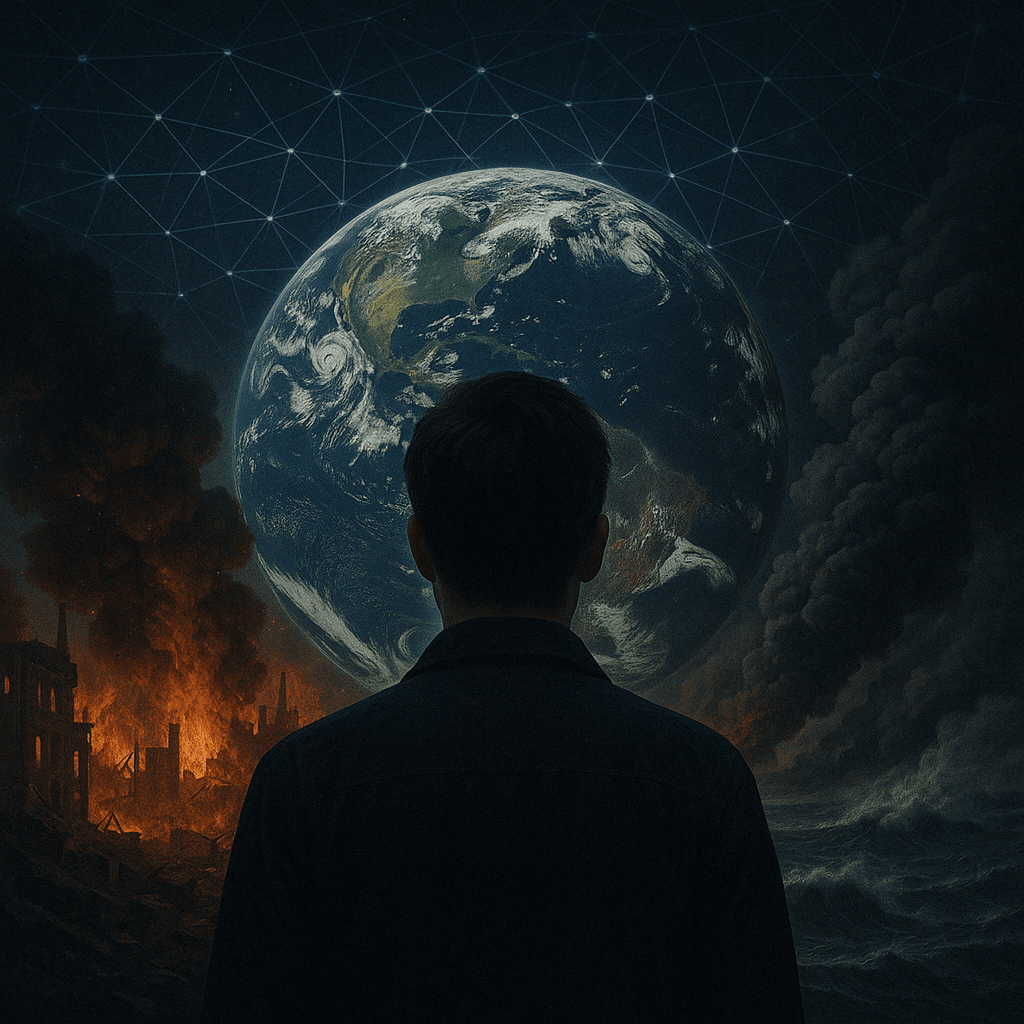
An image representing the Age of Chaos (Image generated by artificial intelligence.)
The combination of greater data availability, more advanced algorithms, and deeper learning techniques may mark the beginning of a new era for humanity. This vision has received strong support in the technology world. Global institutions such as Google, Amazon such as, the United Nations, and the World Economic Forum have reinforced Altman’s optimistic vision by affirming that artificial intelligence and knowledge can solve problems. On the other hand, these claims stand in stark contrast to the reality of the current world. The so-called Age of Intelligence often gives the impression of an “Age of Conflict and Chaos.”
Altman’s statement represents a technological utopia in which artificial intelligence can make the world a better place. He argues that deep learning, by processing vast datasets, can offer solutions surpassing human cognitive capacity. For instance, AI engineers Tshilidzi Marwala and Monica Lagazio argue that global conflicts and economic crises can be predicted and even prevented using artificial intelligence. Google has published reports on how artificial intelligence can be used to combat climate change.
But how much of this idea reflects reality? Does the abundance and accessibility of information mean we can use it correctly and ethically? The current world order cannot answer these questions affirmatively. Humanity typically uses the information at its disposal not to produce rational and moral solutions, but to deepen conflicts, sustain power and prioritize economic interests.
A striking example of what happens when information is used without ethical boundaries is seen in Israel’s genocide in Gaza. Human rights organizations report that Israel uses AI-based tools such as “Lavender” and “The Gospel” to identify target and classify individuals as potential threats by analyzing their digital foot traces. These systems monitor not only people’s social connections but also their behaviors and digital interactions. The accuracy and ethics of the data used in this process have sparked serious debate.
According to Human Rights Watch, these systems often make erroneous predictions and target innocent civilians. It has been reported that Israel’s algorithms have placed civilians directly under risk and, in some cases, labeled innocent people as “suspicious” merely because they changed their telephone numbers.
Another example is the Russia-Ukraine war. This conflict serves as a important illustration of how information and technology can produce dangerous outcomes when used outside ethical frameworks. Ukraine’s use of ATACMS (Army Tactical Missile Systems), long range ballistic missiles provided by USA, to strike Russian territory has expanded the scope of the war.
In response to these attacks, Russian President Vladimir Putin updated the country’s nuclear doctrine. The nuclear doctrine is another term for the official policy that determines when and how a country may use nuclear weapons. Russia’s new doctrine legitimizes the use of nuclear weapons not only in response to nuclear attacks but also against conventional (non-nuclear) attacks that threaten its sovereignty. Such a change demonstrates that technological superiority can lead not merely to deterrence but to increased retaliation and destruction.
Russia’s approach is evidence of how technology, when it transcends ethical boundaries, can generate major threats. Uncontrolled use of Modern weapons and information does not merely deepen conflicts; it also triggers a cycle of destruction that endangers global security.
In the most recent U.S. presidential election, conspiracy theories spread on social media platforms, along with misinformation and polarizing rhetoric, have driven millions of voters not by evidence but by emotional responses such as fear and anger. In this process, AI-powered algorithms manipulate user behavior to amplify the reach of fake news, turning information from a “guide to reality” into a propaganda tool. At this point, questioning Altman’s vision of the Age of Intelligence becomes essential.
Climate change is one of the clearest crises exposing the insufficiency of information and technology on behalf of humanity. Over the past thirty years, humanity has likely produced and shared more information about climate change than at any other time in history. Since 1990, the Intergovernmental Panel on Climate Change (IPCC) has published six comprehensive reports detailing the causes, effects, and potential solutions to global warming. Yet this vast body of knowledge has failed to halt yet climate change.
Despite years of scientific calls to reduce Carbon emissions or limit global warming to 1.5°C, we continue to move further away from these goals. Today predicts that even a 2°C increase may occur by the end of this decade. All this information and data has become less a “light at the end of the tunnel” and more a “map of dead ends,” revealing how humanity can remain passive—or worse, ignore—knowledge even when it is abundant.
As Luke Munn from The Conversation also supports, the real face of this so-called Age of Intelligence clearly reveals that information and technology are inadequate to solve humanity’s core problems. Our challenges do not stem merely from a lack of knowledge but are fueled by human-specific irrational tendencies, and reactions based on anger and fear. For artificial intelligence and technology to offer real solutions, ethical values, the empathy sense, and collective responsibility must take center stage. Yet in the current system, information is often manipulated to serve the interests of those in power.
The real question is this: Can humanity learn to use the opportunities of the Information Age for peace, justice and sustainability? Or will this era become a harbinger of greater chaos and destruction?
Whatever the answer, the future of this era will be determined by how information is used and which ethical values accompany it. Time is running out to transform the Information Age into a redemptive era, and this transformation depends not only on technology but on humanity itself.
Human Rights Watch. “Questions and Answers: The Israeli Military’s Use of Digital Tools in Gaza.” Human Rights Watch. Accessed April 21, 2025. https://www.hrw.org/news/2024/09/10/questions-and-answers-israeli-militarys-use-digital-tools-gaza
TRT World. “Putin: Ballistic Missile Attack on Russia Will Trigger Nuclear Retaliation.” TRT World. Accessed April 21, 2025. https://www.trtworld.com/europe/putin-ballistic-missile-attack-on-russia-will-trigger-nuclear-retaliation-18233825
The Conversation. "Friday Essay: It’s the Intelligence Age, Say Tech Titans – but Information Will Not Save Us." Accessed April 21, 2025. https://theconversation.com/friday-essay-its-the-intelligence-age-say-tech-titans-but-information-will-not-save-us-243158
Is technology truly a savior?
When information lacks ethical frameworks
The inadequacy of information