


This article was automatically translated from the original Turkish version.
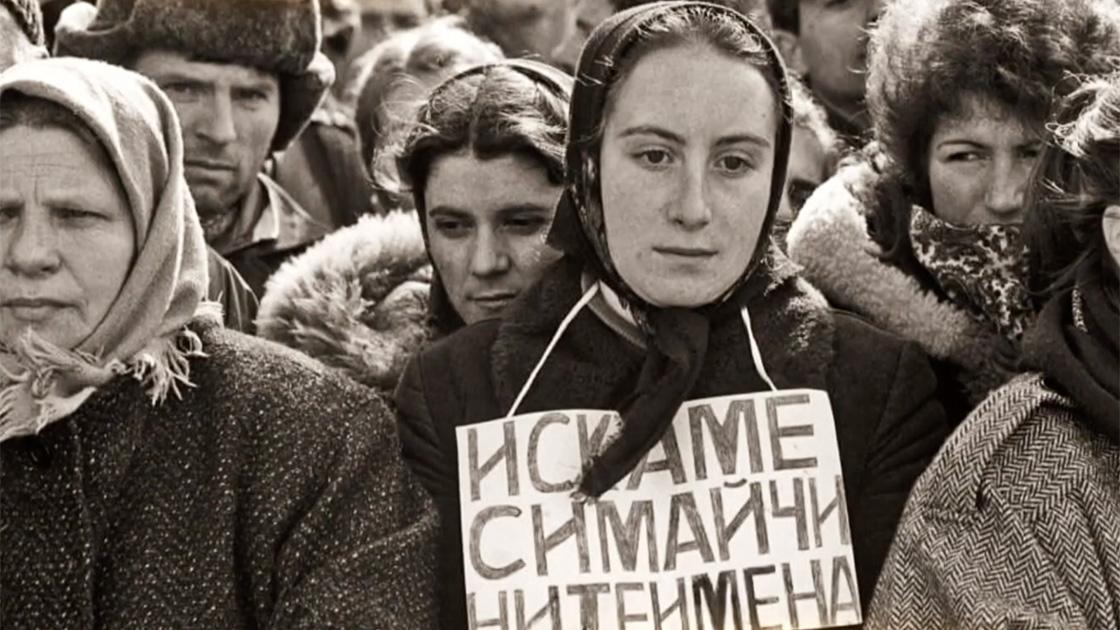
1989 Forced Migration of Turks in Bulgaria
Start Date | 24 May 1989 | ||||||||
|---|---|---|---|---|---|---|---|---|---|
Duration of Migration | June – September 1989 (approximately 3 months) | ||||||||
Number of Migrants | 345960 | ||||||||
Main Route | From Bulgaria to Türkiye; through the Kapıkule, Dereköy, Hamzabeyli, Pazarkule border crossings | ||||||||
Main Settlement Cities | Edirne, Tekirdağ, Kırklareli, Bursa, İstanbul, Eskişehir, İzmir, Manisa | ||||||||
Forced Migration of Turks in Bulgaria is the event in which the totalitarian communist regime in Bulgaria reached the peak of its systematic assimilation policies targeting the Turkish minority, forcing hundreds of thousands of people to migrate en masse to Türkiye, their ancestral homeland. During this process, over 300,000 Turks from Bulgaria left their country to preserve their ethnic, cultural, and religious identity. This migration had profound social, political, and economic consequences for both the individuals who migrated and the two countries involved.
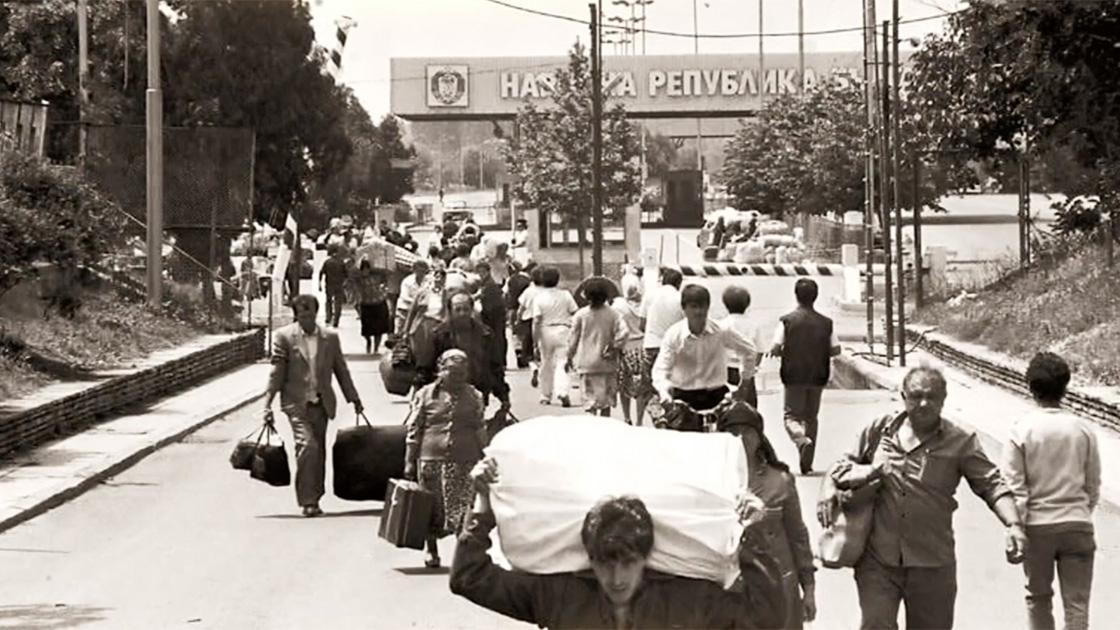
Turks Who Migrated from Bulgaria to Türkiye (AA)
The 1989 Forced Migration of Turks in Bulgaria began with a television address by Todor Zhivkov, General Secretary of the Bulgarian Communist Party, on 29 May 1989. In this speech, he announced that Turks living in Bulgaria would be permitted to leave the country. In the following days, particularly between June and September 1989, hundreds of thousands of people migrated en masse to Türkiye.
This migration emerged as a response to the systematic assimilation policies aimed at Bulgarizing the Turkish population in Bulgaria and culminated in approximately 345,000 people seeking refuge in Türkiye within three months. The event is recognized as one of the largest forced migrations based on ethnicity in recent European history.
Documentary on the 1989 Migration (TRT Avaz)
After gaining independence from the Ottoman Empire through the 1878 Treaty of Berlin, Bulgaria pursued a state strategy centered on minority policies aimed at creating a homogeneous nation-state. Turkish and Muslim minorities were directly affected by these policies. Following the establishment of the communist regime after World War II, pressure on minorities intensified, leading to mass migrations to Türkiye in 1950–1951 and 1968.
In 1984, a campaign called the “Name Change Process” (Vızroditelen Protses) forced Turks in Bulgaria to adopt Bulgarian names. Speaking Turkish, receiving Turkish-language education, practicing religious rituals, wearing traditional clothing, and even performing holiday customs such as baking dough pastries were all banned. Those who resisted were exiled to centers such as the Belene Internment Camp. The repression resulting from these assimilation policies triggered resistance movements across various segments of society, becoming the primary catalyst for the migration.
In May 1989, protests began in regions such as Deliorman and Kırcaali; during these demonstrations, deaths occurred and hundreds were arrested. On 29 May 1989, Todor Zhivkov announced on Bulgarian television that those wishing to leave the country would be permitted to do so. This announcement formally initiated the forced migration known as the “Great Excursion” (Golyamata Ekskurziya).
One of the most prominent figures associated with the 1989 forced migration of Turks in Bulgaria is weightlifter Naim Süleymanoğlu. Born in 1967 in Mestanlı, a village under Kırcaali, Süleymanoğlu became a symbol of resistance against Bulgaria’s assimilation policies.
Under the “Name Change” policy implemented between 1984 and 1989, his name was forcibly altered to “Naum Shalamanov,” part of an attempt to integrate him into Bulgarian identity. In 1986, during the World Weightlifting Championship held in Australia, Süleymanoğlu sought asylum in Türkiye. This act became a pivotal moment, both symbolically and practically, for the Turkish community in Bulgaria. Although the Bulgarian government attempted to portray the asylum as a Turkish-organized kidnapping operation, Turkish public opinion widely recognized that Süleymanoğlu had defected of his own free will.
Süleymanoğlu’s move to Türkiye was not merely a trigger for the migration; it also served as a psychological cornerstone of the Turkish community’s resistance to assimilation. His gold medal win at the 1988 Seoul Olympics under the Turkish flag and his subsequent speech at the United Nations drew international attention to human rights violations in Bulgaria. In his address, he stated: “You may lose your home, your job, even your loved ones, but the last thing a person can lose in life is their identity.”
Trailer of the Film on Naim Süleymanoğlu’s Life (CGV MARS DAĞITIM)
The Turkish community in Bulgaria referred to him with titles such as “The Key to Kapıkule,” “The Big Little Giant,” and “Pocket Hercules,” and viewed his defection as an act of courage that opened the spiritual gateway to migration. Süleymanoğlu’s success became a major source of inspiration, particularly for younger generations, increased interest in weightlifting, and strengthened the national identity of the migrant community.
Having passed away in 2017, Süleymanoğlu continues to live in the memory of the Turks of Bulgaria through a statue erected in his honor in Kırklareli and annual commemorative events. His legacy plays a powerful symbolic role in remembering and narrating the 1989 migration.
By June 1989, the influx of migrants from Bulgaria to Türkiye had reached extraordinary proportions. Thousands of people crossed into Türkiye daily through border checkpoints, primarily at Kapıkule, as well as Dereköy, Hamzabeyli, and Pazarkule. The majority of migrants reached the border by bus, tractor trailers, or on foot; after being held temporarily, they were admitted into Türkiye. The Republic of Türkiye established temporary customs and registration centers to expedite border crossings.
According to official records, a total of 345,960 people entered Türkiye between 1 June and 22 August 1989. Over 85 percent of those who arrived were of Turkish origin. A significant portion of the migrants were settled in provinces such as Edirne, Tekirdağ, Kırklareli, Bursa, and Istanbul; the Thrace Region served as the primary reception area. Cities such as Eskişehir, İzmir, and Manisa also received large numbers of migrants. In particular, the press in Eskişehir extensively covered the integration challenges faced by migrants and the public support provided to them.
This massive influx of migrants necessitated rapid measures in Türkiye, particularly regarding housing, healthcare, education, and the labor market. Large-capacity tent cities and guesthouses were constructed, and basic needs were met through cooperation with local authorities.
Following Todor Zhivkov’s removal from office on 10 November 1989, the new Bulgarian government issued appeals for return and extended the validity of passports. As a result, approximately 133,000 people returned to Bulgaria by mid-1990. However, many of these returnees soon realized that conditions in Bulgaria had not improved, triggering a second wave of migration back to Türkiye.
Field research has found that migrants described the migration process as a “deportation” or “rootless displacement.” Oral history studies have documented a range of traumatic experiences, from pressure to change names to children being punished at school for speaking Turkish.
The Republic of Türkiye accepted the arriving migrants as “co-ethnics” and implemented supportive policies in the areas of housing, healthcare, education, and employment. Some migrants entered the labor market, while others continued traditional occupations such as agriculture. Civil society organizations such as BAL-GÖÇ played an active role during this period.
After Todor Zhivkov’s removal and the regime change in 1989, Bulgaria developed new minority policies. In 2012, the Bulgarian Parliament formally condemned the policies implemented against Turks between 1984 and 1989. Returnees organized into structured groups and actively participated in politics through parties such as the Movement for Rights and Freedoms (MRF).
The 1989 forced migration of Turks from Bulgaria is a historical example of an ethnic group’s struggle to preserve its cultural identity and the international repercussions of state policies. The event created multidimensional sociopolitical and demographic impacts for both Bulgaria and Türkiye.
Alişoğlu, Batuhan, and Mehmet Kayıran. “Eskişehir Basınında 1989 Bulgaristan Göçü.” *ABAD: Anadolu ve Balkan Araştırmaları Dergisi* 4, no. 7 (2021): 17–35.https://dergipark.org.tr/tr/pub/abad/issue/62420/822374
Anadolu Ajansı. "Bulgaristan Türklerinin zorunlu göçünün üzerinden 35 yıl geçti." Accessed May 23, 2025.
CGV MARS DAĞITIM. "Cep Herkülü: Naim Süleymanoğlu - Fragman (22 Kasım'da Sinemalarda)." CGV MARS DAĞITIM Youtube Kanalı. Accessed May 23, 2025.https://www.youtube.com/watch?v=0GSCVxkl2Ic
Demirhan, Hasan. "Sözlü Anlatımlarla 1984-1989 Yılları Arasında Bulgaristan’da Türklere Uygulanan Asimilasyon Politikaları." RumeliDE Dil ve Edebiyat Araştırmaları Dergisi, no. 16 (2019): 274–284.
Dere, İlker, and Kübra Akkoç. “Soya Dönüşün Gölgesinde 1989 Bulgaristan Göçmenlerinin Anılarında Naim Süleymanoğlu.” *Genel Türk Tarihi Araştırmaları Dergisi* 7, no. 13 (2025): 179–194.https://dergipark.org.tr/en/download/article-file/4333840
Duygu, Göksu. "1989 Bulgaristan Türklerinin Göçü ve Bu Göçün Trakya Bölgesine Olan Etkileri." Uluslararası İlişkiler Çalışmaları Dergisi, no. 7 (2021): 60–73. 1989.
Gündüz, Ali Osman. Bulgaristan'dan Türkiye'ye Türk Göçü (1989 Örneği). Kırklareli Üniversitesi Balkan Araştırmaları Uygulama ve Araştırma Merkezi. Accessed May 23, 2025.http://79.123.216.36/xmlui/bitstream/handle/20.500.11857/225/2013-.html.pdf?sequence=1&isAllowed=y
TRT Arşiv. "Bulgaristan'dan Göç - 1989." TRT Archive YouTube Channel. Accessed May 23, 2025.https://www.youtube.com/watch?v=pVLEy0B0cHg
Taşpınar, Tamer. *Naim Cep Herkülü*. Ankara: Türkiye Halter Federasyonu, 2019.
Şahinler, Duygu. “Türk Kültüründe Ritüelistik Bir Yemek Olarak Bauırsaq, Pişi, Pesmet, Lokma, Kıygaşa.” *Uluslararası Uygur Araştırmaları Dergisi*, no. 2022/20 (2022): 1–18.https://dergipark.org.tr/tr/download/article-file/2685991

1989 Forced Migration of Turks in Bulgaria
Start Date | 24 May 1989 | ||||||||
|---|---|---|---|---|---|---|---|---|---|
Duration of Migration | June – September 1989 (approximately 3 months) | ||||||||
Number of Migrants | 345960 | ||||||||
Main Route | From Bulgaria to Türkiye; through the Kapıkule, Dereköy, Hamzabeyli, Pazarkule border crossings | ||||||||
Main Settlement Cities | Edirne, Tekirdağ, Kırklareli, Bursa, İstanbul, Eskişehir, İzmir, Manisa | ||||||||
No Discussion Added Yet
Start discussion for "1989 Forced Migration of Turks in Bulgaria" article
Background of the Forced Migration
Assimilation Policies (1984–1989)
Events Triggering the Forced Migration
Symbol of Assimilation Resistance: Naim Süleymanoğlu
The Migration Process and Scale
Testimonies
Türkiye’s Policies and Integration Process
Developments in Bulgaria and After the Migration