KURE Kids Header Line
badge icon

This content was originally written in Turkish for children and is automatically translated into English using artificial intelligence.

article-image

Why Does Water Evaporate at Every Temperature?

Last Updated: 12/02/2025

Water can evaporate not only when it reaches its boiling point but also at lower temperatures. This means it is not necessary for water to reach 100 °C. When you leave a glass of water on a windowsill during summer you will notice its level decreases. This is evaporation! Water can evaporate at any temperature because not all water molecules have the same speed (kinetic energy).
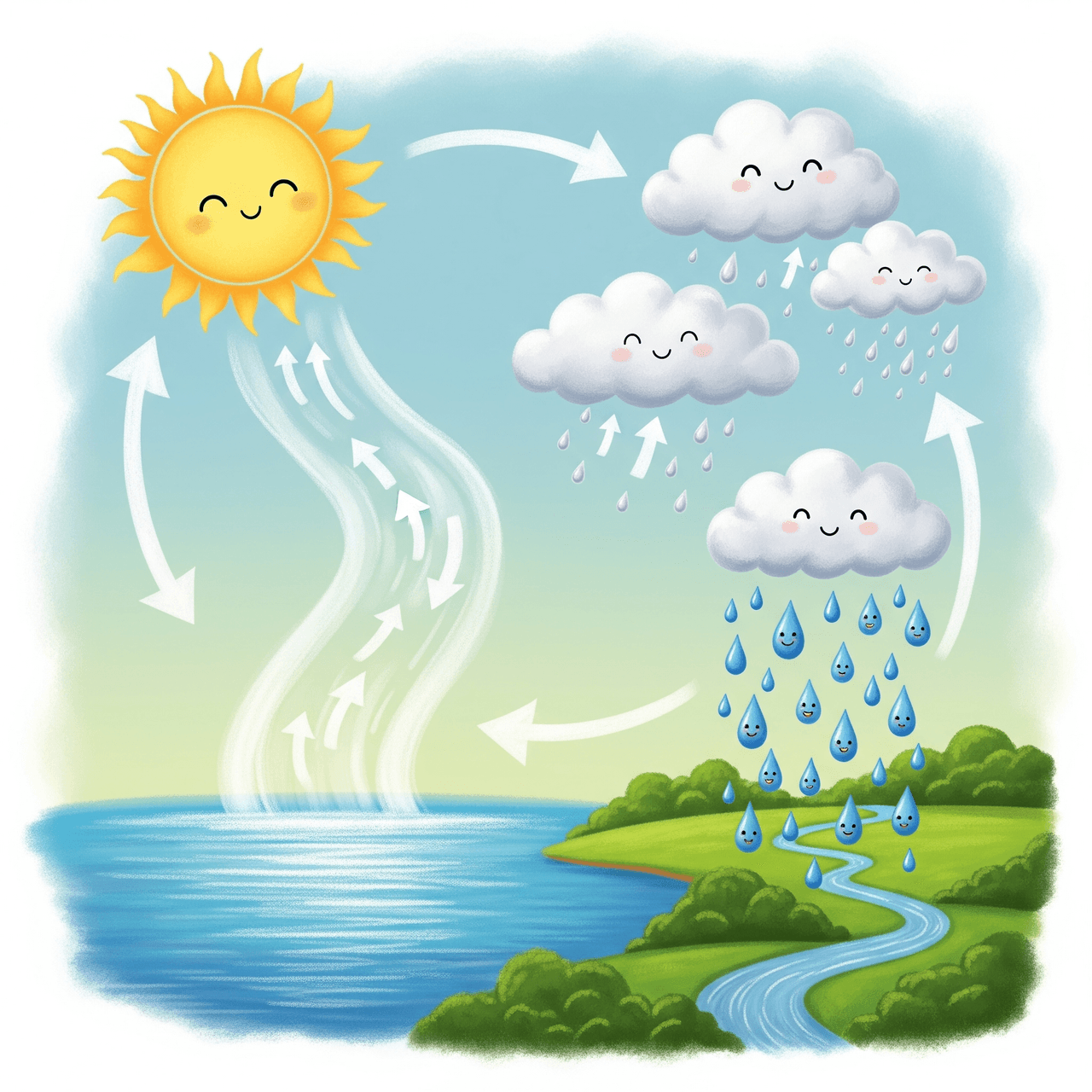

Water Cycle and Evaporation (Generated by Artificial Intelligence.)


What Is Evaporation?

Evaporation is the process by which a liquid turns into a gas. Clothes drying in the sun or puddles disappearing after rain demonstrate how water evaporates and mixes with the atmosphere. Water does not vanish; it transforms into a gas called water vapor.
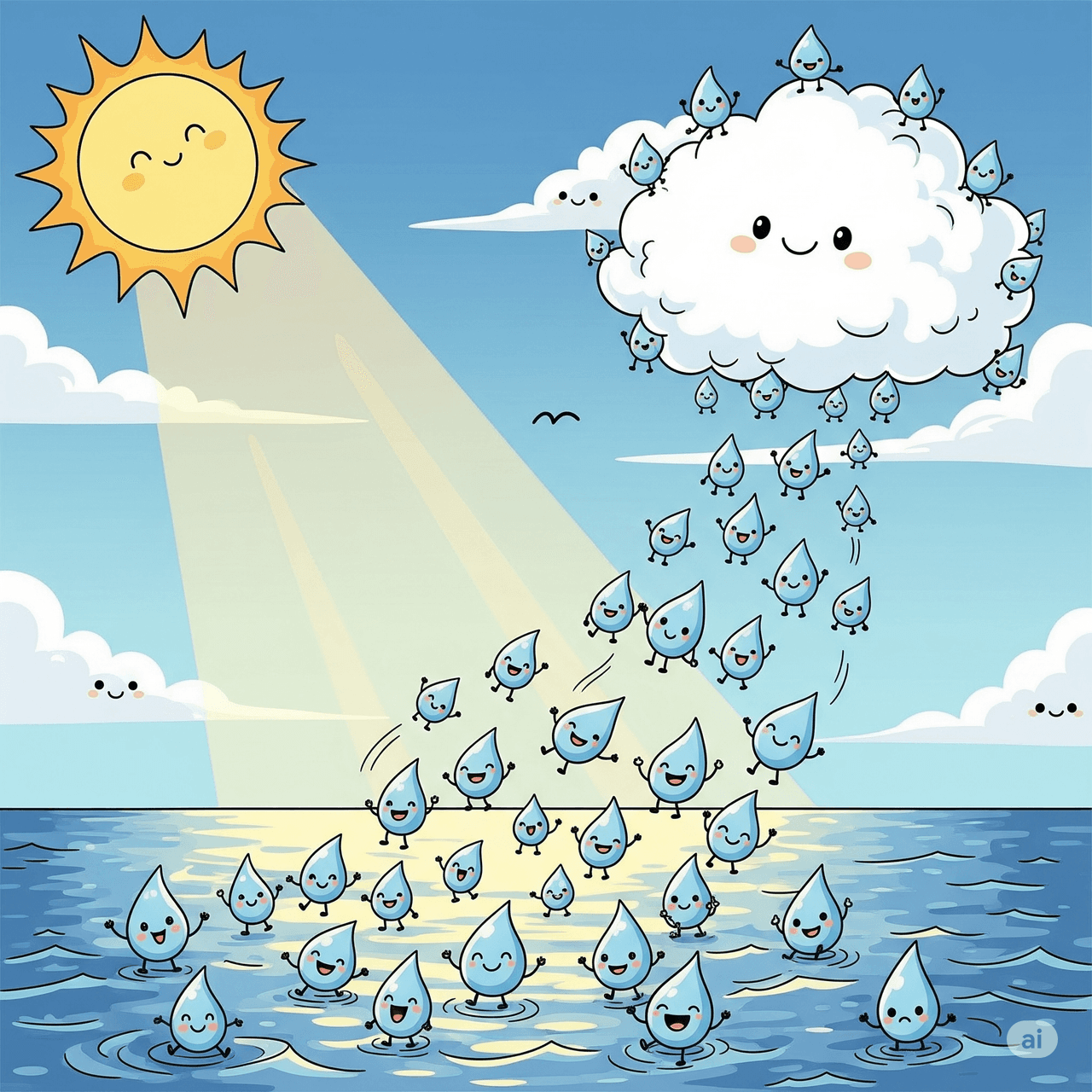

Water Droplets Evaporating from the Ocean Surface Due to Solar Energy (Generated by Artificial Intelligence.)


Role in the Water Cycle

Evaporation is one of the three main steps in the Earth’s water cycle: evaporation condensation and precipitation. Approximately 90 percent of the moisture in the atmosphere originates from evaporation; the remaining 10 percent comes from plant transpiration.


Oceans are the largest source of evaporation. Covering more than 70 percent of the Earth’s surface oceans serve as the primary reservoir of atmospheric water. Interestingly during evaporation only water rises while salt remains behind. This is why rainwater returning to the Earth’s surface is fresh.


Transitions Between States of Matter

Evaporation is the transition from one of the three states of matter liquid to gas. Similarly:


When water cools sufficiently it freezes and becomes a solid (ice).


When ice warms it melts and returns to the liquid state.


When liquid water is heated its molecules move faster and eventually transform into a gas that is water vapor.


These changes occur due to variations in molecular motion as temperature increases or decreases.
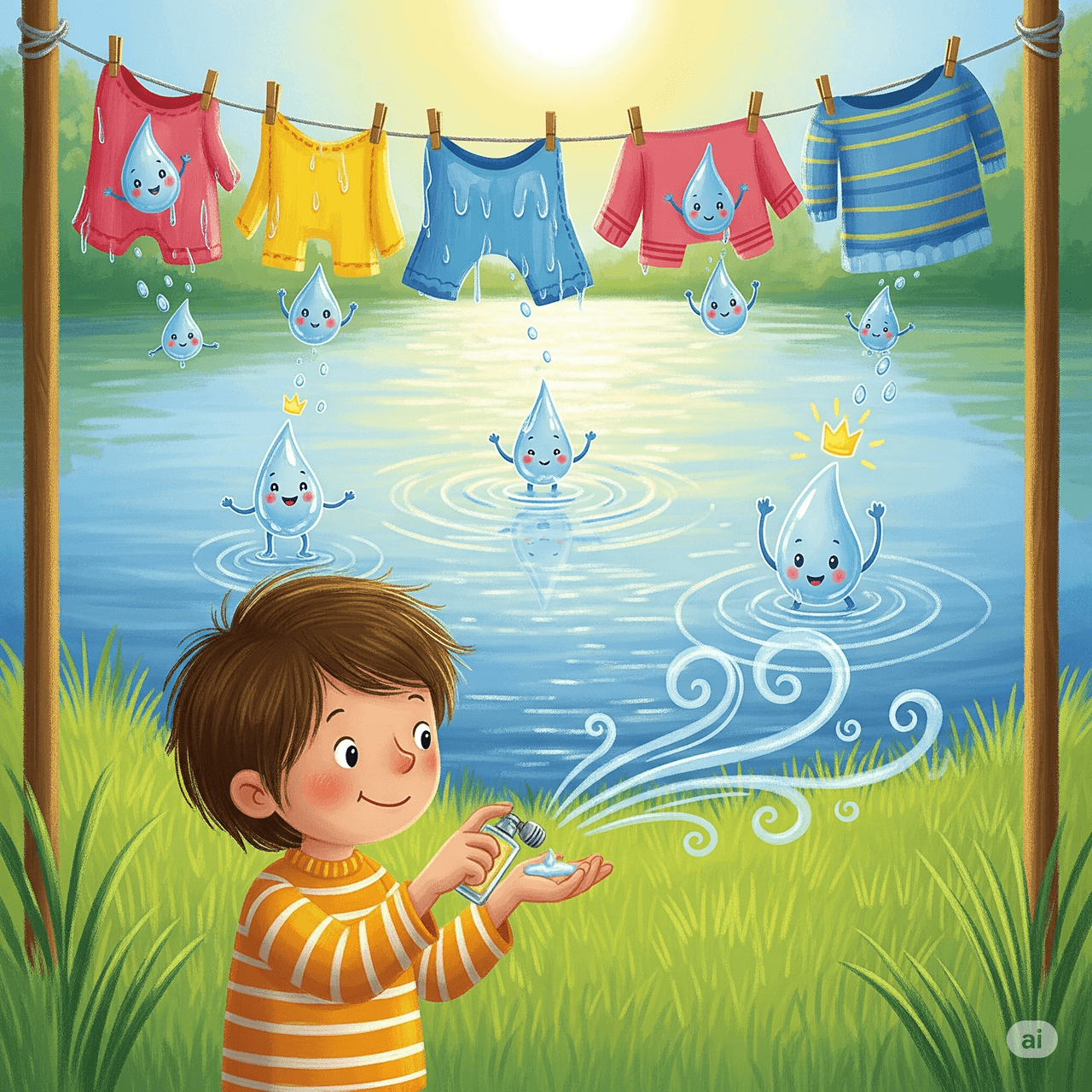

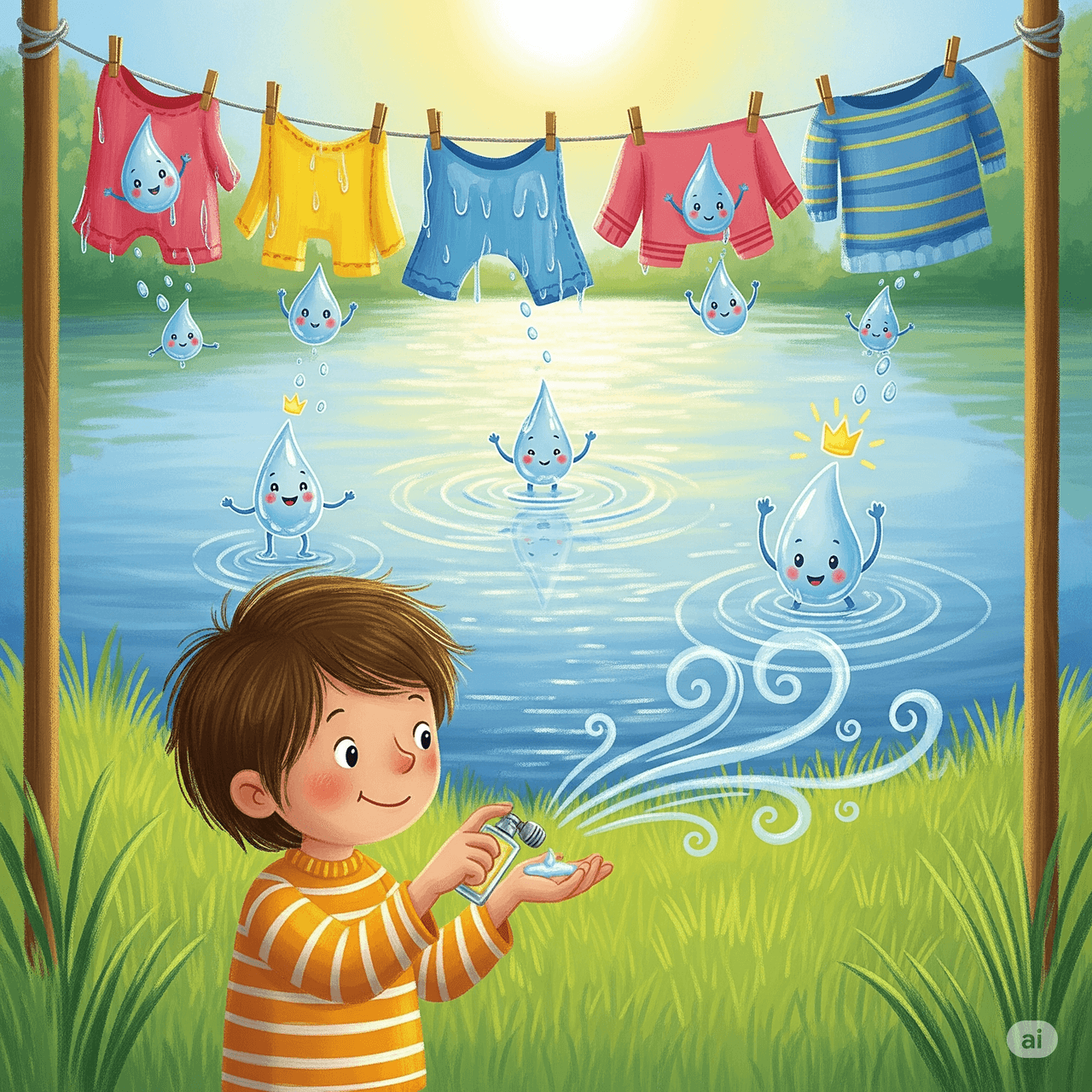
Drying Clothes and Evaporation of Cologne (Generated by Artificial Intelligence.)


Examples from Daily Life

Clothes drying in the sun during summer.


Vapor rising from lakes even in winter.


The cooling sensation felt when applying cologne.


Water vapor rising from oceans returning as rain.

Don't Forget to Look at These!
Science and Technology
cat img
History and Culture
cat img
Art and Literature
cat img
image
Most Read
Thomas Edison
arrow
image
Last Added
Pardus
arrow
ilham-notu-bg
INSPIRATION NOTE FOR CURIOUS KIDS!

You can also perform a small experiment: Put a little water in a dish and leave it in a sunny spot. Observe its level every day! How many days will it take to disappear completely? In this way, you can observe how water “vanishes” and mixes into the sky.

KURE Kids Kure Card Pin Icon
KURE Kids Kure Card Book Icon
ChnPE1JafuahAlHMEs2xlgDJybkM5DtR.png

Influencing Factors

pressure

humidity

surface area

wind

Temperature

Observable Example

loss of water from the surface of seas and lakes

gradual reduction of water in a glass

Drying clothes

Type of Physical Change

Phase change (liquid → gas)

Molecular Cause

Differences in kinetic energy between molecules: high-energy molecules leave the liquid when they reach the surface

Evaporation Temperature

Evaporation occurs at all temperatures; boiling is not required (Boiling point: 100°C – not mandatory for evaporation)

Who Wrote?
Kids Writing
AuthorHikmet Can UrhanDecember 2, 2025
bottom-bg-effect-bottom
bottom-bg-effect-top

Water can evaporate at any temperature, not just at its boiling point. This is because water molecules are in constant motion. When some molecules possess sufficient energy, they escape from the surface into the atmosphere and become vapor. This process can occur even at low temperatures. Environmental factors such as wind, temperature, and humidity affect the rate of evaporation. This invisible process is an essential part of the natural water cycle.

Bibliographies


National Geographic. “Evaporation.” National Geographic Education. Accessed August 2, 2025. https://education.nationalgeographic.org/resource/evaporation/?utm_source

Çelik, Sezer İlkay. “Su Neden Her Sıcaklıkta Buharlaşır?” Bilim ve Teknik. Accessed August 2, 2025. https://bilimteknik.tubitak.gov.tr/makale/su-neden-her-sicaklikta-buharlasir

ilham-notu-bg
ilham-notu-bg
ilham-notu-bg
HEYY!
Did You Know?
These?
Lamb
Lamb
Ask to Küre