

Vaka-i Hayriye
In the past, the Ottoman State had a very powerful and brave army: the Janissaries. For many years, the Janissaries ensured the victory of numerous wars. However, as time passed, these soldiers stopped undergoing training and began to disregard rules. When this situation made the functioning of the state difficult, a major change became necessary. This major transformation, namely the abolition of the Janissary Corps, is known as the "Vak'a-i Hayriye," or the "Auspicious Event."
Why Did the Janissaries Need to Change?
In their early years, the Janissaries were highly disciplined, but beginning in the 17th century, this discipline began to deteriorate. They no longer wished to go to war, instead becoming involved with urban tradespeople and frequently opposing the sultan’s decisions. The sultans needed a more modern and educated army to protect the country.
Sultan Selim III attempted reforms, but the Janissaries refused to allow them. Eventually, Sultan Mahmud II, who ascended the throne, devised a careful and patient plan to find a decisive solution within the military.
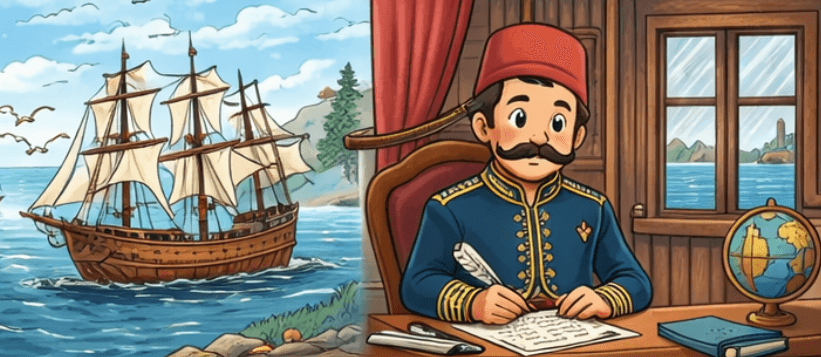
2. Mahmut yapacağı yenilikleri düşünüyor. (Yapay zeka ile oluşturulmuştur)
What Happened on That Day?
Sultan Mahmud II decided to establish a new and educated military class under the name "Eşkinci." Enraged by this development, the Janissaries launched a major rebellion in Istanbul on 15 June 1826.
This time, the public and other military units rallied behind the sultan. The sultan called on the people to unite, and within a short time the Janissary rebellion was suppressed. On 17 June 1826, the Janissary Corps was completely abolished. After this event, the Ottoman army began to modernize, and the newly established force was named "Asâkir-i Mansûre-i Muhammediyye."
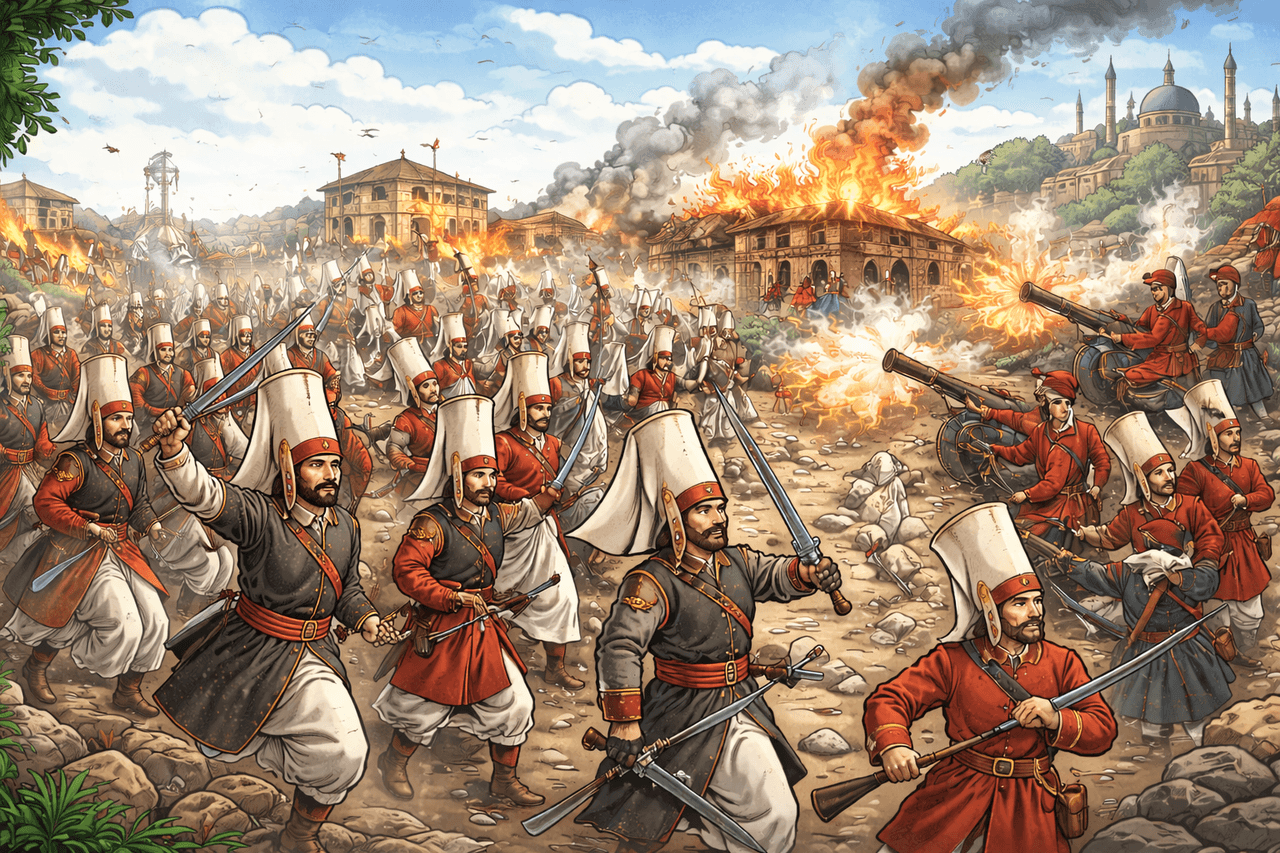
Vaka-i Hayriye gününe anlatan bir görsel. (Yapay zeka ile oluşturulmuştur)
Why Is It Called the "Auspicious Event"?
The event is called "auspicious" because the greatest obstacle to the army’s effectiveness was removed. With the abolition of the Janissaries, the path was opened for modern reforms in many areas, including education, healthcare, and governance. Thanks to this transformation, the state gained the opportunity to renew itself in accordance with the demands of the era.