

Nine Tiles
Nine Tiles is a fun and active game played by children together. It derives its name from the nine tiles used in the game. This game requires both quick thinking and teamwork. It is played with similar rules in different regions of Türkiye and is also known in some places as “tombik” or “sibop”.
How to Play?
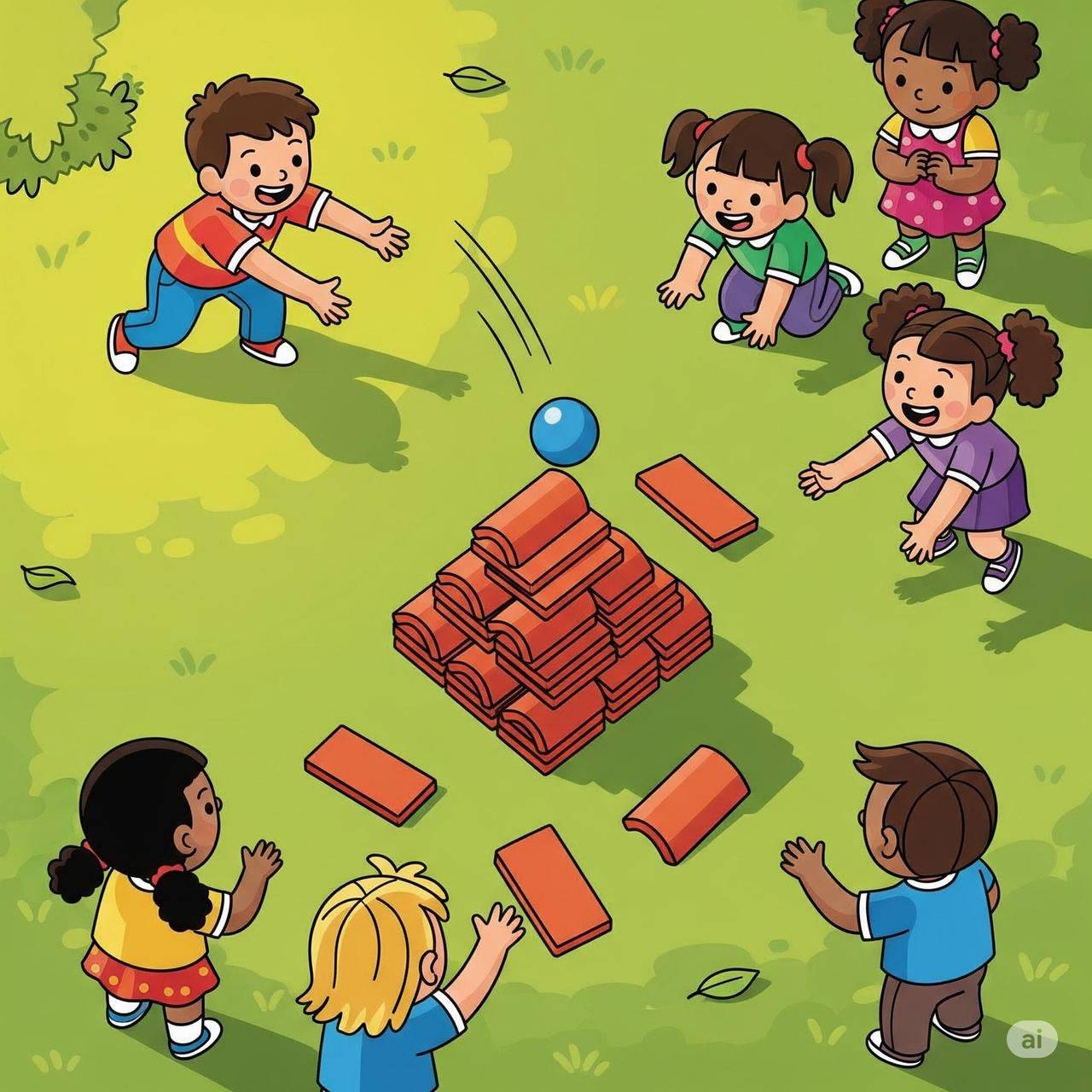
To play the game, nine tiles and one ball are prepared. First, a circle is drawn on the ground, and the tiles are stacked on top of each other from largest to smallest. Players are divided into two teams. One team arranges the tiles, while the other team attempts to knock down the tower by throwing the ball from behind the line.
When the tiles fall, the game becomes exciting: while the stacking team tries to rebuild the tower, the other team grabs the ball and tries to hit their opponents. If the players can dodge the ball and successfully rebuild all the tiles, they win the round.
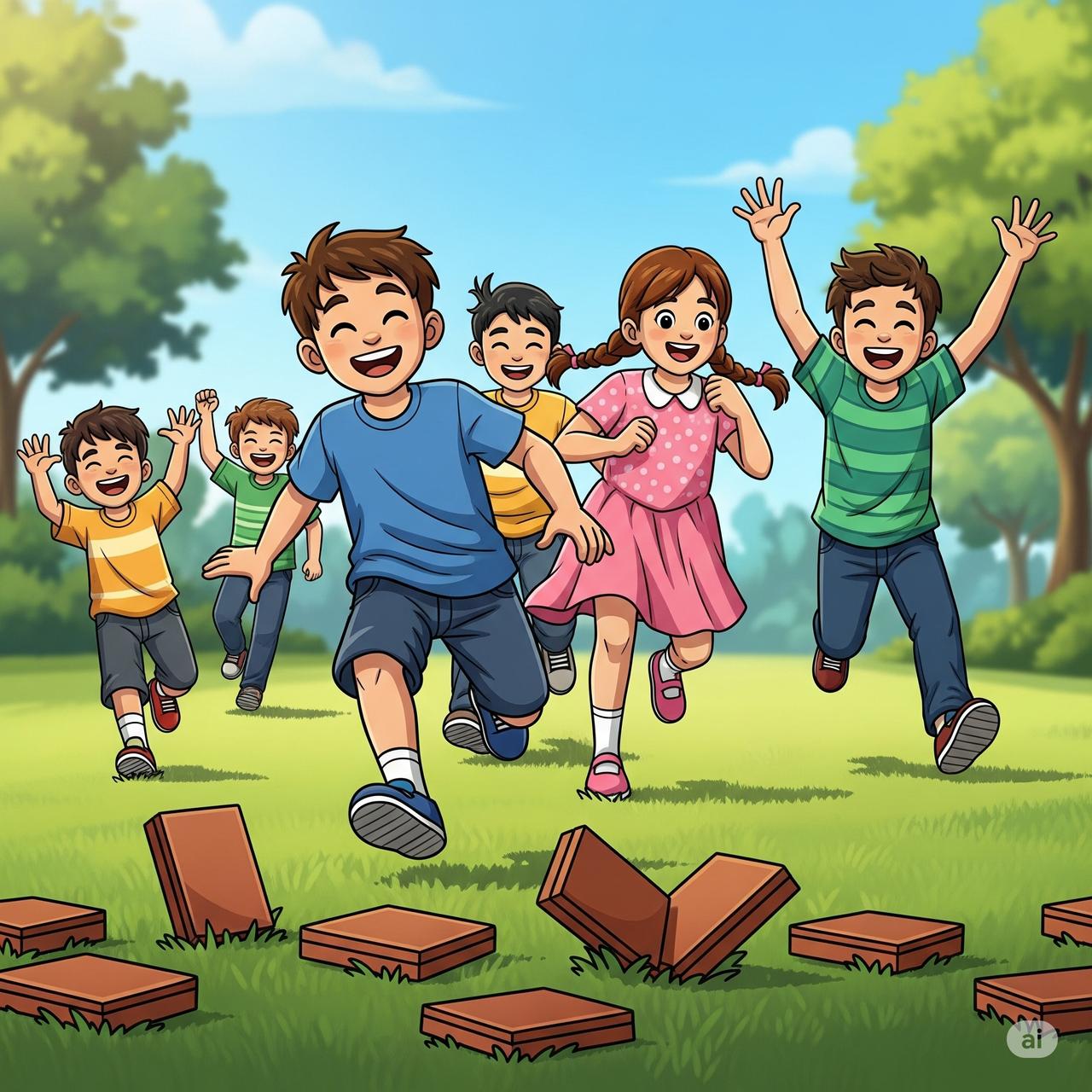
Children Playing Nine Tiles (generated with AI assistance.)
What Are the Rules?
- The game requires at least six players. In some regions, it is played with groups of up to fourteen players.
- The throwing team must stand behind the line. The distance varies by region, ranging from three meters to twelve to thirteen steps.
- The topmost tile is called the “sibop tile”. When this tile is placed, players shout “Sibop!” to signal the end of the round.
- In the Uşak region, there is a different rule: when the first tile is knocked down, the player is called “ebe”; when the second tile falls, they are called “dede”. These titles grant additional privileges.
Why Is It Important?
Nine Tiles is more than just a game. It teaches children to pay attention, make quick decisions, and work together. Physical movements such as running, throwing, and bending also strengthen the body. By keeping traditional games alive, children maintain a connection to the past and help preserve cultural heritage.
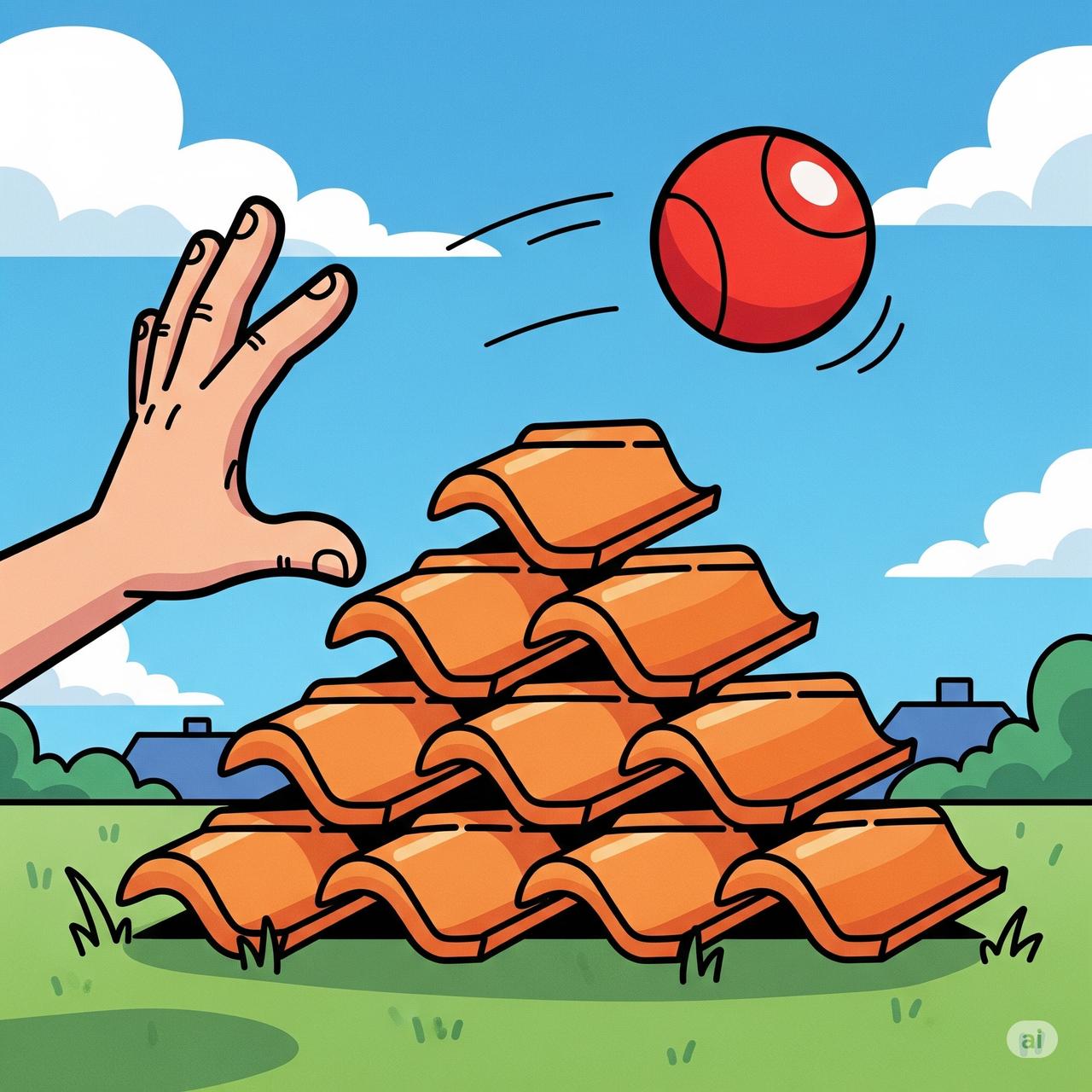
Nine Tiles (generated with AI assistance.)
Journey Through Time
Centuries ago, children in Anatolia played Nine Tiles in streets, village squares, and open fields. During an era without electronic games, this was one of children’s favorite forms of entertainment.