Fresco
Have you ever seen colorful paintings integrated into a wall, as if they were bursting forth from within the plaster? These magical artworks are called fresco. Frescoes are very different from paintings on ordinary paper; they are applied directly onto walls using a special plaster.
The Italian word "fresco" means "fresh" or "wet" in Turkish. This is no coincidence; to create a true fresco, the plaster on the wall must still be fresh and wet.
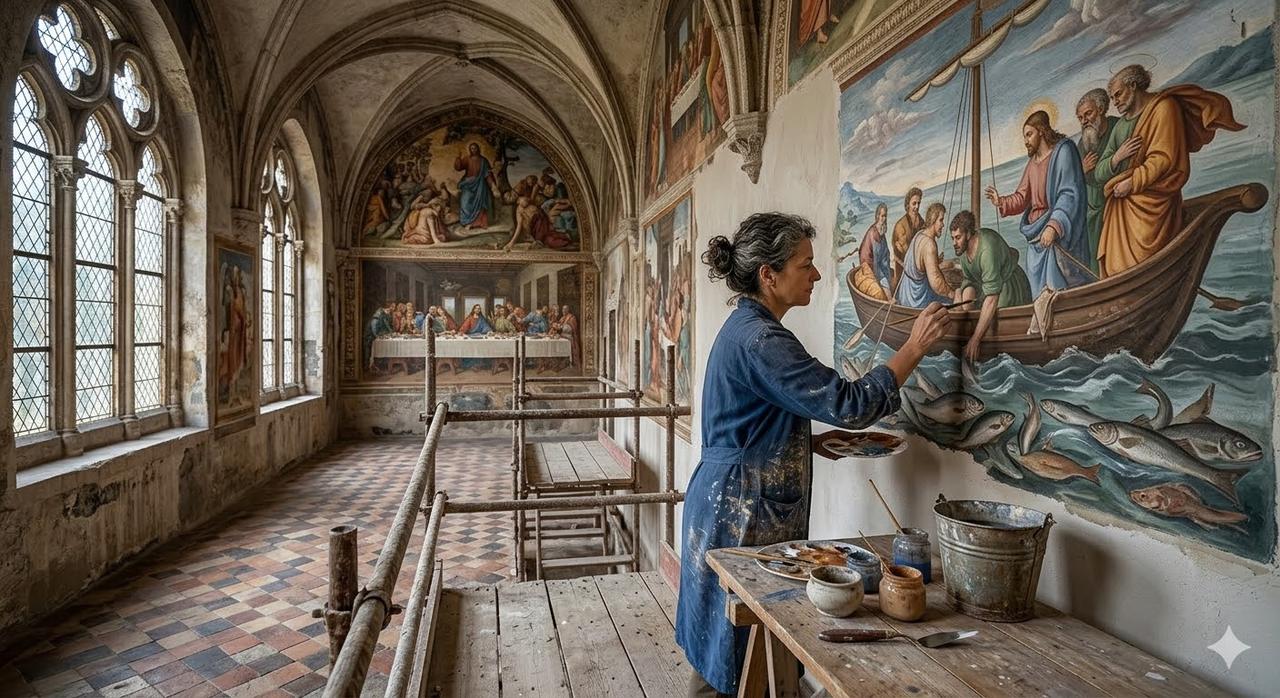
Fresk yapımını temsil eden görsel (Yapay zeka ile oluşturulmuştur)
Wet or Dry?
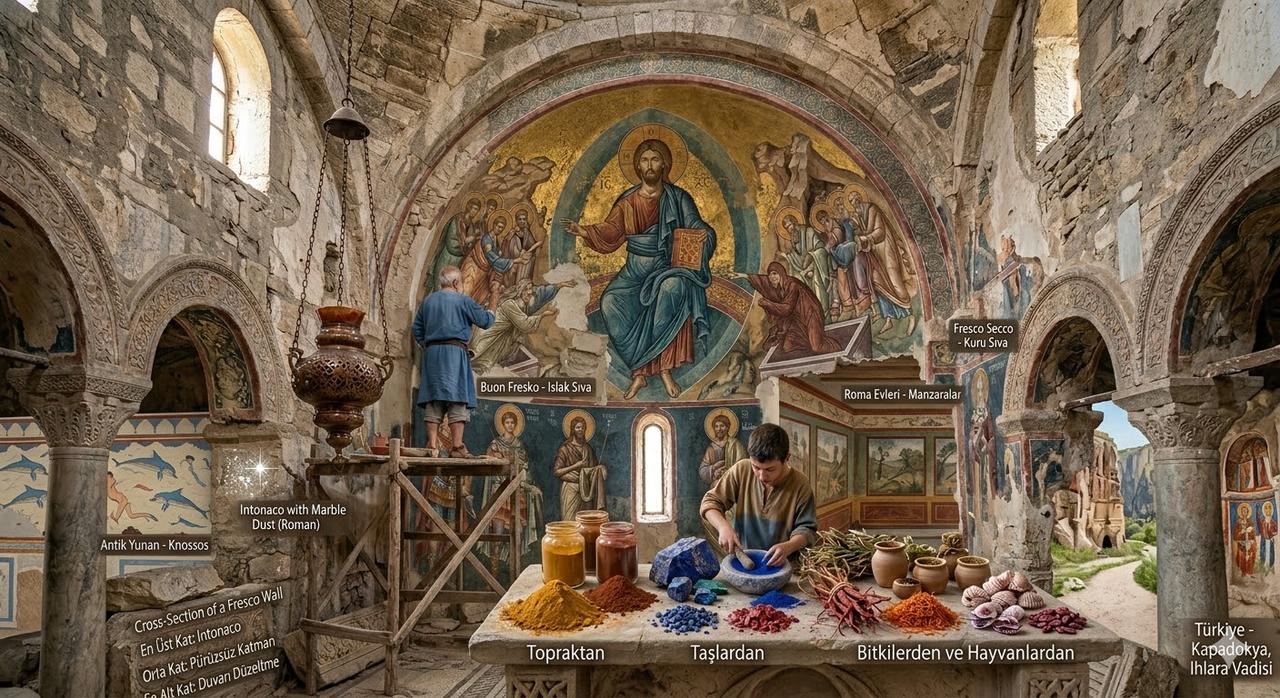
Artists use two different methods when creating frescoes. The most durable is the "Buon Fresko" technique, in which the paint is applied while the plaster is still wet. In this method, the pigment becomes embedded within the wet plaster. As the plaster dries and hardens into stone, the paint becomes an inseparable part of the wall, allowing the images to survive for thousands of years without deterioration.
The other technique is "Fresco Secco", or dry fresco. Here, the painting is applied onto a completely dry wall. However, this method does not last as long as paintings done on wet plaster and may eventually flake off.
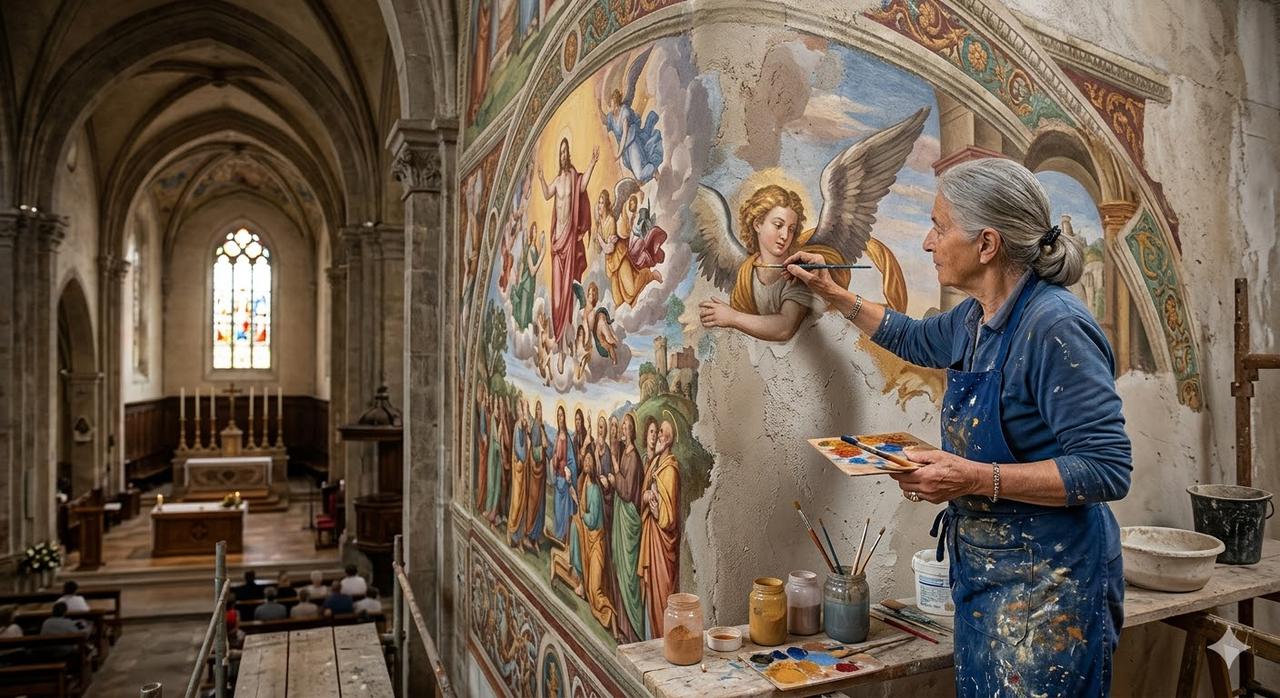
Fresk yapımını temsil eden görsel (Yapay zeka ile oluşturulmuştur)
Where Do the Colors Come From?
In ancient times, paint was not available in stores. Artists gathered the colors for their frescoes from the heart of nature.
- From earth: Special soils (ochre pigments) were used for yellow and red tones.
- From stones: Valuable minerals and stones were ground to produce blue and green pigments.
- From plants and animals: The roots of certain plants or sea shells also yielded remarkable colors.
The Hidden Layers of the Wall
A fresco wall is like a three-layer cake. At the bottom is a thick layer used to level the wall. Above it is a smoother layer, and on top is the finest and most delicate layer, called "intonaco", where the painting is applied. During the Roman period, marble dust was added to this top layer to make the images appear more brilliant.
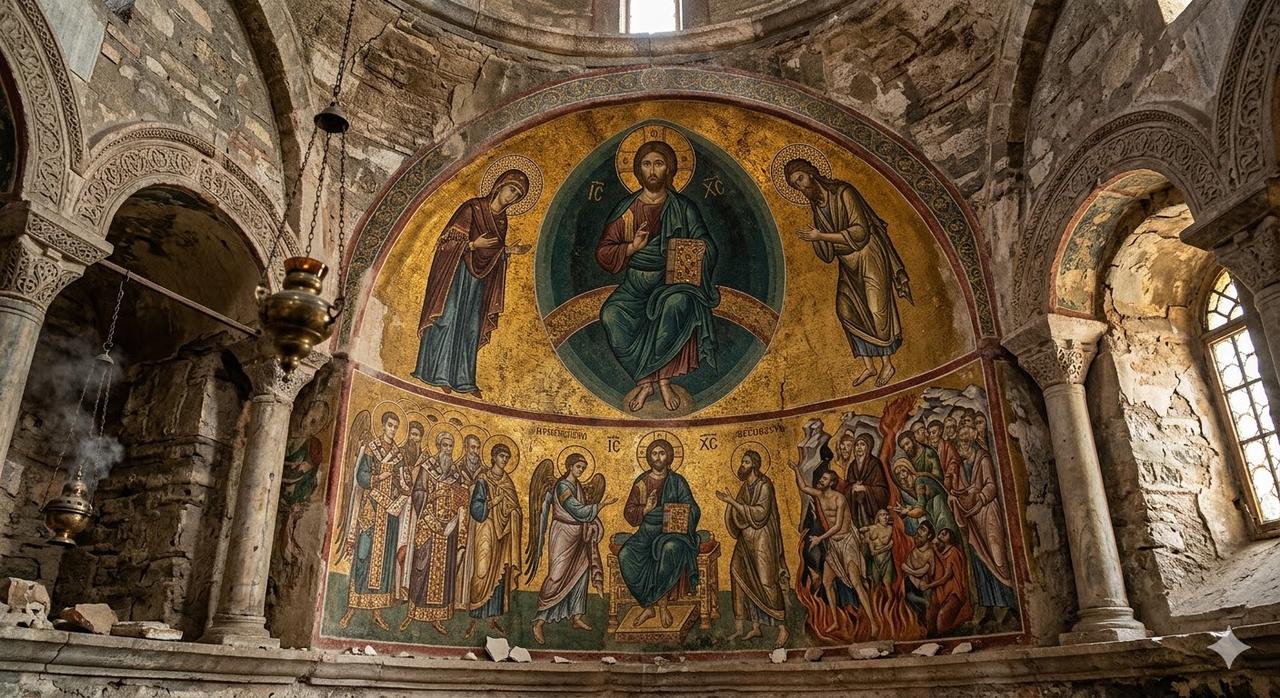
Fresk ( duvar resmi) temsili görsel (Yapay zeka ile oluşturulmuştur)
Time Travel: Following the Frescoes
You can find frescoes in many parts of the world. In ancient Greece, the walls of the Palace of Knossos feature cheerful dolphin murals, while Roman homes display frescoes of natural landscapes. In Türkiye, remarkable frescoes still preserved in the rock-cut churches of places like the Ihlara Valley continue to shine with vitality.