

`lift` ile İlgili Madde Sonuçları
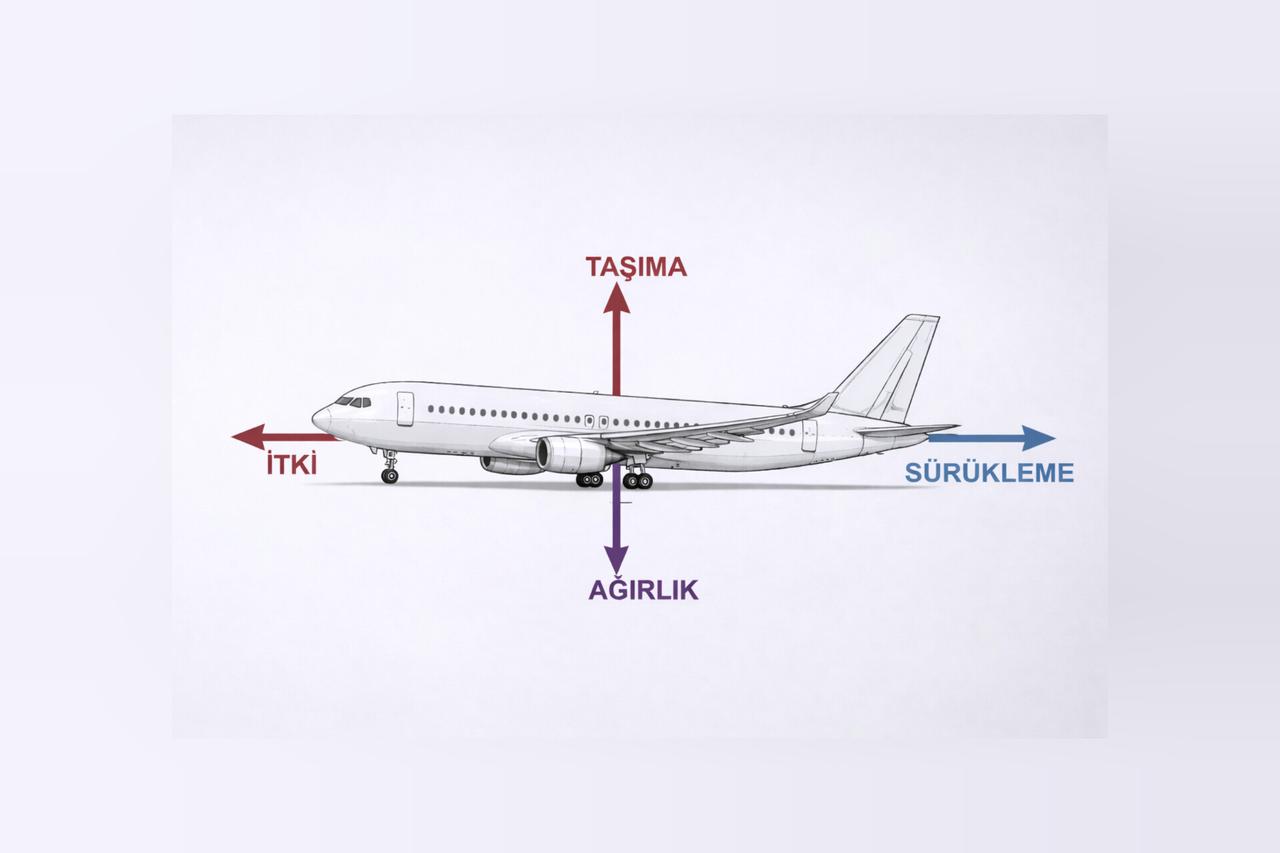
Uçağa Etki Eden Dört Kuvvet
Uçakların havadaki hareketini anlamak için öncelikle fiziksel kuvvetlerin etkisini incelemek gerekir. Bir uçağın havada kalabilmesi ve yönlenebilmesi dört temel kuvvetin etkileşimine bağlıdır: taşıma (lift), ağırlık (weight), itki (thrust) ve sürükleme (drag) kuvvetleri. Bu kuvvetler arasında özellikle itki ve taşıma kuvvetleri, uçağın havalanması ve havada ilerlemesi açısından kritik öneme sahiptir. Uçağa Etki Eden Dört Kuvvet (Görsel: Yapay Zeka Aracılığıyla Oluşturulmuştur) " image-alternate=
TR
Mehmet Bağcı
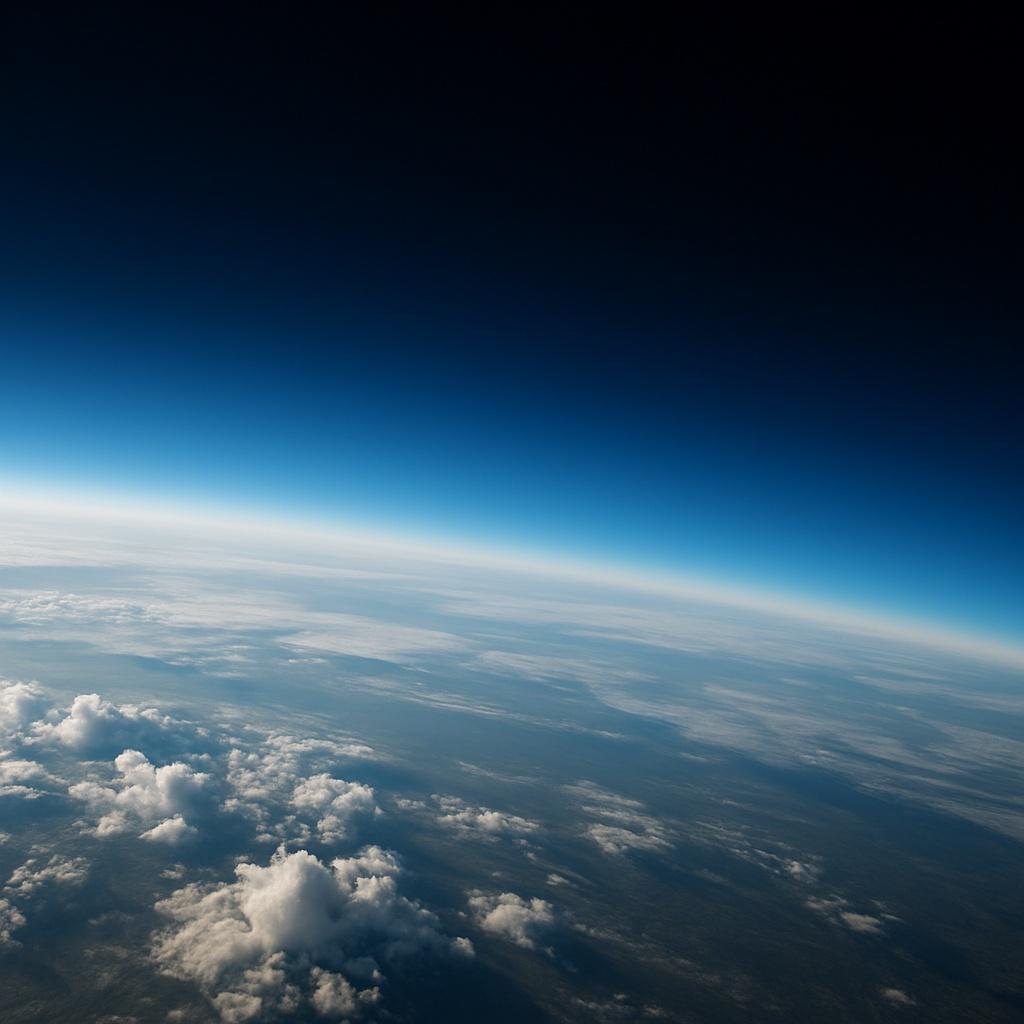
Standart Atmosfer
Standart atmosfer, dünyanın herhangi bir yerindeki atmosferik şartları ortalama değerlerle temsil eden varsayımsal bir atmosfer modelidir. Genellikle uçak tasarımı, uçuş performansı analizleri, altimetre kalibrasyonu, roket mühendisliği ve balistik hesaplamalar gibi havacılık ve uzay mühendisliği alanlarında kullanılır. Standart Atmosfer (Yapay Zeka ile oluşturulmuştur) " image-element-format="right" image-source="https://cdn.t3pedia.org/media/uploads/2025/05/27/Cu8Bv6SGdhia5rKlY2gUqvAtkVa7fJkT.
TR
Emre Karapınar
Four Forces Acting on an Aircraft
To understand how aircraft move through the air, it is necessary to first examine the effects of physical forces. An aircraft’s ability to remain airborne and maneuver depends on the interaction of four fundamental forces: lift, weight, thrust, and drag. Among these, thrust and lift are critically important for takeoff and sustained flight. Four Forces Acting on an Aircraft (Image: Generated by Artificial Intelligence) " image-alternate="" image-element-format="right"> 1. Thrust Force Thrust
ENMehmet Bağcı
 Ai
AiAirfoil (English)
An airfoil is the two-dimensional cross-section of objects that move through a fluid, such as wings, propellers, rudders, or sails. These sections are designed to provide the optimal lift-to-drag ratio for vehicles moving through fluids like air or water. Typically curved or flat, and often resembling a teardrop shape, airfoils function by creating a pressure difference on their two opposing surfaces based on Bernoulli’s principle. This pressure difference generates aerodynamic forces, enabling
EN
Fatih Türk
Standard Atmosphere
Standard Atmosphere is a hypothetical atmospheric model that represents average atmospheric conditions at any location on Earth. It is commonly used in aerospace and aviation engineering fields such as aircraft design, flight performance analysis, altimeter calibration, rocket engineering, and ballistic calculations. Standard Atmosphere (Generated by Artificial Intelligence) " image-element-format="right" image-source="https://cdn.t3pedia.org/media/uploads/2025/05/27/Cu8Bv6SGdhia5rKlY2gUqvAtkVa7
ENEmre Karapınar
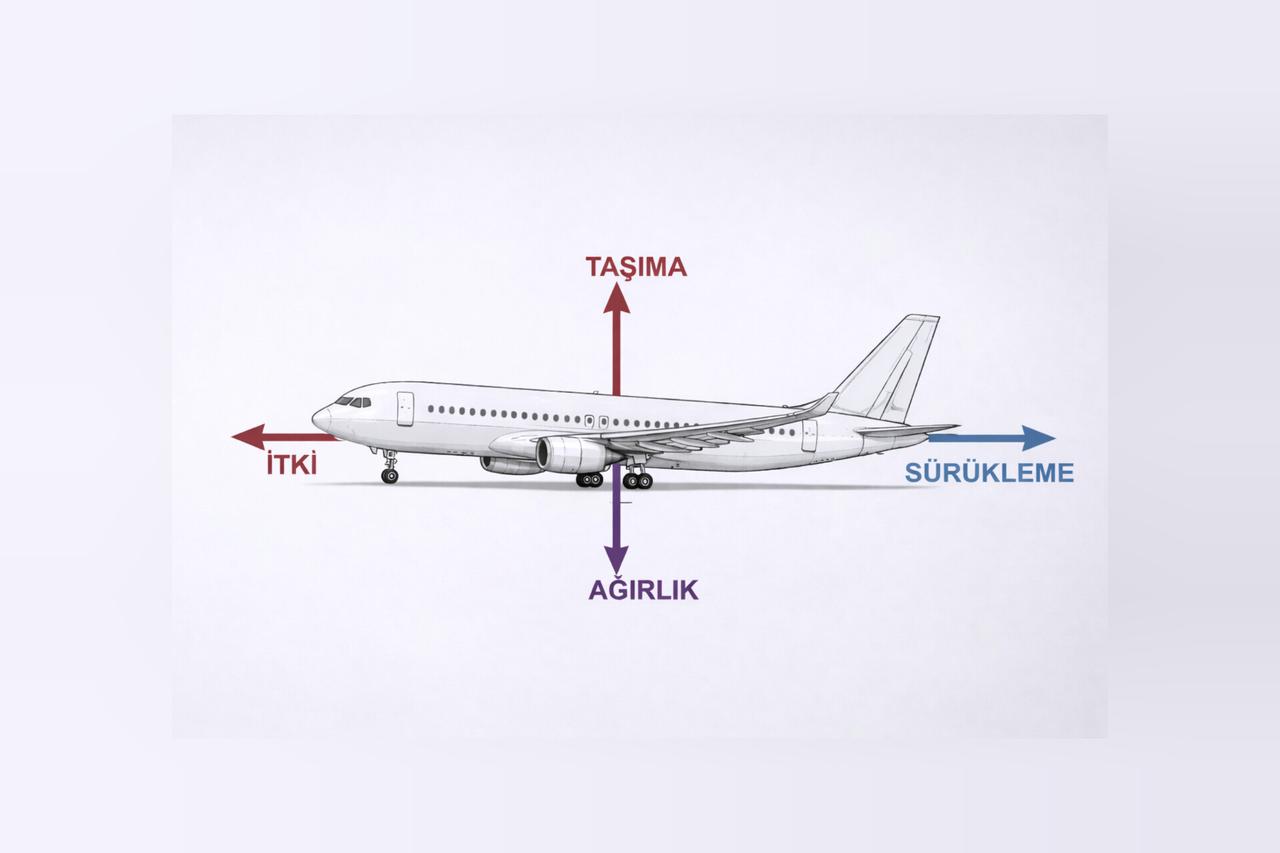
What forces do aircraft move with in the air?
To understand how aircraft move through the air, it is necessary to first examine the effects of physical forces. An aircraft’s ability to remain airborne and maneuver depends on the interaction of four fundamental forces: lift, weight, thrust, and drag. Among these, thrust and lift are particularly critical for takeoff and sustained flight. The Four Forces Acting on an Aircraft (Science Young) " image-alternate="" image-element-format="right"> 1. Thrust Force Thrust is the primary force that
EN
Mehmet Bağcı