This article was automatically translated from the original Turkish version.
To understand how aircraft move through the air, it is necessary to first examine the effects of physical forces. An aircraft’s ability to remain airborne and maneuver depends on the interaction of four fundamental forces: lift, weight, thrust, and drag. Among these, thrust and lift are critically important for takeoff and sustained flight.
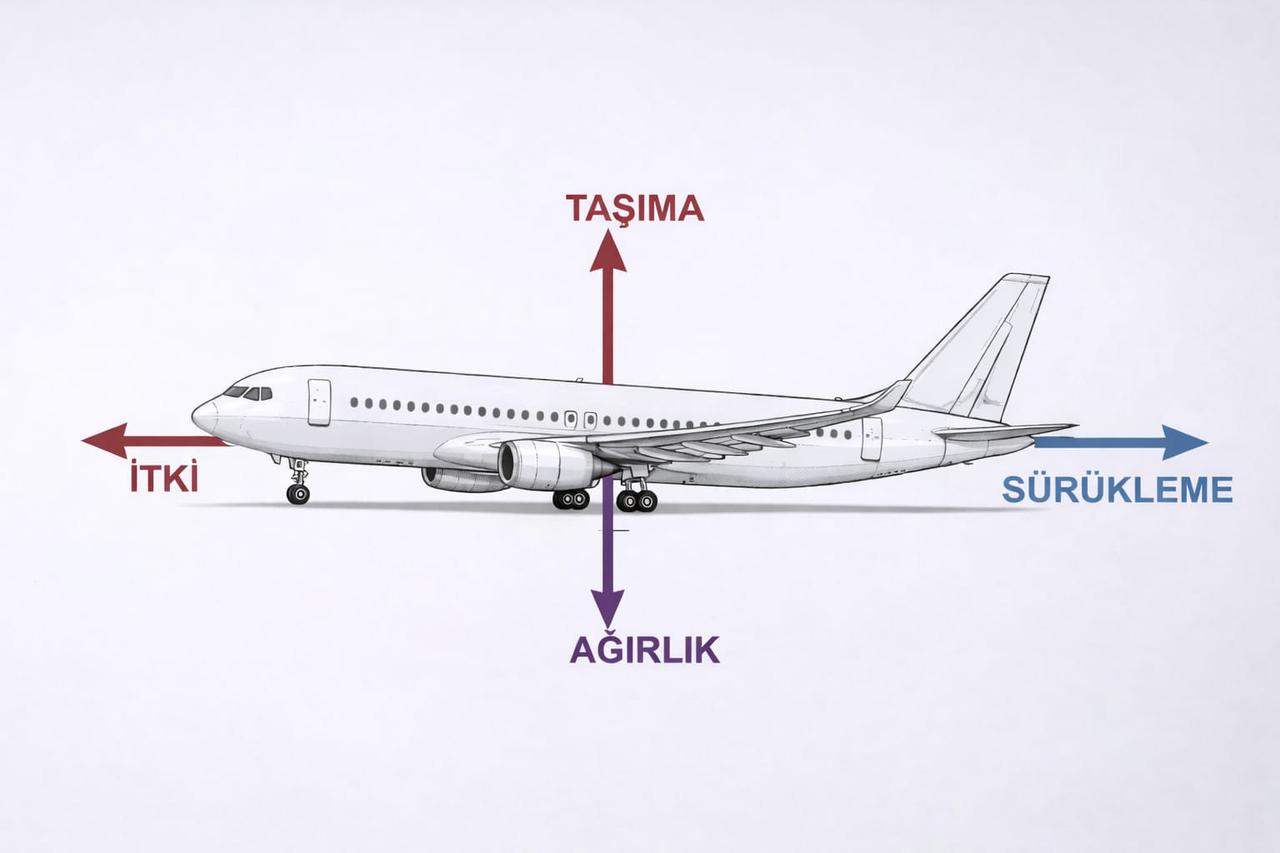
Four Forces Acting on an Aircraft (Image: Generated by Artificial Intelligence)
Thrust is the primary force that propels the aircraft forward. Jet engines or propellers draw air in and expel it at high speed rearward. According to Newton’s third law, this action generates an equal and opposite reaction that pushes the aircraft forward. Thrust always opposes drag. When thrust exceeds drag, the aircraft accelerates; when it is insufficient, the aircraft decelerates.
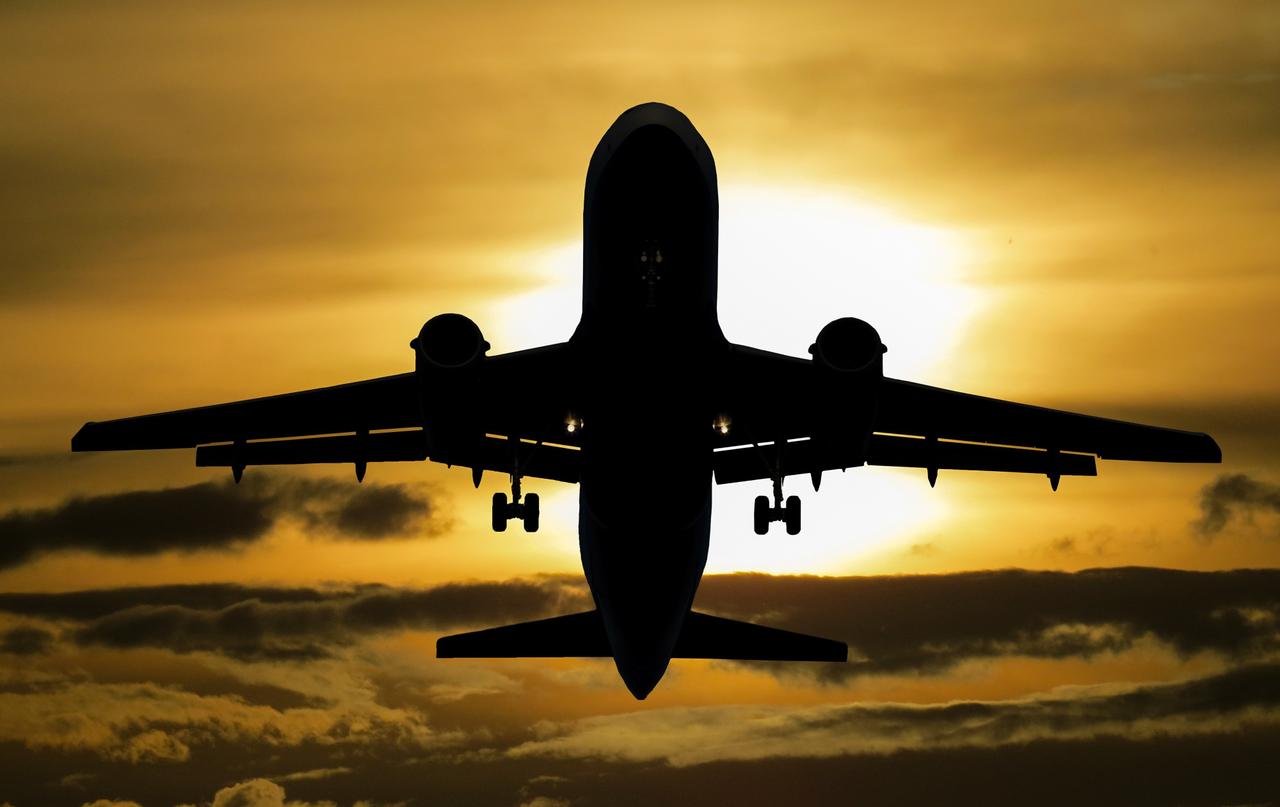
An Aircraft Climbing During Initial Climb Out Phase (pixabay)
Lift is generated by the aircraft’s wings. The specialized shape of the wings, known as an airfoil, forces air to flow at different speeds over the upper and lower surfaces. This creates lower pressure above the wing and higher pressure below, resulting in a net upward force (vacuum effect). This force is the primary reason an aircraft remains airborne.
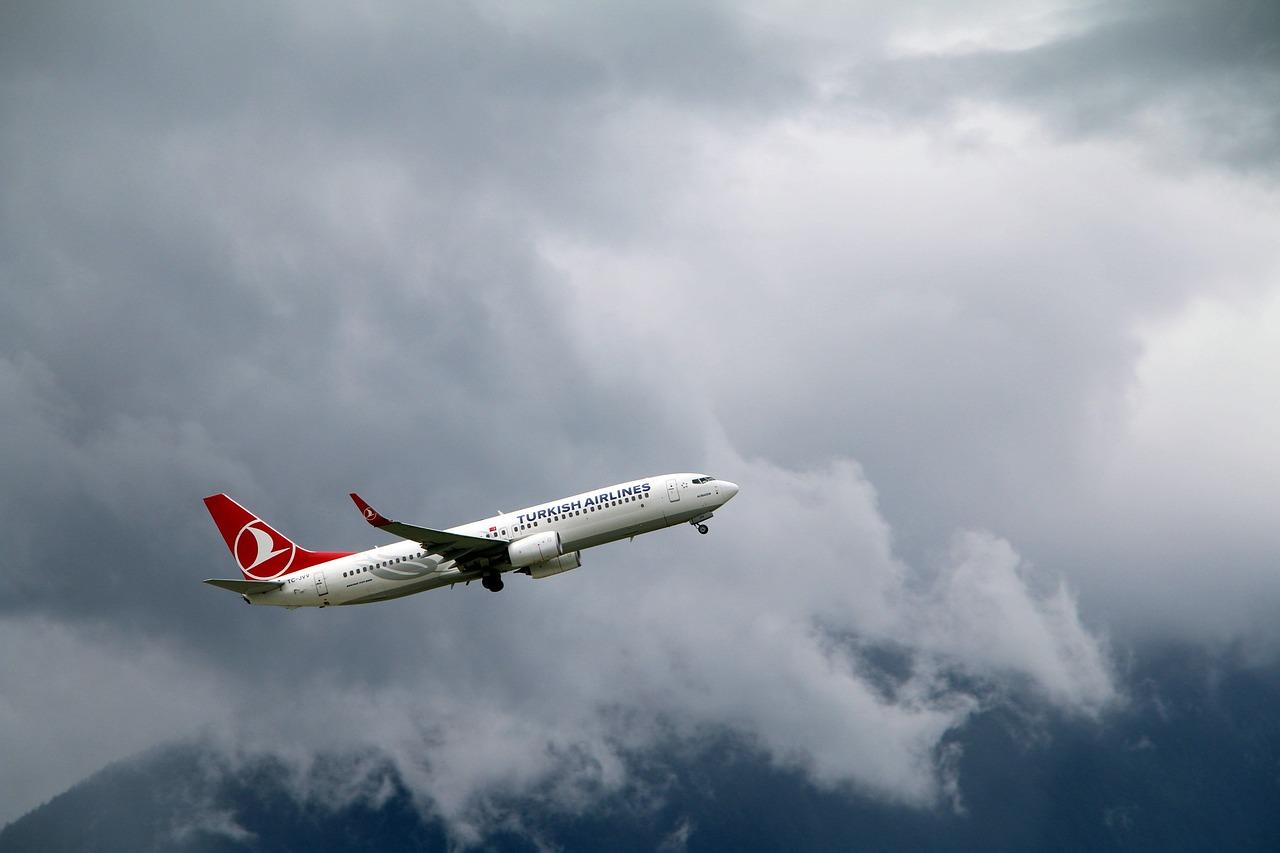
An Aircraft Climbing During Initial Climb Out Phase (pixabay)
Weight is the force exerted on the aircraft by gravity, representing the total mass of the airframe, passengers, fuel, and cargo. This force always acts vertically downward toward the center of the Earth. The center of gravity is the point at which this force is effectively applied. Lift counteracts weight; if balance is not maintained, the aircraft descends.
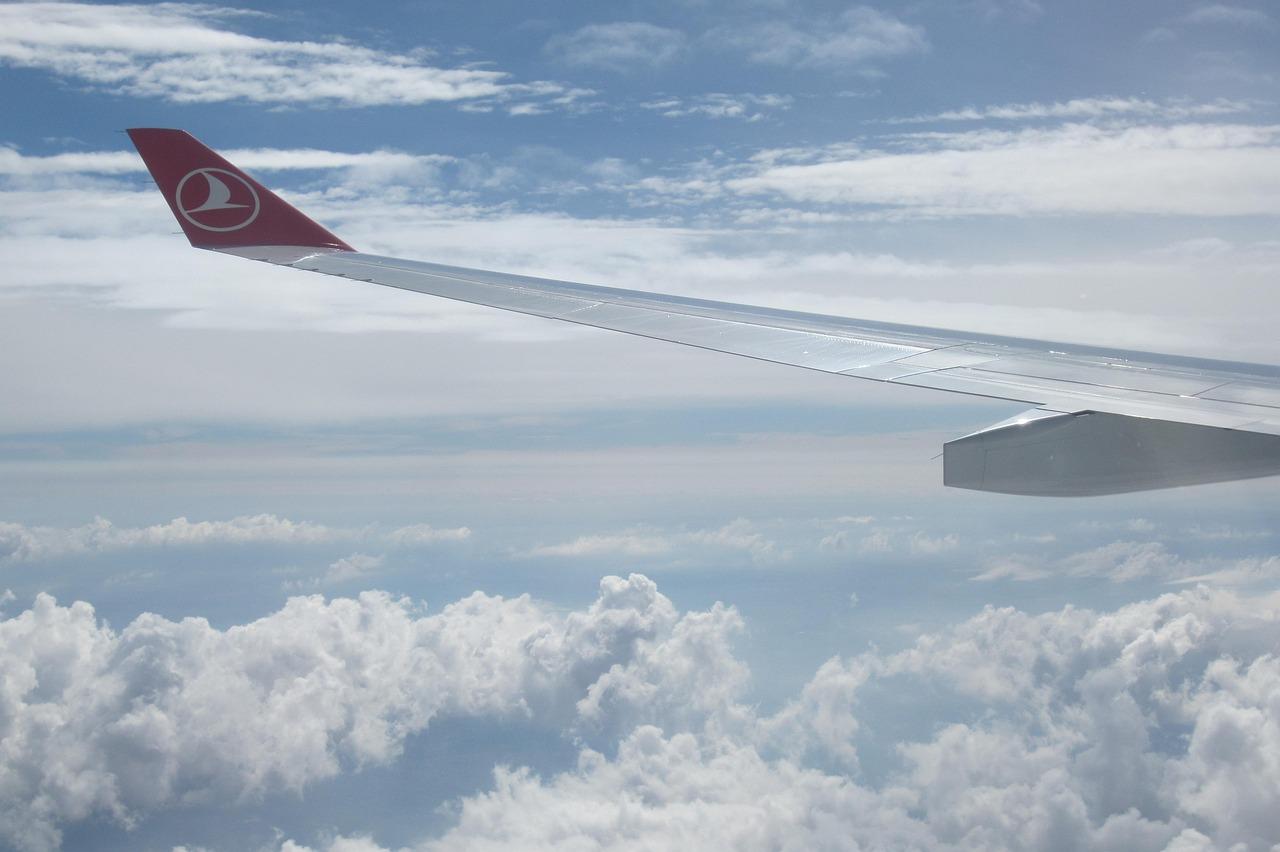
An Aircraft in Cruise Phase Maintaining Altitude (pixabay)
Drag is the resistance the aircraft encounters as it moves through the air. It acts opposite to the direction of motion and tends to slow the aircraft. Sources of drag include:
Thrust counteracts drag. Modern aircraft designs aim to reduce drag to improve fuel efficiency.
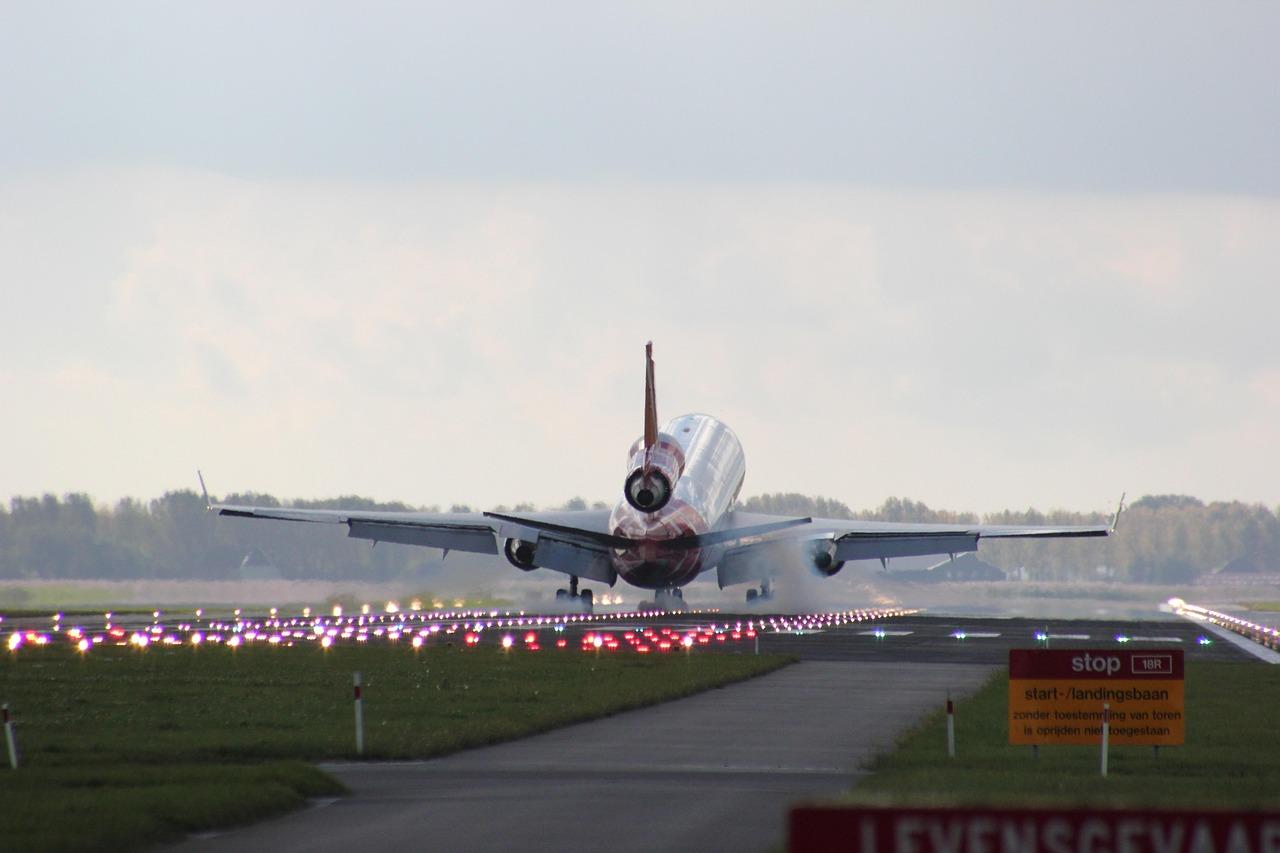
Touchdown, an Aircraft Making Contact with the Runway (pixabay)
When the four forces acting on an aircraft are in balance, the aircraft flies at a constant speed. In this equilibrium state:
1. Lift balances the weight force caused by gravity.
2. Thrust balances the drag force caused by air resistance.
This condition can also be explained by Newton’s laws of motion. When all forces acting on an object are balanced, the object remains at rest if it was stationary, or continues moving at a constant velocity if it was in motion. For aircraft, this means stable and level flight.
Note: L = lift, W = weight, T = thrust, D = drag. (> : Greater than) (< : Less than) (= : Equal to).
Lift is generated by the aerodynamic design of the aircraft’s wings, based on Bernoulli’s principle. According to this principle, as the speed of a fluid—in this case, air—increases, pressure decreases; as speed decreases, pressure increases. The upper surface of the wing is curved, while the lower surface is relatively flat. This design accelerates airflow over the top of the wing (dynamic), reducing pressure. The slower-moving air beneath the wing (static) creates higher pressure. As a result, pressure below the wing exceeds pressure above it, generating an upward lift force (vacuum effect) that enables the aircraft to take off.
Forward motion of the aircraft is achieved through thrust provided by the engines. However, another force encountered during flight is drag, which arises from air resistance and acts opposite to the direction of motion. For example, the resistance felt when walking against the wind is a simple everyday analogy of drag. The thrust produced by the engines must overcome drag to allow the aircraft to move forward and sustain flight.
Finally, since aircraft cannot move backward, a special vehicle is used to push or pull the aircraft out of parking positions. This procedure ensures the aircraft departs its parking spot safely.
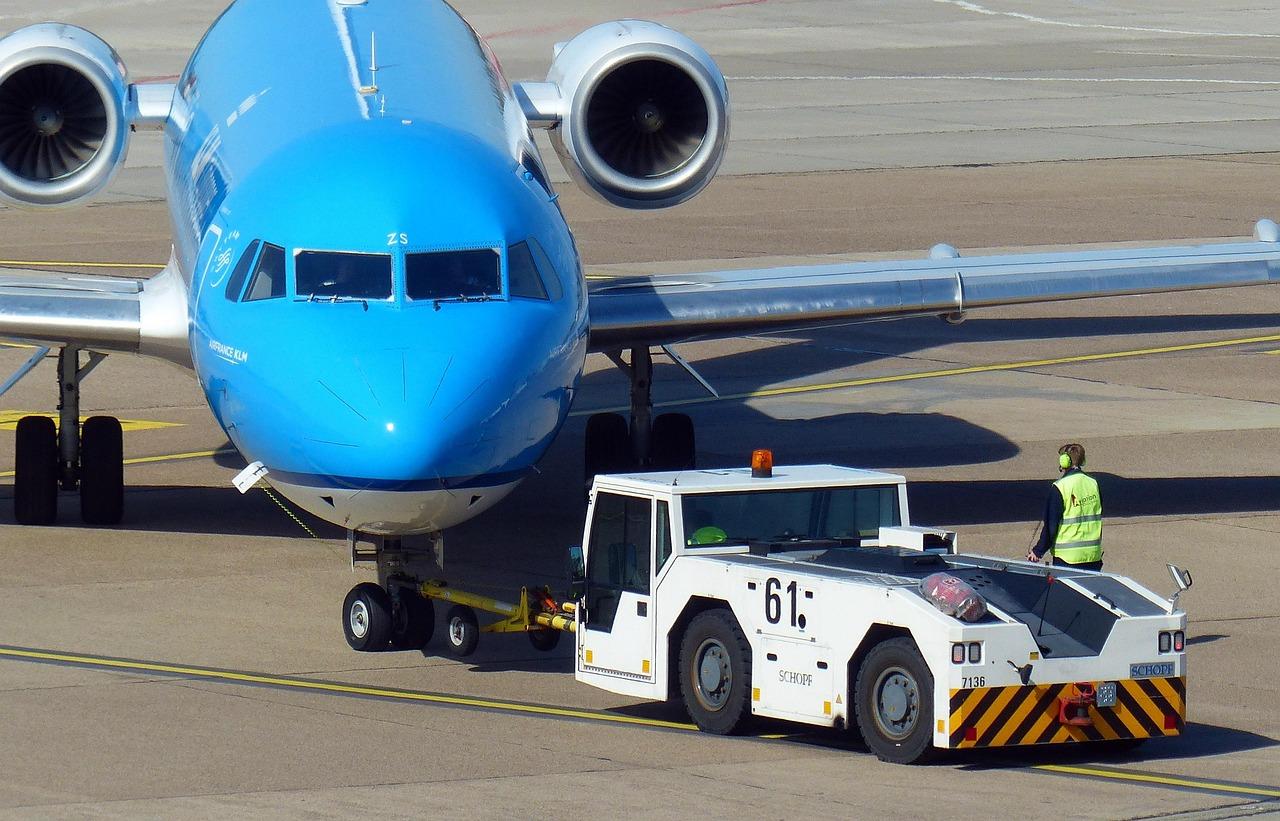
This vehicle is called a pushback or pushback tug. (pixabay)
Havacılık ve Uzay Portalı. "Uçağa Etki Eden Kuvvetler." Accessed August 12, 2025.https://www.havauzay.org/ucaga-etki-eden-kuvvetler.html.
Okatan, Ayşenur. “Uçaklar Havada Nasıl Hareket Eder?” TÜBİTAK Bilim Genç. Accessed August 12, 2025.https://bilimgenc.tubitak.gov.tr/makale/ucaklar-havada-nasil-hareket-eder.
Sarıgül, Tuba. “Uçaklar Nasıl Baş Aşağı Uçabiliyor?” TÜBİTAK Bilim Genç. Accessed August 12, 2025.https://bilimgenc.tubitak.gov.tr/makale/ucaklar-nasil-bas-asagi-ucabiliyor.
1. Thrust Force
2. Lift Force
3. Weight Force
4. Drag Force
Equilibrium: Balance of the Four Forces
Coordination of Wings and Engines