


Bu içerik Türkçe olarak yazılmış olup yapay zeka ile otomatik olarak İngilizceye çevrilmiştir.
Counterintelligence (CI) is the comprehensive set of security activities conducted by states and intelligence agencies to detect, prevent, and neutralize intelligence operations directed against them. These efforts aim to disrupt the information-gathering attempts of hostile actors—such as foreign states, intelligence services, terrorist organizations, or individuals—and minimize the impact of such activities.
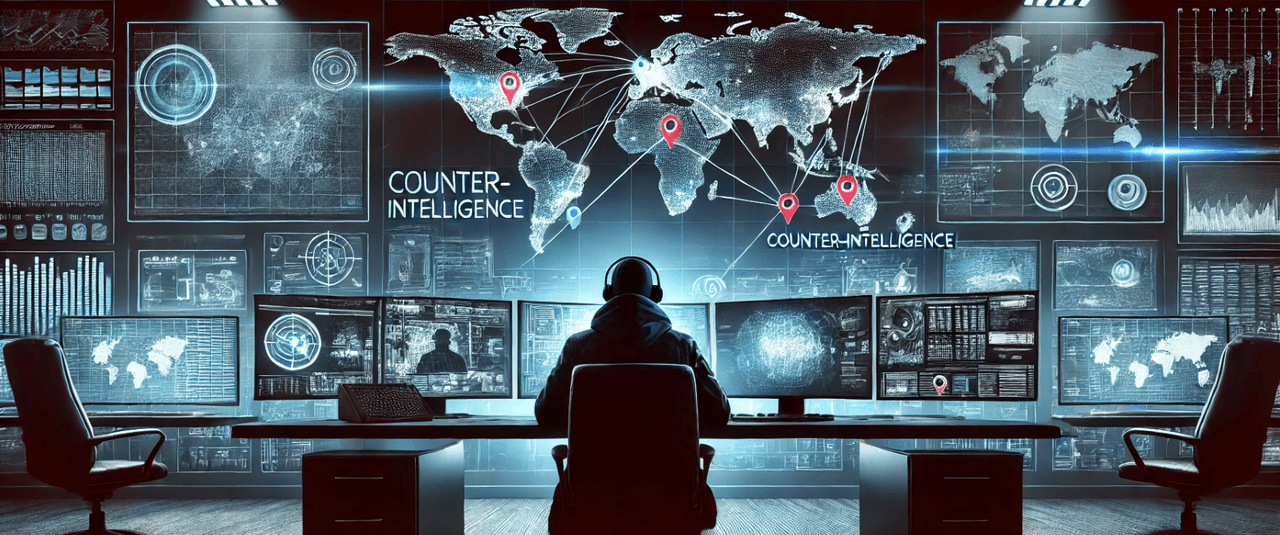
A Visual Representing Counterintelligence Activities (Generated by Artificial Intelligence)
Counterintelligence fundamentally encompasses two main approaches: security and counterespionage. Security refers to the defensive dimension of counterintelligence and includes the physical and digital protection of personnel, facilities, documents, and operations. Practices in this area involve restricted access zones, classification of documents, encryption systems, alarm mechanisms, controlled areas, and polygraph (lie detector) tests.
Counterespionage, by contrast, is a more aggressive and active approach. This strategy seeks to prevent hostile elements from infiltrating intelligence systems from within while simultaneously attempting to penetrate foreign intelligence services. The objective is to analyze the internal structure of foreign services, identify their agents, and undermine their operations.
Counterintelligence activities are not limited to defense and detection; they also include proactive methods such as active deception, countermeasures, and counterpropaganda against enemy intelligence collection efforts. In deception operations, deliberately false, incomplete, or contradictory information is provided to hostile actors to weaken their decision-making capabilities.
Countermeasures involve active or passive interference with the activities of intelligence collectors to prevent or redirect them. Counterpropaganda encompasses efforts to refute and neutralize attempts by hostile elements to influence public opinion, decision-makers, or analytical processes.
Counterintelligence is also linked to covert actions. In this context, a state may attempt to secretly influence the internal affairs of another state to protect its own national security or foreign policy objectives. Such activities can range from simple propaganda campaigns and economic pressure to direct interventions.
The success of counterintelligence depends not only on technical capabilities and organizational structure but also on human resources and the precision with which these individuals conduct operations. In this regard, human intelligence (HUMINT) is still regarded by many analysts as indispensable. Despite technological advances, the human element remains critical in counterintelligence for understanding the intentions and strategies of adversaries.
Carlisle, Rodney P., ed. Encyclopedia of Intelligence and Counterintelligence. Armonk, NY: M.E. Sharpe, 2005.
Johnson, Loch K., ed. Handbook of Intelligence Studies. Abingdon, UK: Routledge, 2007.
Millî İstihbarat Teşkilatı. “Sözlük – İstihbarata Karşı Koyma.” Accessed May 10, 2025. https://www.mit.gov.tr/sozluk.html#%C4%B0

Henüz Tartışma Girilmemiştir
"Resistance to Intelligence" maddesi için tartışma başlatın
Core Approaches and Methods
Areas of Activity and Supporting Elements