


Bu madde henüz onaylanmamıştır.
+2 Daha
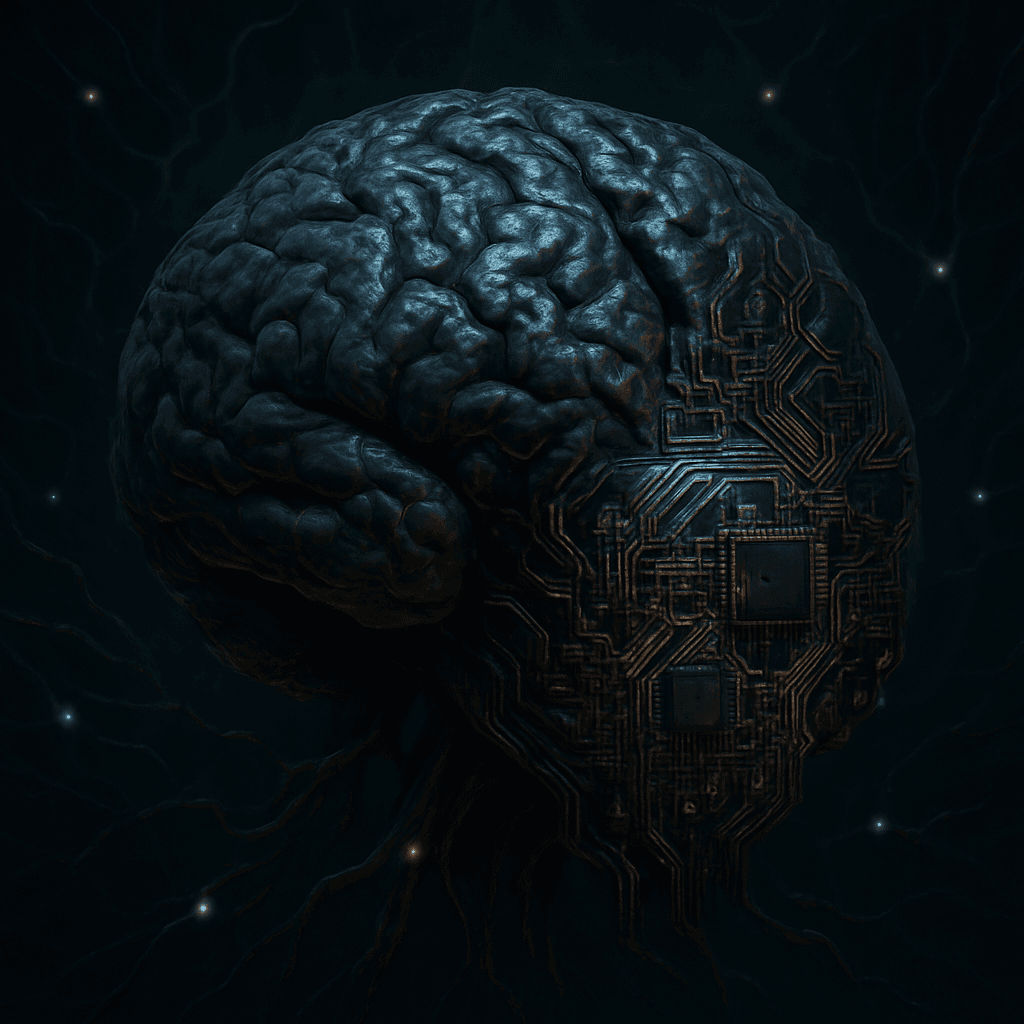
Görsel yapay zeka ile oluşturulmuştur.
Neuromorphic Computing
Definition(s) | A brain-inspired computing paradigm that emulates the neural structure and operation of the human brain at the hardware level. | ||||||||
|---|---|---|---|---|---|---|---|---|---|
Key Terms | Uses Spiking Neural Networks (SNNs) for communication and Plasticity (like STDP) for real-time, on-chip learning and adaptation. | ||||||||
Key Advantages | Offers extreme energy efficiency and low latency by mimicking the brain’s event-driven and massively parallel processing. | ||||||||
Core Logic | Unlike traditional architectures, it processes data asynchronously via "spikes," computing only when meaningful events occur. | ||||||||
Pioneer | Carver Mead (Late 1980s). | ||||||||
Neuromorphic computing refers to a novel computing paradigm inspired by the structure and functionality of the human brain. Unlike traditional von Neumann architectures, neuromorphic systems aim to replicate biological neural mechanisms—such as spiking neurons and synapses—at the hardware level. By mimicking the brain’s event-driven, massively parallel, and energy-efficient processing capabilities, neuromorphic computing enables the development of intelligent systems that operate with unprecedented speed and efficiency, particularly for real-time and edge-based AI applications.
Neuromorphic computing is a brain-inspired approach to computing that seeks to replicate the neurological structures and operational mechanisms of biological nervous systems—especially the human brain—within artificial hardware systems. The term was coined in the late 1980s by Carver Mead, a pioneer in VLSI (Very Large Scale Integration) design, who envisioned circuits that could emulate the analog, event-based communication of neurons and synapses.
Neuromorphic computing draws its core inspiration from the biological mechanisms of the human brain—particularly the structure and function of neurons, synapses, and the way information is processed and transmitted in neural circuits.
In the brain, neurons communicate with each other through electrical impulses known as spikes. These spikes travel across synapses, which are the junctions between neurons. Unlike traditional computers that use binary logic and global clocks, biological systems are asynchronous, event-driven, and inherently parallel.
Neuromorphic architectures attempt to replicate this communication model by designing electronic circuits that mimic:
The brain doesn't process information continuously—it reacts to events. This principle is central to neuromorphic systems: computations are triggered only when meaningful activity occurs, greatly reducing power consumption and latency.
Biological neural networks operate with billions of neurons firing in parallel. Neuromorphic chips try to emulate this massive parallelism, allowing them to handle tasks like perception, motion, and pattern recognition more efficiently than conventional systems.
Neuromorphic computing is not just a new hardware trend—it is a philosophical pivot. It challenges the very foundation of how machines should think. While traditional AI systems are statistical, deterministic, and resource-intensive, neuromorphic systems are adaptive, uncertain, and alive in the way they process information.
Neuromorphic computing may not simply simulate human intelligence—it may give rise to a new class of synthetic cognition. These systems are not digital brains in disguise, but rather intelligent entities in their own right, shaped by different constraints, modalities, and evolutionary paths.
Unlike conventional AI, which relies on dense matrix multiplications and supervised datasets, neuromorphic systems engage the world through asynchronous spikes, local plasticity rules, and real-time sensory feedback. This allows them to embody intelligence that is:
Neuromorphic cognition is non-symbolic, event-driven, and probabilistic, offering a radically different lens through which to explore concepts such as perception, memory, and even consciousness.
Rather than simulating how humans think, neuromorphic systems may think differently altogether—processing uncertainty natively, prioritizing energy efficiency over precision, and functioning not as tools, but as collaborators. In this sense, synthetic cognition may become the first step toward machine minds that are not modeled after us, but that coexist with us.
As neuromorphic computing systems grow increasingly capable of learning, adapting, and interacting with the world in context-sensitive ways, they raise complex ethical questions that extend beyond conventional computing. These systems, which mimic key aspects of biological cognition such as spike-based communication, synaptic plasticity, and event-driven learning, challenge existing frameworks of responsibility, control, and agency in technological systems.
Unlike rule-based or pre-trained AI systems, neuromorphic architectures can exhibit emergent behaviors shaped by their environment and internal plasticity mechanisms. This raises the question of whether such systems should be treated solely as computational tools or as autonomous agents with a degree of self-governance. While current systems do not possess consciousness or intent, their potential for independent adaptation may complicate the assignment of moral and legal responsibility in future scenarios.
In neuromorphic systems that self-modify over time, it becomes increasingly difficult to trace specific outcomes back to discrete programming decisions. This has implications for accountability in safety-critical applications, such as robotics, autonomous vehicles, or medical devices. Traditional models of liability—based on clear chains of human intent—may need to be revised to address the distributed, evolving nature of synthetic cognition.
If neuromorphic systems in the future were to display advanced cognitive traits—such as persistent memory, self-monitoring behavior, or adaptive goal formulation—debates around the ethical treatment of such entities may emerge. While current systems remain far from sentient, the question of how to ethically engage with increasingly lifelike artificial agents is likely to gain prominence in parallel with technological progress.
As neuromorphic devices become embedded in decision-making systems, users may begin to outsource not just tasks but forms of judgment and perception. This raises questions about human dependency, the erosion of critical thinking, and the shifting boundaries of cognitive authority. Ethical foresight must account not only for the behavior of the systems themselves, but also for how they shape human behaviors and choices in return.
Davies, Mike, Narayan Srinivasa, Tsung-Han Lin, Gautham Chinya, Yongqiang Cao, Sri Harsha Choday, Georgios Dimou, vd. 2018. "Loihi: A Neuromorphic Manycore Processor with On-Chip Learning." IEEE Micro 38 (1): 82-99.
IBM Research. 2024. "What is Neuromorphic or Brain-Inspired Computing?" Accessed February 28, 2026. https://research.ibm.com/blog/what-is-neuromorphic-or-brain-inspired-computing.
Mead, Carver. 1989. Analog VLSI and Neural Systems. Reading, MA: Addison-Wesley.
Mead, Carver. 1990. "Neuromorphic Electronic Systems." Proceedings of the IEEE 78 (10): 1629-1636.
Schuman, Catherine D., Thomas E. Potok, Robert M. Patton, J. Douglas Birdwell, Mark E. Dean, Garrett S. Rose, ve James S. Plank. 2017. "A Survey of Neuromorphic Computing and Neural Networks in Hardware." arXiv preprint, arXiv:1705.06963.

Görsel yapay zeka ile oluşturulmuştur.
Neuromorphic Computing
Definition(s) | A brain-inspired computing paradigm that emulates the neural structure and operation of the human brain at the hardware level. | ||||||||
|---|---|---|---|---|---|---|---|---|---|
Key Terms | Uses Spiking Neural Networks (SNNs) for communication and Plasticity (like STDP) for real-time, on-chip learning and adaptation. | ||||||||
Key Advantages | Offers extreme energy efficiency and low latency by mimicking the brain’s event-driven and massively parallel processing. | ||||||||
Core Logic | Unlike traditional architectures, it processes data asynchronously via "spikes," computing only when meaningful events occur. | ||||||||
Pioneer | Carver Mead (Late 1980s). | ||||||||
Henüz Tartışma Girilmemiştir
"Neuromorphic Computing" maddesi için tartışma başlatın
Definitions & Origins
Biological Inspiration
Neurons and Synapses
Event-Driven Processing
Massive Parallelism and Adaptivity
Beyond Silicon: The Frontier of Neuromorphic Intelligence
Synthetic Cognition: A New Form of Intelligence
Ethical Dimensions of Synthetic Cognition
Moral Agency and Autonomy
Accountability and Responsibility
Synthetic Rights and Recognition
Human Dependence and Cognitive Delegation
Bu madde yapay zeka desteği ile üretilmiştir.