

`trigonometry` Related Article Results
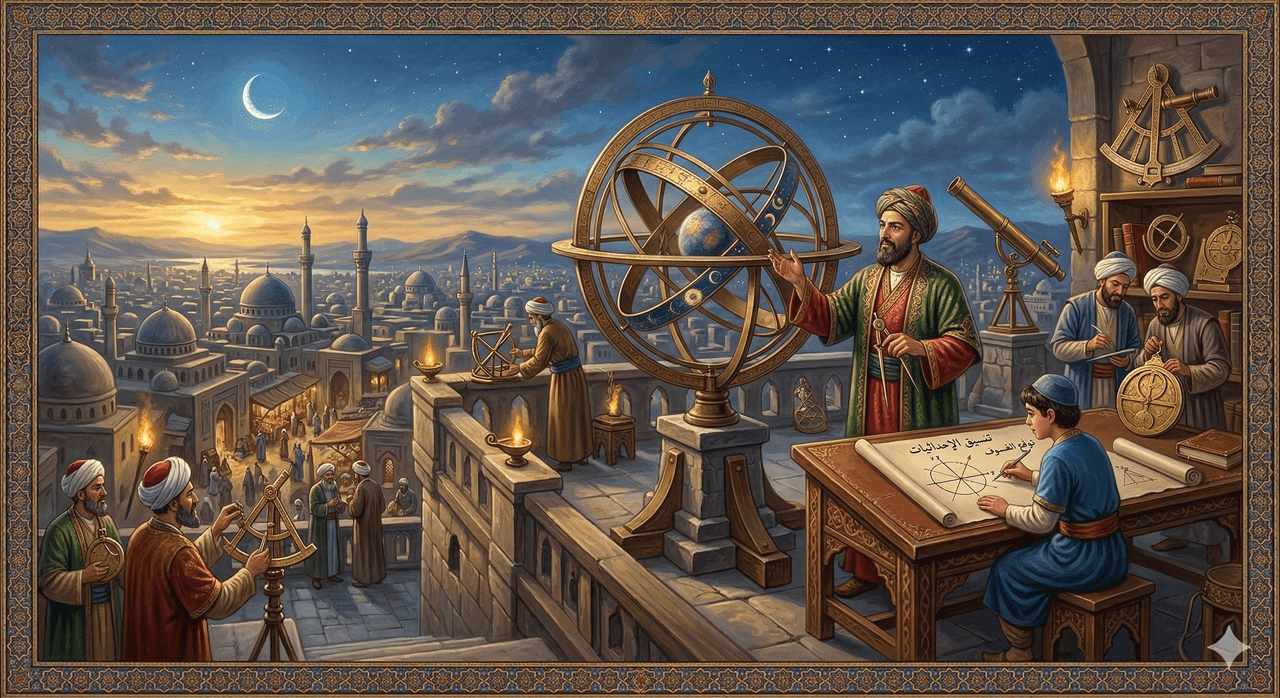
Abu al-Wafa al-Buzjani
Ebû’l-Vefâ el-Bûzcânî, whose full name is “Ebû’l-Vefâ Muhammed b. Muhammed b. Yahyâ b. İsmâil b. el-Abbâs el-Bûzcânî”, was one of the greatest mathematicians and astronomers produced by the Islamic world during the 10th century. He was born in 940 in the town of Bûzcân in the region of Khorasan and moved to Baghdad at a young age, where he continued his scholarly work in the scientific center of his time. He is remembered for his revolutionary discoveries in trigonometry and geometry. The epithe
EN
Mustafa Cem İnci
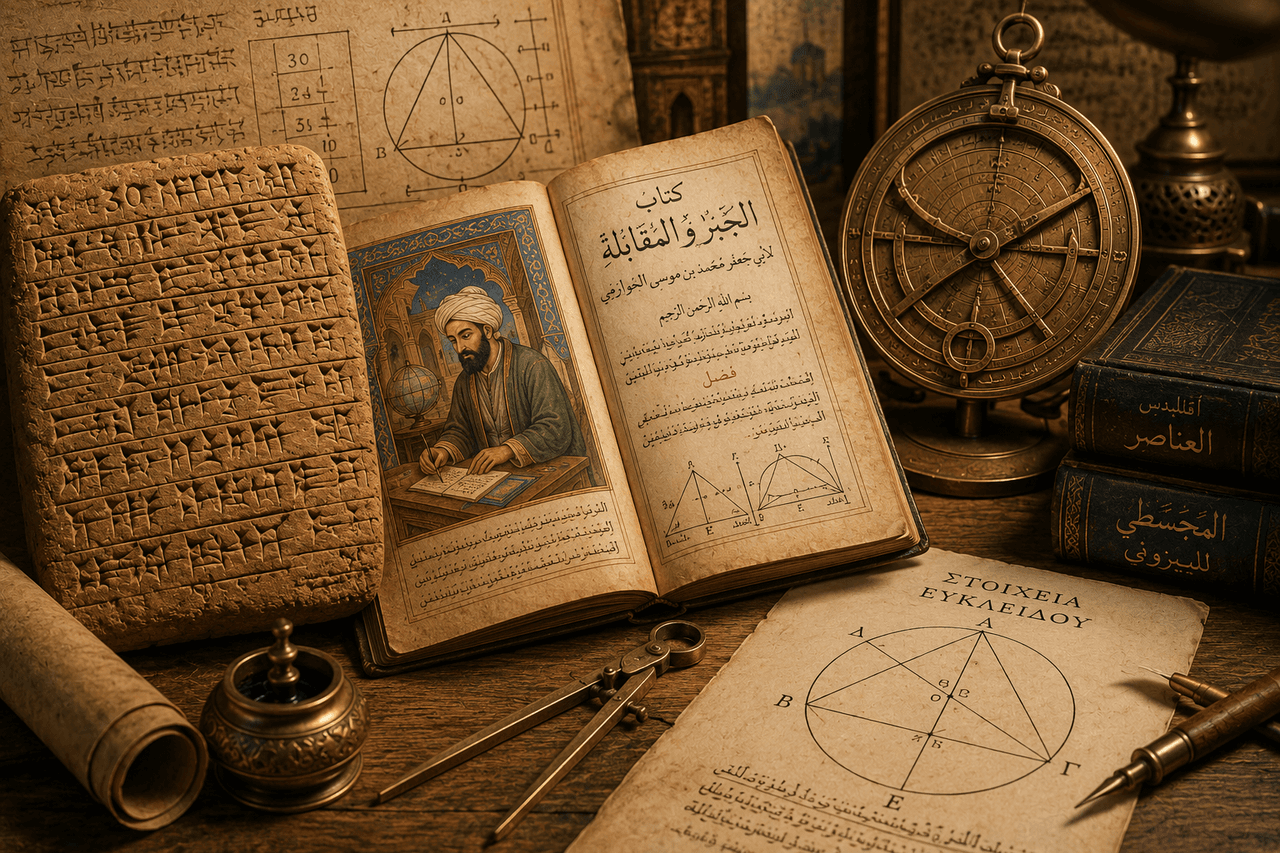
The History of Mathematics: The Journey of Numbers from Mesopotamia to the Islamic World
Mathematics is one of the oldest and most important branches of science in human history. Today, mathematics is used in technology, engineering, astronomy, economics, and many areas of daily life; it emerged as the result of thousands of years of accumulated knowledge. From the earliest times, humans have used mathematics to measure time, conduct trade, calculate taxes, define agricultural land, and study the heavens. The word “mathematics” derives from the Greek word mathema, meaning “learning.
EN
Batuhan Hallaç
 Py
PyPythagorean Theorem
The Pythagorean Theorem is a fundamental geometric theorem that describes the relationship between the three sides of a right triangle. According to this theorem, in a right triangle the square of the hypotenuse is equal to the sum of the squares of the other two sides. Mathematical Expression of the Pythagorean Theorem " image-alternate="" image-element-format="right"> Historical Development Although the Pythagorean Theorem is named after the ancient Greek mathematician Pythagoras (c. 570–49
EN
Ömer Said Aydın