

`strength` Related Article Results
 Al
AlAluminum Alloys in Aviation and Space Technologies
Aluminum alloys play a critical role in the aerospace industry. Aluminum has become an indispensable material in these sectors due to its lightness high strength and corrosion resistance like. In aviation it is used in airplane structures engine components and interior fittings while in space technologies it is frequently preferred for rocket engines spacecraft and structural elements. Key Properties of Aluminum Alloys Aluminum is a metal known for its lightness and high durability. However pure
EN
Mehmet Eren Yolcu

Shot Put
In shot put, athletes aim to throw a heavy metal shot as far as possible using specific techniques. Shot put requires not only physical strength but also a specialized technical skill and body coordination. Athletes perform their throws from within a circular throwing area, whose boundaries are defined, aiming toward a designated sector. History The origins of shot put trace back to medieval Europe, where competitions involved hurling heavy stones as far as possible. This tradition was gradually
EN
Furkan Üresin
Precipitation Hardening
Precipitation hardening is a heat treatment method used to enhance the mechanical properties of alloys. This technique is based on the principle of forming second-phase particles (precipitates) within the alloy matrix by first dissolving the alloy at high temperature, rapidly quenching it (e.g., in water), and then holding it at a specific temperature (aging). Precipitates significantly increase the material’s yield and tensile strength by impeding dislocation motion during deformation. Historic
ENMuzaffer Yalçın
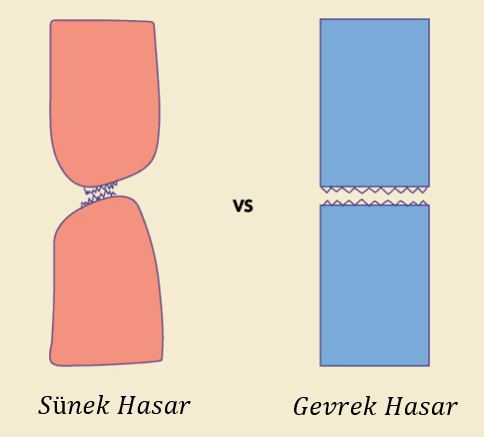
Brittle Material
Brittle materials are materials that generally have low deformation capacity, exhibit elastic behavior behavior, and are prone to fracture under high stress. Such materials are commonly used in engineering applications where hardness and durability requirements are paramount. However, the fracture behavior of brittle materials presents challenges in time engineering design. Knyamed. "Ductile vs. Brittle Fracture." Accessed February 26, 2025. https://knyamed.com/blogs/difference-between/ductile-v
ENElyesa Köseoğlu
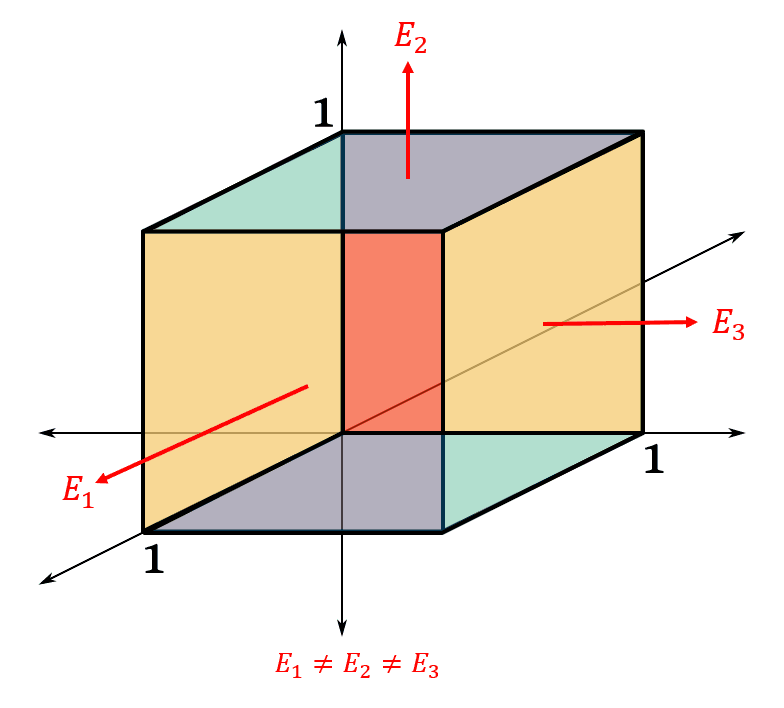
Orthotropic Material
Orthotropic materials are a type of material that exhibits distinct mechanical properties along three mutually perpendicular axes (Cartesian coordinate system: x, y, z). 【1】 In orthotropic materials, mechanical properties may differ along three perpendicular axes (x, y, z directions), but each direction has a constant value. That is: The elastic modulus in the x direction (Eₓ) is constant, The elastic modulus in the y direction (Eᵧ) is constant, The elastic modulus in the z direction (E_z) is co
ENElyesa Köseoğlu
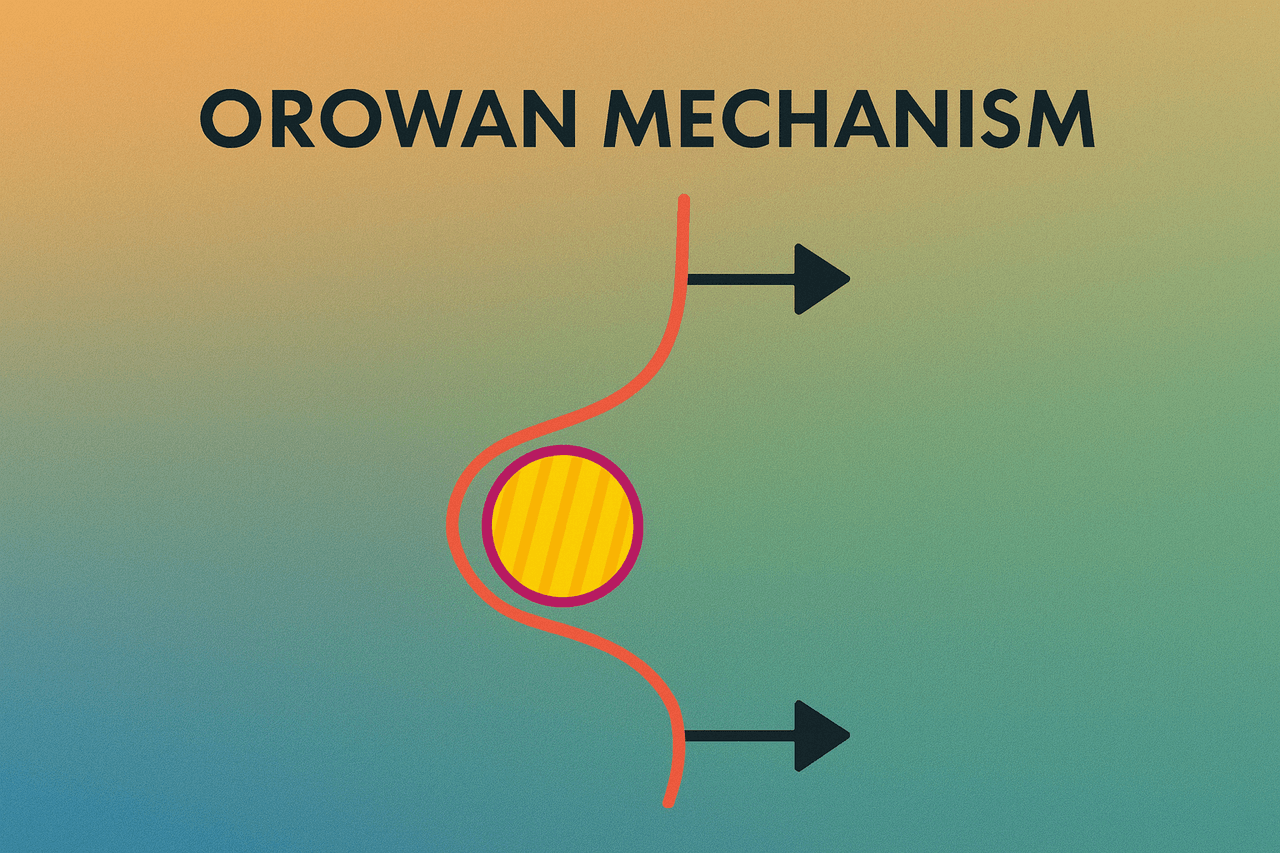
Orowan Mechanism
The Orowan mechanism is a dislocation behavior in materials science in which dislocations bypass obstacles they cannot cut through—namely, hard or non-shearable second-phase particles—by looping around them and continuing their path. This mechanism is named after Hungarian metallurgist Egon Orowan, who in the 1930s published seminal work explaining the presence of dislocations in crystals and their role in strengthening. The Orowan mechanism is one of the fundamental strengthening mechanisms tha
EN
Sude Altınçekiç
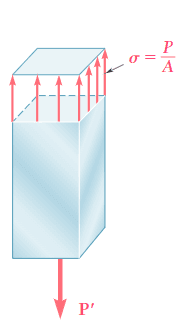
Çekme Dayanımı (Ultimate Tensile Strength)
Çekme dayanımı (ultimate tensile strength - UTS, tensile strength, TS, ultimate strength veya Ftu olarak da ifade edilir), bir malzemenin kopmadan önce maruz kalabileceği maksimum gerilme değeridir. Genellikle MPa veya psi birimleriyle ifade edilir ve malzemenin mekanik dayanımını belirleyen temel parametrelerden biridir. Gevrek malzemelerde çekme dayanımı(U), akma noktasına(Y) yakın bir değerde bulunurken, sünek malzemelerde daha yüksek değerlerde olabilmektedir. Eğrinin en yüksek noktası, malz
ENElyesa Köseoğlu
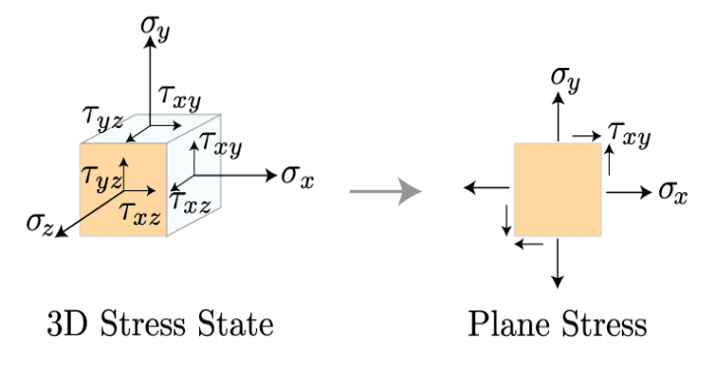
Plane Stress
Plane stress describes the condition in which stresses are zero along one plane. This condition typically applies to thin plates. Because the thickness direction of the material is significantly smaller compared to the other directions, negligible stress develops in this direction and is assumed to be zero (σz = σxz = σyz = 0). Thus, only the stresses in the x and y directions (σx, σy, τxy) are considered. Importance of Plane Stress An increase in the number of equations in theoretical and numer
ENElyesa Köseoğlu
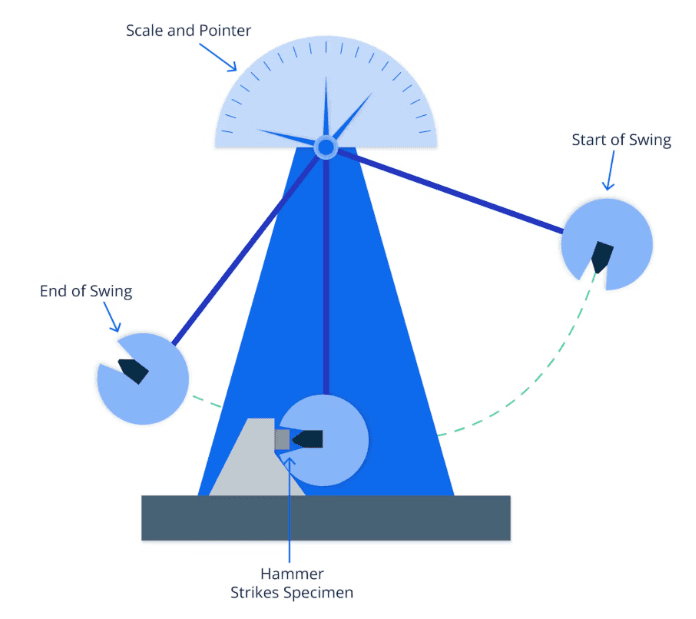
Toughness
Toughness is the total amount of energy a material absorbs until the point of fracture. This property indicates the material’s capacity to store energy under impact like external loads. Toughness is directly related to the area under the stress-strain curve, which represents the energy absorbed per unit volume. A material with high toughness is expected to have both high ductility and high strength. Brittle materials with high strength but low ductility, and materials with low strength but high
ENElyesa Köseoğlu
TiTitanium Alloys in Aviation and Aerospace Technologies
Titanium and titanium alloys are among the most important and critical components in the aerospace and space industries. Their high strength-to-weight ratio, perfect corrosion resistance, high-temperature tolerance, and long fatigue life like properties make them indispensable in these fields. Basic Properties of Titanium and Benefits of Its Alloys Titanium is a transition metal in the periodic table and is generally described as a lightweight, strong, and durable metal that forms a protective o
ENMehmet Eren Yolcu