

`sound-waves` Related Article Results
 Do
DoDoppler Effect
The Doppler effect is the phenomenon in which the frequency or wavelength of a wave, as measured by an observer, changes due to the relative motion between the wave source and the observer. When the source approaches the observer, the perceived frequency increases (wavelength shortens), and when the source recedes, the frequency decreases (wavelength lengthens). This physical phenomenon was first described by Austrian physicist Christian Doppler and has broad applications ranging from acoustics
EN
Yunus Emre Yüce
LeLevitation and Acoustic Forces
Levitation refers to the ability of materials to remain suspended in air by counteracting place gravity and is one of the most intriguing topics in science science. While most people associate levitation with magic or science fiction films, we now know scientifically that this phenomenon is real. This form of levitation, known as Acoustics acoustic levitation, was significantly advanced in 2022 when engineers integrated it with robotic technologies to reach a much higher level of sophistication.
EN
Oksana Gülünay
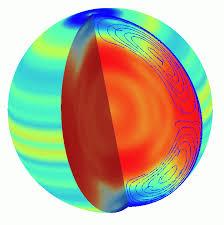
Helioseismology
Helioseismology is a subdiscipline of astrophysics that analyzes oscillations observed on the Sun’s surface to study its internal structure chemical composition and internal dynamics. The term is derived from the combination of “helios” meaning Sun and “seismology” the study of Earth’s internal structure using seismic waves. Similar to how seismology examines the paths of earthquake-induced waves through Earth’s layers helioseismology provides indirect information about the Sun’s interior by ana
EN
Erhan Şencan