

`self-confidence` Related Article Results

What Is Historical Heritage?
What Is Historical Heritage? Historical heritage consists of valuable traces left behind by people who lived in the past. These traces include ancient buildings, monuments, inscriptions, city ruins, palaces, mosques, bridges, and even traditions and handicrafts. They show how people lived, what they thought, and what they valued throughout history. Why Is Historical Heritage Important? - It helps us understand the past. - It helps us learn who we are and where we come from. - It preserves our cu
EN
Mustafa Cem İnci

My Giraffe Can Fly (Book)
My Giraffe Can Fly is a picture book by Mert Arık, illustrated by Hüseyin Sönmezay, and holds an important place in children’s literature. Published by Timaş Yayınları, this work aims to support the development and imaginative worlds of children aged 6 to 9. Designed to foster children’s creativity, self-confidence, and imagination, the book features an educational and aesthetic narrative. While helping children explore their artistic expressions and inner worlds, it also addresses themes of uni
EN
Hacer Büşra Aslan
 Th
ThThe Holistic Relationship Among Self-Esteem, Decision-Making, and Problem-Solving Skills
Self-esteem is a fundamental psychological construct related to an individual’s perception of themselves as valuable, capable, and worthy of respect. According to the Turkish Language Association, self-esteem means “the respect and intrinsic value a person feels toward themselves.” In psychological literature, self-esteem is defined as an individual’s overall evaluation of themselves and plays a decisive role in self-perception, social relationships, decision-making behaviors, and psychological
EN
Ayça Uçar
JoJourney of Youth: National Technology Initiative
Each generation has its own dream. Some, gazing at the sky in the past, dreamed of flight; others, upon encountering computers, asked themselves, “Could I build one too?” For our generation, a unique path has been opened: National Technology Initiative. What does this initiative promise us, especially the youth? First and foremost, self-confidence. In a society that for decades grew up with the belief that “we cannot do it, we cannot produce,” seeing our drones fluttering in the sky, watching ou
EN
Ilgın Zabun

Impostor Syndrome
The Imposter Syndrome (IS) is a psychological pattern characterized by persistent self-doubt and an internal fear of being exposed as a fraud, despite external evidence of success. Individuals affected by this syndrome typically attribute their achievements not to their own abilities or efforts but to luck, external factors, or temporary circumstances. First identified in 1978 by Dr. Pauline Clance and Dr. Suzanne Imes, this syndrome is widely recognized as a significant issue among high-achievi
EN
Esra Can

Self-Respect
Self-esteem is a fundamental psychological concept that refers to the evaluations and attitudes an individual develops toward their own self. It encompasses how an individual perceives themselves, the extent to which they value themselves, and their sense of adequacy. In this context, self-esteem is regarded as a multidimensional construct that includes the totality of an individual’s perceptions and appraisals of themselves. In the literature, the concept of self-esteem is also expressed throug
ENYaren Topaloğlu
DoDoes Wearing Certain Clothing Really Boost Human Self-Confidence Psychologically?
Some days a person stands for a long time in front of the closet. There are many options, yet nothing seems to match the feeling of that particular day. Then suddenly, without warning, the hand reaches for that one piece that always makes you feel good. Maybe it is a blazer that fits the shoulders perfectly, maybe an old sweatshirt that has not been worn in years, or perhaps just a simple outfit that, when seen in the mirror, gives you the sense that today is the day. What is interesting is that
EN
Ebrar Sıla Peri

Being Self-Confident: The Journey of Self-Belief
Did you know that self-discovery begins with self-confidence? What does self-confidence bring to a person? Let’s become knowledge explorers—it’s time to discover! ✨What Does Self-Confidence Mean? Self-confidence is the feeling of trust a person has in themselves. Every individual, every child, carries within their heart a treasure waiting to be uncovered. Being self-confident does not mean always being right; it means never giving up on believing in yourself. 🌱It Begins Like a Seed Self-confide
EN
Nida Öztürkmen
The Secret Burden of Scientists: Impostor Syndrome
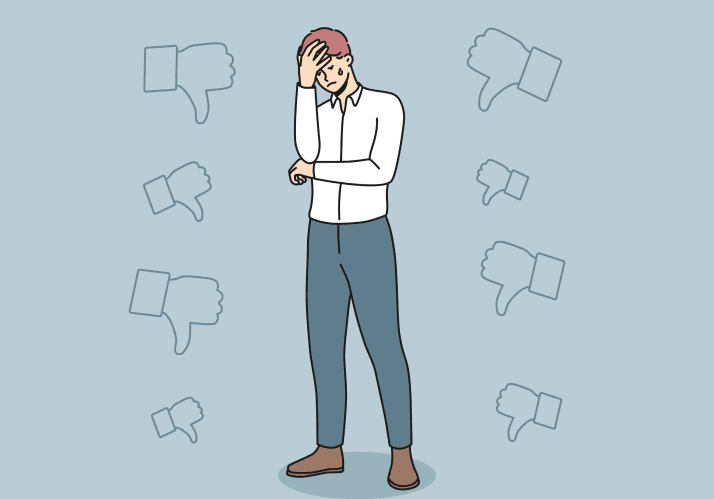
“Did I really deserve this success? No, no—it was pure luck…” “I’m not actually that good…” Think about it… You’ve been working for years. Theses, papers, experiments, presentations… You’re praised, invited to events, talked about by others. Yet deep inside, you tell yourself: “Actually, I don’t know much at all.” “This project got accepted, but I was just lucky.” “One day everyone will realize… I don’t really know how to do this.” If these phrases sound familiar, you’re not alone. Because these
EN
Hatice Mehlika Biten

The Fine Line Between Trust and Naivety: A Stoic Perspective
Today, many people experience disappointment because they act with good intentions. In particular, individuals who are naturally inclined to trust readily form connections without questioning the intentions of others. This tendency can lead to significant vulnerabilities, both in personal relationships and in professional life. At this point, Stoicism offers us an important perspective: "Focus on what you can control." If something is beyond your control, you should not emotionally attach yourse
EN
Furkan Işıktan