

`risk-management` Related Article Results
Project Management Institute (PMI)
The Project Management Institute (PMI) is a nonprofit organization established in 1969 in the United States that has developed globally recognized professional standards in project program and portfolio management. PMI serves as a reference point for project professionals by providing standards training publications certifications and events to ensure that interdisciplinary project management practices are conducted within a professional framework. Project Management Institute (PMI) The founders
EN
Sabiha Meyra Şahinler

Murphy's Law
Murphy’s Law is a concept rooted in engineering safety principles, originally expressed in its most basic form as “if anything can go wrong, it will go wrong.” Over time, it has become established in popular culture, scientific analyses, and management theories as a principle of pessimistic probability, representing a perspective that emphasizes systems’ vulnerability to failure and the inevitability of errors. Historical Origins and Emergence The naming and formulation of this concept stem from
EN
Yunus Emre Yüce

Accreditation
Accreditation is the process by which an authorized body evaluates and approves whether an institution, program, or operational module complies with established standards and criteria. This process is voluntary and provides a quality infrastructure that supports the reliability and validity of conformity assessment activities such as testing, inspection, analysis, and certification. Accreditation is a systematic practice designed to ensure the acceptability of conformity assurance documents incl
EN
Nursena Güller

Project Management
Project Management, is the discipline of applying the processes, methods, skills, and tools necessary to achieve a project’s objectives. More formally, according to the Project Management Institute (PMI), project management is the application of knowledge, skills, tools, and techniques to project activities to meet the project’s requirements. This application encompasses planning, organizing, executing, controlling, and closing processes from the project’s inception to its completion. Project ma
ENSabiha Meyra Şahinler
Proactive
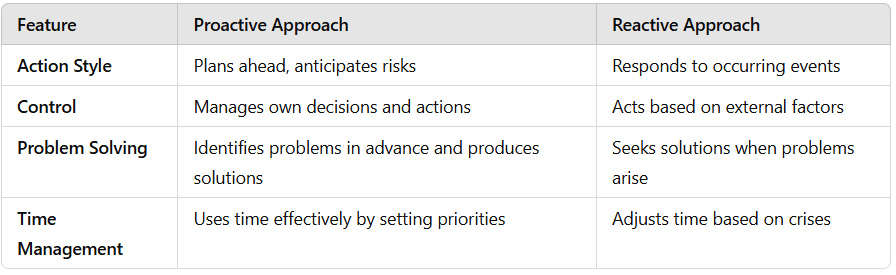
Proactivity is a concept that refers to individuals or organizations anticipating potential future situations, taking preventive measures, making plans, and acting accordingly. Proactive individuals and institutions do not merely react to existing circumstances; they also make conscious efforts to shape the future. Origin and Definition of the Concept of Proactivity The word "proactive" is derived from the Latin terms "pro" (before, forward) and "activus" (active, in motion). The concept was fir
EN
Sümeyra Uzun
 Ne
NeNetwork Security
Network security is the collection of technological, administrative, and physical measures designed to protect the confidentiality, integrity, and availability of data transmitted over computer networks. These measures aim to protect the network against both internal and external threats. It requires taking precautions against attack types such as unauthorized access, data loss, identity fraud, and service disruption that may affect institutions, individuals, and systems. Network security ensure
EN
Samet Şahin
The Concept of Risk and Military Risk Management from a Historical Perspective
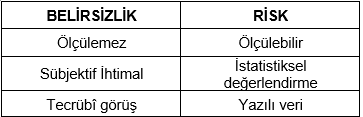
In ancient times, humans and leaders perceived risk as an element arising from fortune and beyond human control cause concept. Centuries ago risk, chance operating outside human control was accepted as inevitable. In later periods, with the advancement of civilization, science and technology, decision-makers began to define risk and measure its level in order to make the most accurate decisions and avoid losses. As human knowledge and experience developed, they devised various methods to identif
ENYücel Özel
DeDeficiency Assessment
Vulnerability assessment is a planned analysis process designed to identify, classify, and prioritize existing security vulnerabilities in an information system. Since software is developed by humans, it is impossible for it to be flawless; some errors are harmless while others can be exploited to compromise system integrity and availability. For example, common vulnerabilities such as SQL Injection or Cross-Site Scripting (XSS) can provide attackers with unauthorized access. Vulnerability asses
ENBeyza Nur Türkü
The Concept of Risk and Military Risk Management from a Historical Perspective
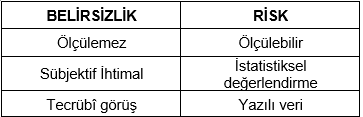
People and leaders living in ancient times perceived risk as a concept rooted in fortune and elements beyond human control. Centuries ago, risk was regarded as an unavoidable manifestation of chance outside human influence. In later periods, with the advancement of civilization, science, and technology, decision-makers began to define risk and measure its level in order to make the most accurate decisions and avoid harm or loss. As people’s knowledge and experience grew, they developed various m
ENYücel Özel