

`history-of-astronomy` Related Article Results
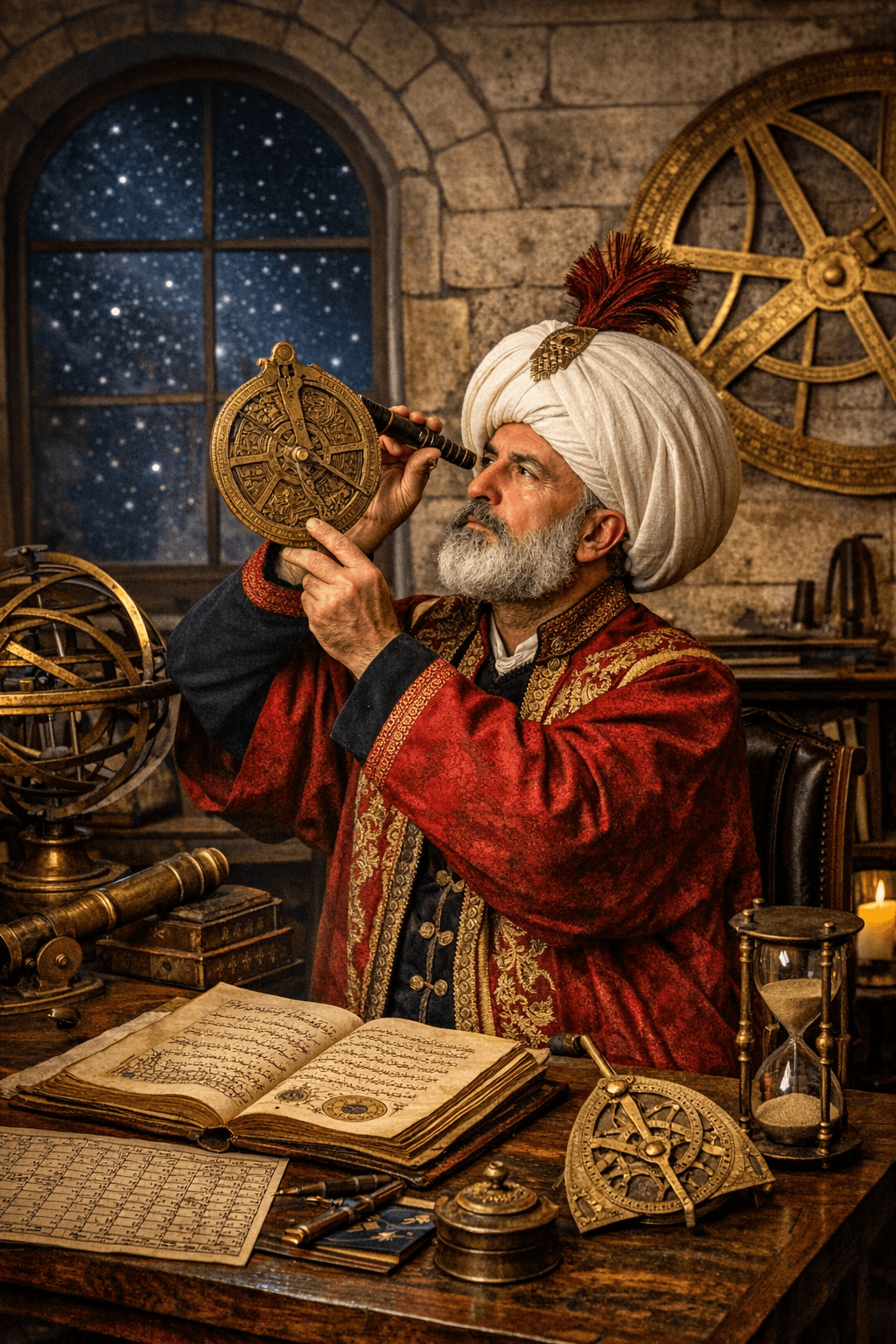
Office of the Chief Astrologer
In the Ottoman State, the question of how time was measured, how the sky was interpreted, and how this knowledge was integrated into state affairs has always led me to reflect on the institution of the Müneccimbaşı. For the Müneccimbaşı was not merely a role involving observation of the stars; it was a crucial mechanism that determined the rhythm of state administration, worship, and daily life. Looking back today, the extent to which time was treated as a central element and linked to the heave
EN
gülü sıla polat
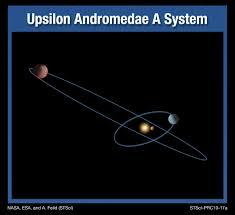
Upsilon Andromedae System
Upsilon Andromedae (υ Andromedae, abbreviated υ And) is a Sun-like star located approximately 44 light-years from Earth in the direction of the Andromeda constellation, accompanied by a multiplanet system orbiting it. In 1999, with the discovery of its second and third planets, it became a landmark in astronomical history as the first multiplanet system ever detected around a main-sequence star outside the Solar System. The system’s architecture consists of a “hot Jupiter” and two outer gas gian
EN
Erhan Şencan
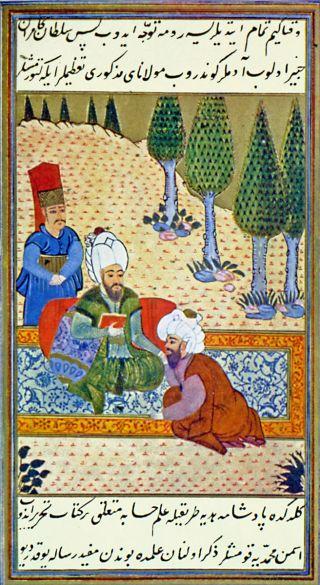
From Samarkand to Istanbul: Ali Qushji's Astronomical Legacy
Ali Kuşçu was a distinguished scholar, mathematician, and observer who lived in the 15th century and is regarded as one of the founders of astronomical education in Osmanlı. He is believed to have been born in Samarkand and to have acquired the epithet “Kuşçu” because his father served as the falconer-in-chief (doğancıbaşı) to Ulugh Bey. As a youth, he received his education at the Ulugh Bey Observatory, one of the most advanced scientific centers of his time. There he studied mathematics astron
EN
Rahşan Kızıltepe