


This article was automatically translated from the original Turkish version.
+2 More
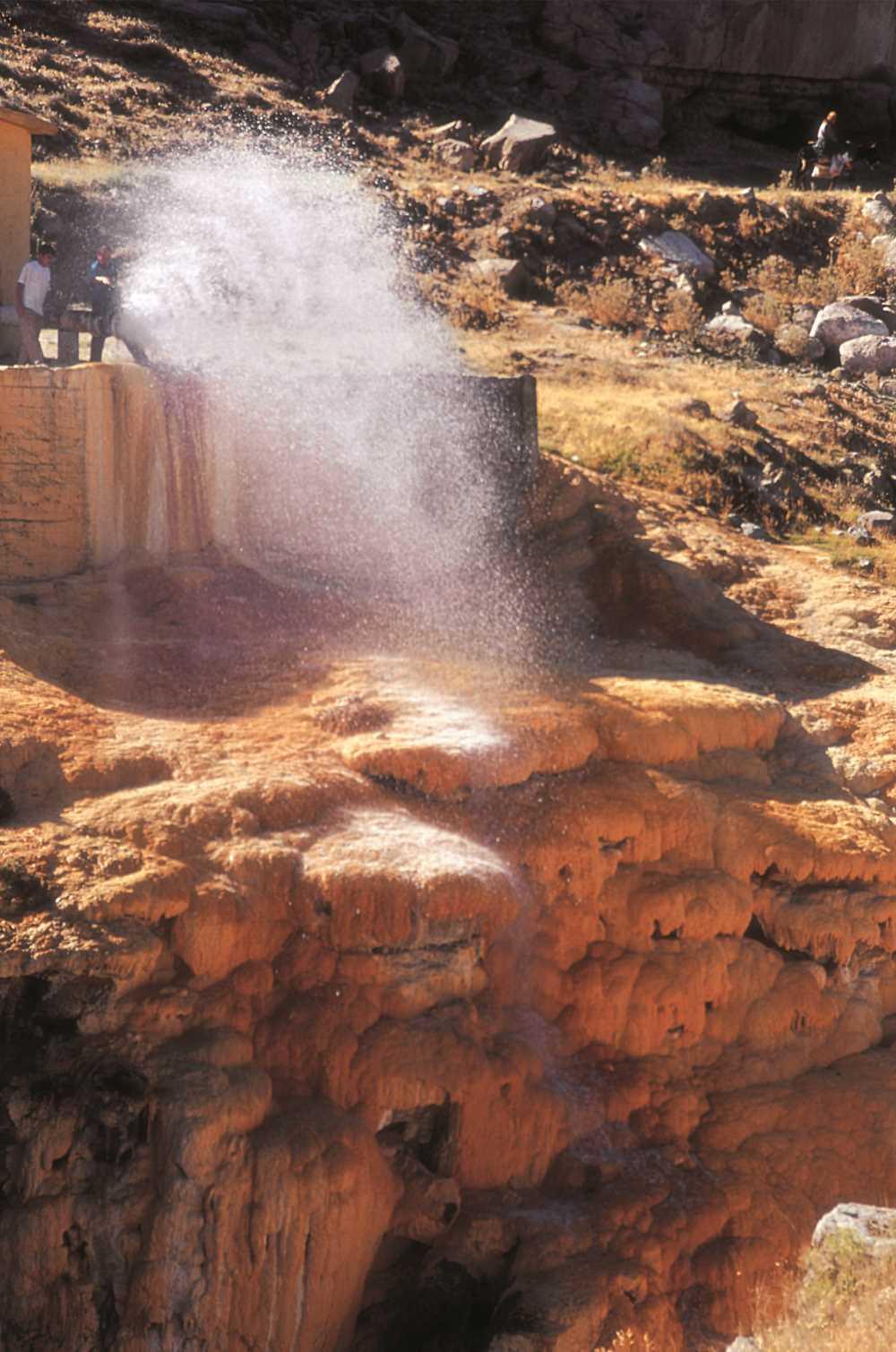
Ziga Spas
Location | Güzelyurt - Aksaray / Türkiye | ||||||||
|---|---|---|---|---|---|---|---|---|---|
Usage Area | Thermal tourism Health tourism Regional potential for heating and greenhouse applications in terms of geothermal potential | ||||||||
Source Temperature | 45°C – 52°C | ||||||||
Maximum Flow Rate | 150 L/s (artesian well output) | ||||||||
Gas Emission | Carbon dioxide (CO₂) concentration | ||||||||
Mineral Content | Na⁺, Ca²⁺, HCO₃⁻, Cl⁻, SO₄²⁻ | ||||||||
Travertine Color | Yellow Reddish Brownish | ||||||||
Fault Line | Ziga Fault Zone (southwest-northeast trending) | ||||||||
Ziga Hot Springs are located within the boundaries of Aksaray province in Türkiye’s Central Anatolia Region. The spa area is situated approximately 35 kilometers from the city center of Aksaray, 1.5 to 2 kilometers east of Yaprakhisar Village under the jurisdiction of Güzelyurt district. The Ziga thermal springs lie southeast of the Ihlara Valley and are accessible by road.
Ziga Hot Springs are situated along a northwest-southeast trending normal fault line. Measurements along this fault have identified five hot and mineral water sources with varying temperatures and discharge rates. The water temperature ranges between 45°C and 52°C, with discharge rates measured up to 150 liters per second. A well drilled in 1999 has yielded hot water via artesian flow.
Gas emissions, primarily carbon dioxide (CO₂), are observed at the springs. The total dissolved solids content of the water is approximately 3450 mg/l. The mineral composition of the water can be used as a complementary and supportive treatment for various health conditions including rheumatic disorders metabolic imbalances eye diseases and gynecological ailments.
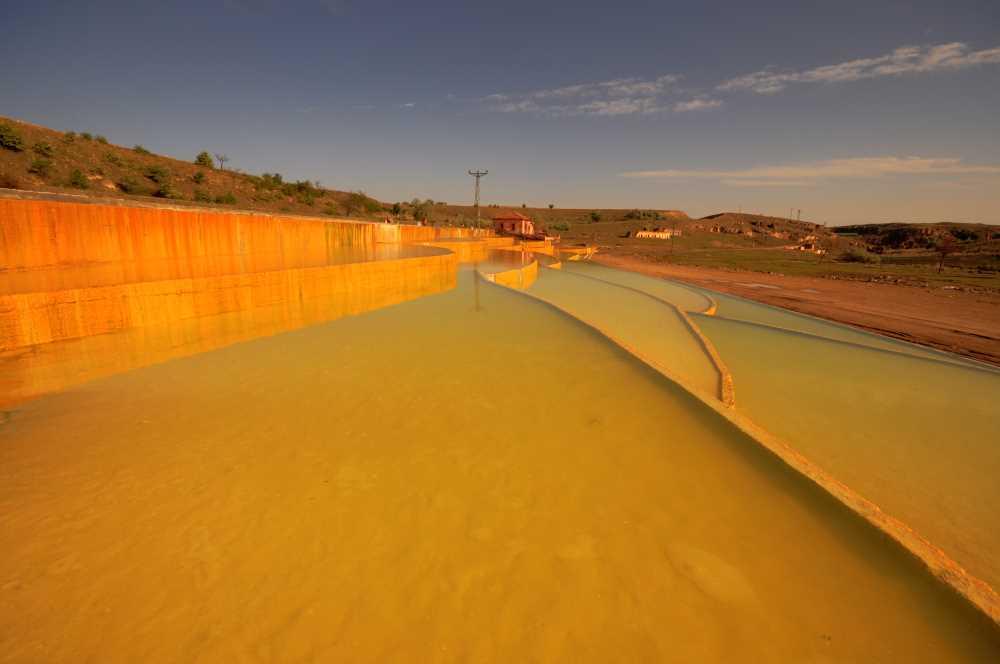
Ziga Kaplıcaları (Türkiye Kültür Portalı)
The Yaprakhisar hot and mineral water source is locally known as “Eski Ziga” and lies within the boundaries of Yaprakhisar Village. This spring emerges through travertine formations and has a temperature of 36°C with a discharge rate of approximately one liter per second. The total dissolved solids content has been measured at 3450 mg/l. Reddish and brownish precipitates accumulate around the spring, a phenomenon attributed to its mineral composition. As in other hot and mineral water sources in the region gas emissions are common.
Ziga Hot Springs are located within the Central Anatolian Volcanic Province. Neogene volcanic rocks are widespread in the area. These rocks particularly associated with the Melendiz Mountains consist of andesite dacite and tuff units. The Ziga Thermal Area has been shaped along fault systems formed by recent tectonic activity. Permeable volcanic units and fracture systems facilitate the circulation of groundwater enabling thermal water to reach the surface.
The area containing Ziga Hot Springs features a undulating topography near the eastern edge of the Ihlara Valley with abundant tuff and volcanic sediments. Over time calcium carbonate precipitates formed by the thermal waters have created travertine deposits. These formations have gradually accumulated at points where hot mineral water emerges resulting in travertines of varying colors and shapes.
Travertines impart yellow reddish and brownish surface textures to the region. In areas of ongoing geothermal activity surface features such as swellings microfractures and hydrothermal alteration traces are observed. These morphological structures reflect the influence of active tectonic processes on the geomorphological evolution of the area.
The thermal waters emerging from Ziga Hot Springs are rich in minerals and chemically enriched in sodium (Na⁺) calcium (Ca²⁺) bicarbonate (HCO₃⁻) chloride (Cl⁻) and sulfate (SO₄²⁻) ions. The water temperature ranges between 45°C and 52°C. The total dissolved solids content is approximately 3450 mg/l.
Chemically the water is classified as a mineral hot spring. The high mineralization level indicates prolonged interaction of the water with deep-seated magmatic or metamorphic rocks. Gas emissions observed along the Ziga springs are dominated by carbon dioxide (CO₂). The presence of these gases indicates that components carried by the hot water from depth trigger surface processes such as precipitation and pH changes.
The physicochemical properties of the water qualify it for both bathing and drinking therapy and have been confirmed by laboratory analyses. In terms of mineral content and temperature range Ziga Hot Springs are classified as medium-enthalpy geothermal resources.
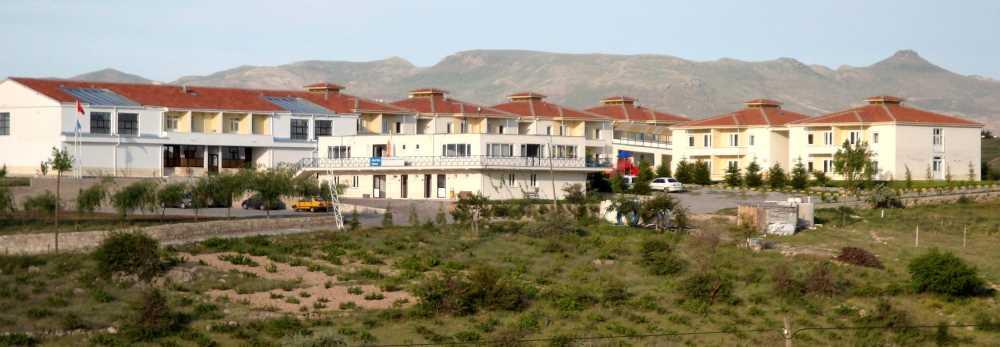
Ziga Kaplıca Tesisleri (Türkiye Kültür Portalı)
Aksaray Üniversitesi. "Ziga Kaplıcaları." *E-Şehir Aksaray Ansiklopedisi*. Accessed May 10, 2025.https://e-sehir.aksaray.edu.tr/2021/03/23/ziga-kaplicalari/
Aksaray İl Kültür ve Turizm Müdürlüğü. "Termal Turizm." T.C. Kültür ve Turizm Bakanlığı Resmî Web Sitesi. Accessed May 10, 2025.https://aksaray.ktb.gov.tr/TR-63662/termal-turizm.html
Aksaray İli and Urbanization Provincial Directorate. *Aksaray Province 2015 Environmental Status Report*. Environmental Impact Assessment and Environmental Permits Branch Directorate. Accessed May 10, 2025.https://webdosya.csb.gov.tr/db/ced/editordosya/Aksaray2015.pdf
T.C. Ministry of Culture and Tourism. "Ziga Kaplıcaları." Türkiye Kültür Portalı. Accessed May 10, 2025.https://kulturportali.gov.tr/turkiye/aksaray/gezilecekyer/ziga-kaplicalari

Ziga Spas
Location | Güzelyurt - Aksaray / Türkiye | ||||||||
|---|---|---|---|---|---|---|---|---|---|
Usage Area | Thermal tourism Health tourism Regional potential for heating and greenhouse applications in terms of geothermal potential | ||||||||
Source Temperature | 45°C – 52°C | ||||||||
Maximum Flow Rate | 150 L/s (artesian well output) | ||||||||
Gas Emission | Carbon dioxide (CO₂) concentration | ||||||||
Mineral Content | Na⁺, Ca²⁺, HCO₃⁻, Cl⁻, SO₄²⁻ | ||||||||
Travertine Color | Yellow Reddish Brownish | ||||||||
Fault Line | Ziga Fault Zone (southwest-northeast trending) | ||||||||
Hot and Mineral Water Sources
Yaprakhisar Source
Geological Features
Geomorphological Features
Hydrogeochemical Properties