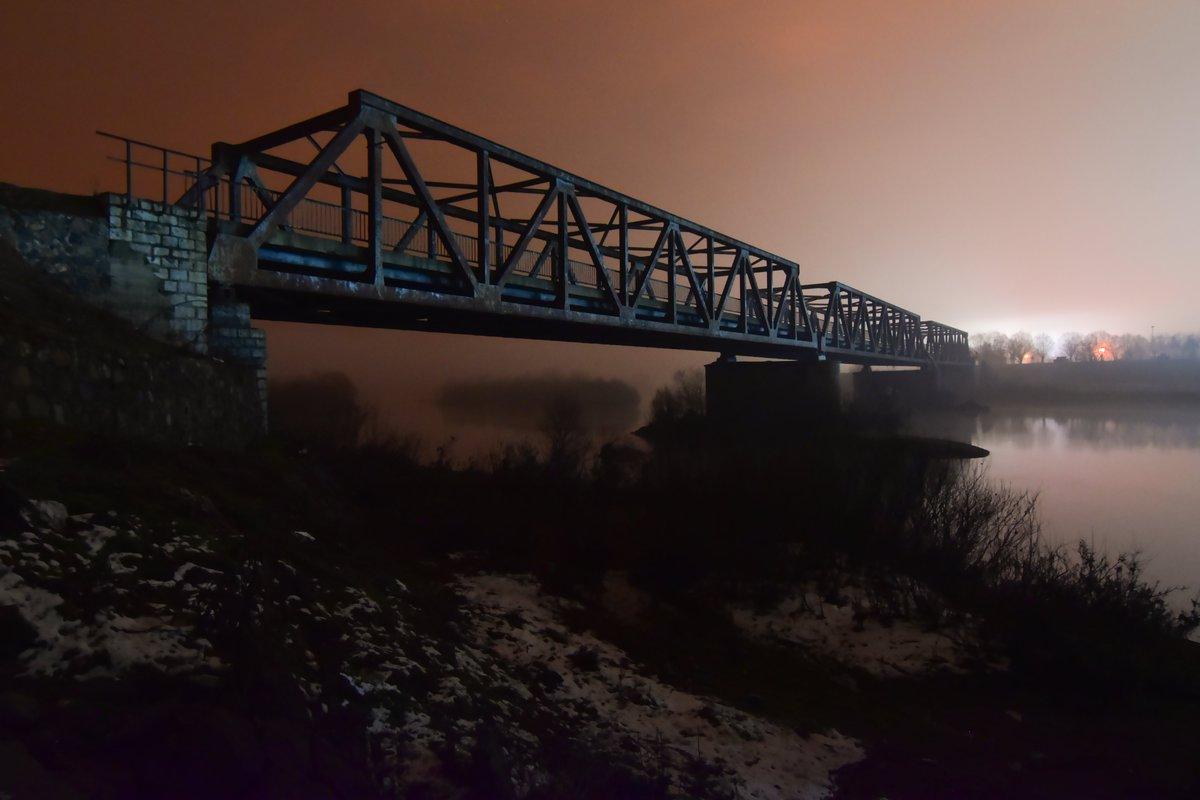
This article was automatically translated from the original Turkish version.
+1 More
Name(s) | Genç Bridge (Historic Genç Bridge) | ||||||||
|---|---|---|---|---|---|---|---|---|---|
Location | Bingöl / Genç over the Murat River | ||||||||
Building Type | Road Bridge | ||||||||
Opening | 1952 | ||||||||
Genç Köprüsü is a historical transportation structure built over the Murat River near the center of Genç district in Bingöl province in Eastern Anatolia. It was designed during the late Ottoman period to strengthen regional transportation networks and completed in the early 20th century. The bridge played a role in administrative, military, and commercial mobility.
The bridge is situated along historical transit routes connecting Eastern Anatolia to the Mesopotamia basin. The Murat River formed a natural barrier that significantly hindered transportation especially during winter and spring months. Therefore, the construction of a permanent bridge was crucial for enhancing central government control over the region and ensuring regular military logistics and commercial traffic.【1】
According to Ottoman archival documents, the bridge’s construction was planned under the central government’s authority and underwent specific bureaucratic stages including surveys, cost assessments, and tender procedures.【2】 This demonstrates that the structure was not merely a local initiative but a state-funded infrastructure project shaped within national policy frameworks.
Until the 1950s, the people of Bingöl faced difficult conditions in maintaining communication and transport with neighboring provinces. Crossing the Murat River, which frequently disrupted the Bingöl–Diyarbakır route, posed a major challenge. Travel across the river was conducted using rafts, which were both highly inefficient and extremely slow under the conditions of the time. Moreover, traffic across the river was supervised by military units, creating a burdensome situation for both local residents and soldiers.【3】
As the people of Bingöl relied on Diyarbakır, considered the most developed province in the region, for trade and essential supplies, the need for a bridge near Genç district on the Murat River became imperative.【4】
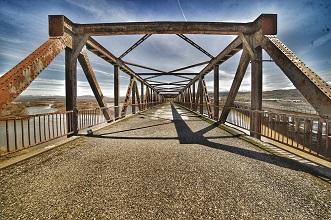
Genç Köprüsü (Genç Belediyesi)
The relocation of Genç district center to Kupar Mahallesi in 1936 and the establishment of a new administrative structure centered on Yayla village highlighted the urgent need for transportation across the Murat River. The prolonged use of primitive means for river crossings created serious risks to life and property, leading local authorities and residents to regard a permanent bridge as a necessary infrastructure investment. Although efforts to construct the bridge began early, no concrete results were achieved for a long time.【5】
After the 1948 local elections, the appointment of Ahmet Bayram as mayor brought renewed momentum to the bridge demand at the local administration level. Following the 1950 general elections, the Democrat Party government accelerated its development and transportation policies. In 1951, Turgut Başkaya, appointed governor of Bingöl, reported to the central government that constructing a bridge over the Murat River was essential for regional connectivity and initiated efforts to improve the Muş–Bingöl–Elazığ road link. Local officials invited ministers and senior administrators to the region to demonstrate the bridge’s necessity firsthand.【6】
Throughout 1951, the bridge construction encountered various technical and geological challenges. Settlement of some bridge piers due to unstable riverbed conditions, material incompatibilities, and delays in procuring imported iron components prolonged the construction timeline. Authorities planned to build a temporary service bridge, but initially only a wooden pedestrian crossing was feasible. Due to the delays, numerous petitions were sent to the Prime Minister’s Office by local administrators and community representatives, emphasizing the vital importance of completing the bridge for the region.【7】
Following interventions by the central administration, the project was reassessed and it was reported that technical obstacles had been resolved and the bridge piers were nearing completion. It became evident that the upper structure work was delayed until 1952 due to the procurement of metal components ordered from Germany. During the same period, studies were conducted regarding the planned road route passing through Bingöl city center; however, topographical and engineering assessments concluded that routing the road entirely through the city was not feasible.【8】
As a result of joint efforts by local administrations, political representatives, and the regional population, Genç Köprüsü was completed and opened to traffic in 1952. It became one of the significant transportation structures built over the Murat River during the Republican era. After its opening, it significantly contributed to the growth of road trade with Diyarbakır and played a decisive role in ensuring the continuity of the regional transportation network.【9】
Genç Köprüsü features a multi-arched design. The arch spans were arranged according to the width and flow regime of the riverbed. The use of precisely cut stone blocks in masonry reflects the technical standards common in public constructions of the period.
The bridge deck was designed with sufficient width to accommodate pedestrian and animal traffic, while parapet walls were raised for safety. Decorative elements are minimal, with functionality taking precedence.
Since its construction, the bridge has served as part of the regional transportation network. With the expansion of the national road system during the Republican era, its functional importance diminished somewhat; however, it has continued to exist as a historical structure.
Today, the bridge is recognized locally as a historical structure.
It appears in district promotional materials and visual archives and is regarded as part of the region’s cultural heritage.【10】Preservation efforts for the structure fall under the responsibility of local authorities and relevant institutions.
Apuhan, Ferhat. “Arşiv Vesikaları Çerçevesinde Genç Köprüsü’nün İnşa Süreci.” *Bingöl Araştırmaları Dergisi* 6, no. 1 (2019): 77–92. Accessed March 3, 2026. https://dergipark.org.tr/tr/download/article-file/937575
Bingöl Sürmanşet Gazetesi. “Türkiye’deki Sayılı Köprülerinden Biri Bingöl’de.” *Bingöl Sürmanşet*. Date Published: January 30, 2024; Updated: November 5, 2024. Accessed March 3, 2026. https://www.bingolsurmanset.com/turkiyedeki-sayili-koprulerinden-biri-bingolde
Genç Belediyesi. “İlçemizden Kareler.” Genç Belediyesi Foto Galeri. Accessed March 3, 2026. https://www.genc.bel.tr/tr/galeri/ilcemizden-kareler
T.C. Ministry of Culture and Tourism -Bingöl İl Directorate of Culture and Tourism. “Genç İlçesi.” Accessed March 3, 2026. https://bingol.ktb.gov.tr/TR-286269/genc-ilcesi.html
[1]
Apuhan, Ferhat. “Arşiv Vesikaları Çerçevesinde Genç Köprüsü’nün İnşa Süreci.” Bingöl Araştırmaları Dergisi 6, no. 1 (2019) Sayfa: 77-92. Erişim tarihi: 3 Mart 2026. https://dergipark.org.tr/tr/download/article-file/937575
[2]
Apuhan, Ferhat. “Arşiv Vesikaları Çerçevesinde Genç Köprüsü’nün İnşa Süreci.” Bingöl Araştırmaları Dergisi 6, no. 1 (2019) Sayfa: 77-92. Erişim tarihi: 3 Mart 2026. https://dergipark.org.tr/tr/download/article-file/937575
[3]
Apuhan, Ferhat. “Arşiv Vesikaları Çerçevesinde Genç Köprüsü’nün İnşa Süreci.” Bingöl Araştırmaları Dergisi 6, no. 1 (2019) Sayfa: 77-92. Erişim tarihi: 3 Mart 2026. https://dergipark.org.tr/tr/download/article-file/937575
[4]
Apuhan, Ferhat. “Arşiv Vesikaları Çerçevesinde Genç Köprüsü’nün İnşa Süreci.” Bingöl Araştırmaları Dergisi 6, no. 1 (2019) Sayfa: 77-92. Erişim tarihi: 3 Mart 2026. https://dergipark.org.tr/tr/download/article-file/937575
[5]
Apuhan, Ferhat. “Arşiv Vesikaları Çerçevesinde Genç Köprüsü’nün İnşa Süreci.” Bingöl Araştırmaları Dergisi 6, no. 1 (2019) Sayfa: 77-92. Erişim tarihi: 3 Mart 2026. https://dergipark.org.tr/tr/download/article-file/937575
[6]
Apuhan, Ferhat. “Arşiv Vesikaları Çerçevesinde Genç Köprüsü’nün İnşa Süreci.” Bingöl Araştırmaları Dergisi 6, no. 1 (2019) Sayfa: 77-92. Erişim tarihi: 3 Mart 2026. https://dergipark.org.tr/tr/download/article-file/937575
[7]
Apuhan, Ferhat. “Arşiv Vesikaları Çerçevesinde Genç Köprüsü’nün İnşa Süreci.” Bingöl Araştırmaları Dergisi 6, no. 1 (2019) Sayfa: 77-92. Erişim tarihi: 3 Mart 2026. https://dergipark.org.tr/tr/download/article-file/937575
[8]
Apuhan, Ferhat. “Arşiv Vesikaları Çerçevesinde Genç Köprüsü’nün İnşa Süreci.” Bingöl Araştırmaları Dergisi 6, no. 1 (2019) Sayfa: 77-92. Erişim tarihi: 3 Mart 2026. https://dergipark.org.tr/tr/download/article-file/937575
[9]
Apuhan, Ferhat. “Arşiv Vesikaları Çerçevesinde Genç Köprüsü’nün İnşa Süreci.” Bingöl Araştırmaları Dergisi 6, no. 1 (2019) Sayfa: 77-92. Erişim tarihi: 3 Mart 2026. https://dergipark.org.tr/tr/download/article-file/937575
[10]
Bingöl Sürmanşet Gazetesi. “Türkiye’deki Sayılı Köprülerinden Biri Bingöl’de.” Bingöl Sürmanşet. Yayınlanma: 30 Ocak 2024. Güncelleme: 5 Kasım 2024. Erişim tarihi: 3 Mart 2026. https://www.bingolsurmanset.com/turkiyedeki-sayili-koprulerinden-biri-bingolde

Name(s) | Genç Bridge (Historic Genç Bridge) | ||||||||
|---|---|---|---|---|---|---|---|---|---|
Location | Bingöl / Genç over the Murat River | ||||||||
Building Type | Road Bridge | ||||||||
Opening | 1952 | ||||||||
No Discussion Added Yet
Start discussion for "Young Bridge (Bingöl)" article
Location and Historical Context
Before the Construction of Genç Köprüsü
Construction Process of Genç Köprüsü
Architectural Features
Function and Purpose
Current Status