


This article was automatically translated from the original Turkish version.
Yıldız İstihbarat Teşkilatı emerged as a significant organization during the reign of Sultan Abdülhamid II, serving as a defensive mechanism against the serious internal and external threats faced by the Ottoman Empire and laying the foundations of modern Turkish intelligence. It attracted attention through its centralized structure, direct subordination to the Sultan, extensive network of agents, and detailed information-gathering mechanisms. In the context of its time, this organization played a critical role in understanding the political and social fabric of the Ottoman state.
This organization was also known as the "Zabita-i Hafiye Teşkilatı" or "Yıldız Hafiye Teşkilatı," and over time came to be referred to as the "Yıldız Intelligence Organization."
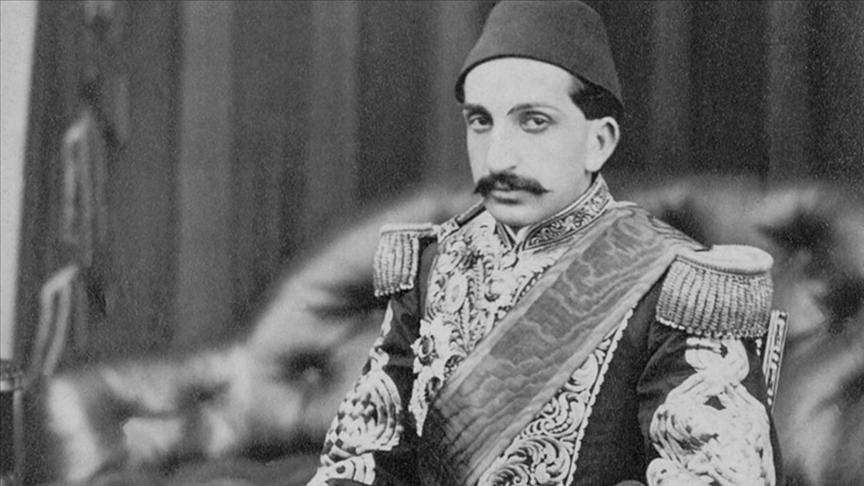
Sultan 2. Abdülhamid Han (AA)
Efforts to transition to modern intelligence in Turkish history began during the reign of Abdülhamid I (1774–1789). During this period, intelligence activities focused on monitoring whether those in power and those under their authority were exceeding legal boundaries. Significant institutional progress was made during the reign of Selim III (1789–1807) with the integration of permanent diplomatic missions into intelligence operations. Under Mahmud II (1808–1839), emphasis was placed on internal intelligence reports.
The direct subordination of intelligence activities to a formal institution in the Ottoman Empire occurred during the reign of Abdülmecid (1839–1861). Although the secret organization established under Abdülmecid was closed shortly after its founding, it was reactivated in 1863 during the reign of Sultan Abdülaziz (1861–1876). Activities during these periods laid the foundational steps toward modern intelligence by prioritizing public security.
The period during which efforts to transition to modern intelligence were most intense and where the most significant intelligence developments occurred was the reign of Sultan Abdülhamid II.
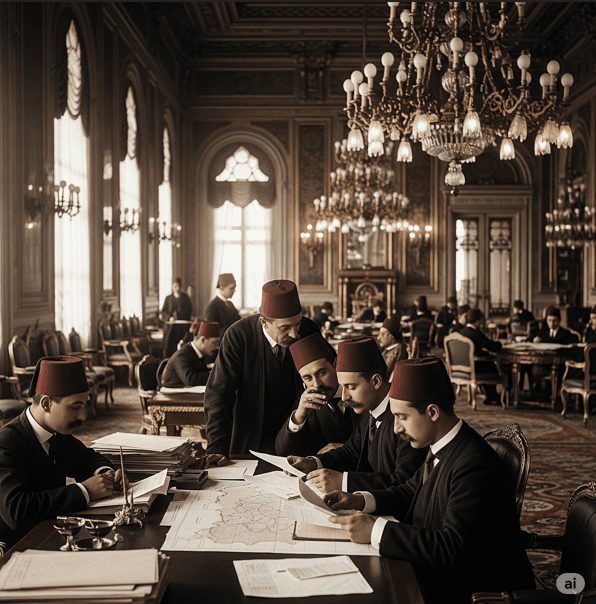
Temsilî Yıldız İstihbarat Teşkilatı (Yapay zekâ ile oluşturulmuştur)
During a challenging period marked by intensifying internal and external threats, Abdülhamid II prioritized security and intelligence efforts to ensure the survival of the empire. In 1879, he initiated reforms in security and oversight structures with the establishment of the Zabtiye Nezareti.
Finding the security of Dolmabahçe Palace inadequate, the Sultan moved to Yıldız Palace, where he spent the majority of his 33-year reign. A special guard unit was created for the Sultan’s personal security, and barracks capable of housing fifteen thousand soldiers were constructed around the palace grounds.
This intelligence organization, centered at Yıldız Palace, directly subordinate to the Sultan and possessing a complex structure, had two primary objectives:
Sultan Abdülhamid was well aware of the depositions of his uncle, Sultan Abdülaziz, and his elder brother, Sultan Murad V, and acted with great caution to avoid a similar fate.
Sultan Abdülhamid aimed to establish the Yıldız Intelligence Organization in such a way that it could surpass the activities of the renowned British intelligence service. The branch of the organization within the Harbiye Nezareti was named the "Şube-i Mahsusa." The Yıldız Intelligence Organization began regularly receiving reports from every corner of the world and dispatched powerful agents to numerous foreign embassies.

Temsilî Yıldız İstihbarat Teşkilatı (Yapay zekâ ile oluşturulmuştur)
The head of the Yıldız Intelligence Organization was the Chief of the Başkitâbet Dairesi, Said Paşa. Said Paşa played a crucial role in formalizing the organization by drafting its regulations. Subsequently, personnel were appointed throughout the country.
The organization operated through two main branches:
Official Branch: Official information received from provinces, commands, embassies, and various state departments was transmitted to Yıldız Palace via telegraph and letters. These reports were recorded in a special journal register for examination.
Private Branch: This branch functioned through a practice known as "jurnalcilik," directly supplying information to the Sultan. Sultan Abdülhamid transformed this system into a key instrument of his rule, giving espionage the status of an official state institution.
In Istanbul, the espionage and jurnalcilik network had an official position, budget, and office known as the "Baş Hafiye." Nevertheless, spies and jurnalcilers constituted a vast volunteer force. This volunteer force delivered an overwhelming number of journals to the Sultan, so many that they were often unreadable.

Temsilî Teşkilat Mensupları (Yapay zekâ ile oluşturulmuştur)
The Yıldız intelligence organization encompassed 990 agents, including pashas, naval officers, governors, judges, religious scholars, physicians, teachers, and journalists, as well as 23 agent centers. Yıldız Palace occupied a central position in the intelligence flow and was regarded as the "nest of spies." Outside Yıldız Palace, the palaces of princes, military schools, madrasas, tekkes, and zaviyes were also major hubs of spy activity.
Private information arrived directly at a special office adjacent to the Sultan’s working chamber. In this office, personal attendants such as the chief of the wardrobe, chief of the prayer mats, chief of the ewers, chief of the tobacco, chief of the coffee, chief of the kitchen, and chief of the library served. These individuals had been part of the Sultan’s household since his days as a prince and had earned his trust through long experience.

Temsilî Teşkilat Mensubu (Yapay zekâ ile oluşturulmuştur)
The organization had a distinctive operational style. The "serhafiyeler" appointed directly by the Sultan were free to operate on any matter. Prominent serhafiyeler included Tüfekçi Ahmet Celaleddin Paşa, İsmail Mahir Paşa, Abbas Hilmi Paşa, Hasan Fehmi Paşa, Salih Münir Paşa, and Şifre Kâtibi Kâmil Bey. Each serhafiye was responsible for his own unit, with Said Paşa overseeing them all.
Serhafiyeler dispatched their subordinate spies to critical regions, and these spies, in turn, recruited new agents in their assigned areas. Agents could be selected from among the general public or state officials. Yıldız agents traveled as far as the farthest corners of Anatolia and the empire to gather information. Collected intelligence was transmitted to Said Paşa, the Chief of the Başkitâbet Dairesi, at the palace. All expenses and expenditures of the spy organization were covered by Yıldız Palace.
The initial spy organization consisted of three hundred individuals. Most spies were recruited from the jandarma and Zabtiye forces, with preference given to those who could read and write. Before assuming duty, candidates underwent detailed interrogations conducted by Tahsin Paşa. These interrogations gathered detailed information on the spies’ identities, families, official positions, kinship ties, and connections in Europe.

Temsilî Teşkilat Mensubu (Yapay zekâ ile oluşturulmuştur)
These astute spies moved among the public and in coffeehouses in Istanbul. Assignments were also given to governors in the provinces, certain state officials, servants of ministers, envoys, embassy secretaries, and domestic staff. Telegrams and letters received from these sources were recorded in journal registers at the intelligence unit in Yıldız for examination. Every document submitted to the Başkitâbet was stamped with the exact time and minute, and official and private documents were separated.
Sultan Abdülhamid regarded combating coups planned in the residences of grand viziers and the palaces of the Sheikh-ul-Islam as one of the organization’s most important duties and assigned spies to these locations as well.
A special Cipher Office was established at Yıldız Palace. All official cipher keys from provinces and embassies were kept at the Mabeyn Başkitâbet. These keys were developed to protect against British intelligence wiretaps.
Telegrams began to be sent in cipher. Every sealed message transmitted via cipher keys was delivered directly to Sultan Abdülhamid. Through this channel, not only agents but also governors, commanders, ambassadors, deputy governors, and embassy undersecretaries could communicate directly with the Sultan in writing.

Temsilî Teşkilat Mensubu (Yapay zekâ ile oluşturulmuştur)
Sultan Abdülhamid attached special importance to journals received from grand viziers, Sheikh-ul-Islams, ministers, and other high-ranking officials. These journals bypassed official channels and were submitted privately. The Sultan personally opened and read some of these journals, while others he deemed unnecessary to read. He would cut the signature beneath documents requiring investigation with scissors and forward them to the relevant Daire-yi Kitâbet for action, while placing others in a sack and sending them to the Evrak Hazinesi.
Sultan Abdülhamid closely monitored whether his orders, whether issued through official reports or journal intelligence, were carried out. He also had important information recorded in a personal notebook. Except during periods of fatigue, he particularly worked on these matters in the mornings. This office formed the backbone of the Yıldız Intelligence Organization. Journals continued to arrive from every corner of the world; after preliminary review, the originals or summary tables were presented to the Sultan.
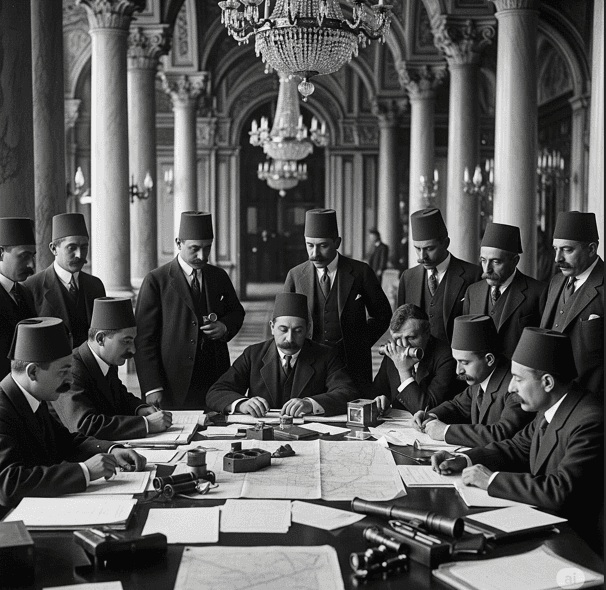
Temsilî Yıldız İstihbarat Teşkilatı (Yapay zekâ ile oluşturulmuştur)
The Yıldız Intelligence Organization lost its function with the end of Abdülhamid II’s reign. In subsequent periods, the Ottoman State and the Republic of Türkiye laid the foundations of today’s modern intelligence organizations through different institutionalization efforts in military and general intelligence.
Altın, Şükrü. *Yıldız İstihbarat Teşkilatı.* Academia.edu. Accessed June 15, 2025.https://www.academia.edu/40099938/YILDIZ_%C4%B0ST%C4%B0HBARAT_TE%C5%9EK%C4%B0LATI.
Anadolu Ajansı. *İmparatorluğun Zor Yıllarının Hükümdarı Sultan II. Abdülhamid.* February 10, 2022. Accessed June 15, 2025.https://www.aa.com.tr/tr/kultur-sanat/imparatorlugun-zor-yillarinin-hukumdari-sultan-2-abdulhamid/2498662
Demir, Mücahit. “Osmanlı Devleti’nde Askerî İstihbarat, Gültekin Yıldız.” Türk Dünyası İncelemeleri Dergisi / Journal of Turkic World Studies. Accessed June 15, 2025.https://dergipark.org.tr/tr/download/article-file/1041261.
Ertem, Alper Volkan. “Türk İstihbarat Tarihi, İsmail H. Demircioğlu, Ahmet Özcan, Namık Çencen, Yücel Yiğit (Editörler). İstanbul: Yeditepe Yayınları, 2021, 904 sf., ISBN: 978-625-7477-03-1.” *International Journal of Humanities and Education (IJHE)* 8, no. 17 (2022): 320–330. Accessed June 15, 2025.https://dergipark.org.tr/tr/download/article-file/2108414
Çağlak, Aykut. “Modern İstihbarata Geçiş Dönemi: Türk ve Rus İstihbarat Organizasyonları – Karşılaştırmalı Bir Çözümleme.” *RUSAD* 7 (2022): 95–122. Accessed June 15, 2025.https://dergipark.org.tr/en/download/article-file/2424552

No Discussion Added Yet
Start discussion for "Yıldız Intelligence Organization" article
Its Place in the Transition to Modern Intelligence
Establishment and Objectives
Structure and Operations
Serhafiyeler and the Agent Network
The Cipher Office
Dissolution of the Organization