This article was automatically translated from the original Turkish version.
+2 More
Region | Mediterranean Region | ||||||||
|---|---|---|---|---|---|---|---|---|---|
Province | Antalya | ||||||||
District | Kemer | ||||||||
Elevation Above Sea Level | ~230 metres | ||||||||
Gas Emission | Infiltration Through Cracks and Fractures | ||||||||
Registration Year | 2021 | ||||||||
Ancient Name | Chimera | ||||||||
Cultural Use | Religious Ceremonies, Rituals | ||||||||
Activities | Short-Term Observation, Food Heating | ||||||||
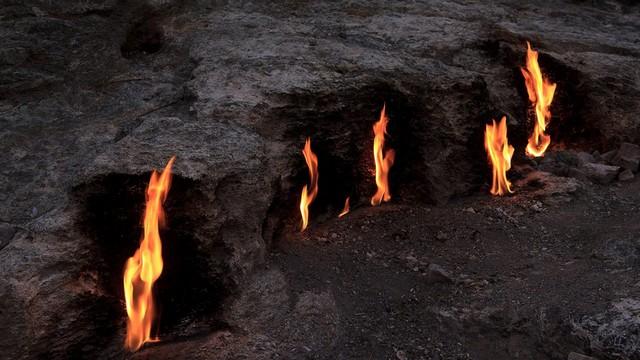
Yanartaş is a natural geological formation caused by methane gas emerging from underground and escaping through rocky surfaces in the form of flames. Ancient sources associate this natural phenomenon with the myth of Chimera from Greek mythology.
Yanartaş is located within the boundaries of Antalya province’s Kemer district, specifically in the Çıralı Neighborhood. The site is situated approximately one kilometer from Çıralı Beach and lies at an elevation of about 250 meters above sea level. Access to Yanartaş, which is within the boundaries of the Olympos-Beydağları Coastal National Park, is possible via footpaths and staircases.
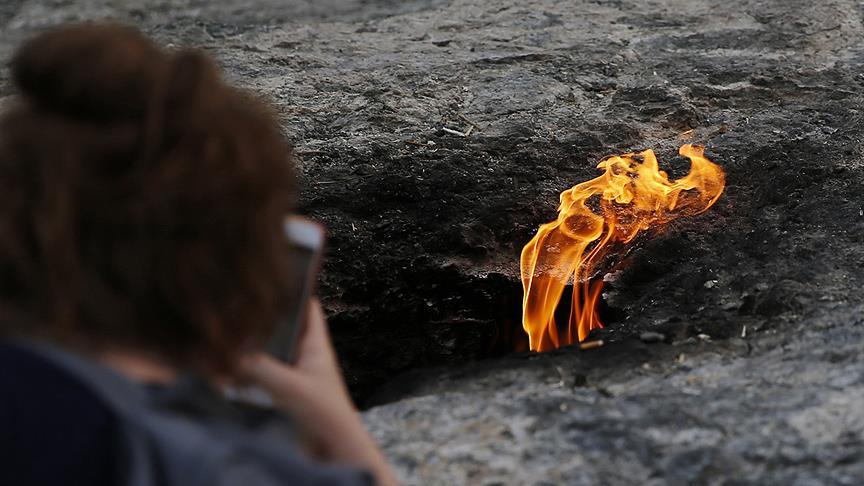
Yanartaş (AA)
Yanartaş has been recorded as one of the important natural and cultural features of the ancient Lycia region. The continuous flames emerging from the rocks in the area are associated with the Greek myth of Chimera. Additionally, the site contains a church dating to the Roman period and several historical inscriptions. Due to these characteristics, Yanartaş is recognized as an area of historical and archaeological interest.
Flames rise from various points between the rocks and continue burning throughout the year without extinguishing. This feature makes Yanartaş unique from both geological and natural history perspectives. The site lies within the boundaries of the Olympos-Beydağları Coastal National Park, where the high concentration of natural gas emissions results in multiple visible flame points on the surface. This ensures the continuous combustion characteristic of Yanartaş.
The gas emerging from between the rocks in the Yanartaş region consists largely of methane. When this gas comes into contact with oxygen, it ignites spontaneously and produces flames continuously throughout the year. The flames burn day and night and are observable by visitors at all times. This characteristic defines Yanartaş as a geological site with a persistent natural gas emission.
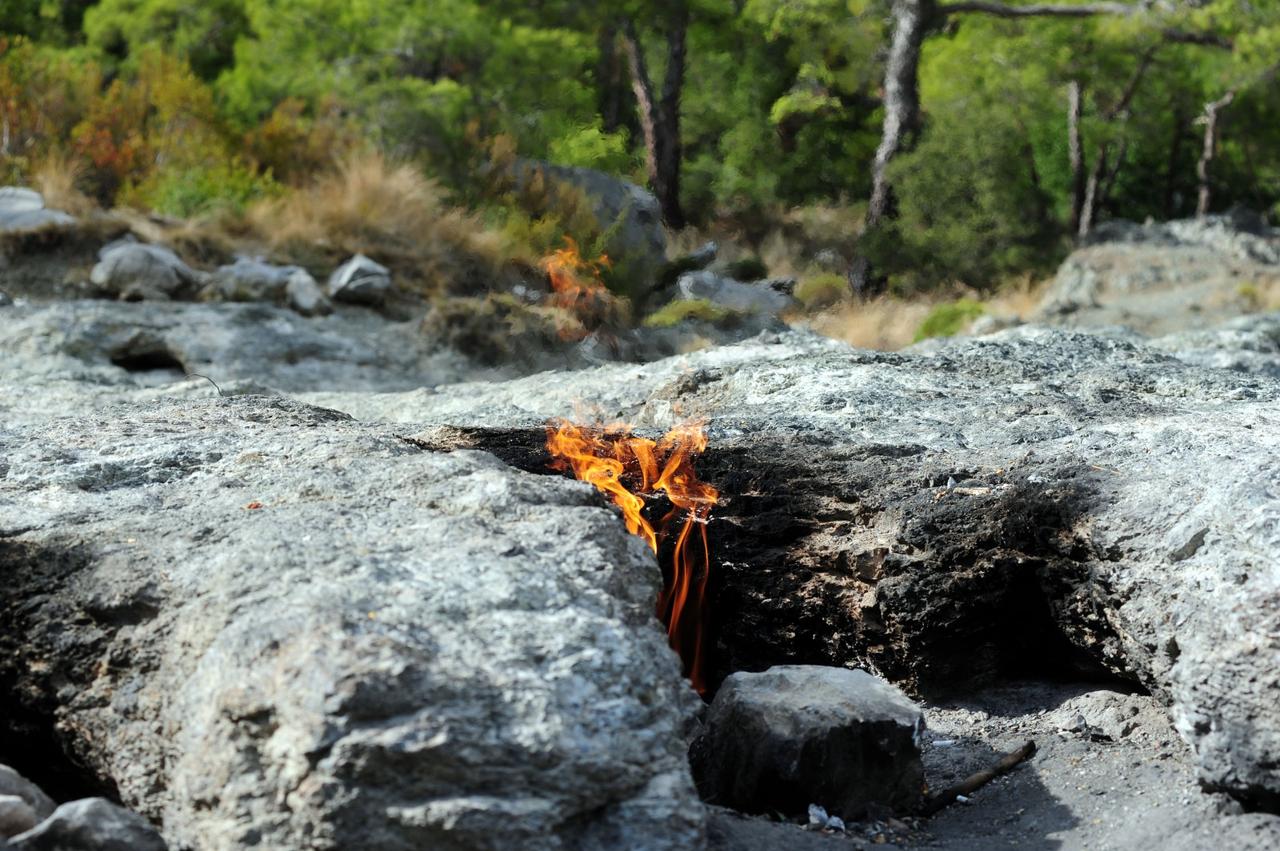
Yanartaş (Kemer Belediyesi)
In antiquity, Yanartaş was associated with the mythical creature known as “Chimera”. According to Greek mythology, Chimera was a creature that breathed fire and was slain by the Lycian hero Bellerophon riding the winged horse Pegasus. This myth is directly linked to the perpetually burning flames at Yanartaş. Today, some local and foreign visitors perform religious rituals or symbolic practices in the areas where the natural gas emissions occur.
In 2021, Yanartaş was officially registered as a “strictly protected sensitive area” by presidential decree. This decision was published in the Official Gazette and entered into force. Under this status, the site is protected by the Ministry of Environment, Urbanization and Climate Change. The change in status has imposed restrictions on human activities in the area, and monitoring procedures have been initiated by the relevant administrative bodies.
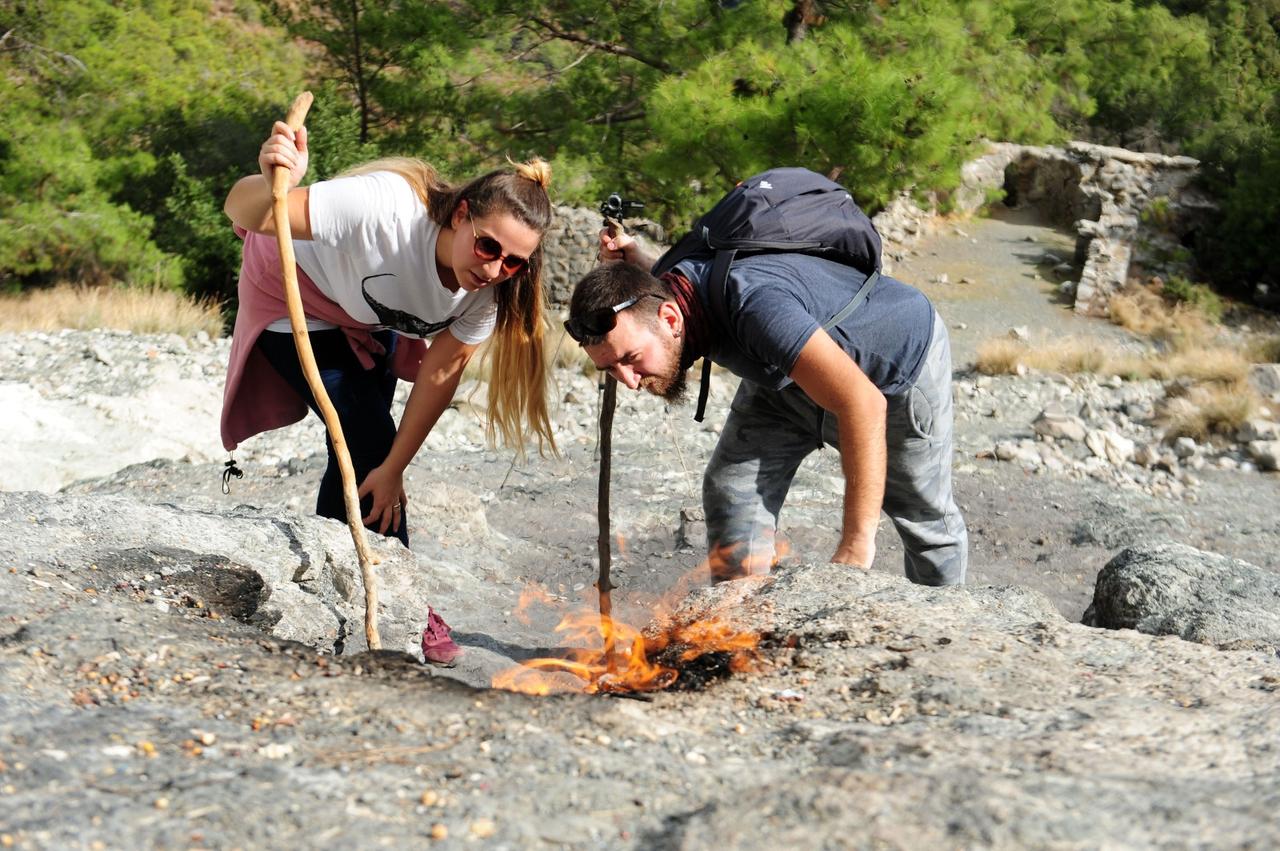
Yanartaş (Kemer Belediyesi)
Yanartaş is visited year-round by both domestic and international tourists. Visitors, particularly in the evening when the visibility of the flames increases, show strong interest in the site. Some visitors conduct brief observations and studies in the areas where flames emerge from the rocks. Additionally, there have been instances where visitors have used the flames to heat or cook food.
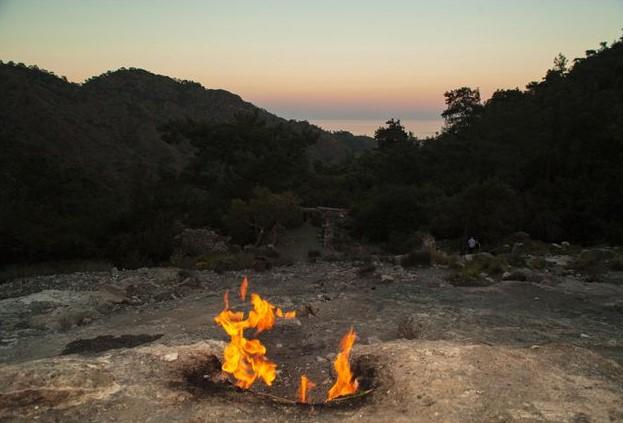
Yanartaş (Kemer Belediyesi)
Anadolu Ajansı. "Tarihi Yanartaş’ta Ayin de Yapılıyor, Sucuk da Pişiriliyor." Accessed July 16, 2025.https://www.aa.com.tr/tr/kultur-sanat/tarihi-yanartasta-ayin-de-yapiliyor-sucuk-da-pisiriliyor/17682.
Anadolu Ajansı. "Yüzyıllardır Sönmeyen Ateş Yanartaş." Accessed July 16, 2025.https://www.aa.com.tr/tr/yasam/yuzyillardir-sonmeyen-ates-yanartas/688832.
Kemer Belediyesi. "Çıralı Yanartaş." Kemer Municipality Website. Accessed July 16, 2025.https://www.kemer.bel.tr/tr/tarihi-yerler/cirali-yanartas.html.
Kemer Belediyesi. "Çıralı Yanartaş’ın Statüsü Değiştirildi." Kemer Municipality Website. Accessed July 16, 2025.https://www.kemer.bel.tr/tr/haberler/cirali-yanartasin-statusu-degistirildi.html.
Çıralı.org. "Yanartaş/Chimera." cirali.org. Accessed July 16, 2025.https://cirali.org/yanartas-chimera/.

Region | Mediterranean Region | ||||||||
|---|---|---|---|---|---|---|---|---|---|
Province | Antalya | ||||||||
District | Kemer | ||||||||
Elevation Above Sea Level | ~230 metres | ||||||||
Gas Emission | Infiltration Through Cracks and Fractures | ||||||||
Registration Year | 2021 | ||||||||
Ancient Name | Chimera | ||||||||
Cultural Use | Religious Ceremonies, Rituals | ||||||||
Activities | Short-Term Observation, Food Heating | ||||||||
Historical Significance
Geological Features
Natural Gas Emission and Continuity
Mythological and Cultural Context
Protection Status and Legal Framework
Tourism Use and Visitor Interaction