+2 More

Date of birth | 1934-03-23 | ||||||||
|---|---|---|---|---|---|---|---|---|---|
Mother | Ayşe Necile Hanım | ||||||||
Father | Mustafa Niyazi Bey | ||||||||
Occupation | Composer and Musicologist | ||||||||
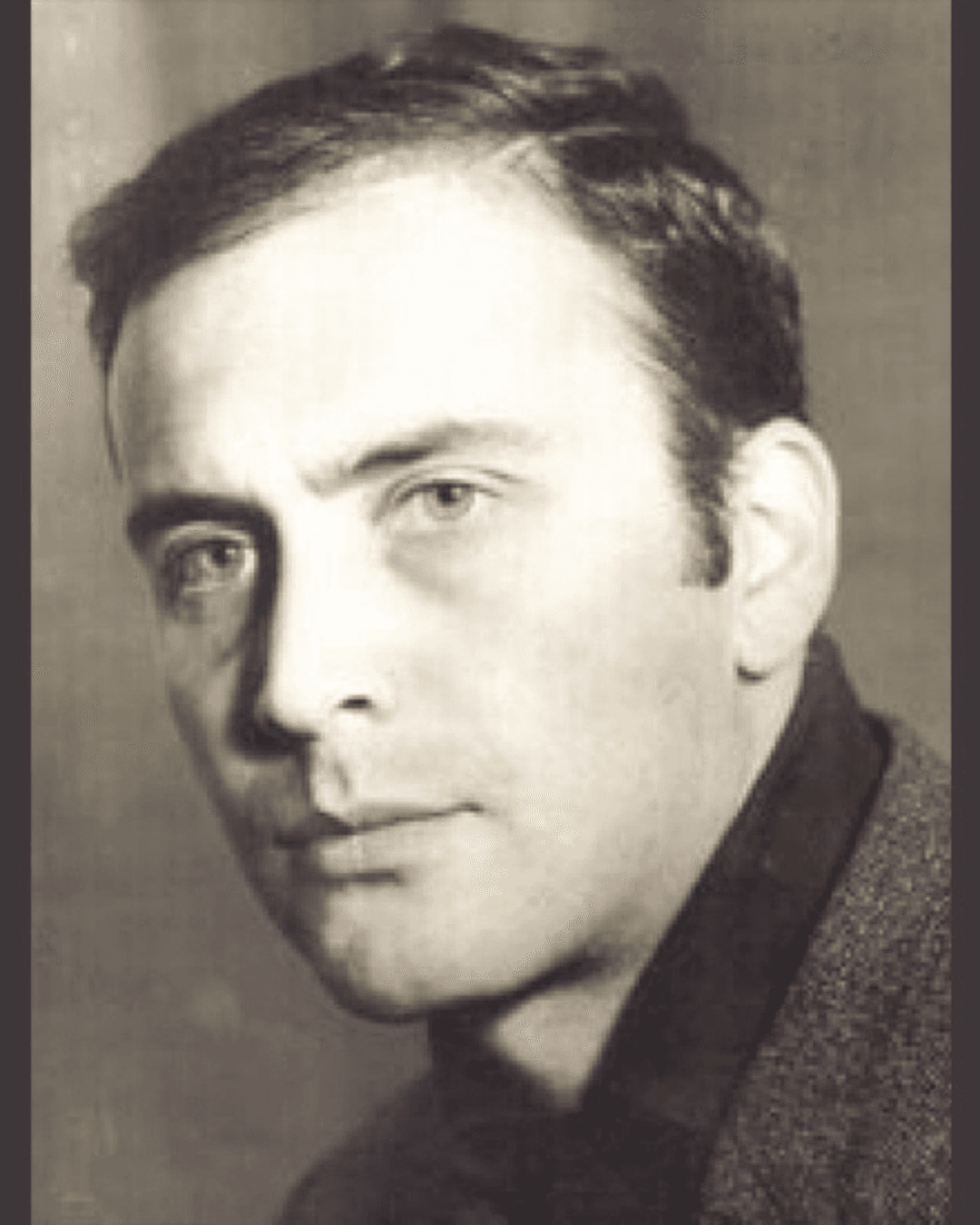
Yalçın Tura (23 March 1934, Istanbul) is a Turkish composer, musicologist, theorist, and educator. He is regarded as one of the leading figures of 20th-century contemporary Turkish music.【1】 He is known for his compositional output including film and stage music, his research into the theory of Turkish music, and his efforts to bring Ottoman-era musical manuscripts into modern music literature. His approach, which integrates traditional Turkish music with Western musical techniques, has been a defining feature of his artistic career.
Born in Istanbul, Yalçın Tura was raised in a family environment steeped in interest in classical Turkish music. His father, Mustafa Niyazi Bey, was a civil servant and a veteran of the Çanakkale Campaign; his mother was Ayşe Necile Hanım. From an early age, Tura was introduced to music, learning to play the violin and piano, and acquiring his first knowledge of Turkish music from his father, who played the ud. This early musical education laid the foundation for the synthesizing approach he would later develop.
Between 1946 and 1954, Tura studied at Galatasaray High School, where he took violin lessons with Seyfettin Asal and theory and solfège with Hulusi Öktem. During his high school years, he developed an interest in composition. After showing his early compositions to Cemal Reşit Rey, he received lessons in harmony and music theory from Demirhan Altuğ; later he studied counterpoint, fugue, and composition with Cemal Reşit Rey.
After graduating from Galatasaray High School in 1954, Tura enrolled in the Philosophy Department of Istanbul University, from which he graduated in 1960.【2】 Throughout his university studies, he continued his musical work and developed a musical approach grounded in aesthetics, philosophy of thought, and philosophy of art.
From the mid-1950s onward, Yalçın Tura embraced composition as a profession, producing works both within the polyphonic Western music tradition and the monophonic Turkish music tradition. Symphonic works, chamber music pieces, compositions for solo instruments, and choral compositions formed a significant part of his early output.
Beşiktaş Çocuk & Gençlik Korosu - Cumhuriyet Güneşi / Çok Sesli (Yalçın Tura) - (Beşiktaş Children
Yalçın Tura gained widespread recognition particularly through his film and theater music. From 1955 onward, for more than two decades, he composed music for numerous films, theatrical plays, and television series.
Zümrüt, Yılanların Öcü, Keşanlı Ali Destanı, Toprak Ana, Taş Bebek, Umutsuzlar, Bir Yudum Sevgi, and Sen de Gitme are among the productions for which he composed music that have secured a lasting place in the history of Turkish cinema and theater.【3】 These works are distinguished by their melodic richness, a musical language seamlessly integrated with dramatic structure, and original orchestration.
In 1976, Tura began his academic career as a faculty member at the Istanbul Technical University State Conservatory of Turkish Music, where he conducted significant research in musicology. In 1988, he was appointed head of the Musicology Department. From 1997 to 2001, he served as director of the conservatory and retired in 2001. Throughout his academic life, he trained numerous students and contributed significantly to the institutionalization of Turkish music research.
Yalçın Tura’s musicological research focuses on the Turkish music pitch system, makam structures, form theory, and harmony. From the 1970s onward, he wrote critical and research-based texts on Turkish music theory. He authored two books: Türk Musıkisi ve Armoni – 1 and Türk Mûsıkîsinin Mes'eleleri, Kantemiroğlu: Musikiyi Harflerle Tespit ve İcra İlminin Kitabı.
One of Tura’s most important scholarly contributions is his work in making Ottoman-era music theory texts accessible to the modern musical world. He prepared Dimitri Kantemiroğlu’s Kitâbu ‘İlmi’l-Mûsîkî ‘alâ Vechi’l-Hurûfât for publication with facsimile, transliteration, translation, and Western notation. He also rendered Abdülbâkî Nâsır Dede’s Tedkîk ü Tahkîk into modern Turkish.【4】 These works are now essential reference sources in the study of Turkish music history and theory.
Yalçın Tura did not adhere to a single aesthetic or technical system in his music. He developed a multifaceted musical language drawing from traditional Turkish music, Western classical music, jazz, and other genres. In the 1970s, he adopted a microtonal approach in some works, aiming to integrate the intervals used in Turkish music into polyphonic structures.
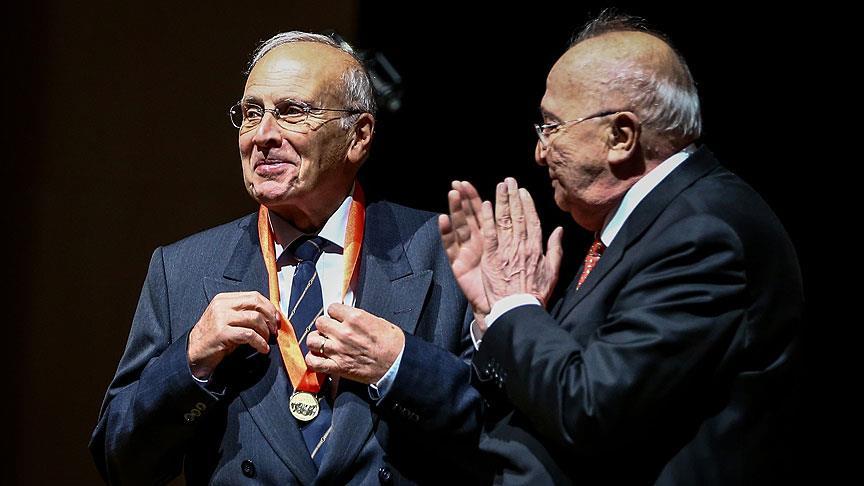
Throughout his artistic career, Tura received numerous awards. These include the Journalists’ Cinema Award, the Golden Orange Film Festival Award for Best Film Music and Lifetime Achievement Award, the Istanbul Film Festival Cinema Honor Award, and the Istanbul Music Festival Honor Award. In 2025, he was awarded the Presidency Culture and Art Grand Award.
Anadolu Ajansı. "Profesör Yalçın Tura’ya Onur Ödülü." Accessed December 18, 2025.https://www.aa.com.tr/tr/kultur-sanat/profesor-yalcin-turaya-onur-odulu/486811.
Beşiktaş Çocuk Korosu. “Beşiktaş Çocuk & Gençlik Korosu - Cumhuriyet Güneşi / Çok Sesli (Yalçın Tura).” YouTube. Accessed December 18, 2025.https://www.youtube.com/watch?v=Ylv_0RJ22vI.
Biography. "Yalçın Tura." Accessed December 18, 2025.https://www.biyografya.com/tr/biographies/yalcin-tura-b54d8e25.
Kurtçu, Erdal, and Kurtçu, Gamze. “Yalçın Tura ve Çağdaş Türk Müziğine Katkıları.” In *Uluslararası Müzik ve Güzel Sanatlar Eğitimi Sempozyumu Bildiriler Kitabı*, pp. 223–229. Sivas: Sivas Cumhuriyet Üniversitesi, 2021. Accessed December 18, 2025.https://umges.cumhuriyet.edu.tr/dosya/umges_bildiri_tam_kitab.pdf
Turkish Music Portal. "Yalçın Tura." Accessed December 18, 2025.http://www.turkishmusicportal.org/tr/besteciler/detay/yalcin-tura.
İKSV Müzik. “Onur Ödülleri: Yalçın Tura.” Accessed December 18, 2025.https://muzik.iksv.org/tr/onur-odulleri/yalcin-tura
İTÜ Haber. "Prof. Yalçın Tura’ya Anlamlı Ödül." Accessed December 18, 2025.https://haberler.itu.edu.tr/haberdetay/2025/11/03/prof-yalcin-tura-ya-anlamli-odul
[1]
Erdal Kurtçu ve Gamze Kurtçu, “Yalçın Tura ve Çağdaş Türk Müziğine Katkıları,” Uluslararası Müzik ve Güzel Sanatlar Eğitimi Sempozyumu Bildiriler Kitabı içinde (Sivas: Sivas Cumhuriyet Üniversitesi, 2021), s. 223.
[2]
İKSV Müzik. “Onur Ödülleri: Yalçın Tura.” Erişim Tarihi: 18 Aralık 2025. https://muzik.iksv.org/tr/onur-odulleri/yalcin-tura.
[3]
Erdal Kurtçu ve Gamze Kurtçu. (a.g.e), s. 226-227.
[4]
Erdal Kurtçu ve Gamze Kurtçu. (a.g.e), s. 228.

Date of birth | 1934-03-23 | ||||||||
|---|---|---|---|---|---|---|---|---|---|
Mother | Ayşe Necile Hanım | ||||||||
Father | Mustafa Niyazi Bey | ||||||||
Occupation | Composer and Musicologist | ||||||||
Family and Early Years
Education
Transition to Composition and Early Works
Film and Stage Music
Academic Career
Musicological and Theoretical Works
Publication of Ottoman Musical Sources
Compositional Approach
Awards