


This article was automatically translated from the original Turkish version.
Wound closure aims to restore tissue integrity by employing various methods to either bring together separated wound edges or reestablish continuity in damaged tissue. This facilitates wound closure and supports healing during its most critical phase.
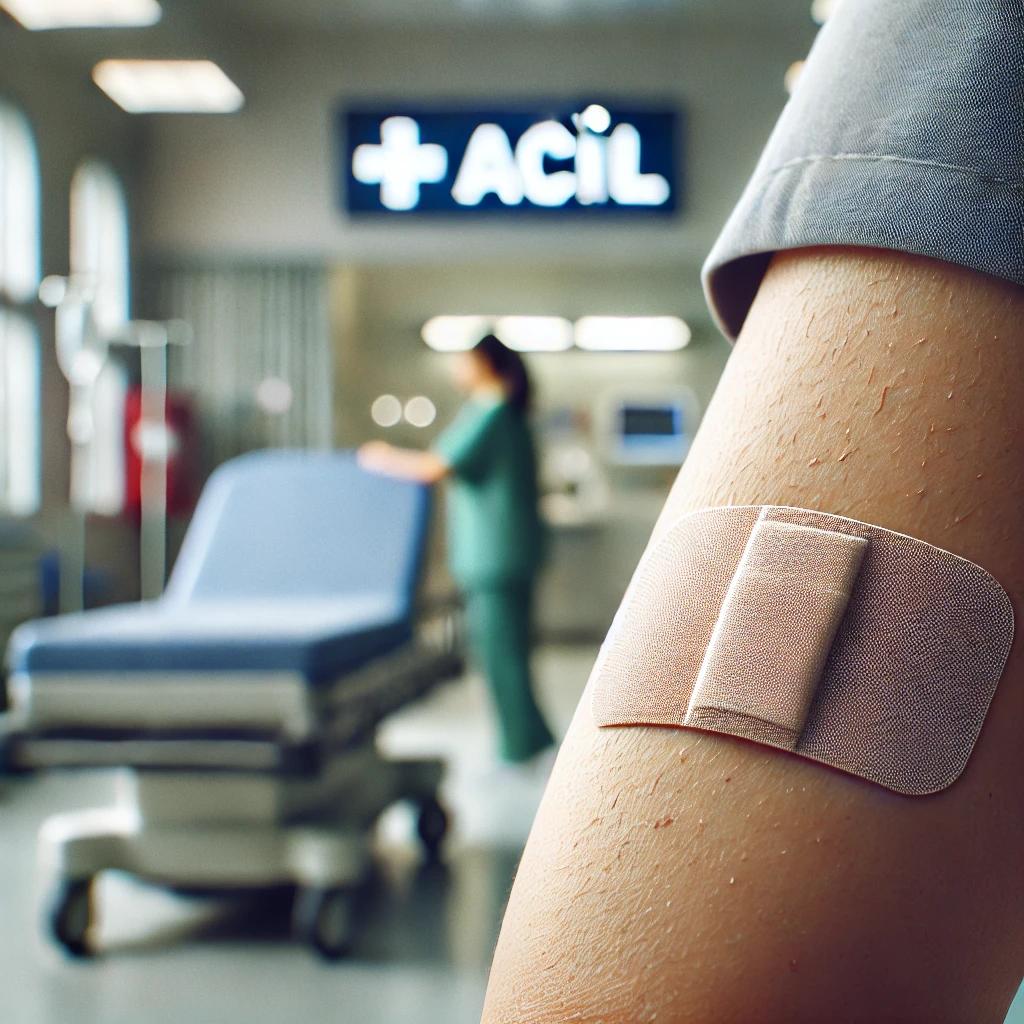
Image generated with AI assistance.
The selection of materials for wound closure depends on numerous factors including the nature of the wound tissue its thickness elasticity rate of healing and tendency to scar as well as the patient’s overall health age weight and comfort level and the presence or absence of infection. Nevertheless the general desired characteristics of wound closure materials are as follows:
Current clinical applications of wound closure materials include staples tissue adhesives tapes and sutures.
Staples are applied to the skin using a specialized applicator and removed after healing with a corresponding device. Their greatest advantage is a significant reduction in surgical time. Compared to sutures staple use reduces the risk of infection. However removal of staples can be more difficult and painful than suture removal.
There are two types:
Tissue adhesives are a wound closure method that enables faster approximation of wound edges compared to other techniques. They are preferred for wound gaps ranging from 0.5 to 50 cm. While they offer advantages such as low cost and ease of application their low tensile strength limits their use. Tissue adhesives are generally favored for superficial wounds and are used as adjuncts to other closure techniques for deeper wounds. Their properties vary according to their chemical composition and viscosity. 2-Octyl cyanoacrylate is the most commonly used tissue adhesive due to its rapid bonding tissue holding strength and favorable cosmetic results.
Wound closure using porous tape provides higher resistance to infection compared to other methods. Tapes are unsuitable for tensioned or moist wound areas. Therefore prior to application the wound site must be dried sterilized and hemostasis must be achieved. Although primarily used for small incisions where wound edge approximation is easily achieved tape can also be used in conjunction with staples or sutures to support wound closure.
Suture is the most commonly used wound closure material for accelerating and facilitating healing without visible scarring. It offers advantages in terms of stability and flexibility at the wound site compared to other closure methods. Historically suture materials have included dried animal intestine horsehair tree bark silk gold silver or steel wires. In recent times synthetic biomaterials such as PLLA and PLGA have also been used as suture materials. Although a wide variety of sutures are currently available no single suture type is ideal for all wounds. Consequently research on sutures continues. Most existing sutures meet primary requirements such as tensile strength anti-inflammatory properties and flexibility. However current suture research also focuses on developing sutures that actively support wound healing by incorporating drugs or therapeutic agents alongside traditional suture properties.
Chu, C.-C., von Fraunhofer, J. A., & Greisler, H. P. (1996). Wound closure biomaterials and devices: CRC Press.
Dennis, C., Sethu, S., Nayak, S., Mohan, L., Morsi, Y., & Manivasagam, G. (2016). Suture materials—Current and emerging trends. Journal of Biomedical Materials Research Part A, 104(6), 1544-1559.
Gottrup, F. (1999). Wound closure techniques. Journal of Wound Care, 8(8), 397-400.
Hochberg, J., Meyer, K. M., & Marion, M. D. (2009). Suture choice and other methods of skin closure. Surgical Clinics, 89(3), 627-641.
Peker, Y. S. (2020). Cerrahide yara kapama teknikleri ve materyalleri. Journal of Surgical Arts/Cerrahi Sanatlar Dergisi, 13(1).
Regula, C. G., & Yag-Howard, C. (2015). Suture products and techniques: what to use, where, and why. Dermatologic Surgery, 41, S187-S200.
Yag-Howard, C. (2014). Sutures, needles, and tissue adhesives: a review for dermatologic surgery. Dermatologic Surgery, 40, S3-S15.
No Discussion Added Yet
Start discussion for "Wound Closure Materials" article
Wound Closure Materials
Staples
1. Nonabsorbable staples
2. Absorbable staples
Tissue Adhesives
Surgical Tape
Suture