


This article was automatically translated from the original Turkish version.

With the proliferation of mass media, animation films and series have become one of the strongest cultural elements of childhood. These productions go beyond mere entertainment content and play an important role in shaping social gender roles. In particular, the Walt Disney Company, founded on 16 October 1923 by Walt Disney and his brother Roy O. Disney, has become one of the most prominent production companies in this field.
Disney’s first full-length animated film, Snow White and the Seven Dwarfs (Snow White and the Seven Dwarfs), premiered on 21 December 1937. Thus, the company’s first female princess character was introduced to audiences. The Disney princess figures, which began with this production and continue to be developed to this day, have exerted decisive influences on the formation of perceptions of femininity and masculinity over time.
In Disney’s early productions, female characters such as Snow White and Cinderella were typically portrayed as passive, obedient and waiting to be rescued. These representations reproduced established stereotypes regarding women’s social roles. However, in later years, a significant transformation occurred in these portrayals; more independent female characters who determine their own destinies came to the forefront.
How female figures in Disney fairy tales have evolved historically, the possible effects of this evolution on boys and girls, and the dynamics behind this transformation have become subjects of academic research.
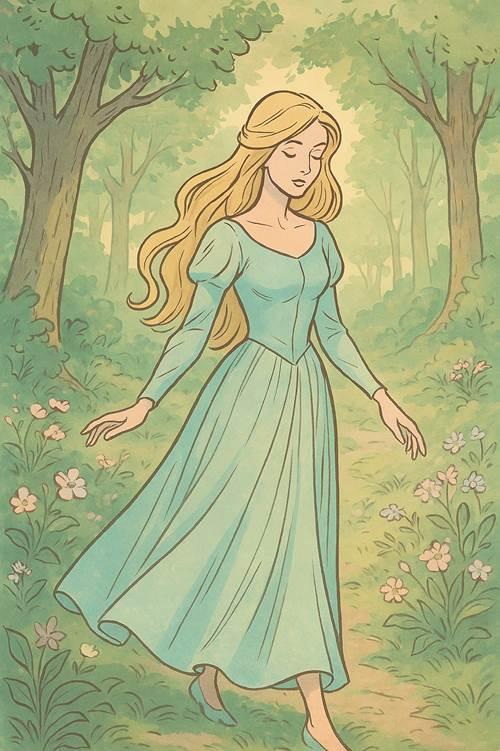
(Generated by Artificial Intelligence.)
Following its founding, the Walt Disney Company has exerted widespread influence on children and adults through its content. Its 1937 release of Snow White and the Seven Dwarfs (Snow White and the Seven Dwarfs) became a cornerstone in shaping cinematic representations of fairy-tale female figures.
Female characters presented between 1930 and 1960 were generally depicted as silent, compliant and patient. In these portrayals, a woman’s qualification as “good” was largely associated with obedience. Studies have found that these dominant representations in films of the period subtly transmitted specific social gender stereotypes and contributed to their internalization. Research examining the impact of these portrayals on children increased notably from the 1980s onward. For instance, research conducted by Mayes-Elma (2007) and England, Descartes and Collier-Meek (2011) concluded that classic princess films reinforced stereotypical judgments about physical beauty in young girls and increased tendencies toward the “rescuer” role in young boys. Moreover, it has been determined that the characters children watch significantly influence their identity development processes.
Collected data have revealed that content encountered at an early age plays an instrumental role in the formation of social norms. In this context, various academic studies have demonstrated that Disney productions hold a significant place in shaping children’s perceptions of social gender roles.
The representation of female characters in Disney productions has undergone significant transformation over time under the influence of societal changes. Particularly from the 1990s onward, the traditional princess image began to give way to more active, courageous and independent female figures. This change has been interpreted in relation to shifts in the expectations of content creators and audiences.
In the 1992 film Aladdin, the character Jasmine exhibited a different stance from classic princess portrayals by asserting her right to make decisions about marriage. The 1998 film Mulan is regarded as a turning point in Disney history for allowing female characters to take on action-oriented roles. In the film, the female protagonist disguises herself as a man to enter the battlefield and challenge societal norms, demonstrating a redefinition of boundaries in female representation.
By the late 2000s, this transformation became more pronounced through other productions. The character Merida in Brave (2012) and the characters Elsa and Anna in Frozen (2013) drew attention as figures emphasizing themes of individual freedom and autonomy. In particular, Elsa’s song “Let It Go” became a symbol of the theme of liberation.
The 2014 film Maleficent (Maleficent) introduced a structural shift in Disney’s classic narratives by placing the character previously portrayed as the evil fairy in Sleeping Beauty (1959) in the lead role. This retelling prompted audiences to question the traditional princess archetype and the concepts of “good” and “evil.” Media criticism and societal demands have been identified as key drivers behind this transformation. Changing societal values and evolving expectations regarding female roles have led Disney to develop new directions in its female character representations. This process suggests that the transformation in princess figures’ role modeling affects not only representation but also the reconfiguration of values transmitted to children. Research is increasingly needed to examine more deeply the effects of this ongoing change on children.
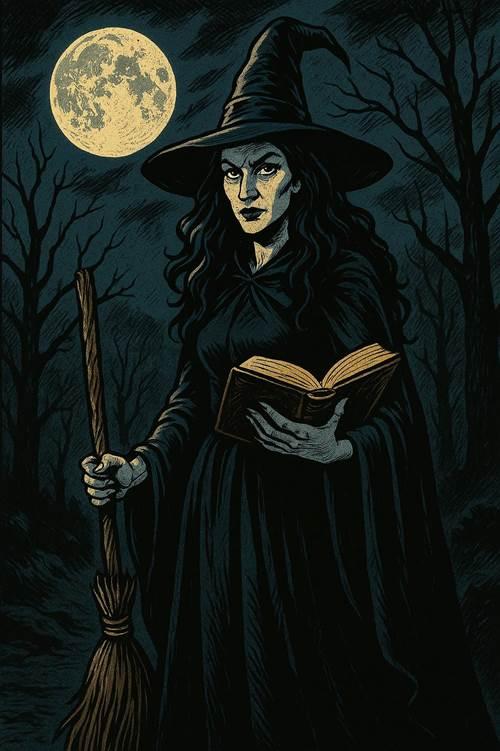
(Image Generated by Artificial Intelligence.)
The influence of cultural products on the formation of social gender roles has become a significant area of research. In this context, Disney princess figures and princess-themed content have been the subject of numerous academic studies. These studies indicate that the relationship established with such content during early childhood may be decisive in shaping social gender perceptions. One notable study in this field was conducted by Dr. Sarah M. Coyne and her research team at Brigham Young University. The study is a long-term investigation into the effects of princess culture on child development. In the first phase conducted in 2016, over 300 boys and girls and their parents were examined. The findings revealed that intensive exposure to princess-themed content during preschool years tends to reinforce gender-stereotyped beliefs, particularly in girls. These children were observed to be more inclined to adopt traditional female roles, leading to the conclusion that such content may limit gender perceptions at an early age.
However, a follow-up study conducted on the same sample group in 2019 revealed that these effects may change over time. As children transitioned into adolescence, interaction with princess culture was found to contribute to the development of more egalitarian attitudes toward social gender roles. In particular, an increase was observed in boys’ ability to express emotions, and more positive shifts in their attitudes toward gender equality were noted. These findings suggest that princess culture may also generate positive long-term effects on child development.
Similarly, in Ayşe Dilara Bostan’s thesis study from a gender perspective, the changing representation of princess figures over time was analyzed. The study determined that princess characters from classical, modern and postmodern periods reflect the sociocultural dynamics of their respective eras and play a role in the reproduction of social gender roles within this framework.
These studies demonstrate that princess figures function as instrumental tools in the transmission of social values. Therefore, it is important to examine the effects of such content on children’s identity development and perceptions of social roles in a multidimensional manner.
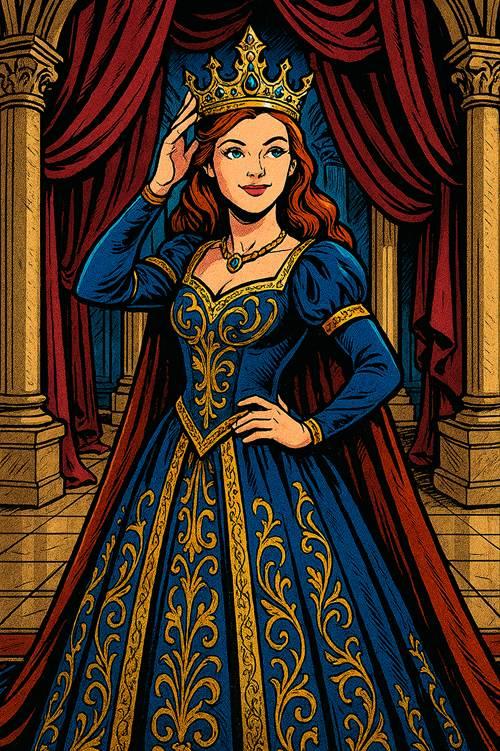
(Image Generated by Artificial Intelligence.)
Bostan, Ayşe Dilara. “Toplumsal Cinsiyet Perspektifinden Prenses Temsilleri: Klasik, Modern ve Postmodern Prensesler Üzerine Bir Değerlendirme.” *TRT Akademi* 3, no. 5 (2018): 6–27.https://dergipark.org.tr/en/pub/trta/issue/35456/356490
Coyne, Sarah M., Jennifer Ruh Linder, Eric E. Rasmussen, David A. Nelson, and Victoria Birkbeck. “Pretty as a Princess: Longitudinal Effects of Engagement with Disney Princesses on Gender Stereotypes, Body Esteem, and Prosocial Behavior in Children.” *Child Development* 87, no. 6 (2016): 1909–1925.https://srcd.onlinelibrary.wiley.com/doi/abs/10.1111/cdev.12569.
Coyne, Sarah M., Jennifer Ruh Linder, Eric E. Rasmussen, David A. Nelson, and Victoria Birkbeck. “Princesses and Superheroes: Social-Cognitive Developmental Trajectories of Gender Stereotypes and Interests.” *Child Development* 91, no. 3 (2020): 943–958.https://srcd.onlinelibrary.wiley.com/doi/abs/10.1111/cdev.13633.
England, Dawn Elizabeth, Lara Descartes, and Melissa A. Collier-Meek. “Gender Role Portrayal and the Disney Princesses.” *Sex Roles* 64, no. 7–8 (2011): 555–567.https://link.springer.com/article/10.1007/s11199-011-9930-7
Kolgu, Deniz, and Mehmet Özkartal. “Atsız’ın Bozkurtlar Romanındaki Kadın Karakterler Üzerine Bir Resimleme.” *İdil Sanat ve Dil Dergisi* 9, no. 76 (2020): 1871–1878.https://ceeol.com/search/article-detail?id=965298
Mayes-Elma, Ruthann. *Harry Potter: Feminist Friend or Foe?* Leiden: Brill, 2007.https://books.google.com/books?hl=tr&lr=&id=6HTYBgAAQBAJ
References
Sarı, Gülşah. “Yeni Nesil Dadı: Medya! Çocukların Toplumsal Cinsiyet Algılarındaki Medyanın Rolüne İlişkin Ebeveynlerinin ve Öğretmenlerinin Bakış Açıları.” *Abant İzzet Baysal Üniversitesi Eğitim Fakültesi Dergisi* 21, no. 1 (2021): 1–24.https://dergipark.org.tr/en/pub/aibuefd/article/1104113.
Szegedi, Lilla. “The Representation of Women in Walt Disney’s Productions in the Studio Era.” *AMERICANA E-journal of American Studies in Hungary* 17, no. 1 (2021): 1–15.https://ojs.bibl.u-szeged.hu/index.php/americanaejournal/article/view/45194/43845.
Wasko, Janet. *Understanding Disney: The Manufacture of Fantasy.* Cambridge: Polity Press, 2001.https://books.google.com/books?hl=tr&lr=&id=QXofEAAAQBAJ
History of Disney Fairy Tales and Female Representation
Evolution of Characters
Research on the Effects of Princesses on Children