


This article was automatically translated from the original Turkish version.
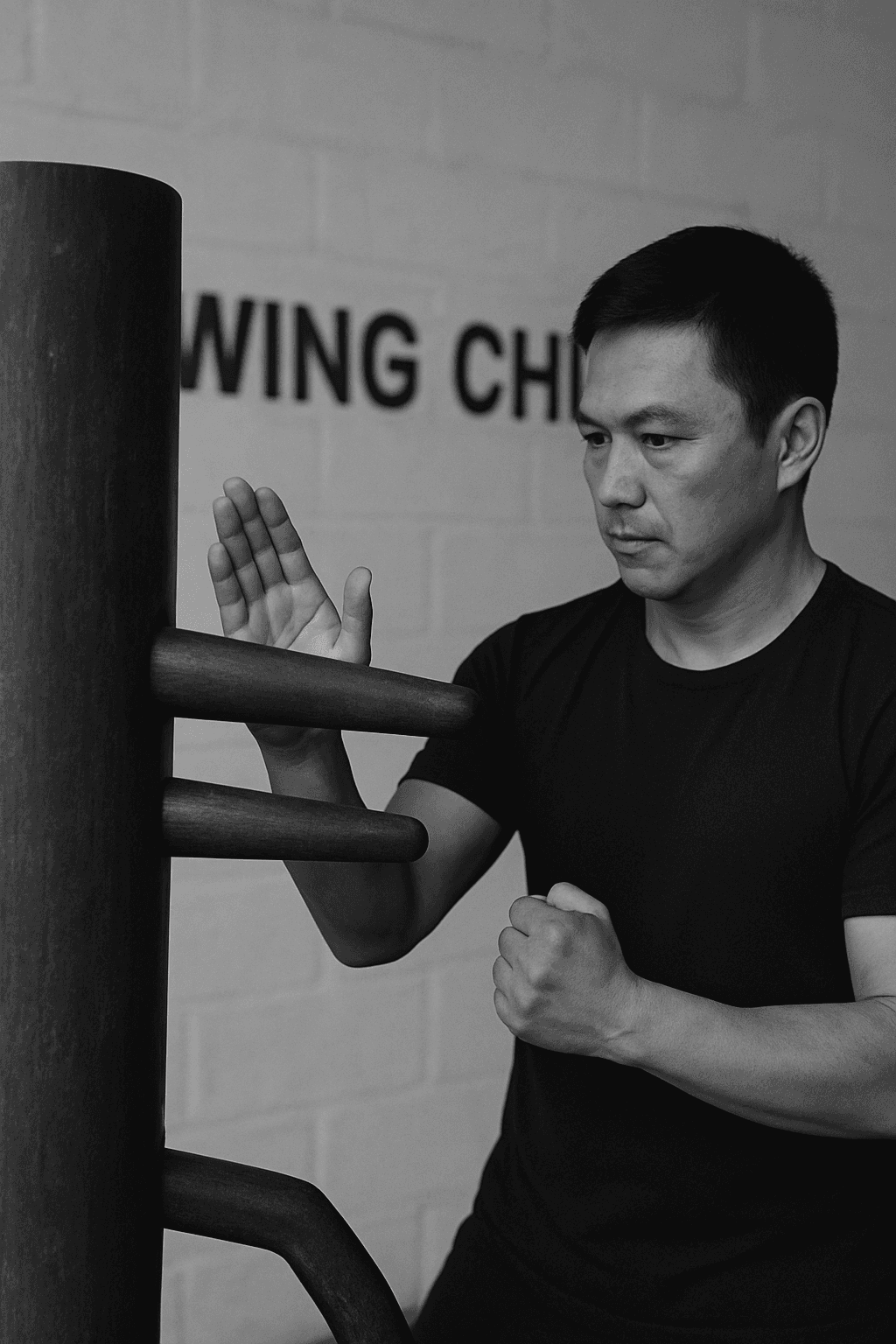
Wing Chun
Origin | Southern China | ||||||||
|---|---|---|---|---|---|---|---|---|---|
History | 17th–18th century | ||||||||
Style | Close-range defense-based traditional kung fu | ||||||||
Scope | Rapid exchanges Precision training Body mechanics | ||||||||
Popular Figures | Ip Man, Bruce Lee, Wong Shun Leung | ||||||||
Application Areas | Police and private security training Martial arts training Personal defense | ||||||||
Main Forms | Biu Jee (Emergency techniques) Siu Nim Tau (Foundation structure) Chum Kiu (Bridge building) | ||||||||
Weapon | Bart Cham Dao (Double butterfly swords) Luk Dim Boon Gwun (Long pole) | ||||||||
Modern Spread | Spread worldwide from Hong Kong with Ip Man in the 20th century. | ||||||||
Wing Chun is a traditional Chinese kung fu style that developed in southern China, based on close-range combat techniques. Its structure is defined by direct-line movements, control of the centerline, and timing-based principles. The system consists of fixed forms, paired applications, and weapon forms. Wing Chun is practiced to develop individual self-defense skills and enhance technical coordination.
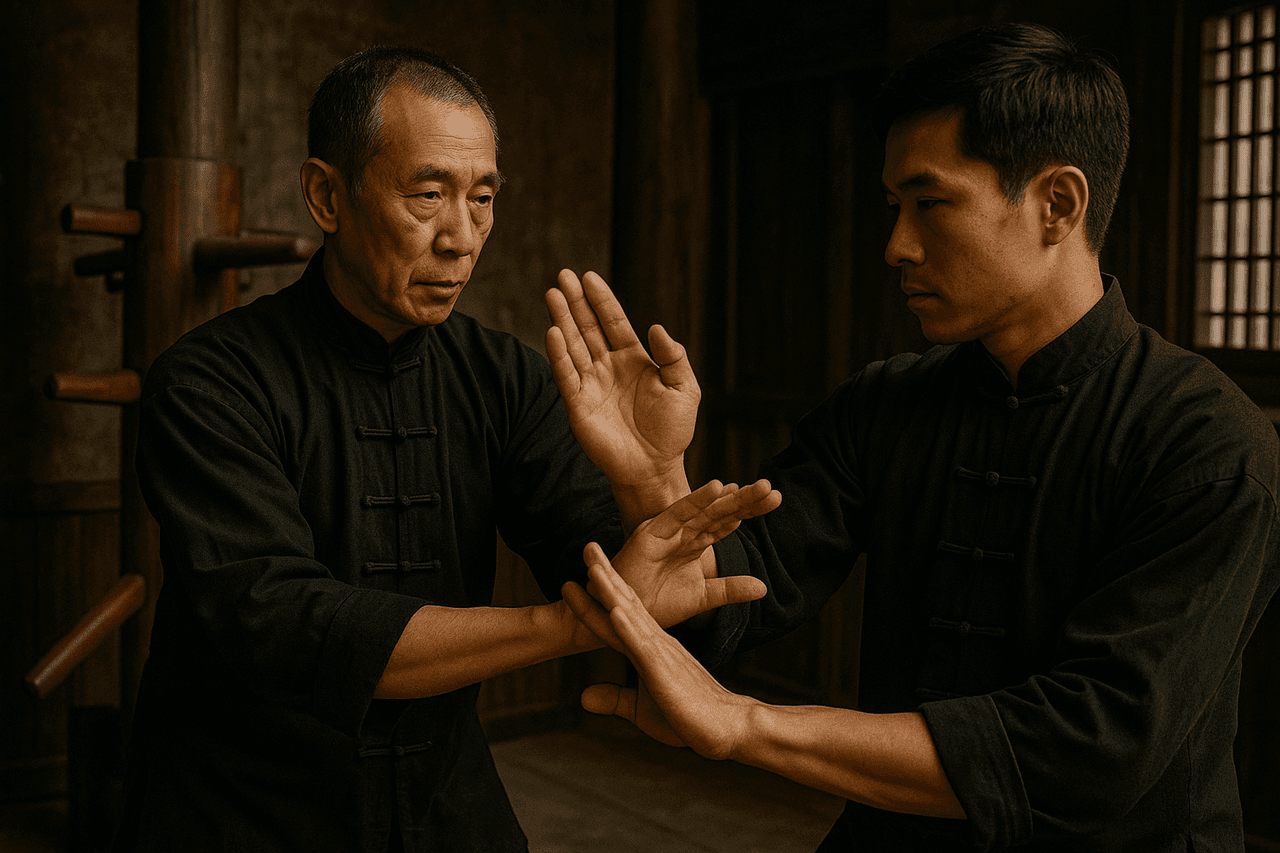
Wing Chun (Yapay zeka ile oluşturulmuştur.)
Accounts of Wing Chun’s origins are largely based on oral traditions and have not been historically verified. According to the most popular legend, this martial art was developed during the Qing Dynasty (1644–1912) by Ng Mui, a Buddhist nun from the Shaolin Temple. It is believed that Ng Mui created this style after the temple’s destruction by Manchu forces, to enable a woman to defend herself effectively using her physical attributes. Legend holds that Ng Mui later taught the system to a young woman named Yim Wing Chun, who preserved the art under her own name.
Beyond legendary accounts, scholars generally agree that Wing Chun’s current structure took shape in 19th-century southern China, particularly in the Guangdong region. During this period, martial arts were widely practiced both for personal defense and as tools of social resistance.
One of the first documented figures to systematically transmit Wing Chun was Leung Jan (1816–1901). A renowned physician and martial arts master in Foshan, Leung Jan taught Wing Chun and contributed significantly to its standardization. One of his students, Chan Wah-shun, played a pivotal role in the spread of modern Wing Chun and later became the teacher of Ip Man, one of the system’s most famous representatives.
Ip Man (1893–1972), the most influential Wing Chun master of the 20th century, migrated to Hong Kong in 1949 following the establishment of the People’s Republic of China and began publicly teaching Wing Chun there. His open approach enabled the system to reach a broad audience for the first time. Among his students was Bruce Lee, who became one of the most important figures in introducing Wing Chun to the Western world, contributing significantly to its global recognition.
From the 1960s onward, Wing Chun began attracting interest among martial arts communities in Europe and America, largely due to the popularity of Bruce Lee. Through Ip Man’s other students and the associations they founded, the system was taught in various countries and diversified into multiple branches. These include variations such as Leung Ting WingTsun, Wong Shun Leung Ving Tsun, and Traditional Wing Chun. Today, Wing Chun is practiced both within traditional kung fu circles and as a modern self-defense system. It is taught through numerous schools and organizations worldwide, aiming to develop both physical defense skills and mental discipline.
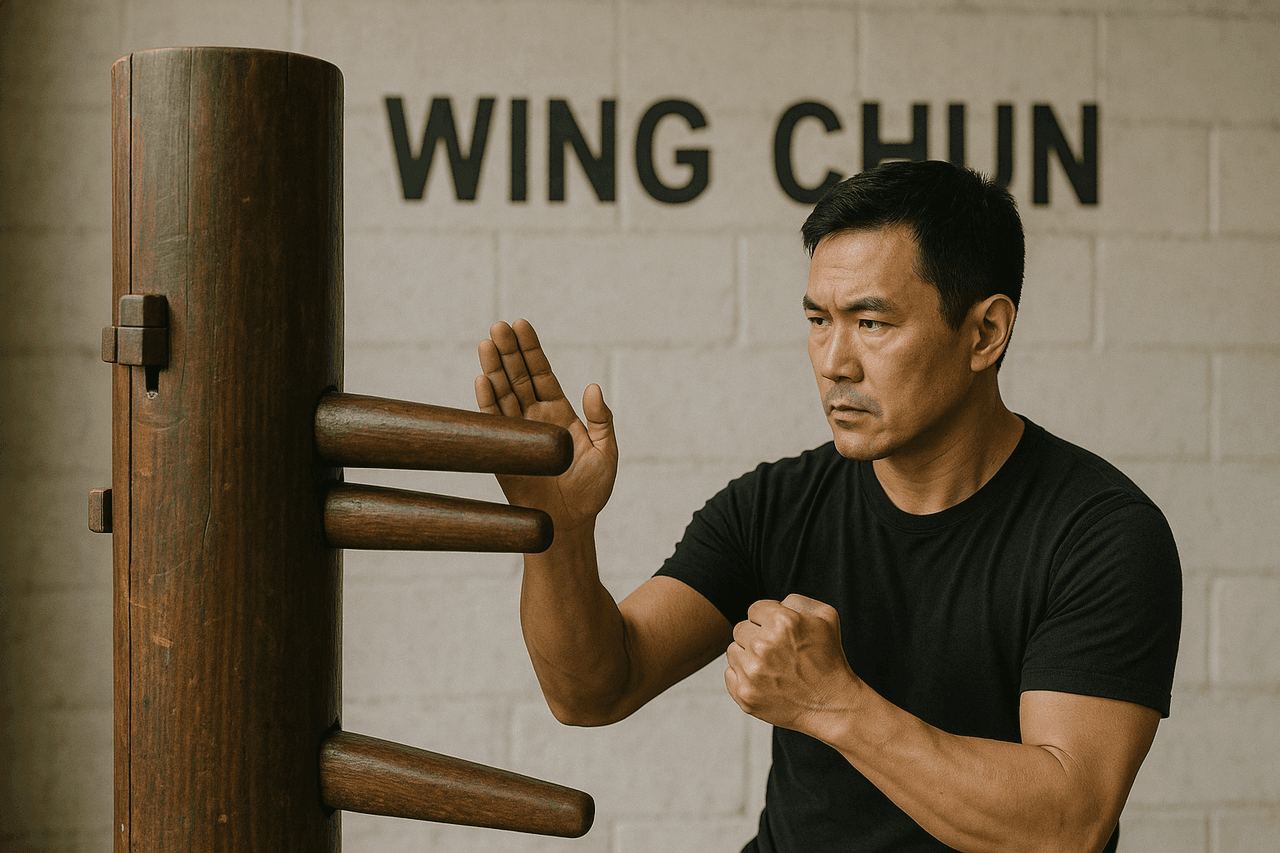
Wing Chun (Yapay zeka ile oluşturulmuştur.)
Wing Chun is one of the southern Chinese close-range combat systems, primarily based on fast, direct, and efficient movements. Its structure is organized around specific forms (taolu) and the technical principles taught within them. These forms represent not only the application of techniques but also the embodiment of theoretical concepts and the student’s progressive development.
Although Wing Chun is primarily known for its close-range, defense-oriented empty-hand techniques, advanced levels include training with traditional Chinese weapons. Weapon instruction in Wing Chun complements the system’s holistic structure and aims to enhance the student’s balance, power transmission, distance control, and technical mastery. These weapons evolved in response to historical combat and self-defense needs in southern China.
Weapon training in Wing Chun is not merely a historical or traditional practice; it is also regarded as an indicator of a student’s proficiency in the system. As such, sword and pole forms are typically taught only at the most advanced stages and are reserved for experienced students.
In the mid-20th century, Wing Chun began to extend beyond traditional Chinese martial arts circles after Ip Man settled in Hong Kong and started teaching it publicly. The global fame of his student Bruce Lee was decisive in establishing Wing Chun’s recognition in the Western world.
From the 1970s onward, numerous schools and associations opened across Europe, North America, and Southeast Asia, integrating the system into international martial arts communities through various branches. Today, Wing Chun is taught and practiced both as a traditional martial art and as a modern self-defense system.
"About Wing Chun Kung Fu." Wing Chun Concepts. Accessed May 7, 2025.https://wingchunconcepts.com/about-wing-chun-kung-fu/.
"Beginner’s Wing Chun Guide." *West Coast Wing Chun.* Accessed May 7, 2025.https://westcoastwingchun.com/beginners-wing-chun-guide/.
"The Wing Chun Forms." Kwok Wing Chun. Accessed May 7, 2025.http://www.kwokwingchun.com/about-wing-chun/the-wing-chun-forms/.
"Wing Chun Nedir, Nasıl Bir Spor, Tarihçesi?" Milli Gazete. Accessed May 7, 2025.https://www.milligazete.com.tr/haber/19580278/wing-chun-nedir-nasil-bir-spor-tarihcesi.
"Wing Chun Tarihi." Türkiye Wushu Kung Fu Federasyonu. Accessed May 7, 2025.https://twkf.gov.tr/wing-chun-tarihi/.
Uyar, Musa, and Yusuf Emre Susuz. “Uzak Doğu Sporu (Wing Chun-Wushu-Karate-Taekwondo-Judo) Antrenörlerinin Benlik Saygısı ve Problem Çözme Becerilerinin İncelenmesi.” Uluslararası Bozok Spor Bilimleri Dergisi 1, no. 2 (2020): 1-9.https://dergipark.org.tr/tr/pub/ubosbid/issue/85213/1503117


Wing Chun
Origin | Southern China | ||||||||
|---|---|---|---|---|---|---|---|---|---|
History | 17th–18th century | ||||||||
Style | Close-range defense-based traditional kung fu | ||||||||
Scope | Rapid exchanges Precision training Body mechanics | ||||||||
Popular Figures | Ip Man, Bruce Lee, Wong Shun Leung | ||||||||
Application Areas | Police and private security training Martial arts training Personal defense | ||||||||
Main Forms | Biu Jee (Emergency techniques) Siu Nim Tau (Foundation structure) Chum Kiu (Bridge building) | ||||||||
Weapon | Bart Cham Dao (Double butterfly swords) Luk Dim Boon Gwun (Long pole) | ||||||||
Modern Spread | Spread worldwide from Hong Kong with Ip Man in the 20th century. | ||||||||
History
Core Techniques and Forms
Basic Forms (Empty Hand)
Paired Application Form
Weapon Training
Primary Weapons
Modern Influence and Global Spread