


This article was automatically translated from the original Turkish version.
Wind turbine is used to convert the kinetic energy of wind into electrical energy. It typically consists of large blades mounted on tall towers. As the wind blows, these blades rotate and generate electricity through a generator.
Wind turbines hold an important place among renewable energy sources because, unlike fossil fuels, wind energy provides power cleanly without harming the environment.
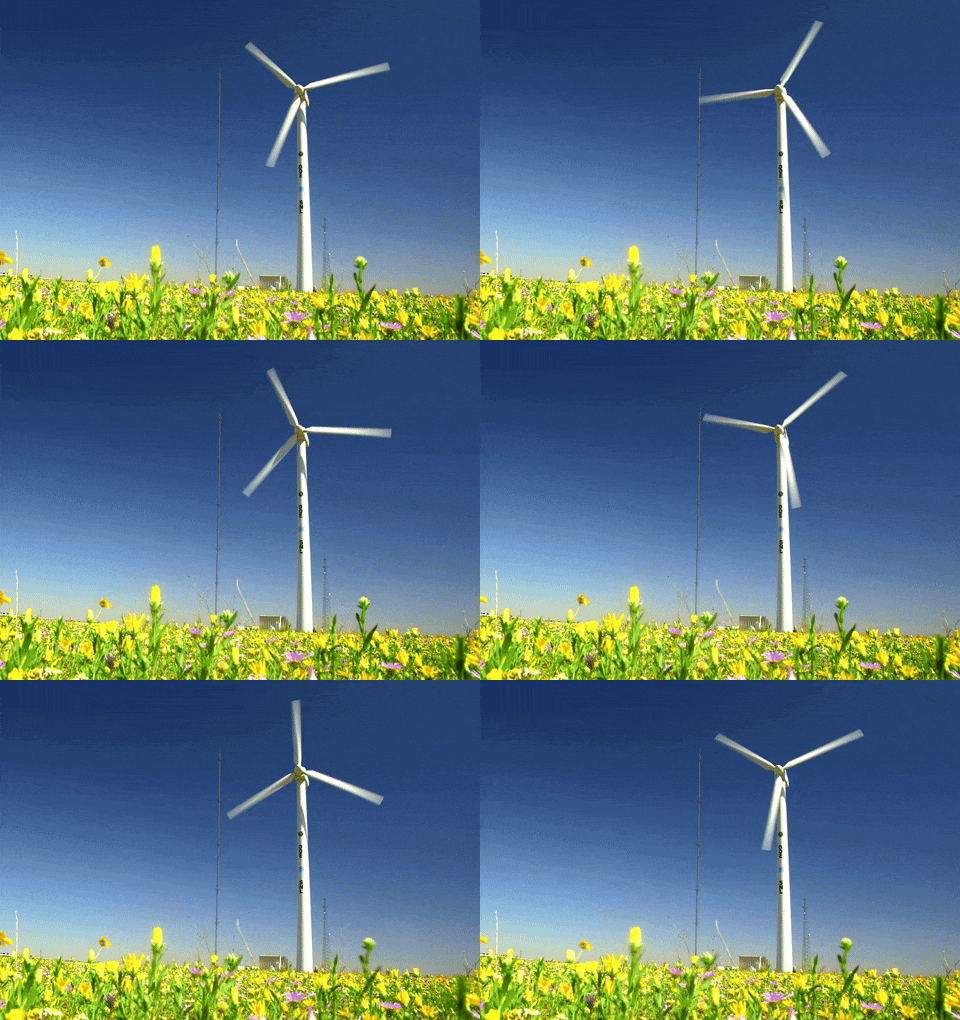
Wind Turbine
A wind turbine is an aerodynamic and electromechanical system that converts kinetic energy from the atmosphere into mechanical and subsequently electrical energy. The turbine primarily consists of rotor blades, a shaft, usually a gearbox, and an electrical generator.
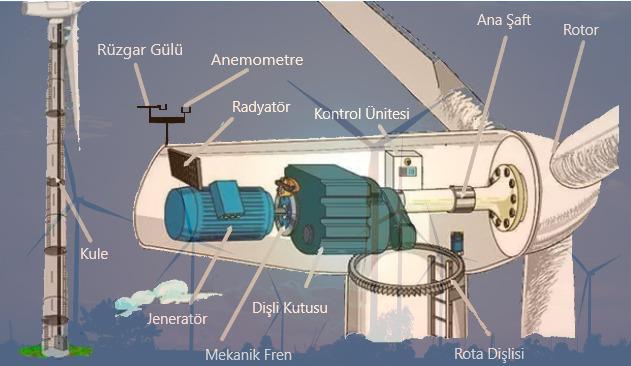
Equipment Used in Turbine
Wind turbines are generally classified into two main types: horizontal-axis and vertical-axis.
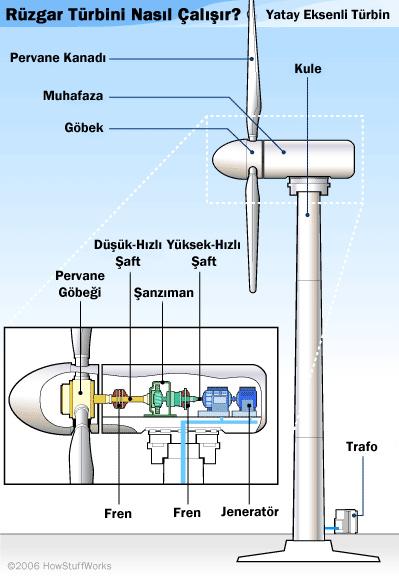
Horizontal-Axis Turbine
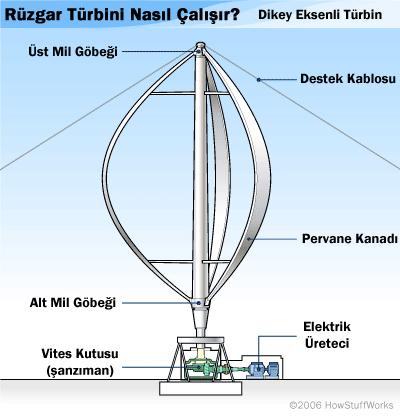
Vertical-Axis Turbine
Wind turbines are usually installed in areas with high wind potential. Offshore locations are popular for wind farms because wind speeds are higher and terrestrial obstructions are fewer. Wind energy is gaining increasing importance worldwide due to its sustainability and environmental friendliness as an energy production method.
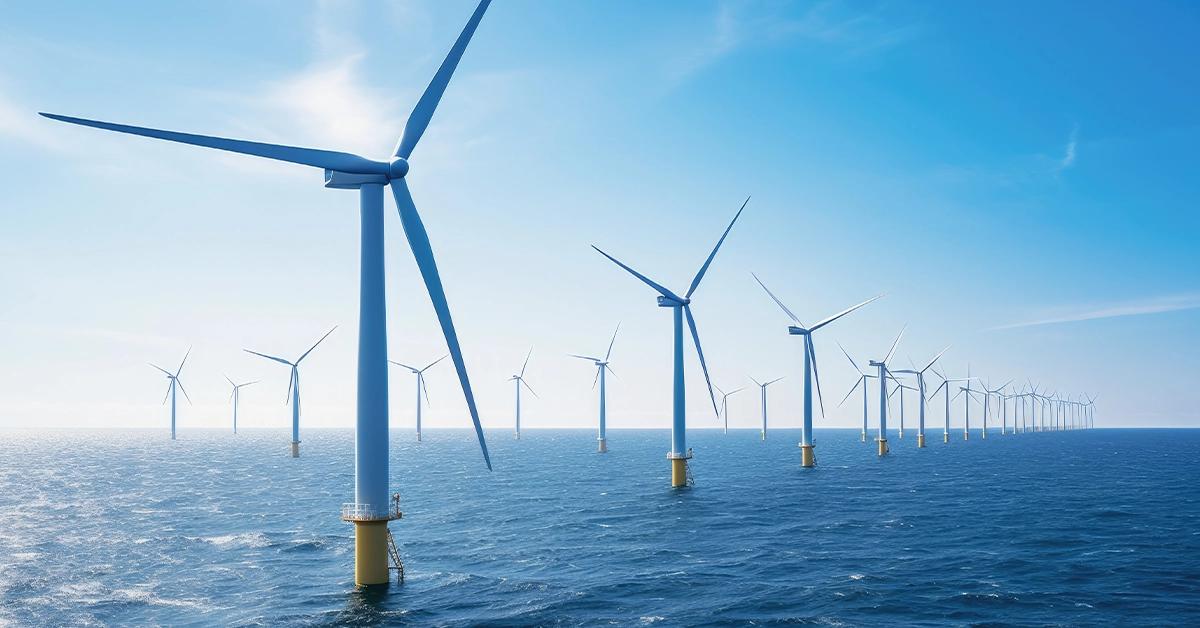
Offshore Wind Farm
When the wind blows, the blades that help rotate the rotor block a portion of the wind’s energy. This blocked portion is the energy converted into electricity. The better the blade efficiency, the higher the power output. According to physical laws, the maximum percentage of wind energy that can be converted into electricity is 59.3%, known as the Betz Limit. However, in practical systems, losses due to friction, heat and turbulence reduce this efficiency to around 30%.
Wind turbines can be used either individually or as part of hybrid systems. In hybrid systems, they are typically used together with solar panels, hydroelectric systems or other energy sources. As a system, they can be connected to the grid, used with solar batteries or diesel generators in hybrid configurations. Until now, standalone wind turbines were mainly used to power water pumps and communication devices, but today they are increasingly used by homeowners and farmers in windy regions to generate electricity.
Wind turbines can be designed to operate at fixed or variable wind speeds. Variable-speed wind turbines can generate 8 to 15 percent more energy than fixed-speed turbines. However, these turbines require additional electronic circuits to deliver a stable energy output.
To calculate the energy output of a wind turbine, wind speed and blade diameter are required. Most large wind turbines rotate at a speed of 15 meters per second. Theoretically, increasing the blade diameter increases energy production, which also means increasing the turbine’s height. This allows the turbine to capture more wind and achieve faster rotation. Wind turbines typically operate at full capacity when rotating at 33 miles per hour (13.4 m/s). When wind speeds reach 45 miles per hour (20 m/s), the system automatically shuts down. Multiple control mechanisms exist to prevent excessive rotational speeds. The most common system is the brake system, which stops the blades from rotating once they reach 45 miles per hour.
A typical large wind turbine produces approximately 5.2 million kWh of electrical energy annually, sufficient to meet the electricity needs of about 600 households.
Tawil, Elie, "How a Wind Turbine Works." Continuing Education and Development, Inc.

Working Mechanism
Design
Installation Site
Factors Affecting Energy Production
Advantages of Wind Energy
Disadvantages of Wind Energy