


This article was automatically translated from the original Turkish version.
+1 More
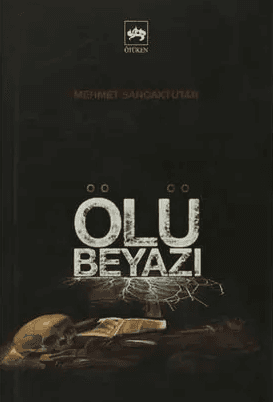
White of the Dead (Book)
Author(s) | Mehmet Sancaktutar | ||||||||
|---|---|---|---|---|---|---|---|---|---|
Publisher(s) | Ötüken Neşriyat | ||||||||
First Edition Year | 2011 | ||||||||
Number of Pages | 223 | ||||||||
Mehmet Sancaktutar’s novel Ölü Beyazı is a work that interrogates the individual’s inner world their relationship with society and the impact of the past on the self within the context of contemporary Turkish literature. The novel centers on themes such as the search for identity psychological disintegration and alienation in human relationships offering a narrative that unfolds on both internal and social levels.
The novel progresses through the inner world of a man confronting his past. The protagonist’s childhood memories his relationships with his family and his questioning of social belonging form the foundation of the narrative. Shifts between events unfolding in the character’s mind and real life introduce a psychological dimension to the storytelling. Particularly the influence of past traumas on the present self and the construction of identity constitute the central axis of the plot. Space and time are often rendered in parallel with the character’s inner world.
One of the novel’s central themes is the process by which the individual comes to terms with their past and their sense of self. The character’s introspective analyses and recollections provide depth to this process.
The character’s state of alienation from society from family and even at times from himself permeates the novel’s atmosphere. His solitude and internal conflicts reinforce this theme.
The mental projections of past events shape the character’s present thought patterns. Memory functions as a structural element of the novel while traumatic experiences mold the character’s development.
The novel is written in the first-person singular narrative. Mehmet Sancaktutar draws attention through a poetic and metaphorical use of language. Intense interior monologues are interwoven with the stream-of-consciousness technique to construct the narrative. The temporal structure is non-linear with continuous transitions between past and present.
The Unnamed Narrator: The central character of the novel is a man struggling to reconcile with his past and grappling with problems in his relationships with his family and himself. His internal conflicts and memory fractures deepen his characterization.
The Mother Figure: One of the significant figures in the narrator’s past. Her role within the family and her relationship with her child are fundamental elements shaping the narrator’s inner world.
The Father Figure: The father character shaped around the concepts of authority fear and distance is the dominant figure determining the psychological dynamics in the narrator’s life.
Sancaktutar, Mehmet. Ölü Beyazı. Ötüken Neşriyat, 2011.

White of the Dead (Book)
Author(s) | Mehmet Sancaktutar | ||||||||
|---|---|---|---|---|---|---|---|---|---|
Publisher(s) | Ötüken Neşriyat | ||||||||
First Edition Year | 2011 | ||||||||
Number of Pages | 223 | ||||||||
No Discussion Added Yet
Start discussion for "White of the Dead (Book)" article
Subject
Theme
Search for Identity and Inner Confrontation
Alienation and Isolation
Memory and Trauma
Style
Characters