This article was automatically translated from the original Turkish version.
Subject Name | Wakeboard | ||||||||
|---|---|---|---|---|---|---|---|---|---|
Sport Type | Water sports / Discipline related to water skiing | ||||||||
Basic Equipment | Wakeboard Life jacket Wake boat or cable system Towing rope Bindings (boots) | ||||||||
Application Area(s) | Artificial facilities with cable systems Controlled marine areas Dam lakes Lakes | ||||||||
Drawing Systems | Fixed cable systems Wake boats | ||||||||
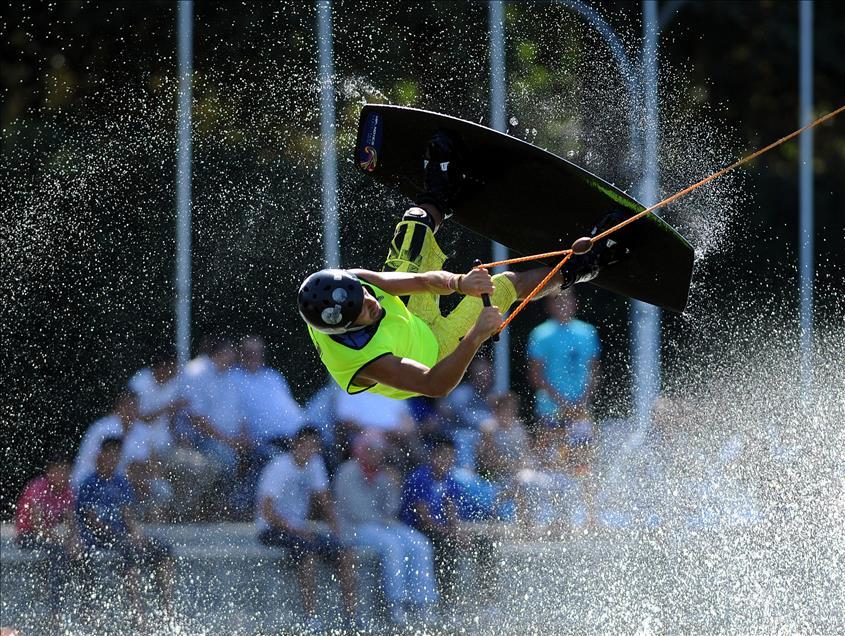
Wakeboard is a water sport that involves gliding on the water surface using the pull generated by a motorized boat or cable system, incorporating elements of balance, speed, and maneuverability. The athlete performs the glide by standing on a single board called a wakeboard, with both feet fixed to it, and using the waves (wake) created behind the boat and the water surface.
Wakeboard emerged within the developmental context of water skiing disciplines and gradually became recognized as a distinct sport as the technique of gliding on a single board gained popularity. The diversification of equipment and the standardization of application methods facilitated its adoption in both recreational and competitive settings.
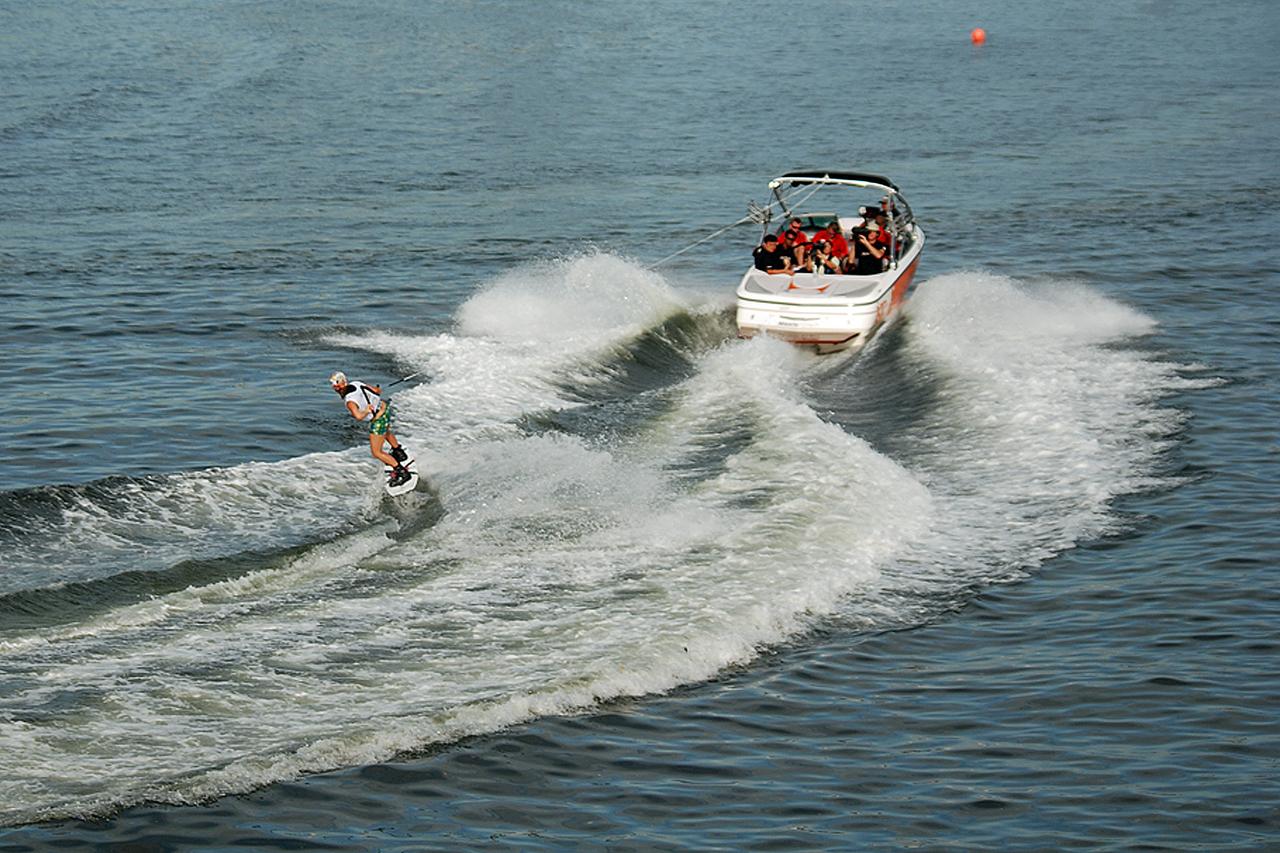
Wakeboard image (Flickr)
The equipment used in wakeboarding plays a decisive role in the performance and safety of the sport.
Wakeboard boards are designed to provide balance and maneuverability on the water surface. Their dimensions, shapes, and structural properties may vary according to the intended use; these characteristics influence the athlete’s control and movement capabilities on the water【1】.
Bindings are equipment that secure the athlete’s feet to the board and provide ankle support. Choosing appropriate bindings is important for enhancing control and reducing the risk of injury【2】.
Wakeboarding is performed using a tow rope. The rope connects the athlete to the boat or cable system and generates the fundamental motion dynamics of the sport.
The tow sources used in wakeboarding are categorized into two main types.
Wake boats are motorized vessels specifically designed to generate prominent and controllable waves at the rear. These waves enable the athlete to perform jumps and maneuvers. The boat’s design and equipment directly affect how the sport is practiced【3】.
Cable systems are fixed installations that pull the athlete along a defined track. These systems allow wakeboarding to be performed in controlled environments with continuous tow.
Wakeboarding is practiced on relatively calm water surfaces such as lakes, reservoirs, and controlled sea areas. Cable systems enable the sport to be conducted in artificial facilities. The characteristics of the application area are among the factors that determine the technical and safety aspects of the sport.
The fundamental glide in wakeboarding relies on maintaining balance while moving across the water surface. Athletes can perform directional changes and jumps by utilizing the waves generated behind the boat. Technical applications may vary depending on the equipment used and the tow system【4】.
Wakeboarding is considered within the scope of disciplines related to water skiing. In Türkiye, this sport is governed under the activities of the Türkiye Water Ski Federation; organization and regulation are carried out within this framework【5】.
Due to its emphasis on speed and balance, wakeboarding carries specific injury risks. Falls and impact-related injuries are among the primary risks associated with the sport. Therefore, wearing a life jacket, selecting appropriate equipment, and practicing in controlled areas are essential for safety.
Wakeboard is historically and technically related to water skiing. However, the use of a single board and the application of distinct balance techniques are key elements that distinguish wakeboarding from classical water skiing.
Captains Preferred Products. "What Is a Wake Boat? A Comprehensive Guide." Accessed January 3, 2026.https://captainspreferredproducts.com/blogs/learning-center/what-is-a-wake-boat-a-comprehensive-guide
Dimensions. "Wakeboarding." Accessed January 3, 2026.https://www.dimensions.com/collection/wakeboarding
Nationwide Children’s Hospital. “Waterskiing & Wakeboarding Injuries.” Accessed January 3, 2026.https://www.nationwidechildrens.org/research/areas-of-research/center-for-injury-research-and-policy/injury-topics/sports-recreation/waterskiing--wakeboarding
TutorialsPoint. "Wakeboarding Tutorial." Accessed January 3, 2026.https://www.tutorialspoint.com/wakeboarding/index.htm
Türkiye Su Ski Federation. "Su Kayağı." Accessed January 3, 2026.
[1]
Dimensions. “Wakeboarding.” Erişim tarihi: 3 Ocak 2026. https://www.dimensions.com/collection/wakeboarding
[2]
TutorialsPoint. “Wakeboarding Tutorial.” Erişim tarihi: 3 Ocak 2026. https://www.tutorialspoint.com/wakeboarding/index.htm
[3]
Captains Preferred Products. “What Is a Wake Boat? A Comprehensive Guide.” Erişim tarihi: 3 Ocak 2026. https://captainspreferredproducts.com/blogs/learning-center/what-is-a-wake-boat-a-comprehensive-guide
[4]
TutorialsPoint. “Wakeboarding Tutorial.” Erişim tarihi: 3 Ocak 2026. https://www.tutorialspoint.com/wakeboarding/index.htm
[5]
Türkiye Su Kayağı Federasyonu. “Su Kayağı.” Erişim tarihi: 3 Ocak 2026. https://www.tssf.gov.tr/su-kayagi/

Subject Name | Wakeboard | ||||||||
|---|---|---|---|---|---|---|---|---|---|
Sport Type | Water sports / Discipline related to water skiing | ||||||||
Basic Equipment | Wakeboard Life jacket Wake boat or cable system Towing rope Bindings (boots) | ||||||||
Application Area(s) | Artificial facilities with cable systems Controlled marine areas Dam lakes Lakes | ||||||||
Drawing Systems | Fixed cable systems Wake boats | ||||||||
Historical Background and Conceptual Framework
Equipment and Technical Features
Wakeboard Board
Bindings (Boots)
Tow Rope System
Wake Boats and Cable Systems
Wake Boats
Cable Systems
Application Areas
Techniques and Application Methods
Institutional Structure and Organization
Safety, Risks, and Injuries
Relationship Between Wakeboard and Water Skiing