

 Recently Added:
This article was automatically translated from the original Turkish version.
Russian President Vladimir Putin’s visit to China in May 2026 will be one of the official diplomatic engagements addressing the strategic partnership between Russia and China economic relations and international issues. The Kremlin announced that Putin will make an official visit to Beijing on 19–20 May at the invitation of Chinese President Xi Jinping.
According to the statement issued by the Kremlin the two leaders will discuss measures to strengthen the comprehensive partnership and strategic cooperation between Russia and China. The statement also noted that the sides will exchange views on international and regional issues.
It was reported that a joint declaration is planned to be issued during the talks and that intergovernmental institutional and other bilateral documents will be signed. The Kremlin also announced that Putin and Xi will attend the opening ceremony of the “2026–2027 Russia and China Education Years” initiative.
Putin and Xi Jinping last met in September 2025 during the Shanghai Cooperation Organisation Summit held in China.
Diplomatic contacts between Russia and China have been maintained regularly in recent years. The two sides cooperate in energy trade defense transportation technology and international diplomacy.
Putin’s visit to China will take place after U.S. President Donald Trump’s meetings in Beijing. It has been reported that during the talks between Trump and Xi Jinping topics such as trade Taiwan regional developments centered on Iran and the Russia-Ukraine war were discussed.
The Chinese government has officially declared its neutrality on the Russia-Ukraine war. Xi Jinping has previously stated that China could assume a mediation role.
According to the Kremlin statement Putin is scheduled to meet with Chinese Premier Li Qiang during his visit to discuss economic and trade cooperation. The talks are expected to cover energy trade economic relations and the volume of bilateral trade.
The Russian news agency TASS reported that the visit has been planned to coincide with the 25th anniversary of the “Treaty of Good Neighbourliness Friendship and Cooperation” signed in 2001.
In recent years Russia and China have strengthened their economic and political ties. China has become one of Russia’s largest trading partners. The use of the Russian ruble and the Chinese yuan has increased in bilateral trade.
It has been noted that China has continued importing Russian energy products following Western sanctions against Russia. The two countries are also pursuing joint projects in energy infrastructure and transportation. In a joint statement issued in 2022 Putin and Xi described their relationship as an “unlimited partnership”.
Al Jazeera. "Russia’s Putin to Visit China Following Trump’s Trip." Accessed May 16, 2026. https://www.aljazeera.com/news/2026/5/16/russias-putin-to-visit-china-following-trumps-trip.
Anadolu Ajansı. "Putin to Visit China for Talks With Xi, Kremlin Says." Accessed May 16, 2026. https://www.aa.com.tr/en/eurasia/putin-to-visit-china-for-talks-with-xi-kremlin-says/3939274.
South China Morning Post. "Russia’s Putin Is Heading to China Next Week, Days After Historic Xi-Trump Summit." Accessed May 16, 2026. https://www.scmp.com/news/china/diplomacy/article/3353648/russias-putin-heading-china-next-week-days-after-historic-xi-trump-summit.
Vladimir Putin’s visit to China on 19–20 May 2026 is expected to address energy cooperation trade volume payments in national currencies logistics projects and global geopolitical developments.
Russia’s economic relations with China have grown rapidly since the outbreak of the Ukraine war due to sanctions imposed by Western countries. Bilateral trade volume increased by 26.3 percent in 2023 reaching 240 billion dollars and surpassed 244 billion dollars in 2024 setting a new record.
Although trade volume saw a modest decline in 2025 it rebounded in the early months of the year. According to Chinese Customs Administration data trade between the two countries rose by 19.7 percent year-on-year during January–April 2026 reaching 8.524 billion dollars. During the same period China’s exports to Russia increased by 23.1 percent while Russia’s exports to China rose by 17 percent.
The energy sector has emerged as one of the core pillars of Russia-China relations. Russia’s exports to China are dominated by oil natural gas and coal. China has become one of Russia’s most important energy markets.
One of the key agenda items expected during the visit is the “Power of Siberia 2” natural gas pipeline project. The project aims to transport Russian gas to China via Mongolia. In addition increasing the capacity of existing energy corridors and signing new long-term energy agreements are also on the agenda.
Russian President Putin previously stated that the two countries are on the verge of taking a “fundamental step” in oil and natural gas cooperation and that key issues have largely been resolved.
Russian officials and experts have highlighted that due to Western sanctions Russia’s economy has become increasingly dependent on China. It is noted that Chinese companies have significantly expanded their presence in the Russian market particularly in automobiles electronics industrial equipment and intermediate goods.
Following the withdrawal of Western companies from the Russian market Chinese automobiles have become one of the country’s primary supply sources. Although China’s automobile exports to Russia declined in 2025 Russia remains one of the largest markets for Chinese cars.
In response to Western sanctions Russia and China have expanded payment systems outside the dollar and euro in recent years. According to Russian Ministry of Finance data the majority of commercial payments between the two countries are now conducted in rubles and yuan. This is viewed as part of both countries’ policies to reduce dependence on Western-dominated financial systems.
Putin’s visit to China took place shortly after Donald Trump’s visit to China. These consecutive visits are seen as indicators of China’s rising central position in global power dynamics.
The visit is considered strategically significant given the ongoing wars in Iran and Ukraine. It is noted that China is seeking to balance its relations with both the United States and Russia while enhancing its influence in energy trade and diplomacy.
China and Russia define their bilateral relations as a “comprehensive strategic coordination partnership for a new era.” The two countries coordinate closely on numerous issues in international platforms such as the United Nations Security Council the Shanghai Cooperation Organization and BRICS.
It was indicated that approximately 40 cooperation agreements are expected to be signed during Putin’s visit with the goal of elevating economic ties to a higher level.
Prior to his visit to China Vladimir Putin stated that relations between Russia and China have reached an “unprecedented level” and that the friendship between the two countries is “not directed against anyone.” Putin emphasized that relations between Moscow and Beijing are built on mutual trust understanding and strategic cooperation and that the two countries support each other on issues of sovereignty state unity and core national interests.
Putin announced that he would travel to Beijing at the invitation of Chinese President Xi Jinping and described Xi as a “good friend for many
Anadolu Ajansı. "Putin says Russia-China friendship 'not directed against anyone' ahead of Beijing visit". Accessed May 19, 2026. https://www.aa.com.tr/en/asia-pacific/putin-says-russia-china-friendship-not-directed-against-anyone-ahead-of-beijing-visit/3941703.
Associated Press – "Putin says Russia-China friendship 'not directed against anyone' ahead of Beijing visit". Accessed May 19, 2026. https://apnews.com/article/china-russia-putin-xi-beijing-visit-trump-0c0086341e9694122a49fb7054b41d97.
Vladimir Putin arrived in Beijing on Tuesday night, 19 May 2026, on a two-day official visit at the invitation of Chinese President Xi Jinping. This visit marks Putin’s 25th trip to China and is the first since the war in Iran began in February 2026.
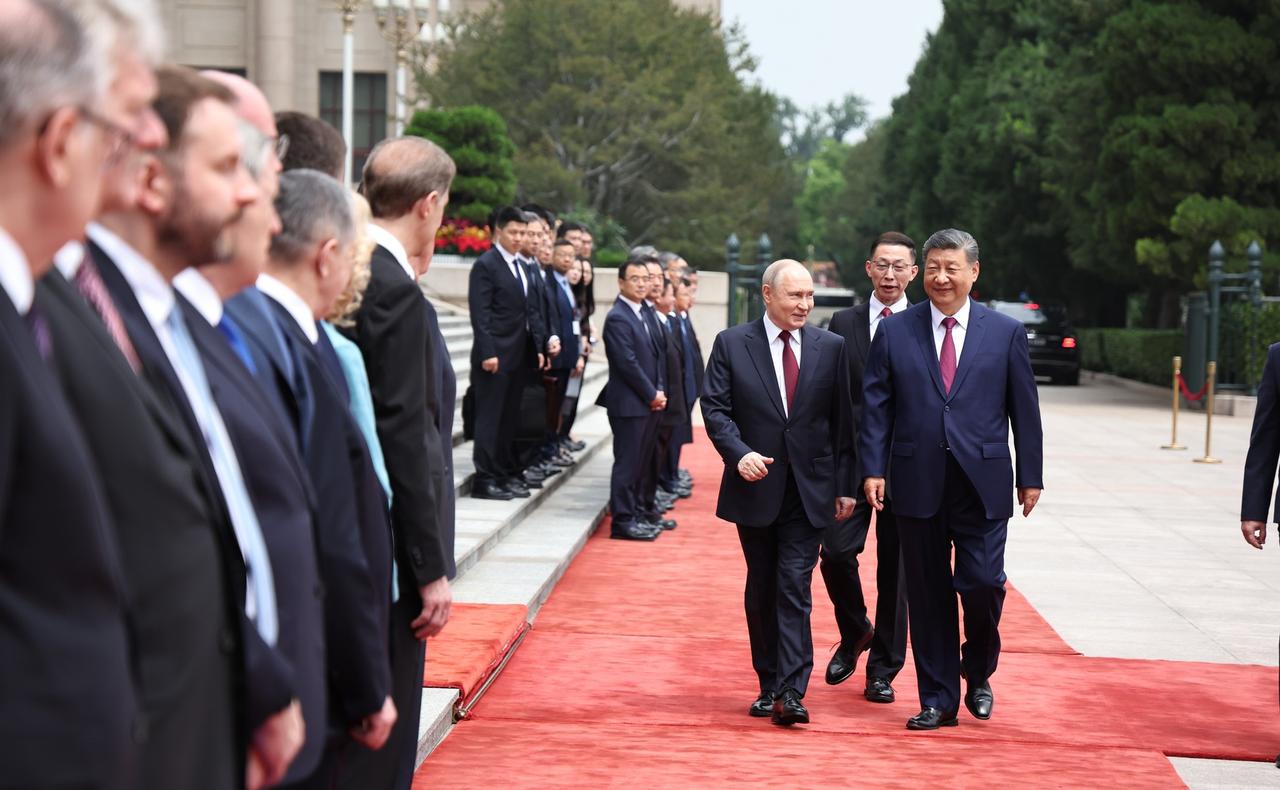
Chinese President Xi Jinping and Russian President Vladimir Putin in Beijing, 20 May 2026 - (Anadolu Ajansı)
Putin was greeted at the airport by a group of young people chanting slogans in Chinese: “Welcome welcome, warmly welcome!” Chinese state media published articles praising the “unshakeable” ties between the two countries and describing Beijing’s consecutive hosting of two world leaders as the “epicenter of global diplomacy.”
The visit took place approximately one week after U.S. President Donald Trump’s visit to Beijing. Kremlin aide Yury Ushakov stated that the visit’s schedule had been set far in advance and that the timing carried no deliberate intent.
On Wednesday morning, 20 May 2026, a state ceremony was held at Tiananmen Square. The military band played the national anthems of both China and Russia, while children waved the flags of both nations on the square. Putin walked alongside Xi Jinping on a red carpet leading to the Great Hall of the People, as a 21-gun salute echoed across Tiananmen Square.
Putin’s delegation included five deputy prime ministers eight ministers and the CEOs of major state enterprises including Gazprom and Rosneft.
Various international media outlets highlighted notable protocol differences regarding the airport welcome. While Trump was met at the airport by Han Zheng, a vice president of China who is not a member of the Communist Party Politburo, Putin was received by Wang Yi, a Politburo member foreign minister and one of Xi Jinping’s closest advisors. Xi Jinping described Putin using the rare diplomatic phrase “old friend.”
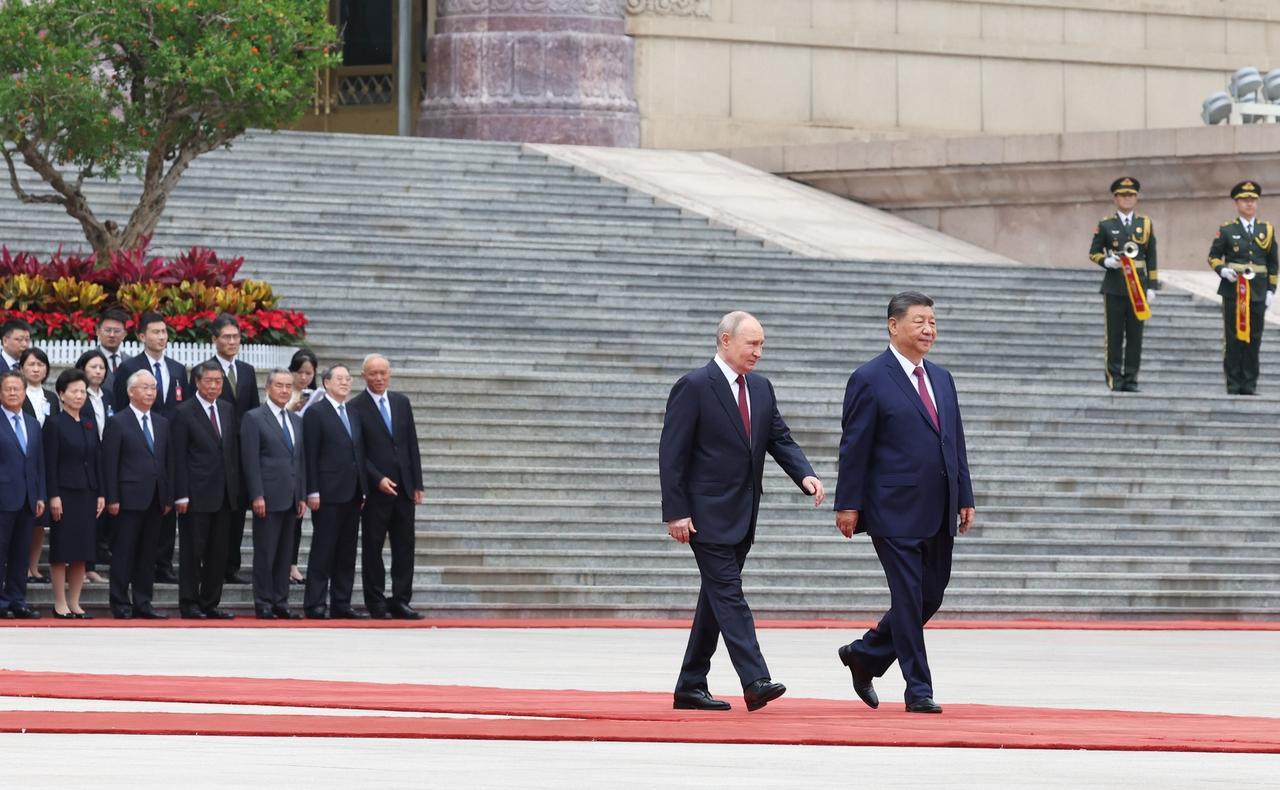
Chinese President Xi Jinping and Russian President Vladimir Putin in Beijing, 20 May 2026 - (Anadolu Ajansı)
Indian media outlet Firstpost claimed these protocol differences reflect “significant political meaning within China’s meticulously crafted diplomatic system” and that Putin received a distinctly higher-level reception in Beijing than Trump did. Kremlin spokesperson Dmitri Peskov emphasized that the two visits should not be compared from any competitive perspective.
Following the state ceremony at the Great Hall of the People, Putin and Xi held one-on-one and delegation-level talks in the same venue. The two leaders discussed bilateral cooperation. Putin also held a separate meeting on the same afternoon with Chinese Premier Li Qiang. In a statement to the Xinhua news agency, Li Qiang said “In an increasingly volatile international environment the China-Russia relationship continues to remain stable and predictable.” He added that China is ready to work with Russia to elevate bilateral cooperation to a new level in line with the strategic guidance of the two heads of state.
During the talks it was agreed to extend the China-Russia Treaty on Good-Neighborliness Friendship and Cooperation signed in 2001. Xi Jinping noted that the treaty signed 25 years ago formed the foundation of long-term friendship and comprehensive strategic coordination between the two countries. Highlighting the rapid changes in the international environment and the danger of a return to the “law of the jungle” where the strong are deemed right Xi emphasized that the forward-looking nature and current relevance of the treaty have become increasingly clear. He reaffirmed that China will work with Russia to uphold the treaty’s principles and advance strategic coordination based on mutual support.
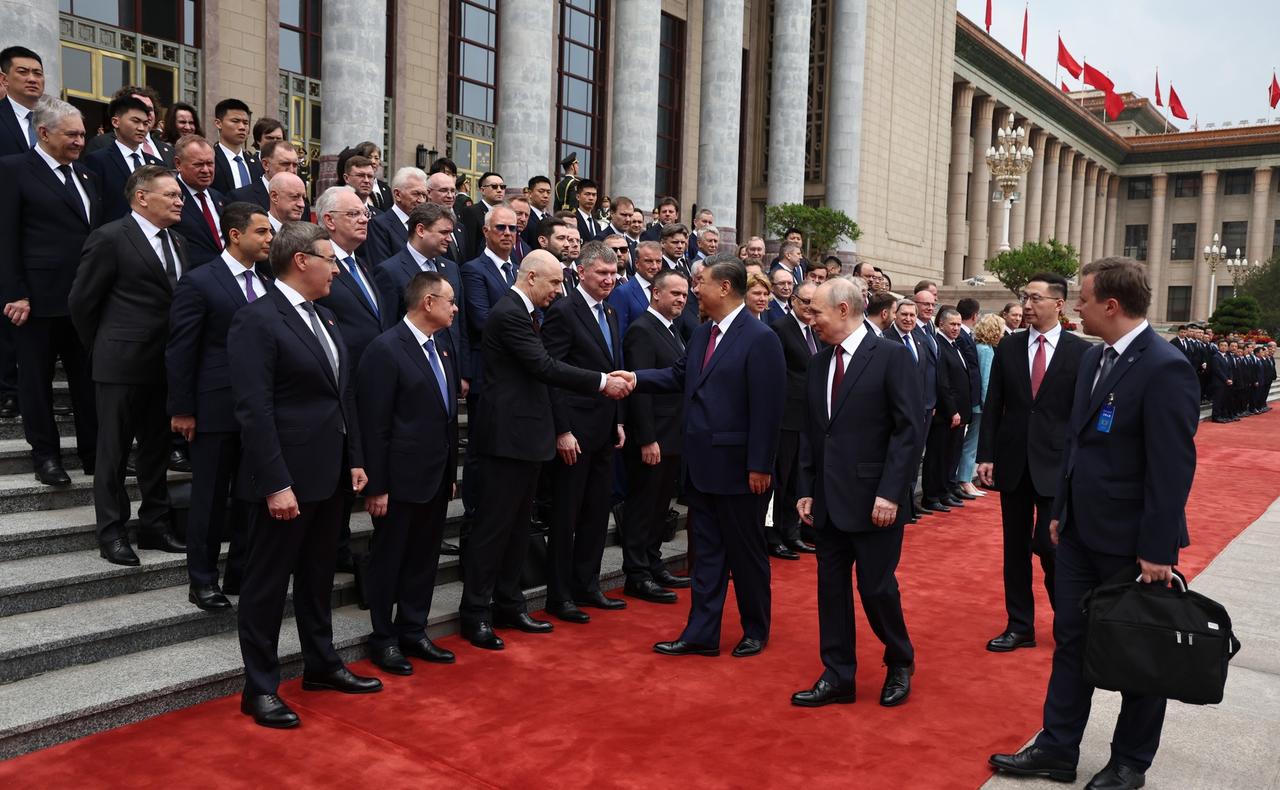
Chinese President Xi Jinping and Russian President Vladimir Putin in Beijing, 20 May 2026 - (Anadolu Ajansı)
Putin also stated during the talks that Russia-China relations have reached an unprecedented level and continue to develop. “This has established a solid foundation for comprehensive partnership and strategic cooperation,” said Putin adding that the relationship is not contingent on global circumstances and possesses an “exemplary” character.
Putin announced that trade volume between the two countries has increased thirtyfold over the past 25 years surpassing $200 billion and reaching $240 billion in 2025. Putin noted that nearly all payments are now conducted in rubles and yuan and that Russia and China have established a stable trading system insulated from external pressures and negative global market trends.
Putin described the energy sector as the “driving force” of Russia-China economic relations. Amid ongoing crisis in the Middle East he noted that Russia remains a reliable energy supplier while China continues to be a responsible consumer. Putin confirmed that his country is among the largest exporters to China of oil liquefied natural gas and coal and pledged to ensure uninterrupted supply of these resources.
Putin noted that the Russian state energy corporation Rosatom has successfully operated in the China market and shared that construction of Russian-designed energy units at the Tianwan Nuclear Power Plant and the Xudabao Nuclear Power Plant is nearing completion. He also stated that both countries are focusing on strengthening cooperation in critical elements and metals required for integrating green technologies.
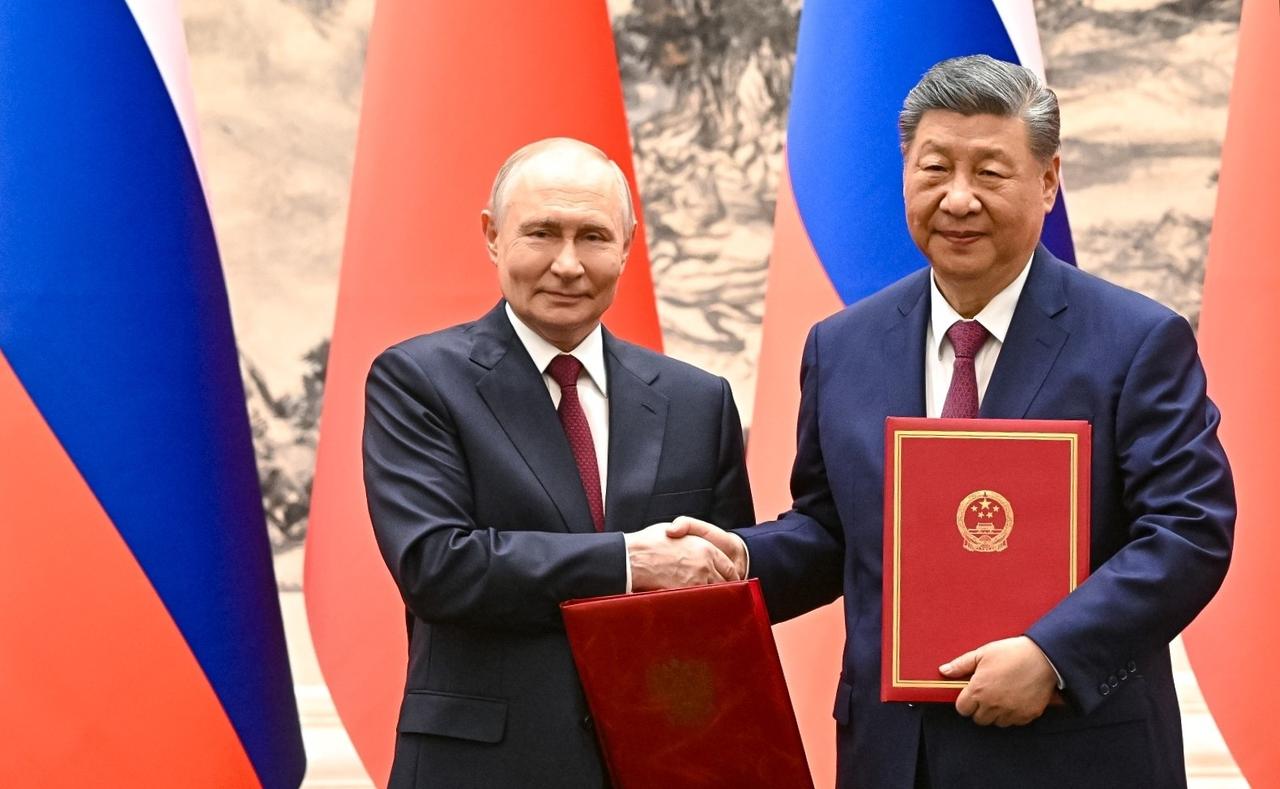
Chinese President Xi Jinping and Russian President Vladimir Putin in Beijing, 20 May 2026 - (Anadolu Ajansı)
Russian Deputy Prime Minister Alexander Novak stated that China is interested in increasing its long-term crude oil imports from Russia and noted a 10 percent increase in oil volumes over the past four months. However the list of signed documents published by the Kremlin did not include any agreement on oil or gas.
The Kremlin announced that the two countries reached agreement on “something very significant” in the energy sector but it remained unclear whether this referred to a pipeline project or another matter.
During the talks no concrete progress was made on the Power of Siberia 2 natural gas pipeline project which was considered one of the most critical agenda items of the visit.
Kremlin Spokesperson Dmitri Peskov stated after the visit that both sides had reached a “general understanding” on the route and key parameters but that some “nuances” remained under discussion. “Some of these nuances have not yet been resolved,” said Peskov adding that while the fundamental understanding on parameters and route has been established no clear timeline for implementation has been set.
The project which has been under negotiation for over a decade involves a 2600-kilometer pipeline system designed to transport 50 billion cubic meters of gas annually from the Yamal Arctic gas fields through Mongolia to China. The main obstacle to completing the project which is expected to complement the existing Power of Siberia 1 pipeline capable of transporting 38 billion cubic meters annually is a pricing dispute. According to sources close to the matter cited by Financial Times China is demanding that the gas price be lowered to near domestic Russian market levels approximately $50 per thousand cubic meters. This figure is roughly one-fifth of the $258 per thousand cubic meters currently paid by Beijing and less than one-eighth of the $420 price charged by Gazprom to other distant foreign customers.
The list of signed documents published by the Kremlin during the visit contained no document directly referencing the Power of Siberia 2 project or any oil and gas cooperation.
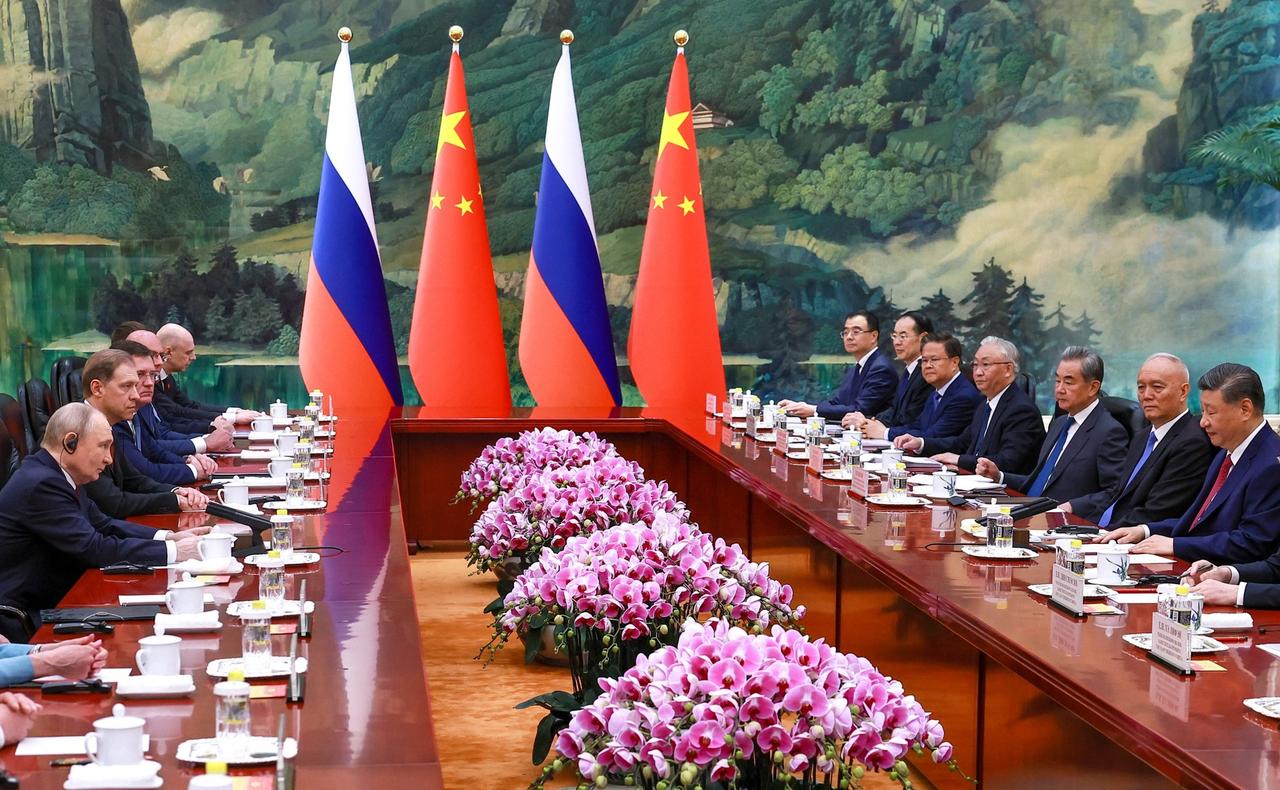
Chinese President Xi Jinping and Russian President Vladimir Putin in Beijing, 20 May 2026 - (Anadolu Ajansı)
More than 40 documents were signed during the visit covering areas including trade education technology and nuclear security. These include bilateral agreements on health standards state news agencies and nuclear energy.
The two countries also issued a comprehensive joint declaration of approximately 9935 words defining Russia and China as a “comprehensive strategic coordination partnership in the new era” along with a shorter joint statement. The joint declaration addressed diverse topics including nuclear security Taiwan Amur tigers giant pandas and golden snub-nosed monkeys.
The joint statement emphasized that artificial intelligence has become a fundamental driver of economic transformation endorsed deepening bilateral cooperation in defense and open-source software supported China’s proposal to establish a global artificial intelligence organization and opposed the use of artificial intelligence as a geopolitical tool. Sberbank CEO German Gref announced that the bank’s flagship AI model GigaChat is targeted to operate on Chinese-made microchips.
It was announced that Russia will extend its visa-free entry policy for Chinese citizens until the end of 2027. This decision was announced simultaneously with China’s decision to extend its visa-free policy for Russians. According to Kremlin figures one million Chinese tourists visited Russia last year while two million Russians traveled to China.
The talks agreed to deepen military security and cooperation including expanding joint exercises air patrols and maritime patrols. Moscow reaffirmed its support for the “One China Principle” on Taiwan while China stated it supports a diplomatic resolution to the Ukraine crisis and firmly supports Russia’s sovereignty and territorial integrity.
The two countries also confirmed ongoing joint projects in non-ferrous metallurgy chemistry paper biotechnology pharmaceuticals aircraft manufacturing and space exploration and agreed to continue cooperation on improving logistics connectivity.
The joint declaration stated that Russia and China are key centers of power in a multipolar world and play a constructive role in preserving the global balance of power. It noted that changes in the international arena and the global balance of power since the end of the Second World War have accelerated and that the global situation has worsened.
The declaration stated: “Both sides commit to and call upon the international community to uphold principles of openness equal and indivisible security democratization of international relations improvement of the global governance system and respect for the diversity of world civilizations and values. The parties will continue to develop a shared vision for a multipolar world and a fairer new model of international relations.”
The declaration included the statement: “Global hegemony is unacceptable and must be prohibited. No state or group of states should control international relations determine the fate of other countries or monopolize development opportunities.” In the context of indivisible and equal security it stated: “The security of one state cannot be achieved at the expense of another’s. Sovereign states cannot be forced to abandon the principle of neutrality.”
The declaration emphasized that the weakening of the UN must not be allowed and that reform is essential. It stated: “The UN Charter is the fundamental norm of international relations. Rules developed by a limited number of states must not replace universally accepted international law.” The declaration in a separate section stressed that the international community must uphold the authority of the UN international equality and justice.
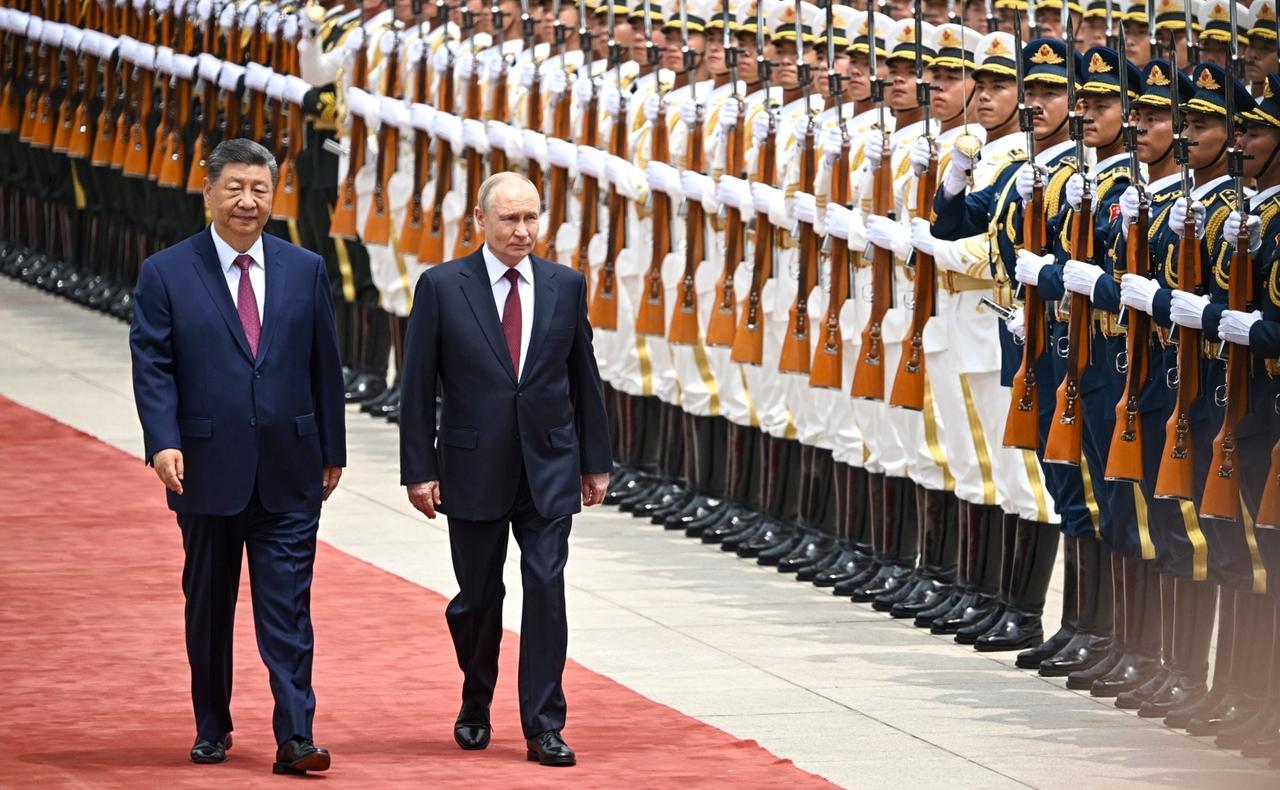
Chinese President Xi Jinping and Russian President Vladimir Putin in Beijing, 20 May 2026 - (Anadolu Ajansı)
At the joint press conference Xi Jinping said: “In a time when unilateralism and hegemonic ambitions are rising and the international arena risks reverting to the law of the jungle where the strong are deemed right” Russia and China as major powers must enhance coordination assume responsibility and safeguard the international order: “Today the world is far from peaceful. Unilateralism and hegemony pose serious threats dangerously pushing the international order toward a perilous struggle of power and domination.”
Xi said: “China and Russia as major powers must assume responsibility in the non-peaceful world of unilateral bullying and the law of the jungle by safeguarding the authority of the United Nations international equality and justice.” He also stressed that the two countries must firmly oppose any attempts to deny the outcomes of the Second World War or justify fascism and militarism.
Xi also called at the same press conference for an immediate end to all conflicts and a return to negotiations in the Gulf region and the Middle East where he said the world stands at a critical crossroads between peace and war. “A comprehensive ceasefire is an urgent priority. Restarting hostilities would be even more dangerous and continuing negotiations is especially vital,” said Xi adding that ending conflicts would alleviate energy supply disruptions and ensure the healthy functioning of the international trade order.
Putin stated that Russia and China pursue independent policies and act within the framework of their strategic partnership: “Russia and China are contributing to the resolution of global and regional issues.”
Putin stated that the two countries will maintain close communication and cooperation in multilateral platforms such as BRICS the Shanghai Cooperation Organization and the G20 and announced that he will attend the APEC summit hosted by China in Shanghai this year.
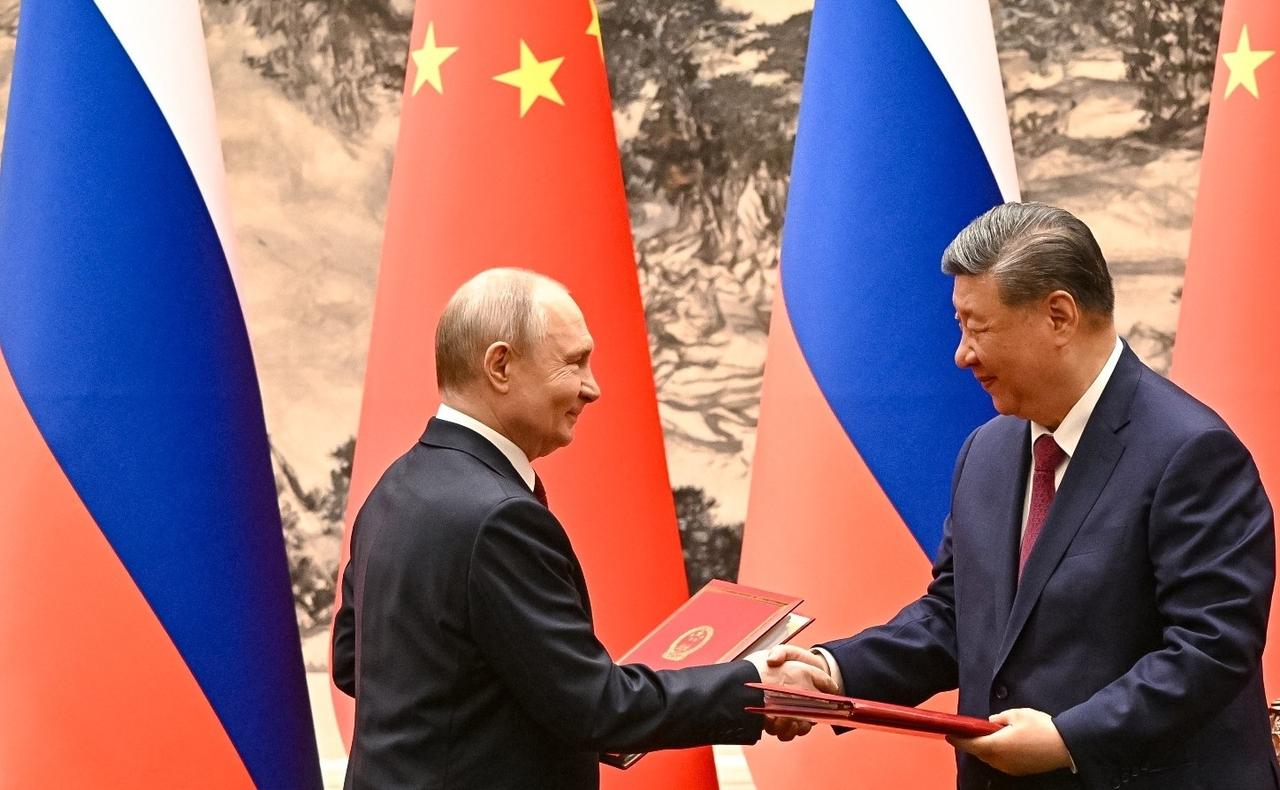
Chinese President Xi Jinping and Russian President Vladimir Putin in Beijing, 20 May 2026 - (Anadolu Ajansı)
The joint declaration stated that the U.S. President Donald Trump’s “Golden Dome” project — a multi-layered global missile defense system with a $175 billion cost aimed at neutralizing all types of missiles at every flight stage — constitutes an “open threat to global strategic stability.” The declaration stated that such plans “directly contradict the fundamental principle of maintaining strategic stability namely the interdependence of strategic offensive and defensive weapons.”
The two countries also condemned the U.S. for allowing the expiration of the New START nuclear arms control agreement signed in 2010 and extended in 2021 without replacing it with a new treaty labeling this move as a “irresponsible policy.” They expressed regret over this development noting that it could initiate a process leading to the end of over half a century of limitations on the intercontinental nuclear arsenals of the two major nuclear powers.
Xi Jinping hosted a tea ceremony for Putin at the Great Hall of the People as the final event of the visit. Attending on the Russian side were Putin’s aide Yury Ushakov Foreign Minister Sergey Lavrov Deputy Chief of Staff of the Prime Minister Maxim Oreshkin and Russian Ambassador to China Igor Morgulov. On the Chinese side Xi Jinping was accompanied by Cai Qi a member of the Politburo Standing Committee of the Communist Party Foreign Minister Wang Yi and Chinese Ambassador to Russia Zhang Hanhui.
Putin described the visit as “successful productive and extremely intensive.” Xi said the talks were “comprehensive” and yielded “rich outcomes.” After the tea ceremony Putin departed the Great Hall of the People and left Beijing on the same day; Russian media reported the departure of his aircraft. Xi Jinping invited Putin for an official visit to Russia next year.
Al Jazeera. "Xi and Putin Signal United Front Against US in Beijing Talks." Al Jazeera, May 20, 2026. Accessed May 21, 2026. https://www.aljazeera.com/news/2026/5/20/chinas-xi-jinping-and-russian-president-vladimir-putin-meet-in-beijing
Alfa-Bank. "Визит Путина в Китай. Итоги и решения." Альфа-Инвестиции (Alfa Investor). Accessed May 21, 2026. https://alfabank.ru/alfa-investor/posts/t/f7fac79b-2f54-f111-91c6-0050569e1fd0/
Anadolu Agency. "Putin Calls China Trip ‘Successful, Fruitful and Very Intensive’ After Talks With Xi." Anadolu Agency, May 21, 2026. Accessed May 21, 2026. https://www.aa.com.tr/en/asia-pacific/putin-calls-china-trip-successful-fruitful-and-very-intensive-after-talks-with-xi/3943440
Anadolu Ajansı. "Rusya ve Çin, Çok Kutuplu Dünya Düzeninin İnşasına İlişkin Ortak Bildiriyi Kabul Etti." Anadolu Ajansı. Accessed May 21, 2026. https://www.aa.com.tr/tr/dunya/rusya-ve-cin-cok-kutuplu-dunya-duzeninin-insasina-iliskin-ortak-bildiriyi-kabul-etti/3943301
Anadolu Ajansı. "Çin ve Rusya Liderleri Pekin’de Bir Araya Geldi." Anadolu Ajansı. Accessed May 21, 2026. https://www.aa.com.tr/tr/dunya/cin-ve-rusya-liderleri-pekinde-bir-araya-geldi/3942679
CNBC. "Three Key Takeaways from Putin’s Beijing Trip — and What They Reveal About China-Russia Ties." CNBC, May 21, 2026. Accessed May 21, 2026. https://www.cnbc.com/2026/05/21/china-russia-putin-xi-jinping-ties-deals-energy-siberia-pipeline-trump-visits-.html
CNN. "Xi’s Double Act: Putin Arrives in China Days After Trump’s Departure." CNN, May 19, 2026. Accessed May 21, 2026. https://edition.cnn.com/2026/05/19/asia/putin-china-visit-xi-meeting-intl-hnk
RIA Novosti. "Мировые СМИ раскопали тщательно скрываемый секрет визита Путина в Китай." RIA Novosti, May 21, 2026. Accessed May 21, 2026. https://ria.ru/20260521/kitay-2093691850.html
Reuters. "Putin in China as It Happened: Moscow and Beijing Warn Trump’s Golden Dome Plan Threatens Stability." Reuters, May 20, 2026. Accessed May 21, 2026. https://www.reuters.com/world/putin-china-live-russian-leader-meets-xi-beijing-days-after-trump-2026-05-20/
The Moscow Times. "«В страну дошли доходы от дорогой нефти». Курс доллара опустился до 70 рублей." The Moscow Times (Russian Edition), May 20, 2026. Accessed May 21, 2026. https://ru.themoscowtimes.com/2026/05/20/osadit-rubl-smozhet-tolko-minfin-kurs-dollara-opustilsya-do-70-rublei-a195789
The Moscow Times. "ЦБР потребовал немедленного исполнения решения суда по выигранному иску к Euroclear на 18,17 трлн р." The Moscow Times (Russian Edition), May 20, 2026. Accessed May 21, 2026. https://ru.themoscowtimes.com/2026/05/20/tsbr-potreboval-nemedlennogo-ispolneniya-resheniya-suda-po-vyigrannomu-isku-k-euroclear-na-1817-trln-r-a195828

It has been announced that Russian President Vladimir Putin will undertake an official visit to China on 19-20 May 2026. The Kremlin stated that Putin will meet with Chinese President Xi Jinping in Beijing to discuss strategic partnership economic relations and international issues. During the talks various bilateral agreements are planned to be signed and the opening of the “2026-2027 Russia and China Years of Education” initiative is scheduled.
No Discussion Added Yet
Start discussion for "Vladimir Putin's Visit to China (May 2026)" article
May 16, 2026
The Kremlin’s Announcement
May 16, 2026
Diplomatic Engagement Between China and Russia
May 16, 2026
Timing Following Trump’s Visit to China
May 16, 2026
Economic and Trade Cooperation
May 16, 2026
Russia-China Relations
May 19, 2026
Putin’s Visit to China and the Economic and Energy Agenda in Russia-China Relations
May 19, 2026
Growth in Russia-China Trade Volume
May 19, 2026
Energy Cooperation
May 19, 2026
Debates on Growing Economic Dependence on China
May 19, 2026
Trade in National Currencies
May 19, 2026
Geopolitical Significance of Putin’s Visit
May 19, 2026
China-Russia Strategic Partnership
May 19, 2026
Putin’s Statements on Russia-China Relations Prior to the Visit to China
May 21, 2026
Vladimir Putin’s Arrival in Beijing (19 May 2026)
May 21, 2026
State Ceremony and Official Welcome (20 May 2026)
May 21, 2026
One-on-One and Delegation-Level Talks
May 21, 2026
Extension of the Treaty on Good-Neighborliness Friendship and Cooperation
May 21, 2026
Economic Relations and Trade
May 21, 2026
Energy Cooperation
May 21, 2026
Negotiations on the Power of Siberia 2 Pipeline
May 21, 2026
Signed Documents and Agreements
May 21, 2026
Joint Declaration: A Multipolar World Order
May 21, 2026
Xi Jinping’s Call for Joint Resistance Against Unilateral Bullying
May 21, 2026
Criticism of the U.S. “Golden Dome” Plan and Nuclear Arms Control
May 21, 2026
Tea Ceremony and Conclusion of the Visit