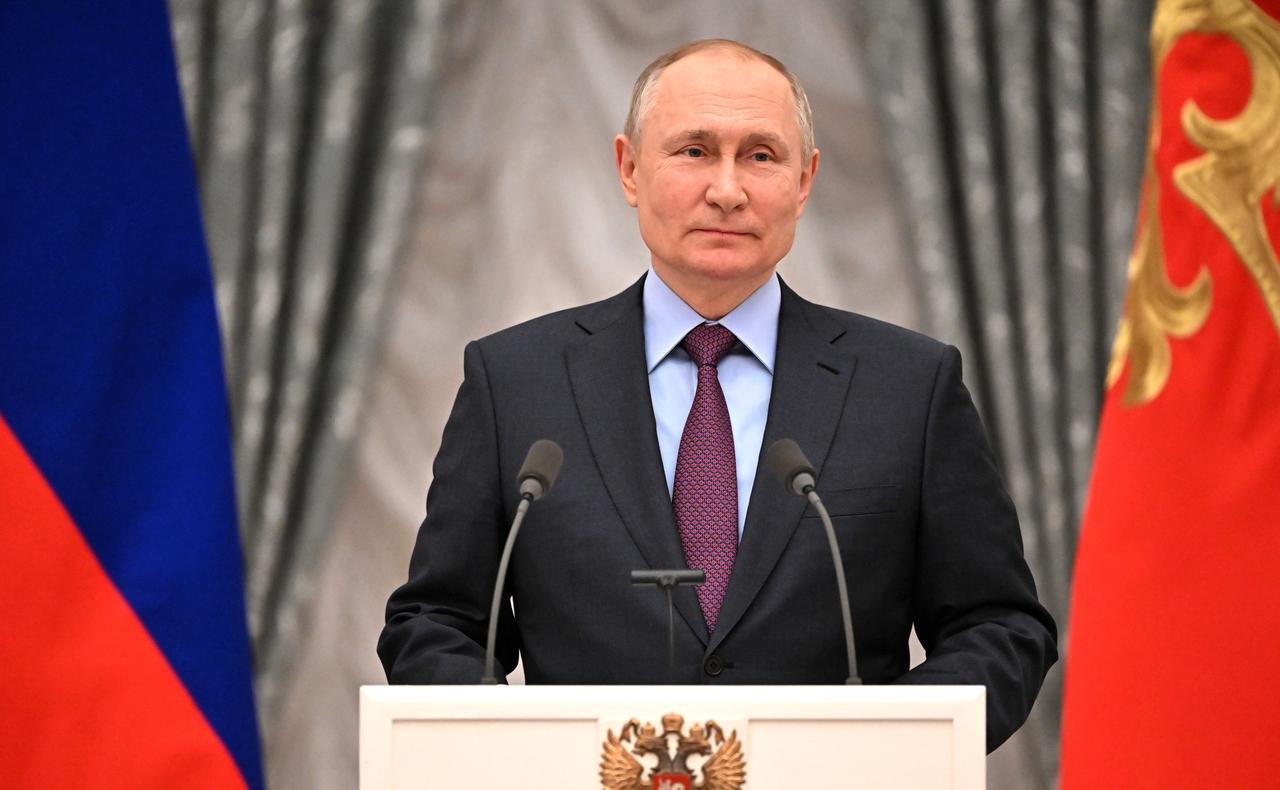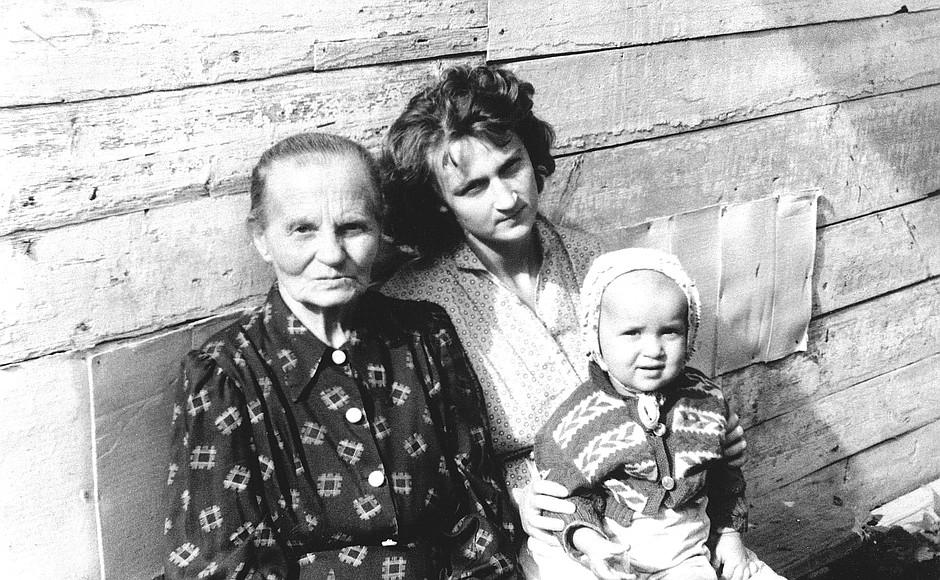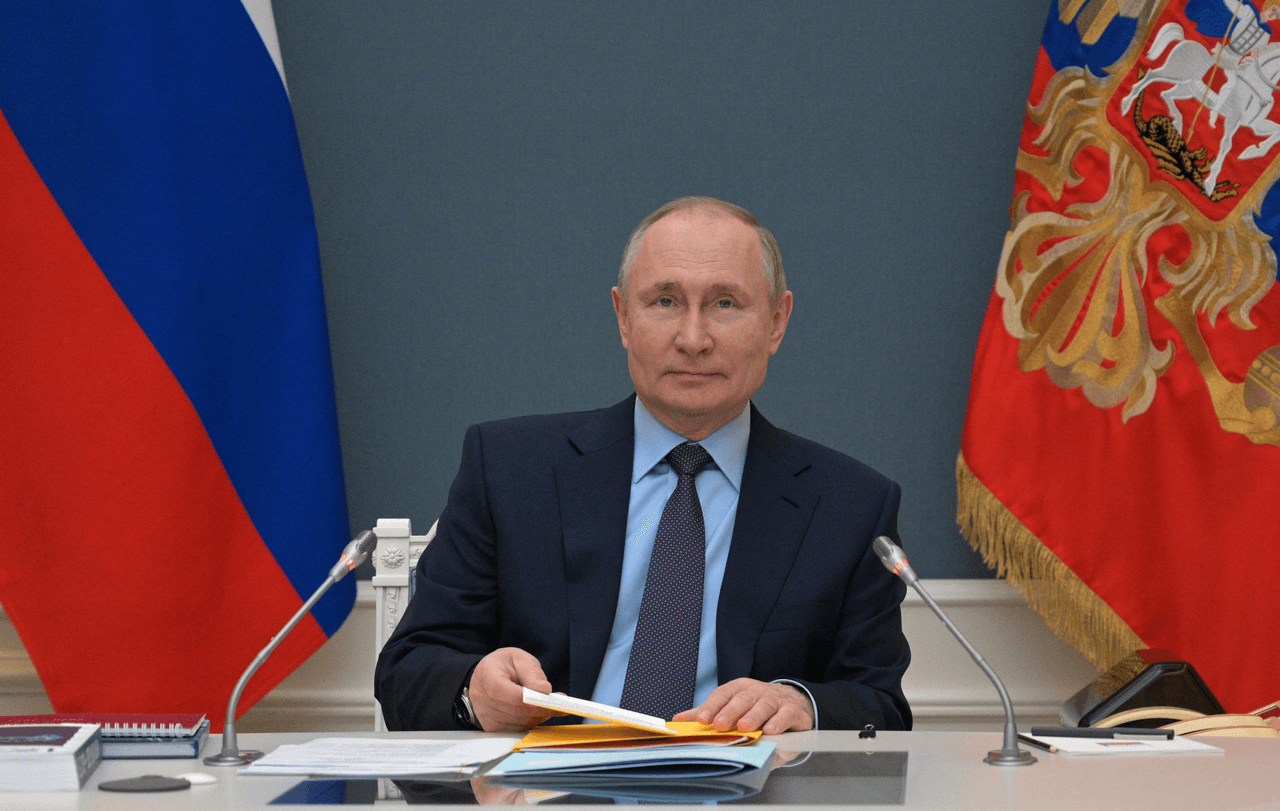

Spouse | Lyudmila Aleksandrovna Putina (1983–2014) | ||||||||
|---|---|---|---|---|---|---|---|---|---|
Date of birth | 1952-10-07 | ||||||||
Age | 73 | ||||||||
Education | Faculty of Law (1970–1975) Leningrad State University | ||||||||
Profession | President Politician | ||||||||
Political beginning | Committee for Foreign Relations of the Saint Petersburg City Administration in 1990 | ||||||||
Entry into the Kremlin | 1996 | ||||||||
Presidential terms | President of the State (third term) (2012–2018) President of the State (fifth term, currently in office) (2024–2030) President of the State (fourth term) (2018–2024) Prime Minister (de facto leader) (2008–2012) President of the State (second term) (2004–2008) President of the State (first term) (2000–2004) | ||||||||
Party | United Russia Party (de facto leader) | ||||||||
Religious belief | Orthodox Christian | ||||||||
Languages | German English | ||||||||
Child | Mariya Vorontsova Katerina Tikhonova | ||||||||
Military service | Former Intelligence Officer (KGB Officer) | ||||||||
Vladimir Vladimiroviç Putin is the President of the Russian Federation and a Russian politician. After graduating from the Law Faculty of Leningrad State University in 1975, where he received his legal education, he served in the Committee for State Security of the Soviet Union (KGB), and during his intelligence career he was stationed in the German Democratic Republic between 1985 and 1990. Following the dissolution of the Soviet Union, Putin worked in the early 1990s as an official responsible for foreign relations at the Saint Petersburg City Administration, and later held various positions within the federal government.
Appointed Prime Minister in 1999 by Russian President Boris Yeltsin, Putin assumed the role of acting President at the end of that year following Yeltsin’s resignation, and was formally elected to the office in the 2000 elections. Since 2000, Putin has held the office of President. Although legal term limits required him to serve as Prime Minister during certain periods, he retained executive authority. Throughout his presidency, he has adopted a moderate centralist style of governance in both domestic and foreign policy.
During his leadership, Putin has promoted a strong centralized state and policies emphasizing state sovereignty, but has been criticized for undermining the functionality of democratic institutions, press freedom, and civil society. Key elements of Putin’s foreign policy strategy include the annexation of Crimea in 2014, military intervention in Syria in 2015, and the 2020 constitutional referendum.
In this period, Russia’s goal of regaining geopolitical relevance has been prioritized, while simultaneously reinforcing domestic legitimacy through symbolic and structural measures that frame historical narratives around a Russian-centric identity.
Vladimir Vladimiroviç Putin was born on 7 October 1952 in Leningrad, Soviet Union. His family belonged to the typical working class of postwar Soviet society. His father, Vladimir Spiridonoviç Putin, volunteered for service in World War II and was seriously wounded during combat. After the war, he worked as a master craftsman in a factory. His mother, Maria Ivanovna Shelomova, also worked as a factory worker and survived the Siege of Leningrad under extremely harsh conditions. Putin had two older brothers, both born before him, who died—one from diphtheria and the other under the difficult conditions of the war.
Putin spent his childhood in a kommunalka, a shared apartment housing multiple families, in Leningrad. He grew up on the fifth floor of a five-story building under limited living conditions. Putin is described during this period as a devoted, quiet, and attentive child. Although his mother initially disapproved of his interest in martial arts, she later supported him as she witnessed his success.
According to his teachers, Putin was characterized as a distracted and rule-defiant student in class. However, he possessed a strong memory and notable oratorical ability. These traits became more pronounced during his secondary school years.
Vladimir Putin’s education was shaped not by academic excellence in childhood but by the development of discipline. He began primary school in 1960 at School No. 193 in Leningrad. In his early years, he displayed disinterest and indiscipline in his studies, but this gradually changed under the personal guidance of his teachers. Particularly influenced by his class teacher Vera Gurevich, he began focusing on his studies from the sixth grade onward, and his academic performance rose rapidly. During this time, he also participated in school social and sporting activities.
After completing secondary school, Putin attended High School No. 281 in Leningrad, where he received a chemistry-focused education. This school had a technical orientation and offered university preparatory programs. His strong memory and linguistic abilities became evident, and he developed an interest in history, German, and especially law. In his youth, he attempted to directly apply to the KGB for information but was advised by officials to first complete university education, and was recommended to enroll in a law faculty.
Following this guidance, Putin enrolled in the Law Faculty of Leningrad State University in 1970. This faculty was known for its curriculum that deeply examined the Soviet legal system and state structure. Over the five years he spent there, Putin received instruction in law, constitutional law, international relations, and Soviet administrative law. During the same period, he held various positions within the Komsomol, the Soviet youth organization, gaining political experience.
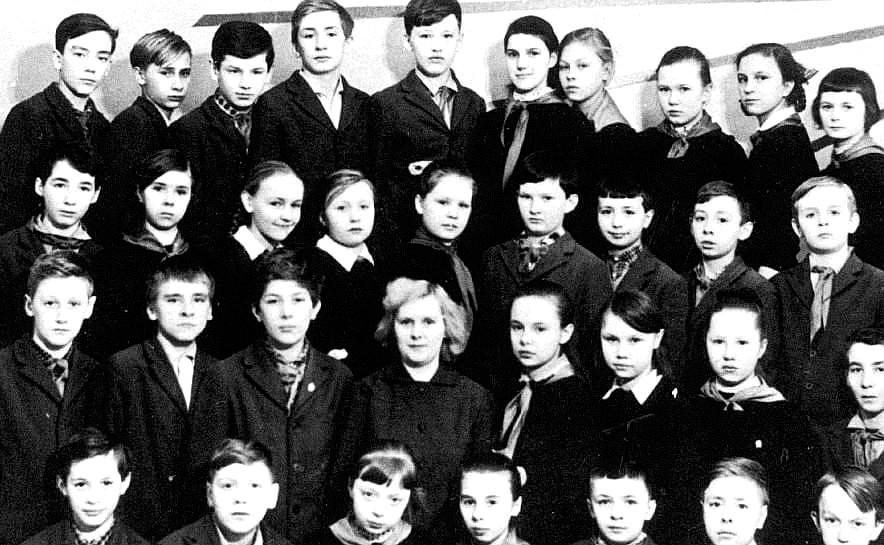
Vladimir Putin (Second from Left in Back Row) and His Classmates (kremlin.ru)
Immediately after graduating from the Law Faculty of Leningrad State University in 1975, Putin joined the KGB, the state intelligence service of the Soviet Union. He worked as an operative (field intelligence officer) and rose to the rank of colonel. After receiving additional training at the KGB’s academy in Moscow in 1985, he was posted to East Germany, where he served as a KGB officer in Dresden from 1985 to 1990.
The fall of the Berlin Wall in 1989 and the collapse of the East German regime ended Putin’s KGB career in Dresden. Putin was recalled to Leningrad in 1990 and transitioned to the KGB’s “active reserve” status, moving from intelligence work to civilian life. He formally resigned from the KGB shortly after the failed August 1991 coup attempt in the Soviet Union.
Following the collapse of the Soviet Union, Putin took his first step into civilian politics in 1990 in his native city of Leningrad (later renamed Saint Petersburg). At the invitation of reformist mayor Anatoliy Sobchak, he left his university position in February 1990 to become Sobchak’s advisor on foreign relations. Shortly thereafter, in June 1991, he was appointed Chairman of the Committee for Foreign Relations of the Saint Petersburg City Administration. This role was crucial in regulating the city’s foreign trade and attracting foreign investment.
In the post-Soviet era, Putin also assumed responsibility for issuing export licenses that generated foreign currency for the central government. In 1992, he was promoted to Deputy Mayor of Saint Petersburg and became one of Sobchak’s closest collaborators. During this period, Saint Petersburg implemented programs aimed at overcoming economic hardship by exporting raw materials abroad in exchange for food imports, and Putin signed numerous export licenses.
During his tenure in Saint Petersburg’s municipal administration, Putin established himself as a loyal and effective technocrat. In 1994, after Sobchak expanded his powers, Putin was promoted to First Deputy Mayor, becoming the city’s second-ranking official. However, when Sobchak lost the June 1996 mayoral election, Putin was forced to leave his municipal post. This defeat marked a turning point in Putin’s career: his patron had lost, and Putin swiftly relocated from Saint Petersburg to Moscow. He thus began preparing to move from local to federal politics, entering the political center of Russia.
In August 1996, Putin was appointed Deputy Head of the Presidential Property Management Directorate in the Kremlin. In this role, he was responsible for managing state assets. In March 1997, he became Deputy Chief of Staff of the Presidential Administration and Head of the Kremlin’s Chief Control Directorate.
In May 1998, he was promoted to First Deputy Chief of Staff of the Presidential Administration, and in July 1998, he was appointed Director of the Federal Security Service (FSB). From September 1998, he managed internal security policy. In March 1999, he became Secretary of the Russian Security Council. On 9 August 1999, Yeltsin declared Putin acting Prime Minister and his successor; on 16 August, the State Duma confirmed his appointment as Prime Minister.
Upon assuming the presidency at the end of 1999, Putin effectively used the period until the March 2000 elections to consolidate the fragmented state structure inherited from Yeltsin, overcome the economic crisis, and restore Russia’s international standing. He won public support through promises of stability and reform. In the presidential election on 26 March 2000, he won 52.94% of the vote in the first round. Communist leader Zyuganov received 29%. This result was notable as it marked the first time since the Soviet era that a leader secured a majority in the first round.
International observers noted that the election day proceeded orderly, but criticized state control over the media. Putin was inaugurated on 7 May 2000, becoming the second President of modern Russia.
Inauguration Ceremony, 7 May 2000 (YouTube)
Putin’s first two presidential terms from 2000 to 2008 were marked by the construction of a centralized governance structure and accelerated economic growth. Shortly after taking office, he divided the country into seven federal districts and appointed Kremlin-linked representatives to each, aiming to curb the influence of powerful regional governors.
Putin also took steps against the oligarchs who had gained power during the Yeltsin era. Media tycoons Vladimir Gusinsky and Boris Berezovsky were forced into exile. The 2003 arrest of businessman Mikhail Khodorkovsky and the subsequent dismantling of his Yukos company, whose assets were transferred to state energy firms, strengthened state control over the energy sector. These policies centralized both economic and political power.
Economically, Russia experienced recovery fueled by rising oil revenues. In 2000, the economy grew by 10%, and between 2000 and 2008, average annual growth reached 7%. Russia’s GDP increased by approximately 94%, and per capita income doubled. Poverty rates fell from around 30% to 14% by 2008. Foreign debt was reduced, and public spending was brought under control.
In foreign policy, Putin initially pursued a cooperative stance toward the West; however, events such as Ukraine’s 2004 Orange Revolution led him to view Western influence in neighboring countries as a threat. In his 2007 speech at the Munich Security Conference, he openly challenged the unipolar world order and adopted a more confrontational posture toward the West.
Domestically, after the September 2004 Beslan school siege, the direct election of regional governors was abolished; governors were henceforth appointed by the Kremlin. Independent media outlets were either shut down or transferred to government-aligned capital. Control over civil society intensified, and political competition was significantly restricted.
Re-elected in the March 2004 election with 71.3% of the vote, Putin institutionalized a centralized governance model during this period. By 2008, constitutional term limits prevented him from running for a third consecutive term, prompting him to begin formulating a new political strategy.
In 2008, constitutionally barred from seeking re-election, Putin supported Dmitry Medvedev as his successor and assumed the role of Prime Minister. This period is referred to in literature as tandemocracy: Medvedev served as President while Putin was Prime Minister. However, due to his influence over United Russia and his position within the bureaucracy, Putin remained the decisive figure in governance.
The most significant development in foreign policy was Russia’s 2008 war with Georgia. Following clashes in South Ossetia, the Russian military intervened in Georgia and achieved rapid military success, effectively separating South Ossetia and Abkhazia from Georgia. This move was interpreted as a demonstration of Russia’s stance against Western influence in its near abroad.
During his premiership, Putin also played an active role in domestic policy. Under the framework of the “Strategy for 2020” developed after the 2008 global crisis, economic modernization and infrastructure projects were prioritized. However, growth slowed, and reforms were limited by bureaucratic obstacles.
In the 2011 parliamentary elections, United Russia lost votes. Mass protests erupted in Moscow and other cities, alleging electoral fraud. Nevertheless, Putin announced his intention to run for president in 2012 and managed the process according to his power strategy.
In the March 2012 elections, Vladimir Putin won 63.6% of the vote and was elected president for the third time (counted as a second term under constitutional continuity). During this period, Putin’s ideological rhetoric shifted more distinctly toward conservatism. Orthodox-Slavic values were emphasized, and the West was portrayed as morally decadent.
A major turning point in foreign policy occurred in 2014. Following a change of government in Ukraine, Russia annexed Crimea. A referendum was held, and Russia declared Crimea’s accession; however, this annexation was not recognized by the international community, leading to sanctions against Russia. The annexation of Crimea boosted Putin’s domestic support. Subsequently, clashes erupted in the Donbas region between pro-Russian separatists and Ukrainian forces, with Moscow providing indirect support to the separatists.
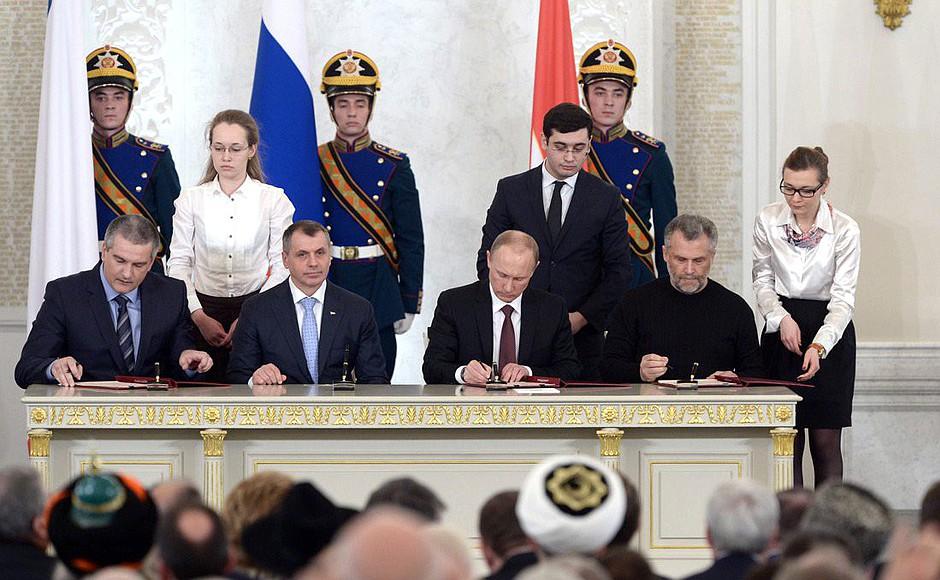
Signing of the Agreement on the Accession of the Republic of Crimea to the Russian Federation (kremlin.ru)
In 2015, Putin made the decision to directly intervene in the Syrian Civil War, supporting the Assad regime. Russian air force operations shifted the balance in favor of the government. In the same year, a crisis erupted between Russia and Turkey after a Turkish fighter jet shot down a Russian jet. However, relations normalized quickly, and the two sides cooperated on Syria.
Turkey’s purchase of the S-400 defense system from Russia highlighted the strategic depth of this rapprochement. During this period, Putin’s administration allocated substantial budgets to military modernization. Accelerated investments in modern equipment were made under the State Armament Program launched in 2010. As the 2018 elections approached, Putin secured constitutional amendments allowing him to run again.
In the presidential election on 18 March 2018, Vladimir Putin was re-elected with 76% of the vote, the highest percentage of his career to date. In this new term, Putin faced economic difficulties. Growth remained sluggish, and real household incomes declined. The increase in the retirement age provoked public backlash and led to a drop in approval ratings. Nevertheless, the reform was implemented. Pressure on the opposition intensified. Protests in 2019 were dispersed by police; in 2020, the poisoning and subsequent arrest of opposition leader Alexei Navalny drew international condemnation.
In January 2020, Putin proposed constitutional amendments that reset his presidential term limits. These amendments were approved in a July 2020 referendum, clearing the way for Putin to remain in office until 2036. Although framed as necessary for “stability,” the opposition labeled them as enabling “lifetime rule.” During the COVID-19 pandemic, initial responsibility was delegated to local authorities, but central authority was later reinforced. The pandemic’s effects and sanctions strained the Russian economy.
The most critical development of this period was the war launched against Ukraine on 24 February 2022, announced as a “special military operation.” Western countries deemed the operation illegal, supported Ukraine, and imposed severe sanctions on Russia. The first year of the war did not yield a swift outcome: Russia withdrew from the Kyiv region but made gains in eastern and southern areas. In the same year, Putin declared that certain regions had been annexed following referendums. These steps were not recognized by the international community. Partial mobilization was declared in September 2022. Internal repression against war opponents intensified, and thousands fled the country.
In 2023, a brief mutiny by Wagner Group leader Prigozhin created a security crisis. However, the crisis was suppressed, and Putin retained his authority. By the end of the term, Russia had largely severed ties with the West and established close relations with countries such as China and Iran. Putin entered the 2024 elections maintaining domestic control.
The presidential elections held from 15 to 17 March 2024 resulted in Vladimir Putin being elected president for a fifth term. Official figures show Putin received approximately 77–78% of the vote; exit polls indicated 87.8%. This was the highest presidential election result in the post-Soviet era. Communist Party candidate Nikolay Haritonov received around 4% of the vote, while other candidates received even lower percentages.
With this result, Putin secured the right to remain in office until 2030. In his post-election speech, he affirmed his determination to continue opposing the West, stated that military operations in Ukraine would continue, and pledged to further strengthen the armed forces. He emphasized Russia’s historical resistance to external pressure and called for national unity. With this election, Putin became one of the longest-serving leaders in modern Russian history.
Since the 2000s, Putin has cultivated a political leadership style centered on the principle of a “strong state,” consolidating authority in a single hand and prioritizing stability. As a former KGB officer, his priority has been the restoration of state authority and the prevention of national disintegration; he himself has defined Russia’s greatest threat not as stagnation but as the possibility of fragmentation. Accordingly, from the early years of his tenure, he has focused on centralizing the federal structure and building a vertical hierarchy of central power.
In terms of governance style, Putin presents an authoritarian modernizer profile, maintaining public support through promises of economic growth and order under strict central control. Although criticized for backsliding on democracy and human rights, the economic recovery achieved during his first two presidencies and the end of the political and social chaos of the 1990s fostered a widespread perception of stable governance, significantly increasing his public backing.
During Putin’s tenure, media privatization and control over the opposition have intensified. National television channels came under state control, and some journalists and opposition politicians were neutralized through various means. In the early years of his rule, Putin took steps to limit the political influence of oligarchs and eliminate political lobbying that had contributed to instability. He sent a clear message to remaining privilege holders: stay out of politics. Ultimately, economic elites retained their wealth, but control over political decision-making mechanisms shifted largely to the Kremlin.
At the core of Putin’s political personality lies a blend of pragmatism and statism. He has described the dissolution of the Soviet Union as “the greatest geopolitical catastrophe of the twentieth century.” While reinforcing state power, he has cultivated a nationalist-conservative bond with society, incorporating institutions such as the Russian Orthodox Church, the military, and traditional family values as pillars of Russian identity. In this regard, a symbiotic relationship has developed between Putin and the Russian Orthodox Church: Putin reintroduced the Church into social life after the Soviet era, and in return, the Church has provided intellectual and religious legitimacy to Putin’s conservative, state-centered vision. For example, the reintroduction of religious education in schools, laws banning “LGBT propaganda,” and social policies reflecting the Church’s views are practical manifestations of Putin’s ideological stance.
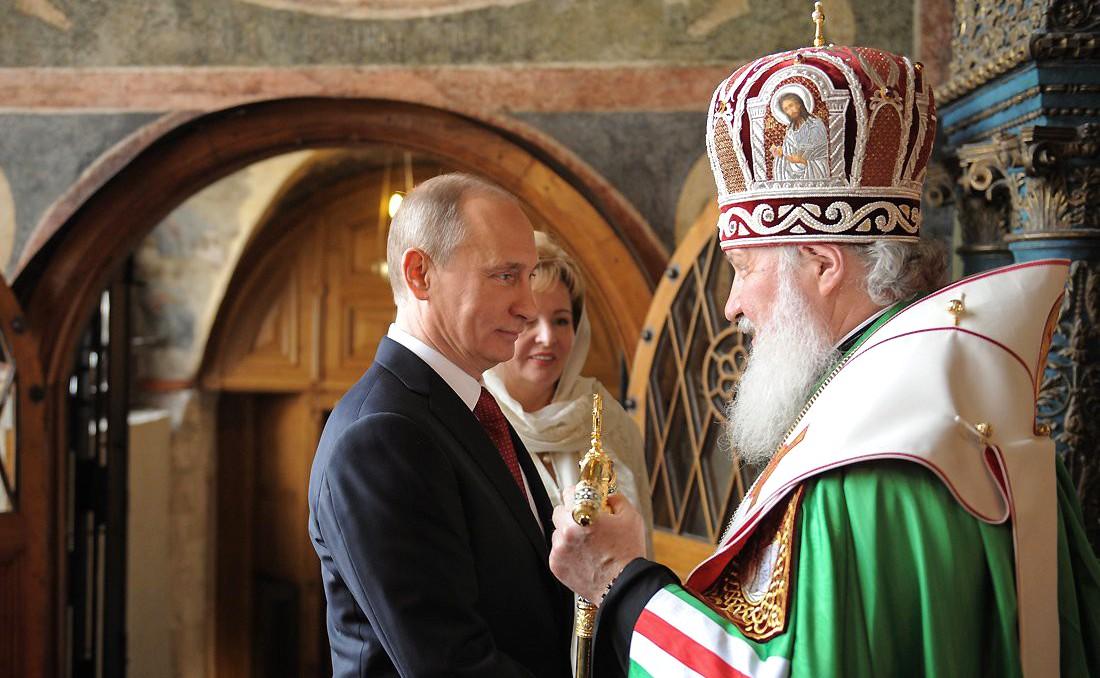
Vladimir Putin at the Cathedral of Christ the Saviour in Moscow (kremlin.ru)
Putin’s approach to historical heritage is pragmatic and utilitarian. In the post-Soviet period, he has embraced elements of the historical legacy that align with Russia’s national interests, particularly those that glorify state continuity, strong leadership traditions, and centralized authority. However, this selective historical narrative has ignored historical facts such as Soviet-era policies of deportation targeting ethnic groups, suppression of local languages, and cultural assimilation efforts. In this context, a narrative has been constructed that omits the full historical reality, aiming to present Russia as a multiethnic state while emphasizing unity under a single identity.
Putin’s domestic policy during his tenure has undergone significant changes across areas such as the state’s role in the economy, control of strategic sectors, military strengthening, religion, and social values.
When Vladimir Putin assumed office in 2000, he adopted a “strong state” approach aimed at restoring economic stability after the market experiments of the 1990s. Early reforms included simplifying the tax system under the Gref Plan and fixing the income tax at a flat rate of 13%. Steps were also taken to improve the business environment.
Between 2000 and 2008, rising oil and natural gas prices significantly boosted the economy. Gross domestic product (GDP) nearly doubled, per capita income increased, and the poverty rate fell from around 30% to 14%. During this period, millions joined the middle class. However, economic growth remained heavily dependent on energy exports.
The Putin administration developed strategies such as the “Concept for Development until 2020” and the “12 National Projects” to reduce dependence on energy. However, the 2008 global financial crisis and Western sanctions following the 2014 annexation of Crimea slowed economic growth. From 2013 onward, the Russian economy faced structural problems such as low productivity and insufficient technological innovation.
Although some improvement in income distribution occurred, economic power remains concentrated among oligarchs and circles close to the state. As of 2018, per capita national income exceeded Eastern European averages; however, real wages declined after 2014, weakening public purchasing power.
In a stagnant economic environment, the government was forced to implement fiscal measures. The value-added tax (VAT) rate was increased, and the retirement age was raised. The retirement reform, in particular, was one of the rare domestic policy moves during Putin’s tenure that led to a noticeable decline in public support.
One of the core elements of Vladimir Putin’s economic and strategic vision has been transforming Russia into a global energy superpower. In the early 2000s, the country’s leading oil and gas companies were largely controlled by private capital, particularly by oligarchs. This structure began to change in 2003 with the collapse of Yukos and the arrest of its owner, Mikhail Khodorkovsky. The oil sector was reorganized under the state-owned company Rosneft. Gazprom was elevated to “national champion” status and expanded under state control.
Putin’s policy of bringing energy producers under state control was successfully implemented, strengthening centralized authority over the energy sector. The Kremlin has used oil and gas revenues not only to finance public spending, social programs, and infrastructure investments but also as a tool in foreign policy.
Periodic disruptions or redirections of Gazprom’s natural gas deliveries to Europe, particularly during the 2006 and 2009 Ukraine crises and after 2014, revealed the strategic dimension of Russia’s energy policy. During this period, energy infrastructure was significantly expanded: major pipeline projects such as Nord Stream, TurkStream, and Power of Siberia diversified export routes.
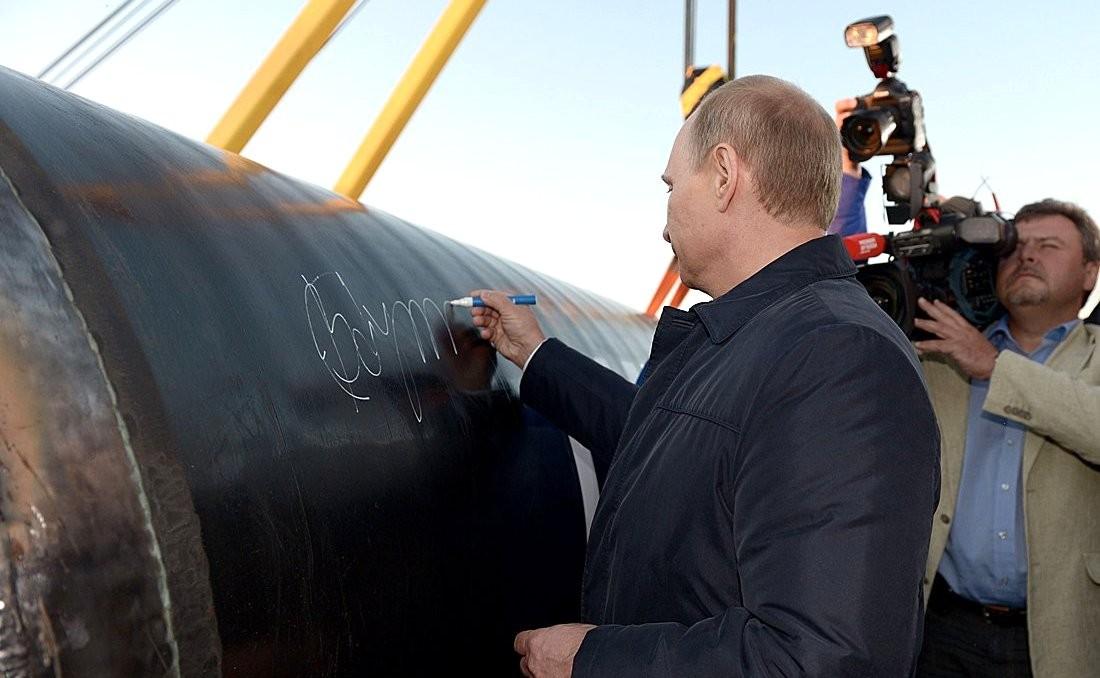
Celebration Ceremony for the First Section of the Power of Siberia Gas Pipeline, 2014 (kremlin.ru)
It is known that in his own academic thesis, Putin argued for the efficient state management of natural resources. Under this approach, Russia has achieved a 12–13% share of global oil production and remains the world’s largest natural gas exporter.
Throughout his tenure, Vladimir Putin has placed great emphasis on restructuring the Russian military. The armed forces, which were technologically backward in the 1990s, entered a modernization process in the 2000s with increased budgetary resources. The 2008 war with Georgia exposed structural weaknesses within the military and necessitated comprehensive reforms.
Reforms initiated after 2008 under Defense Minister Anatoliy Serdyukov aimed to replace the large but dysfunctional units inherited from the Soviet era with more flexible, professional, and permanently ready forces. The number of contract soldiers increased, and officer corps were rejuvenated. In 2010, Putin launched a ten-year State Armament Program allocating 20 trillion rubles to modernize 70% of the military inventory by 2020.
During this period, the Russian military acquired advanced weapon systems such as the T-14 Armata tanks, Su-57 fighter jets, Yasen-class submarines, and S-400 air defense systems. Defense spending increased further after the 2014 annexation of Crimea. By the mid-2020s, approximately one-third of the state budget was allocated to security and defense expenditures, largely due to the war in Ukraine.
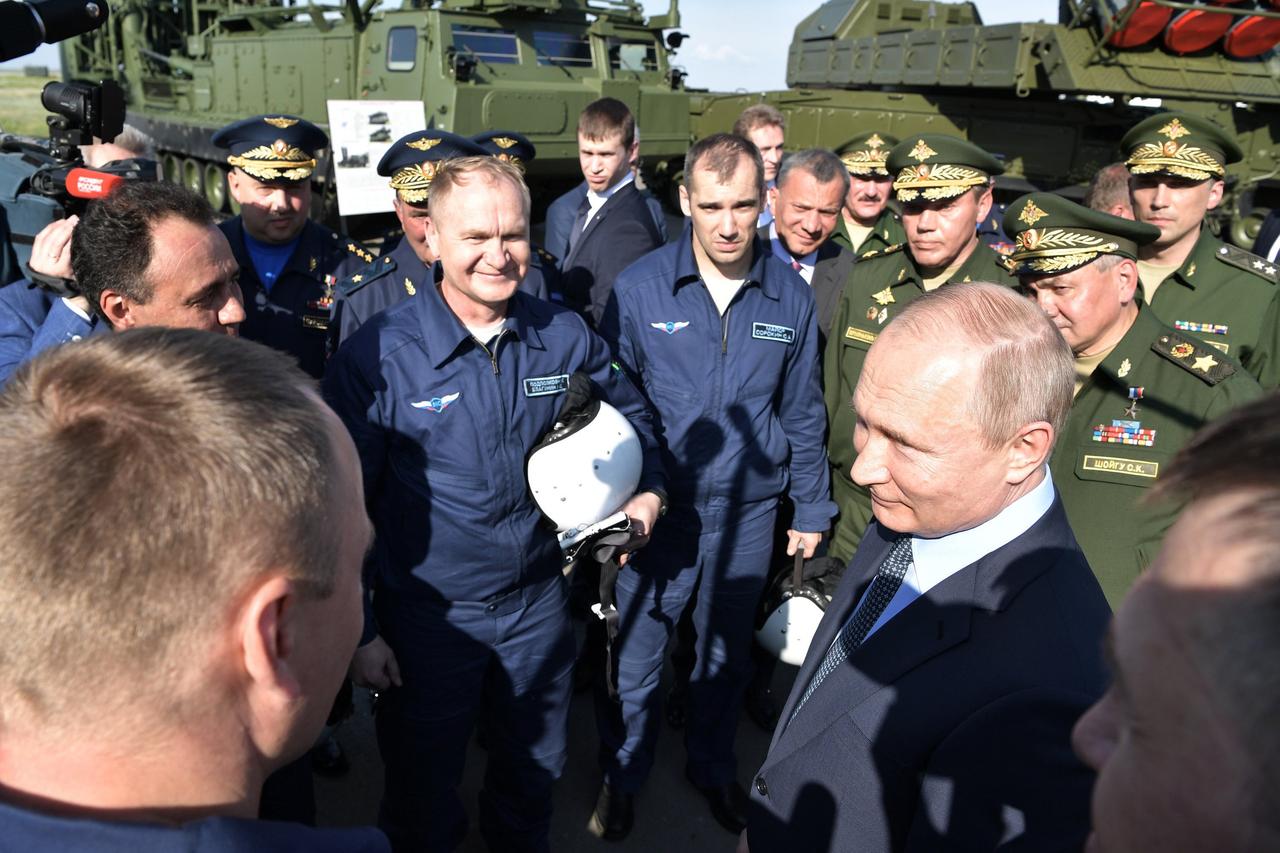
Vladimir Putin with Su-57 Fifth-Generation Fighter Jet Pilots, 2019 (kremlin.ru)
In Vladimir Putin’s domestic policy vision, the Russian Orthodox Church and conservative social values have played a central role. In the post-Soviet identity search, Putin positioned the Orthodox Church as the spiritual foundation of national unity. From the 2000s onward, Putin cultivated a religious image in public opinion, attending church services, playing an active role in religious holidays, and sharing symbolic narratives about his personal faith.
During this period, the Church’s social influence expanded: religious education was introduced into school curricula, previously nationalized properties were returned, and the public visibility of the Orthodox community increased. In return, the Russian Orthodox Church supported Putin’s political authority through public statements that contributed to the state’s legitimacy.
On social values, the Putin administration reinforced conservative transformation through legislation. In 2013, a law banned “propaganda of non-traditional sexual relations,” and anti-abortion rhetoric was supported. Family values were emphasized in school curricula.
In the 2020 constitutional amendments, the phrase “the Russian Federation believes in God” and the definition of marriage as “a union between a woman and a man” were incorporated into the constitution. These steps established a new ideological framework positioning Russia as a spiritual and traditional society in opposition to Western secular and liberal values.
Vladimir Putin’s foreign policy has been shaped by the goals of repositioning Russia as a global power, expanding its influence in the former Soviet space, and opposing the American-led unipolar order. Initially pursuing a cooperative stance toward the West, Putin gradually adopted a competitive and confrontational policy.
In relations with the United States and NATO, Putin has consistently criticized the international order led by the United States throughout his tenure. Although he sought cooperation in the aftermath of 9/11, U.S. actions such as the invasion of Iraq, withdrawal from the ABM Treaty, and NATO expansion damaged relations. His 2007 speech at the Munich Security Conference was a clear expression of this discontent. Relations reached their most tense phase since the Cold War after the 2014 annexation of Crimea and the Ukraine crisis. Viewing NATO’s expansion into former Soviet territories as a threat, Putin strongly opposed the potential membership of Georgia and Ukraine. In its 2022 Strategic Concept, NATO designated Russia as the primary threat to allied security.
In relations with the European Union, Putin developed energy-based cooperation primarily with countries such as Germany, France, and Italy. However, initiatives such as the Eurasian Economic Union clashed with the EU’s Eastern Partnership policy, and relations deteriorated after the Ukraine crisis. The EU, coordinated with the U.S., imposed sanctions on Russia; however, some leaders (e.g., Hungarian Prime Minister Viktor Orbán) maintained close ties with Putin. Relations with Turkey exemplify a multi-vector foreign policy: tensions following the 2015 aircraft crisis were later elevated to a strategic level through the Astana process, the S-400 agreement, and energy projects.
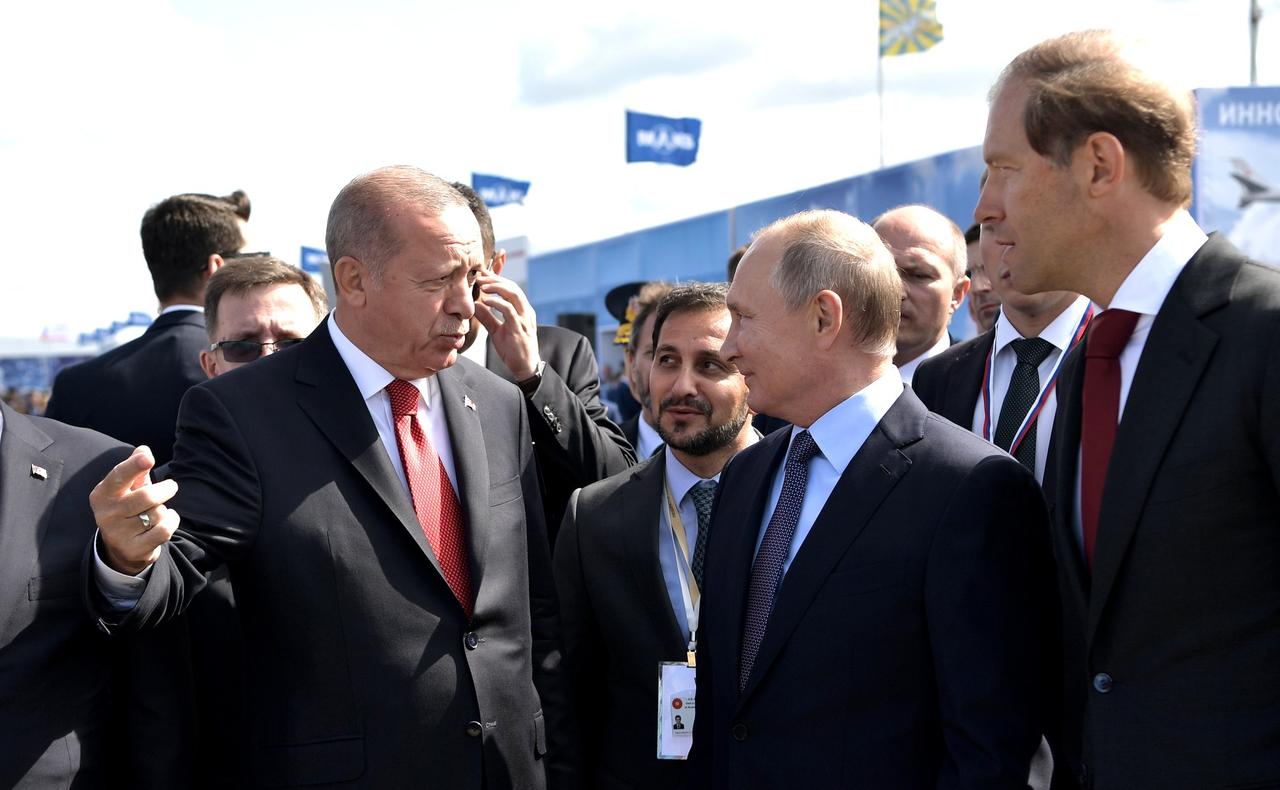
Turkish President Recep Tayyip Erdoğan at the MAKS-2019 International Aviation and Space Fair (kremlin.ru)
The post-Soviet space holds special importance in Putin’s foreign policy. Regimes in Belarus, Armenia, and Kazakhstan have received support, while countries with pro-Western inclinations such as Georgia and Ukraine have faced military interventions. The Eurasian Economic Union, established in 2015, is the institutional manifestation of Moscow’s effort to sustain economic integration within this region under its leadership.
In the Middle East, Putin directly intervened in the Syrian Civil War in 2015 to support the Assad regime. Simultaneously, he maintained relations with opposing actors such as Israel, Iran, and Turkey, demonstrating diplomatic flexibility.
Relations with China have become one of the most notable strategic partnerships of Putin’s tenure. After 2014, energy agreements were signed with China in response to Western sanctions, and trade volumes increased rapidly. In the 2020s, the two countries declared an “unlimited partnership” around anti-American rhetoric and share a vision of a multipolar world order. However, some concerns within the Kremlin have been raised that this closeness could make Russia overly dependent on China.
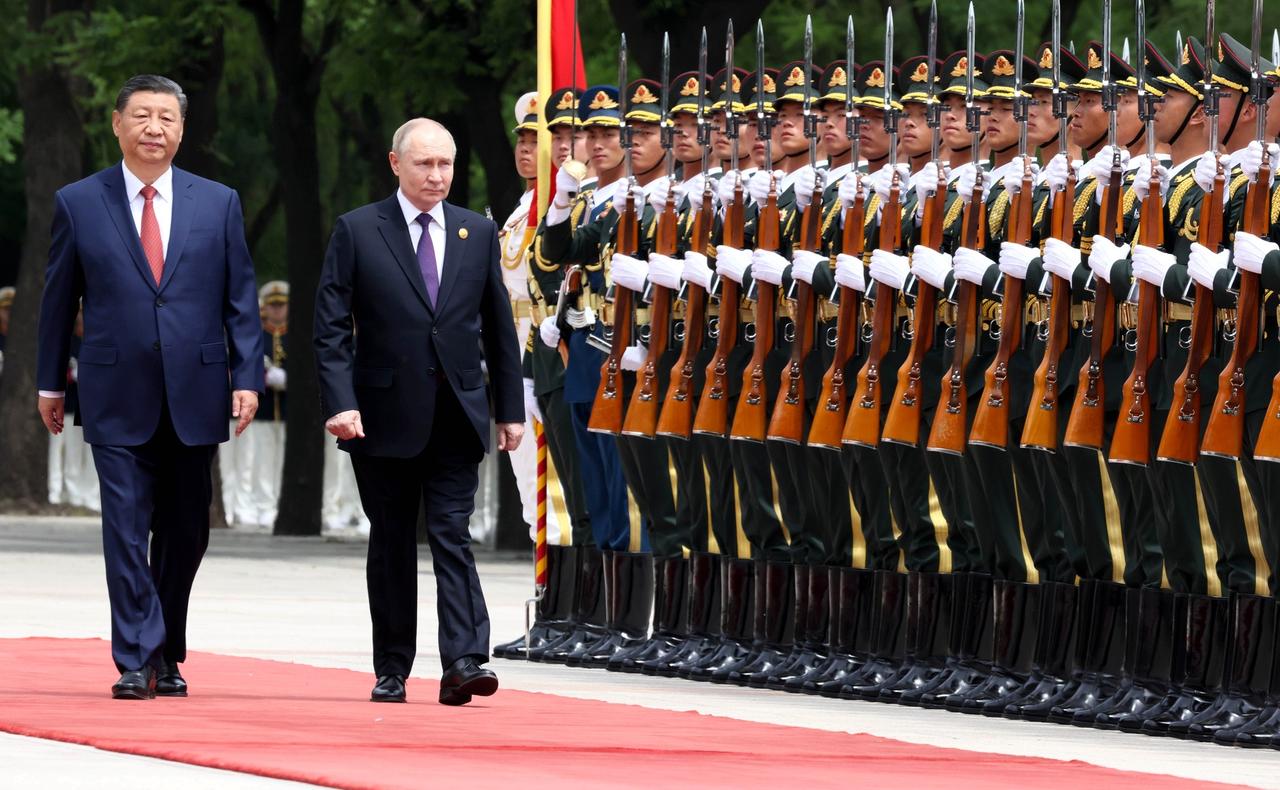
Official Welcome Ceremony for Vladimir Putin (kremlin.ru)
In Latin America, Africa, and South Asia, Putin has sought to enhance global influence by aligning with anti-American regimes. Platforms such as BRICS have been utilized, emphasizing the principles of sovereignty and multipolarity. This rhetoric has found some resonance in countries exhibiting anti-Western stances.
Vladimir Putin’s personal profile is shaped by his religious beliefs, sporting activities, love of animals, and cultural interests. Despite the Soviet Union’s official atheist identity, Putin was baptized as a child by his mother and has stated that he wore a cross pendant given to him by his mother, which he had blessed in Jerusalem and found undamaged after a 1996 fire, reinforcing his faith.
Putin trained in judo and sambo, earned a black belt, and participated in various tournaments. In 2010, he received an honorary doctorate in judo from South Korea and has contributed to publications on the sport. He has also frequently publicized his hobbies such as skiing, ice hockey, fishing, and hunting.
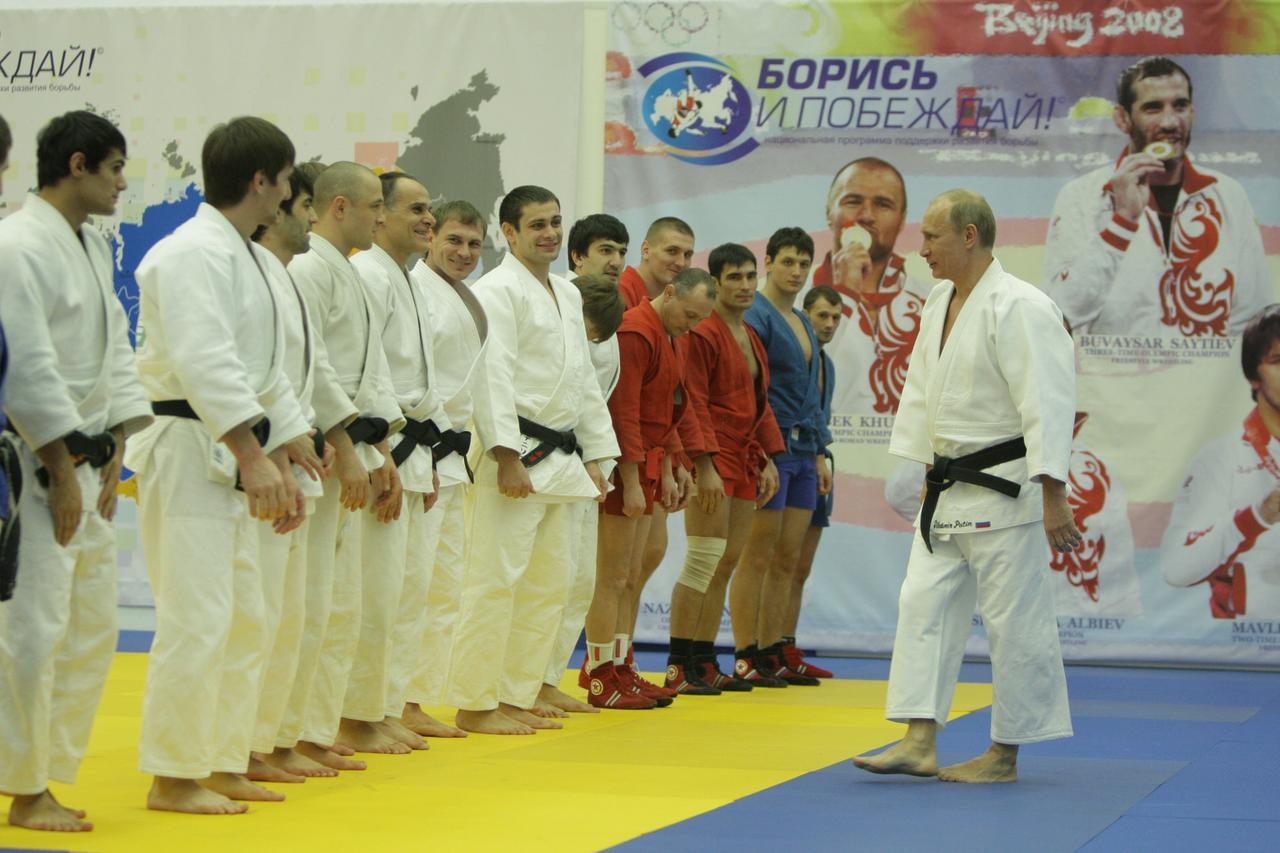
Vladimir Putin at a Training Session with Russian Wrestlers and Martial Artists (kremlin.ru)
Known for his affection for animals, Putin publicly expressed grief following the death of his first dog, Konni. Other dogs he has owned include gifts from Bulgaria and Japan. His active participation in wildlife conservation projects has been presented as evidence of environmental awareness. Linguistically, Putin speaks fluent German and basic English. He is said to have a deep interest in classical Russian literature, particularly Tolstoy and Dostoevsky, and to exhibit nostalgic attachment to Soviet-era cinema and music.
Vladimir Putin has been awarded state orders and medals both within Russia and by various foreign countries. According to Kremlin sources, he has received approximately twenty domestic and foreign honors.
In 2018, he was awarded the Russian Orthodox Church’s highest honor, the Order of Saint Andrew. Among the significant foreign honors he has received, China’s 2018 “Order of Friendship of the People” stands out; Putin is the first head of state to receive this award. In 2006, he was awarded France’s Legion of Honour, Grand Cross; this award was later revoked, sparking public debate after 2022.
In June 2024, North Korea announced it had awarded Putin the “Kim Il Sung Order.” Other international honors bestowed upon Putin include India’s “Jawaharlal Nehru Peace Prize,” Mongolia’s “Genghis Khan Order,” Venezuela’s “Simon Bolivar Order,” and state decorations from the United Arab Emirates and Saudi Arabia.
Burrett, Tina. “Making Russia Great Again? Vladimir Putin’s Changing Sources of Legitimacy, 2000–2024.” *Politics and Governance* 12 (2024): 1-20. Accessed June 17, 2025.
Crane, Keith, Olga Oliker, and Brian Nichiporuk. *Trends in Russia’s Armed Forces: An Overview of Budgets and Capabilities*. RR-2573. Santa Monica, Calif.: RAND Corporation, 2019.https://apps.dtic.mil/sti/pdfs/AD1088623.pdf
Ehrman, John. “Review of The Man Without a Face: The Unlikely Rise of Vladimir Putin.” by Masha Gessen, Mr. “Putin: Operative in the Kremlin, by Fiona Hill and Clifford Gaddy.” *Studies in Intelligence* 57, no. 4 (2012): 39–43. Accessed June 17, 2025.https://www.cia.gov/resources/csi/static/Mr-Putin.pdf
Evans, Alfred B., Jr. “Power and Ideology: Vladimir Putin and the Russian Political System.” *Carl Beck Papers in Russian & East European Studies*, no. 1902. Pittsburgh: University Center for International Studies, University of Pittsburgh, 2008. Accessed June 17, 2025.https://carlbeckpapers.pitt.edu/ojs/cbp/article/view/139
Gaynullin, Lennar. “Vladimir Putin’s 20 Years in Power: The Investigation of Vladimir Putin’s Grounds of Political Legitimacy.” Master's thesis,Uppsala Üniversitesi, 2022.
Koizumi, Yu. “Key Changes in the Russian Military since the Start of the War.” Sasakawa Peace Foundation. Accessed June 17, 2025.https://www.spf.org/iina/en/articles/koizumi_02.html
Ministry of Foreign Affairs People’s Republic of China. “President Xi Jinping Holds Talks with Russian President Vladimir Putin.” fmprc.gov.cn. Accessed June 17, 2025.https://www.fmprc.gov.cn/eng/xw/zyxw/202505/t20250509_11617679.html
President of Russia. "At a ceremony to mark the joining of the Power of Siberia gas pipeline’s first section JPG." Kremlin.ru. Accessed June 17, 2025.http://en.kremlin.ru/events/president/news/46527/photos/37889
President of Russia. "Vladimir Putin took part in a practice for Russian wrestlers and martial artists during a visit to the Moskovsky sports and fitness centre in St Petersburg JPG." Kremlin.ru. Accessed June 17, 2025.http://en.putin.kremlin.ru/photos/all/2010/12/fullscreen/86
President of Russia. “At the Kremlin’s Annunciation Cathedral JPG.” Kremlin.ru. Accessed June 17, 2025.http://en.putin.kremlin.ru/photos/all/2012/5/fullscreen/323
President of Russia. “Biographies of presidents of Russia.” Kremlin.ru. Accessed June 17, 2025.http://www.en.kremlin.ru/structure/president/presidents
President of Russia. “Biography.” Vladimirputin.ru. Accessed June 17, 2025.http://en.putin.kremlin.ru/bio/page-0
President of Russia. “During the meeting of the Russian Geographical Society Board of Trustees (via videoconference) JPG.” *Kremlin.ru.* Accessed June 17, 2025.http://en.putin.kremlin.ru/photos/themes/105/filler/fullscreen/7209
President of Russia. “President of the People’s Republic of China Xi Jinping held an official welcome ceremony for President of Russia Vladimir Putin. JPG.” Kremlin.ru. Accessed June 17, 2025.http://en.putin.kremlin.ru/photos/fullscreen/8137/search?q=Xi%20Jinping
President of Russia. “Vladimir Putin answered media questions. Photo: Sergey Guneev, RIA Novosti JPG.” *Kremlin.ru.* Accessed June 17, 2025.http://en.kremlin.ru/events/president/news/67838/photos/67675
President of Russia. “When landing at the Chkalov State Flight Test Centre airfield, the President’s airplane was accompanied by a group of six Su-57 fifth-generation fighter jets. JPG.” *Kremlin.ru.* Accessed June 17, 2025.http://en.putin.kremlin.ru/photos/fullscreen/6136/search?q=Su-57
President of Russia. “With President of Türkiye Recep Tayyip Erdogan at the International Aviation and Space Salon MAKS-2019 JPG.” Kremlin.ru. Accessed June 17, 2025.http://en.kremlin.ru/events/president/news/61384/photos/60521
RSFSR. “Russian Anthem 2000 - Vladimir Putin Inauguration 7th May 2000 [High Quality Version].” YouTube. Accessed June 17, 2025.https://www.youtube.com/watch?v=GTf2kXwYy8c&list=RDGTf2kXwYy8c&start_radio=1
Snegovaya, Maria, Michael Kimmage, and Jade McGlynn. *The Ideology of Putinism: Is It Sustainable?* Washington, DC: Center for Strategic and International Studies, September 2023. Accessed June 17, 2025.Accessed adresi
TASS. “Putin says relations between Russia and Turkey may be considered as fully restored.” Russian News Agency. Accessed June 17, 2025.https://tass.com/politics/975397
TASS. “The Biography of Russian President Vladimir Putin: A Story of True Leadership.” Russian News Agency. Accessed June 17, 2025.https://tass.com/society/969438
The Moscow Times. “20 Years of Vladimir Putin: The Transformation of the Economy.” Independent News From Russia. Accessed June 17, 2025.Accessed adresi
The Moscow Times. “China's Xi Lands in Moscow
The Moscow Times. “Long Read: 20 Years of Russia's Economy Under Putin, in Numbers.” Independent News From Russia. Accessed June 17, 2025.Accessed adresi
Wilson Center. “Has Vladimir Putin Always Been Corrupt? And Does it Matter?” Wilsoncenter.org. Accessed June 17, 2025.https://www.wilsoncenter.org/event/has-vladimir-putin-always-been-corrupt-and-does-it-matter

Spouse | Lyudmila Aleksandrovna Putina (1983–2014) | ||||||||
|---|---|---|---|---|---|---|---|---|---|
Date of birth | 1952-10-07 | ||||||||
Age | 73 | ||||||||
Education | Faculty of Law (1970–1975) Leningrad State University | ||||||||
Profession | President Politician | ||||||||
Political beginning | Committee for Foreign Relations of the Saint Petersburg City Administration in 1990 | ||||||||
Entry into the Kremlin | 1996 | ||||||||
Presidential terms | President of the State (third term) (2012–2018) President of the State (fifth term, currently in office) (2024–2030) President of the State (fourth term) (2018–2024) Prime Minister (de facto leader) (2008–2012) President of the State (second term) (2004–2008) President of the State (first term) (2000–2004) | ||||||||
Party | United Russia Party (de facto leader) | ||||||||
Religious belief | Orthodox Christian | ||||||||
Languages | German English | ||||||||
Child | Mariya Vorontsova Katerina Tikhonova | ||||||||
Military service | Former Intelligence Officer (KGB Officer) | ||||||||
Childhood and Youth
Education
Intelligence Career
Political Career
Saint Petersburg Period (1990–1996)
Moscow Period (1996–1999)
Interim Presidency (1999–2000)
First Presidency (2000–2008)
Prime Ministership (2008–2012)
Second Presidency (2012–2018)
Third Presidency (2018–2024)
Post-2024
Political Personality
Domestic Policy
Economy and Industry
Energy Policy
Defense and Military Policy
Religion and Social Values
Foreign Policy
Career Chronology
Personal Life
Honors and Awards