


This article was automatically translated from the original Turkish version.
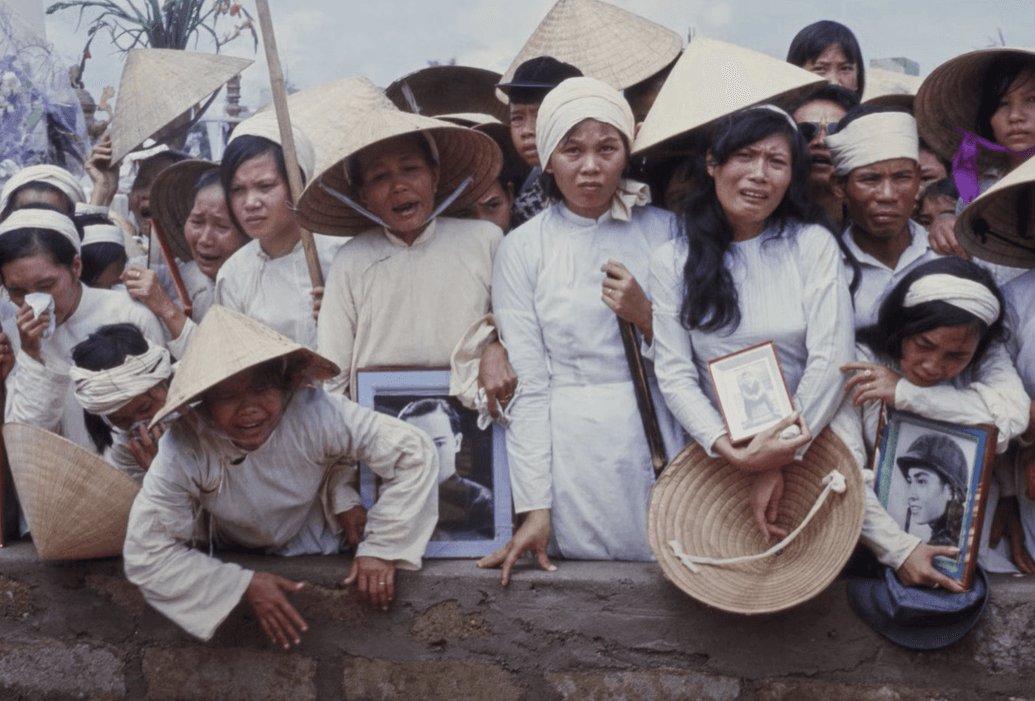
Vietnam War
Time Period | 1955 – 30 April 1975 | ||||||||
|---|---|---|---|---|---|---|---|---|---|
Geographical Area | Vietnam (North and South Vietnam) | ||||||||
Party | North Vietnam South Vietnam | ||||||||
Root Causes | Independence struggle against French colonialism, fear of the spread of communism, the United States' adherence to a global anti-communist policy in accordance with the Truman Doctrine | ||||||||
Losses | More than 58,000 U.S. military personnel, nearly 2 million Vietnamese military and civilian | ||||||||
Vietnam War is regarded as one of the most complex and destructive conflicts of the 20th century. It affected not only the Asia continent but also global politics. The war, which began in 1955 and ended in 1975, was a long and bloody struggle between the communist forces of North Vietnam and the government of South Vietnam, supported by the United States of America (USA). In the bipolar world of the Cold War, Vietnam became a stage for ideological, political and geopolitical calculations, leaving a deep mark on global public opinion. The war, in which the USA intervened under the framework of the “domino theory,” profoundly shaken American society and turned into a major humanitarian tragedy for the Vietnamese people.
Vietnam: The Forgotten 50 Years Documentary (Al Jazeera)
Vietnam became a French colony from the late 19th century. French domination transformed the country’s political, economic and social structure. During this period, the Vietnamese people’s demand for independence grew steadily. The Viet Minh movement, led by Ho Chi Minh, gained strength especially during the Japanese occupation in the Second World War. In 1945, Ho Chi Minh proclaimed the Democratic Republic of Vietnam, but France refused to recognize this development and the war resumed in 1946.
At the Battle of Dien Bien Phu in 1954, Viet Minh forces inflicted a heavy defeat on the French. The Geneva Conference that followed temporarily divided Vietnam along the 17th parallel: a communist administration under Ho Chi Minh in the north and a regime supported by France and the USA in the south. Although it was agreed that elections would be held within two years, these elections were never held, and the foundations of the war became permanent.【1】
The USA’s interest in Vietnam was shaped by its Cold War strategy of containing the spread of communism. Initiated under the Truman Doctrine, this strategy hardened during the Eisenhower administration due to fears that communist regimes in Southeast Asia would follow one another like dominoes. The USA provided economic and military support to the Ngo Dinh Diem regime in South Vietnam. During the Kennedy administration, the number of military advisors reached thousands, and under Johnson’s government, the USA became directly involved in the war following the Gulf of Tonkin Incident.【2】
In 1964, allegations that the USS Maddox, a US Navy vessel, had been attacked by North Vietnam provided the Johnson administration with a pretext to obtain congressional authorization for war. Congress granted the President war powers through the Gulf of Tonkin Resolution. Following this incident, intensive aerial bombardments known as “Operation Rolling Thunder” began. The USA rapidly deployed over half a million troops to Vietnam.【3】
In 1968, Viet Cong and North Vietnamese forces launched an unexpected attack during the Vietnamese New Year (Tet). Although the offensive ended in military failure in the short term, it created in the American public the perception that the war could not be won. This event led President Johnson to announce he would not seek re-election, initiated peace negotiations, and triggered a major fracture in American society over the war.【4】
The Nixon administration, which came to power in 1969, pursued a policy of “Vietnamization,” aiming for the phased withdrawal of American troops and the transfer of defense responsibilities to South Vietnam. The Paris Peace Agreement was signed in 1973. However, two years after the agreement, in 1975, North Vietnam captured the capital Saigon. Thus, Vietnam became unified under a single communist government.【5】
Hollywood and Propaganda
In the cultural dimension of the war, Hollywood cinema played a significant role. Early films such as “The Green Berets” (1968) emphasized the legitimacy of the war and the heroism of American soldiers, but as the war progressed, this narrative changed. Films like “Apocalypse Now” (1979) and the subsequent Rambo series reflected both the trauma of the war and efforts to rebuild America’s image.【6】 Rambo-style films became tools of perception management designed to make a lost war appear as a victory in public memory.【7】
The Vietnam War was the first war in history to be watched “live” via television. Elements such as napalm attacks, the My Lai Massacre, and chemical weapons provoked strong public reactions. Mass protests occurred in the USA, Europe and even in Türkiye. Social actors such as youth movements, universities and labor unions united against the war.【8】
The USA lost over 58,000 soldiers, spent hundreds of billions of dollars, and ultimately suffered military failure. Public trust in the government in the USA collapsed. The traumatic psychological impact, known as the “Vietnam Syndrome,” made future foreign interventions more difficult. Moreover, an anti-war culture remained influential for years in American media, art and academia.【9】
After the war, unified Vietnam attempted to establish a socialist structure but struggled economically for many years. Approximately two million people lost their lives. An estimated 12 million Vietnamese were forced to leave their country as refugees.【10】 Infrastructure was devastated and the environmental impact of chemical weapons persisted for generations. Neighboring countries such as Laos and Cambodia were also negatively affected by the conflicts.
As a NATO member and part of the Western bloc, Türkiye supported the USA. However, crises such as the Cyprus Issue (1964–1974) created tensions in relations and increased anti-American sentiment in Turkish public opinion. Türkiye’s position during the war developed within the context of its strategic partnership with the USA.
In the early years of the war, the Turkish press followed a pro-American editorial line, but after the 1964 Johnson Letter, this stance began to change and critical commentary on the war emerged. From the 1970s onward, an anti-imperialist discourse became dominant, and leftist media outlets characterized the war as an American occupation.【11】
The Vietnam War is remembered in history as a pivotal event that shaped the dynamics of international relations and global power balances in the 20th century. The war led to questioning of the USA’s claim to global leadership and established public opinion and the media as decisive factors in foreign policy. For the Vietnamese people, the war acquired meaning as a hard-won struggle for independence, despite its severe human and material devastation.
Al Jazeera English. "Vietnam: 50 Years of Forgetting | Featured Documentary." Al Jazeera English Youtube Kanalı. Accessed April 29, 2025.
Durmuş, İrfan. Bağımlılık Teorisi Kapsamında Vietnam Savaşı Döneminde Türk-Amerikan İlişkileri. PhD thesis, Fırat Üniversitesi Sosyal Bilimler Enstitüsü, 2022.
Özbek, Emre. Türk Basınında Vietnam Savaşı Tartışmaları (1960–1975). Master's thesis, Karabük Üniversitesi Sosyal Bilimler Enstitüsü, 2018.
Özcan, İsa. Hollywood Sinemasında Kahraman Yaratma ve Algı Yönetimi: Vietnam Savaşı ve Rambo Filmleri. Master's thesis, Maltepe Üniversitesi Sosyal Bilimler Enstitüsü, 2018.
Özsöz, Cihan. Vietnam Savaşı Döneminde Bir Yumuşak Güç Aracı Olarak Hollywood: Apocalypse Now Redux ve The Green Berets. Master's thesis, Beykent Üniversitesi Lisansüstü Eğitim Enstitüsü, 2024.
[1]
Emre Özbek, Türk Basınında Vietnam Savaşı Tartışmaları (1960–1975) (Yüksek Lisans Tezi, Karabük Üniversitesi, 2018), 16–19.
[2]
İrfan Durmuş, Bağımlılık Teorisi Kapsamında Vietnam Savaşı Döneminde Türk-Amerikan İlişkileri (Doktora Tezi, Fırat Üniversitesi, 2022), 22–26.
[3]
İrfan Durmuş, Bağımlılık Teorisi Kapsamında Vietnam Savaşı Döneminde Türk-Amerikan İlişkileri (Doktora Tezi, Fırat Üniversitesi, 2022), 22–26.
[4]
Emre Özbek, Türk Basınında Vietnam Savaşı, 31–35.
[5]
İsa Özcan, Hollywood Sinemasında Kahraman Yaratma ve Algı Yönetimi: Vietnam Savaşı ve Rambo Filmleri (Yüksek Lisans Tezi, Maltepe Üniversitesi, 2018), 60–62.
[6]
Durmuş, Bağımlılık Teorisi Kapsamında Vietnam Savaşı Döneminde Türk-Amerikan İlişkileri, 29–32.
[7]
Cihan Özsöz, Vietnam Savaşı Döneminde Bir Yumuşak Güç Aracı Olarak Hollywood: Apocalypse Now Redux ve The Green Berets (Yüksek Lisans Tezi, Beykent Üniversitesi, 2024), 50–59.
[8]
Özcan, Hollywood Sinemasında Kahraman Yaratma, 77–87.
[9]
Özsöz, Hollywood ve Yumuşak Güç, 66–70.
[10]
Emre Özbek, Türk Basınında Vietnam Savaşı Tartışmaları, 77.
[11]
Durmuş, Bağımlılık Teorisi Kapsamında Vietnam Savaşı Döneminde Türk-Amerikan İlişkileri , 34–38.

Vietnam War
Time Period | 1955 – 30 April 1975 | ||||||||
|---|---|---|---|---|---|---|---|---|---|
Geographical Area | Vietnam (North and South Vietnam) | ||||||||
Party | North Vietnam South Vietnam | ||||||||
Root Causes | Independence struggle against French colonialism, fear of the spread of communism, the United States' adherence to a global anti-communist policy in accordance with the Truman Doctrine | ||||||||
Losses | More than 58,000 U.S. military personnel, nearly 2 million Vietnamese military and civilian | ||||||||
Historical Background
Causes of the War
US Intervention and the Domino Theory
Course of the War
Gulf of Tonkin Incident and Operation Rolling Thunder
Tet Offensive and Shift in Public Opinion
Paris Peace Talks and the End of the War
World Public Opinion and Perception Management
Global Protests and the Role of the Media
Effects of the War on the Parties and the World
Consequences for the USA
Effects on Vietnam and the Region
Reflections of the War in Türkiye
Turkish-American Relations and Debates on Dependency