


This article was automatically translated from the original Turkish version.
Version control is an essential software development practice for tracking and managing changes in code and other files. It is closely related to source code management.
With version control, every change made to the codebase is tracked. This allows software developers to see the complete history of who made what changes at any point in time and to revert to a previous version if needed. It also creates a single source of truth.
Version control acts as a safety net to protect source code from irreversible damage and gives development teams the freedom to experiment without fear of causing harm or encountering code conflicts.
When developers work simultaneously and make incompatible changes, version control identifies problematic areas, enabling team members to quickly revert to a previous version, compare changes, or determine who introduced problematic code through revision history. With a version control system (VCS), a software team can resolve an issue before proceeding further in any project. Through code reviews, software teams can analyze previous versions to understand changes made to the code over time.
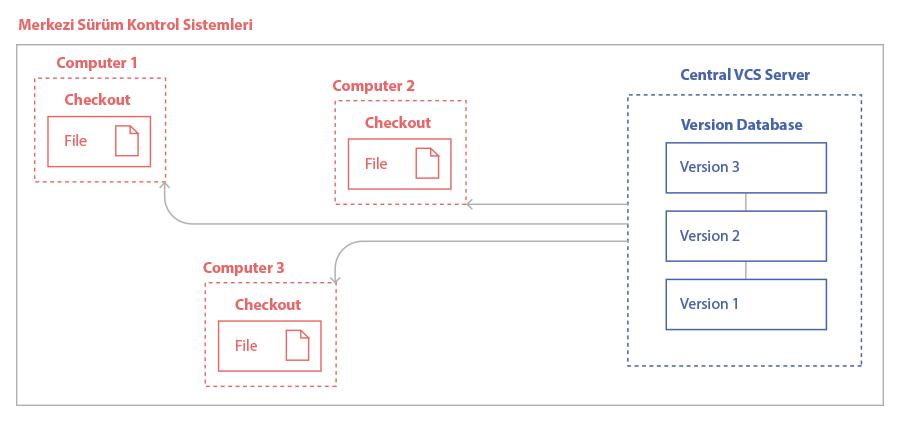
A version control system (VCS) tracks every change made to a file or set of files, enabling developers to revert to earlier versions and collaborate seamlessly. Centralized version control systems (CVCS) simplify this process by storing all file versions on a single server. Developers check out a file to make adjustments, then return it with updates, all of which are properly stored and cataloged by the server. This method provides a simple way to manage changes, saving time and labor.
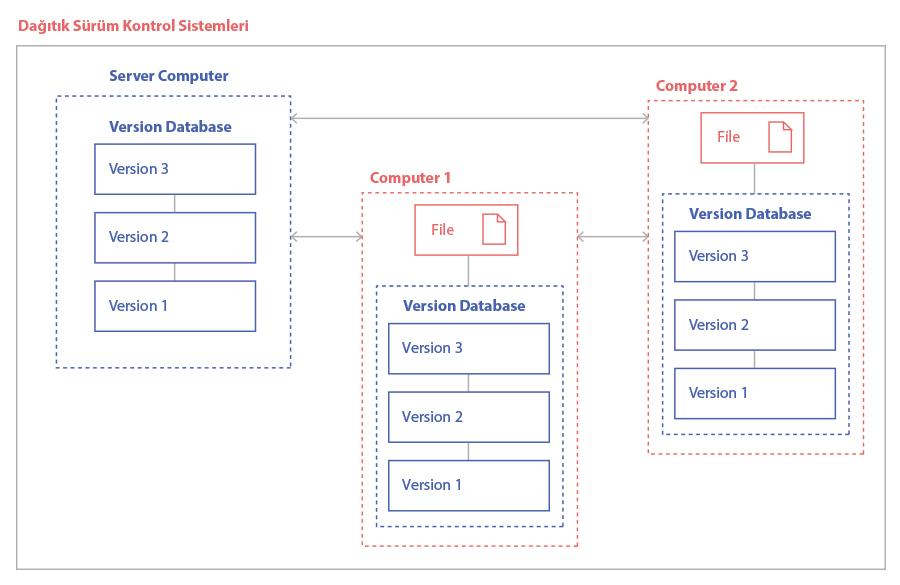
However, as teams grow and projects become more complex, distributed version control systems such as Git are becoming more prominent. DVCS does not merely centralize files; it democratizes them. Each developer maintains a local copy of the entire project history, enabling offline work and facilitating branching and merging strategies. This flexibility is particularly useful for dynamic teams aiming to integrate multiple project concerns without interference.
Whether centralized or distributed, version control is a cornerstone of efficient and collaborative software development. It safeguards progress, clarifies history, and smooths the path forward, helping every team member contribute to building excellent software.
The two most popular types of version or revision control systems are centralized and distributed. Centralized version control systems store all files in a central repository, while distributed version control systems store files across multiple repositories. Less common types include lock-based and optimistic systems.
1. Distributed: A distributed version control system (DVCS) allows users to access a repository from multiple locations. DVCS are commonly used by developers who need to work on projects from multiple computers or collaborate remotely with other developers.
class=\
2. Centralized: A centralized version control system (CVCS) is a type of VCS where all users work with the same central repository. This central repository can reside on a server or on a developer’s local machine. Centralized version control systems are typically used in software development projects where a team of developers needs to share code and track changes.
class=\
3. Lock-based: A lock-based version control system uses file locking to manage concurrent access to files and resources. File locking prevents two or more users from making conflicting changes to the same file or resource.
4. Optimistic: In an optimistic version control system, each user has their own private working area. When they wish to share their changes with the rest of the team, they send a request to the server. The server then examines all changes and determines which ones can be safely merged.
Version control systems (VCS) have become a critical practice in software development by enabling better management, tracking, and implementation of changes to code and related files. VCS provides a structured approach to revision control, supporting dynamic, collaborative environments and ensuring stability across development projects. The advantages of using version control range from improving code quality and accelerating development timelines to enhancing project visibility. All of these make it an indispensable tool for teams aiming for high efficiency and quality in software delivery.
1. Quality: Version control promotes continuous peer review and a culture of collaboration, leading to significant improvements in code quality. By making it easy to track each change in detail, teams can easily review, interpret, and refine their work to ensure adherence to best practices and standards. This collaborative review not only enhances output quality but also aids in early detection and resolution of errors.
2. Acceleration: Version control systems streamline development processes, enabling faster iteration and delivery of features. Effective branching and merging capabilities allow developers to work simultaneously on different aspects of a project without interference, significantly reducing the time from development to deployment. Additionally, the ability to quickly revert to previous versions minimizes downtime when addressing issues, maintaining project momentum.
3. Visibility: A central pool in a version control system acts as a single source of truth, increasing project transparency and accountability. This centralized view of the project’s evolution helps with better planning, monitoring, and collaboration, as every team member has access to the latest updates and past changes. Integration with project management tools further strengthens oversight by directly linking code changes to tasks and milestones.
The three best-known version control tools, also known as revision control systems, are Git, Subversion, and Mercurial.
1. Git: Git is the most popular choice and has become synonymous with source code management. Git is an open-source distributed system used for software projects of all sizes, making it a popular option for beginners, enterprises, and every type of project in between.
2. Subversion (SVN): SVN is a widely adopted centralized VCS. This system keeps all files of a project in a single linear code stream and makes branching difficult, which makes it scalable for large projects. It is easy to learn and includes folder-level security measures, allowing access to subfolders to be restricted.
3. Mercurial: Mercurial is a distributed VCS that offers simple branching and merging features. The system provides fast scaling and collaborative development through an intuitive interface. Its flexible command-line interface allows users to begin using the system immediately.
Aksan, Ceyhun Enki. "Versiyon Kontrol Sistemi (VCS) Nedir?" (2019).Accessed Adresi.
Atlassian. "What is version control?".
BasuMallick, Chiradeep. "What is Version Control? Meaning, Tools and Advantages." (2022).Accessed Adresi.
GeeksforGeeks. "Version Control Systems." (2022).Accessed Adresi.
GitHub. "What is Version Control?" (2024).Accessed Adresi.
Gitlab.com. "What is version control?".
Öztürk, Emel. "Versiyon Kontrol Sistemleri". (2023).Accessed Adresi.

No Discussion Added Yet
Start discussion for "Version Control Systems" article
Foundations of Version Control
Version Control System
Types of Version Control Systems
Benefits of Version Control
Major Version Control Systems