


This article was automatically translated from the original Turkish version.
Vascular Dementia
Definition | Vascular dementia is a loss of cognitive function resulting from reduced blood flow due to abnormalities in the brain's blood vessels. | ||||||||
|---|---|---|---|---|---|---|---|---|---|
Main Causes | Diabetes and heart disease Atherosclerosis (hardening of the arteries) Chronic hypertension Stroke or transient ischemic attack | ||||||||
Vascular dementia is a neurodegenerative disorder characterized by cognitive decline due to disrupted blood flow to the blood. This condition, resulting from cerebrovascular diseases, is the second most common cause of dementia after Alzheimer’s disease. Events such as stroke, transient ischemic attack, or chronic cerebral hypoperfusion such as play a critical role in its development.
The primary cause of vascular dementia is pathological changes in the brain’s blood vessels, including blockage, narrowing, or hemorrhage. These changes obstruct the supply of oxygen and nutrients to neurons, leading to cell death and subsequent cognitive impairment.
The symptoms of vascular dementia vary depending on the affected brain region. The most common symptoms include:
Diagnosis involves neurological examination and imaging techniques such as magnetic resonance imaging (MRI) and computed tomography (CT). Cognitive function is also assessed using tests such as the Montreal Cognitive Assessment (MoCA).
Although there is no cure for vascular dementia, strategies are employed to slow disease progression:
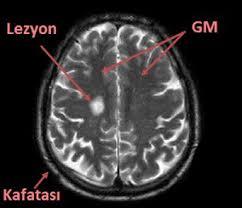
Typical brain lesions seen in vascular dementia (Source: Automated Skull, Tissue, and Lesion Segmentation from MR Head Images: A Probabilistic and Stable Approach, 2018).
The course of the disease depends on the severity of underlying vascular damage. With early intervention, symptoms can be managed; however, in advanced stages, patient care becomes more challenging. Infections, nutritional disorders, and dependency on bed rest are important complications.
Cummings, J. L. Vasküler Demans: Klinik Yaklaşımlar. Nöroloji Yayınları, 2019.
Hachinski, V. Serebrovasküler Hastalıklar ve Bilişsel Bozukluklar. Tıp Ansiklopedisi, 2021.
O'Brien, J. T. Demans ve Nörodejeneratif Hastalıklar. Akademik Nöroloji Serisi, 2018.

Vascular Dementia
Definition | Vascular dementia is a loss of cognitive function resulting from reduced blood flow due to abnormalities in the brain's blood vessels. | ||||||||
|---|---|---|---|---|---|---|---|---|---|
Main Causes | Diabetes and heart disease Atherosclerosis (hardening of the arteries) Chronic hypertension Stroke or transient ischemic attack | ||||||||
Causes and Risk Factors
Major Risk Factors
Clinical Symptoms and Diagnosis
Treatment and Management
Prognosis and Complications