This article was automatically translated from the original Turkish version.
Type of Geographical İndication | Direction Sign | ||||||||
|---|---|---|---|---|---|---|---|---|---|
Registration Number | 599 | ||||||||
Registration Date | 20.11.2020 | ||||||||
Product / Product Group(s) | Textiles | ||||||||
Province(s) | Muğla | ||||||||
Applicant/Registrant(s) | Fethiye Municipality | ||||||||
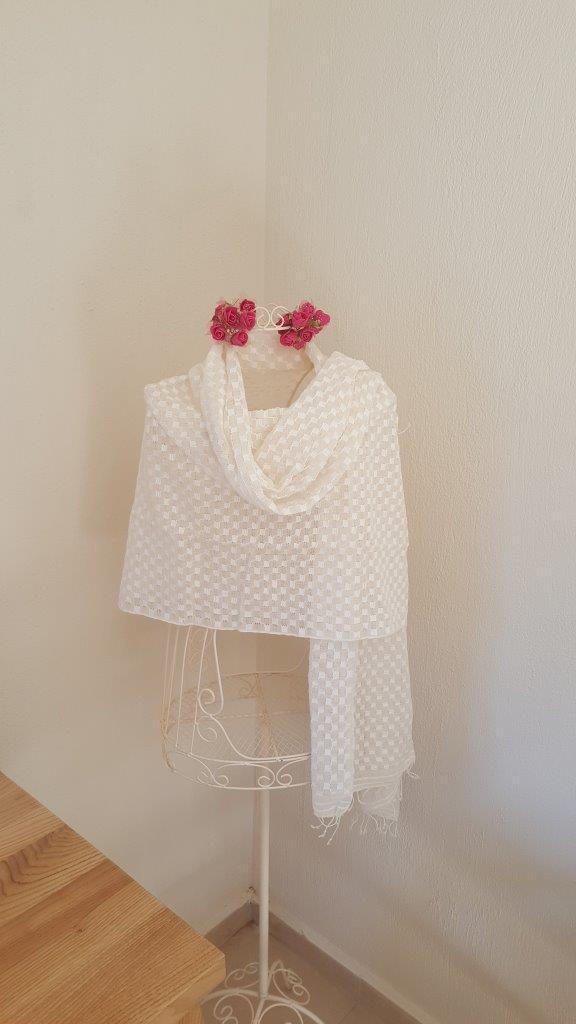
Üzümlü Dastarı is a handwoven textile produced using traditional methods in the village of Yeşilüzümlü, within the district of Fethiye in Muğla Province, and officially registered with a geographical indication. Registered as a certification mark on 20 November 2020, this fine cotton weaving reflects the cultural heritage of the region.

Üzümlü Dastarı (AA)
The product is woven on handlooms using 100 percent cotton yarn. It is produced in a natural cream tone characteristic of raw cotton and gradually whitens with use and washing. Two key features distinguish the Üzümlü Dastarı from other textiles:
Originally woven by women as headscarves, the dastarı is now used in various applications including children’s, women’s and men’s clothing. The headscarf version consists of two panels joined together. Each panel measures 65 to 70 centimeters in width and 150 to 180 centimeters in length.
In Yeşilüzümlü, in addition to the dastarı, other textiles are produced for different purposes:

Üzümlü Dastarı (AA)
The arrangement of motifs is also a crucial factor determining the character of the textile. A single motif can be scattered regularly across the surface in both horizontal and vertical directions; different motifs can be distributed together at specific intervals; motifs can be continued uninterrupted along the weave or reoriented to create asymmetrical placements. A motif combination can be placed at the center like a medallion; motifs may be placed only at the corners; they can be arranged along the edges or central section in a “suyolu” pattern; in garments motifs may be positioned at specific areas such as the neckline or hem. These placement patterns are shaped according to the intended use of the textile both aesthetically and functionally.
The production of the Üzümlü Dastarı is intrinsically linked to the village of Yeşilüzümlü. All production stages must occur within this geographical boundary. Oversight inspections are conducted at least once annually under the coordination of the Fethiye Municipality. These inspections verify yarn properties production methods motif placement and the correct use of the certification mark.
Anadolu Ajansı. "Unutulmaya Yüz Tutmuş Üzümlü Daştarı Dokuması Yeniden Değer Kazandı." Accessed October 19, 2025. https://www.aa.com.tr/tr/kultur/unutulmaya-yuz-tutmus-uzumlu-dastari-dokumasi-yeniden-deger-kazandi/3325354.
Turkish Patent and Trademark Office. "Üzümlü Dastarı / Yeşilüzümlü Dastarı Mahreç İşareti Tescil Belgesi." Accessed October 19, 2025. https://ci.turkpatent.gov.tr/Files/GeographicalSigns/6f8499dd-4a6d-49e0-890f-703113b2178f.pdf.
Turkish Patent and Trademark Office. "Üzümlü Dastarı/Yeşilüzümlü Dastarı." Geographical Indications Portal. Accessed October 19, 2025. https://ci.turkpatent.gov.tr/cografi-isaretler/detay/38673.

Type of Geographical İndication | Direction Sign | ||||||||
|---|---|---|---|---|---|---|---|---|---|
Registration Number | 599 | ||||||||
Registration Date | 20.11.2020 | ||||||||
Product / Product Group(s) | Textiles | ||||||||
Province(s) | Muğla | ||||||||
Applicant/Registrant(s) | Fethiye Municipality | ||||||||
No Discussion Added Yet
Start discussion for "Üzümlü Dastarı / Yeşilüzümlü Dastarı" article
Definition and Distinguishing Features
Materials and Technical Characteristics
Weaving Types
Motifs
Geographical Link and Oversight