This article was automatically translated from the original Turkish version.
+2 More
Date Opened as a Museum | 15 June 2011 | ||||||||
|---|---|---|---|---|---|---|---|---|---|
Location | Altındağ Ankara Türkiye | ||||||||
Original Function | Prison (between 1925 and 2006) | ||||||||
Year the Prison Opened | 1925 | ||||||||
Names After the Prison's Establishment | Ulucanlar Prison Museum Cebeci Detention Center Cebeci General Jail Ankara Jail Ankara Cebeci Civil Prison Ankara Central Closed Prison | ||||||||
Restoration Start Date | 2009 | ||||||||
Registration Status | Structure to be preserved by the Board for the Protection of Cultural and Natural Heritage | ||||||||
Tourism Type | Sadness tourism (Dark tourism) | ||||||||
Notable Individuals Held in the Prison | Fakir Baykurt Adnan Cemgil Ahmet Arif Bülent Ecevit Deniz Gezmiş Necip Fazıl Kısakürek İskilipli Âtıf Hoca Muhsin Yazıcıoğlu Nazım Hikmet Yılmaz Güney | ||||||||
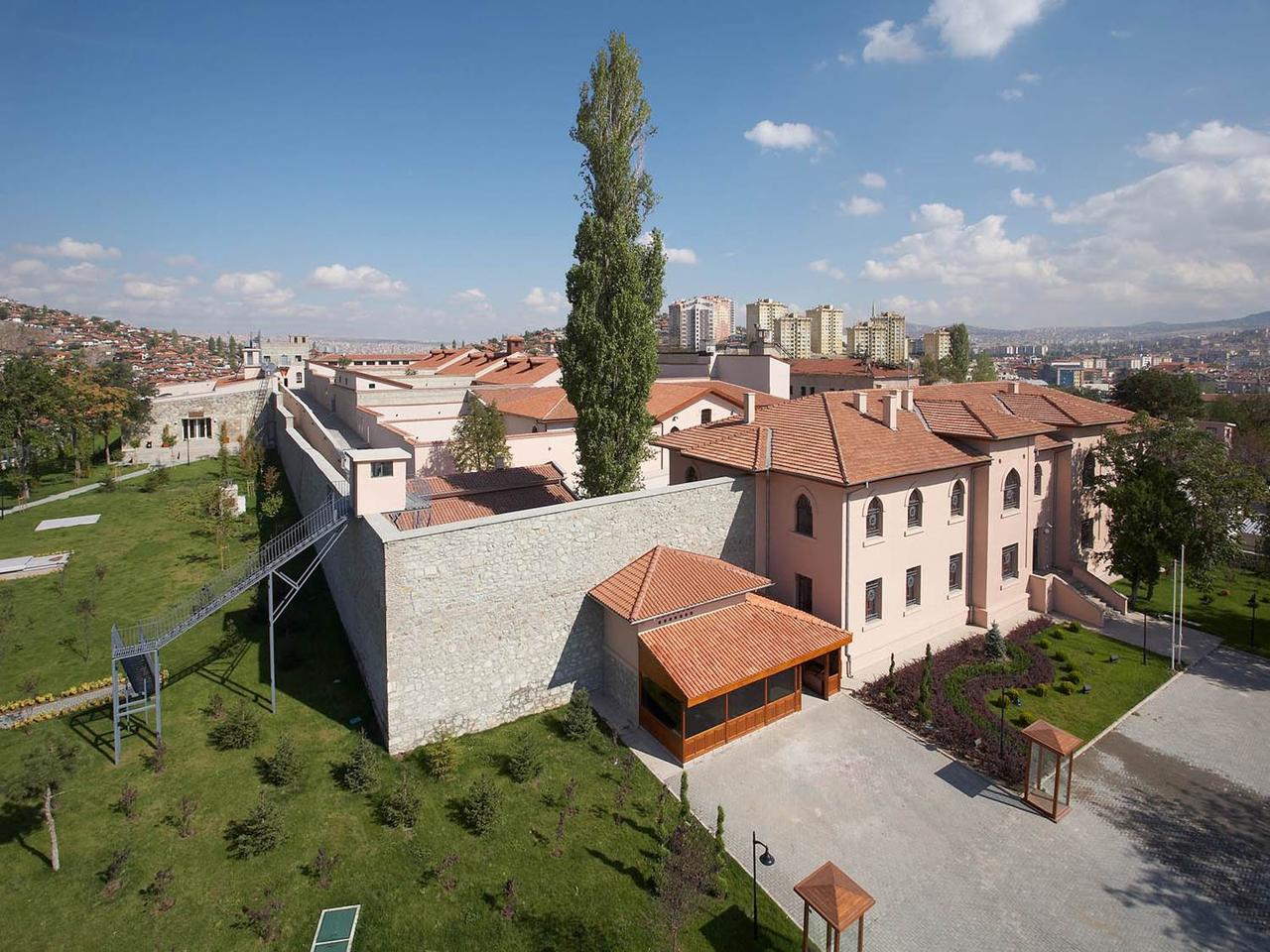
Ulucanlar Prison Museum is the restored version of Ulucanlar Prison, Türkiye’s first closed prison, which opened in 1925. The building, located in the Altındağ district of Ankara, housed prisoners from various criminal backgrounds as well as individuals detained for political, ideological, and cultural reasons over its 81 years of operation. After closing in 2006, the prison was restored according to its original design and reopened to the public in 2011 as the Ulucanlar Prison Museum. This museum is a historical site that bears witness to Türkiye’s political, social, and cultural structure.
Ulucanlar Prison Museum (Anadolu Ajansı)
The foundation of Ulucanlar Prison was laid in 1924 and it began operations in 1925 under the name Cebeci Detention Center. Since its establishment, the institution has been known by various names over different periods: Cebeci General Prison, Ankara Prison, Ankara Cebeci Civil Prison, Ankara Central Closed Prison, and finally Ulucanlar Prison.
The prison was designed as one of the earliest examples of modern penal institutions under the internal security and justice policies of its time. The location was chosen away from the city center and in an area suitable for agricultural activity, based on the belief that prisoners could be rehabilitated through labor. In the years following its opening, it became a center for those convicted of crimes committed in Ankara and its surroundings as well as those sentenced for political offenses. From 1925 to 2006, the prison operated continuously, serving as a site of numerous executions, witnessing judicial proceedings, and housing prominent figures from various eras.
After its closure in 2006, inmates were transferred to Sincan Prison, and in 2009 the complex was transferred to Altındağ Municipality. In the same year, the building complex and its surroundings were registered by the Council for the Protection of Cultural and Natural Heritage as a “cultural heritage site requiring protection.” Restoration and museum conversion efforts, initiated in 2009, were carried out using archival records and testimonies documenting prison life during that era. The goal was to preserve the building’s historical identity while documenting prison life. The museum, covering an area of 16,000 square meters, has been transformed into a memory space displaying artifacts, documents, and photographs from different periods.
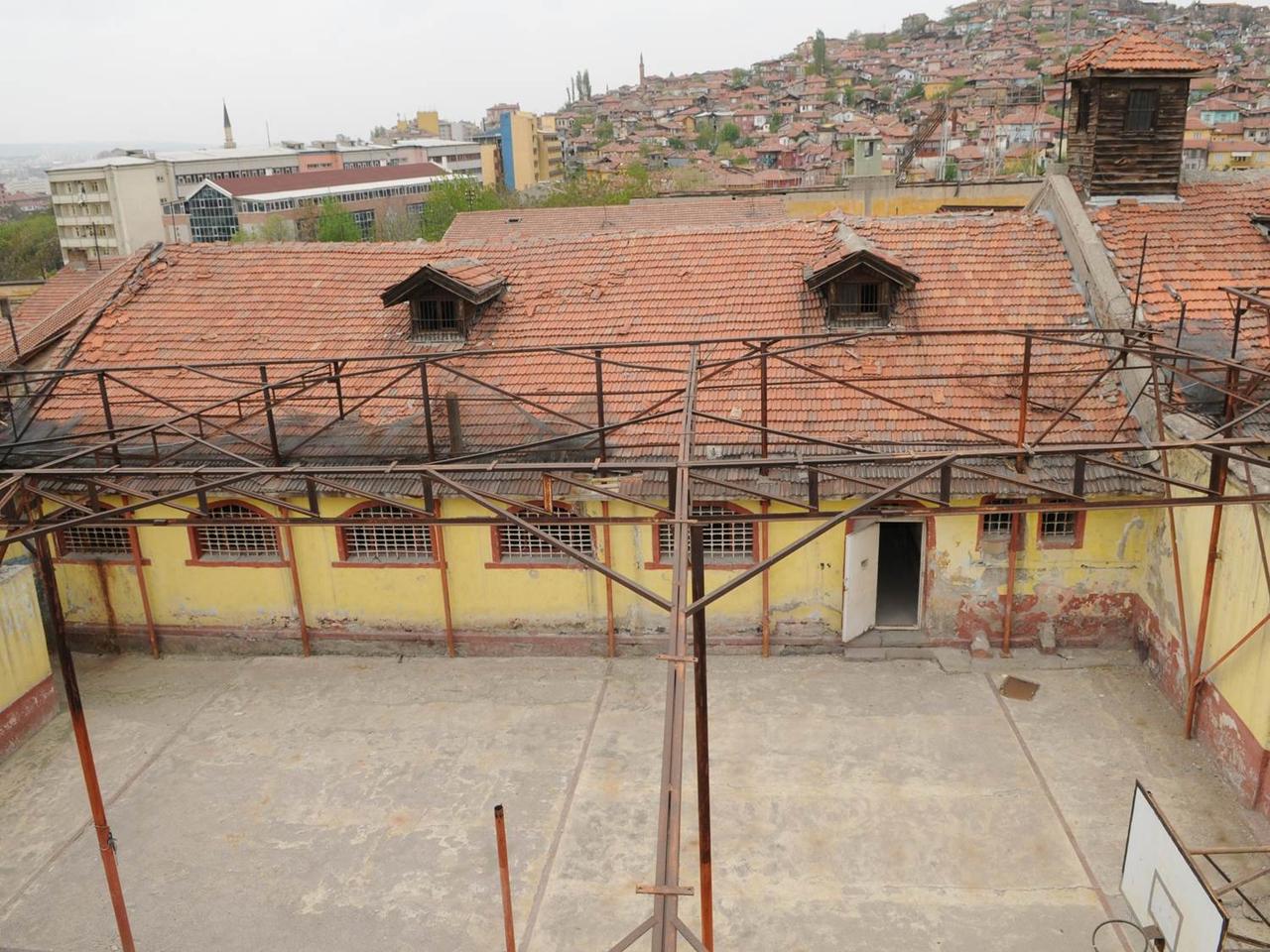
Ulucanlar Prison Museum in Its Original State (Altındağ Municipality)
The visitor route begins at the prison’s main entrance, directing visitors from the entrance to the inner courtyard and then to the cell blocks. The prison’s layout and sections have been reorganized to reflect the conditions of the time, and the exhibition design presents the institution’s history in chronological order. The restoration was carried out faithfully, preserving the historical fabric of enclosed areas, cell blocks, courtyards, and execution spaces. Ulucanlar Prison opened as a museum on June 15, 2011.
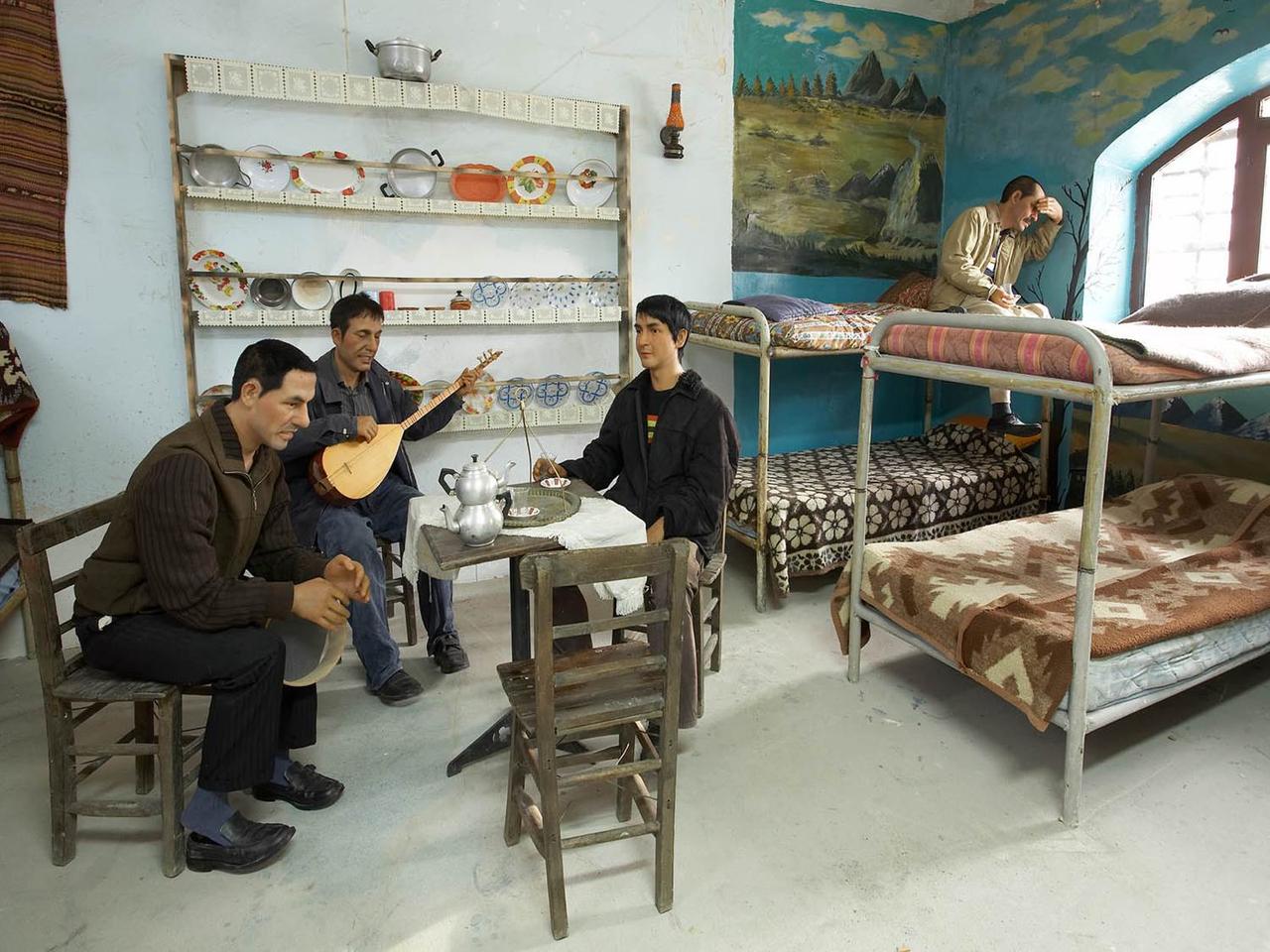
Interior of Ulucanlar Prison Museum (Altındağ Municipality)
Ulucanlar Prison reflects the simple and functional architectural approach typical of early Republican public buildings. The complex is built on a rectangular plan enclosed by high walls. Inner courtyards, main corridors, and cell blocks follow a defined symmetry. During restoration, the original layout was preserved; wall textures, doors, bars, floor stones, and ceiling arrangements were repaired to match their original state. The prison complex includes cell blocks, individual cells, administrative buildings, a bathhouse, a kitchen, an execution area, visitation rooms, and open courtyards. These sections have been refunctioned during the museum conversion according to chronological and thematic organization.
Upon entering the prison complex through the main gate, visitors first reach the section known as the “Hilton Cell Block.” This area, composed of cells 9 and 10, housed many prominent figures from literature and intellectual life. Documents indicate that individuals such as Bülent Ecevit and Necip Fazıl Kısakürek were detained here.
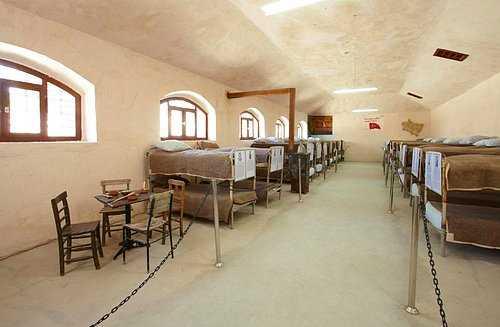
Interior of Ulucanlar Prison Museum (Turkey Culture Portal)
Immediately next to the Hilton Cell Block are the single-person cells known as “Müteferrika.” These cells held detainees whose court rulings had not yet become final, those serving disciplinary punishment, or individuals required to be separated from other prisoners. The courtyards adjacent to the cell blocks have been arranged as open-air exhibitions, displaying photographs, documents, and materials reflecting testimonies from the era.
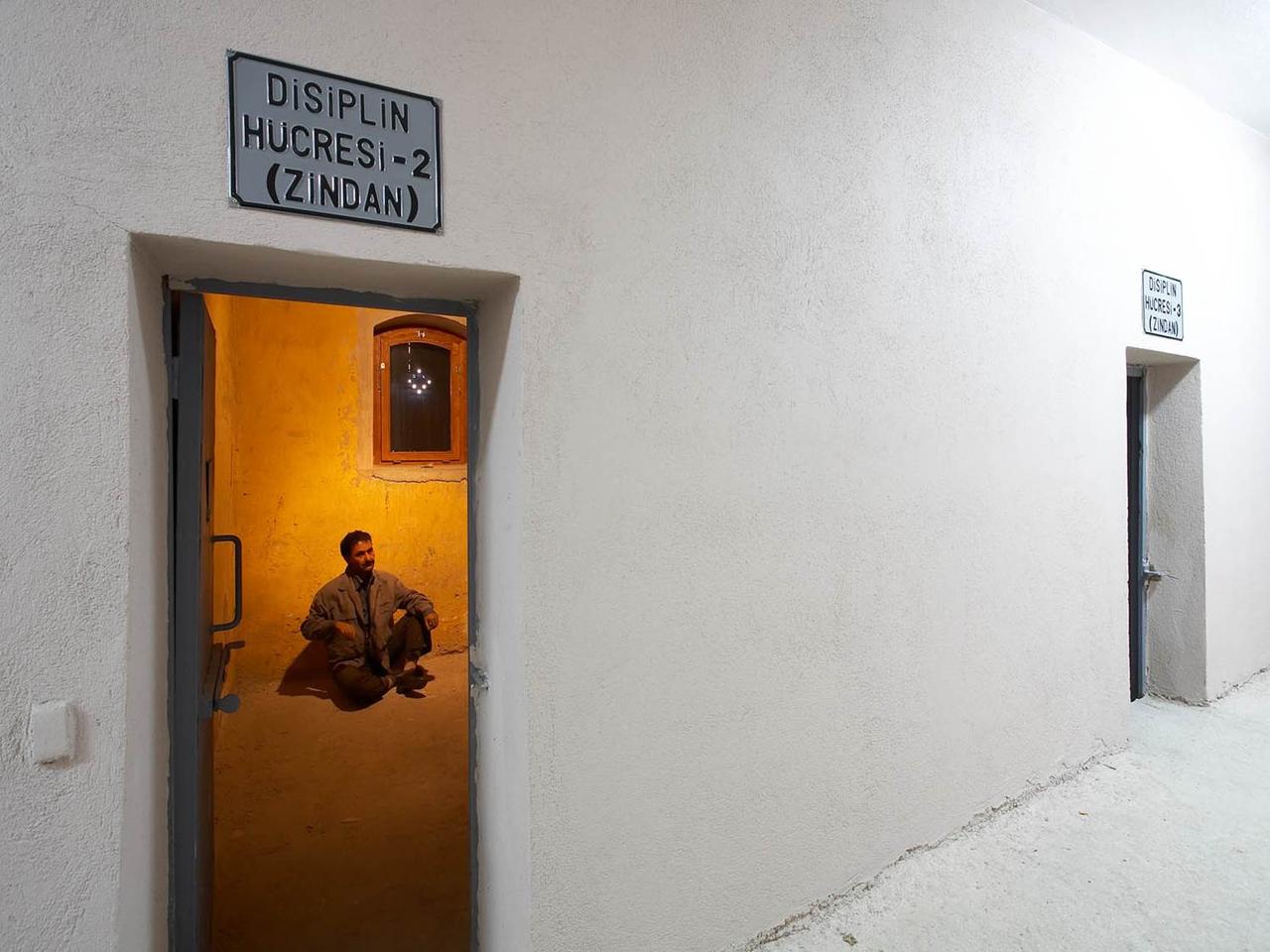
Ulucanlar Prison Museum Disciplinary Cell (Altındağ Municipality)
Another key stop on the tour consists of cell blocks containing information, documents, and personal belongings of famous prisoners. These sections serve as an archive related to the prison’s history, presenting documents collected through research in chronological order. The museum also includes a library containing publications from various periods, court records, conviction documents, and first editions of rare works.
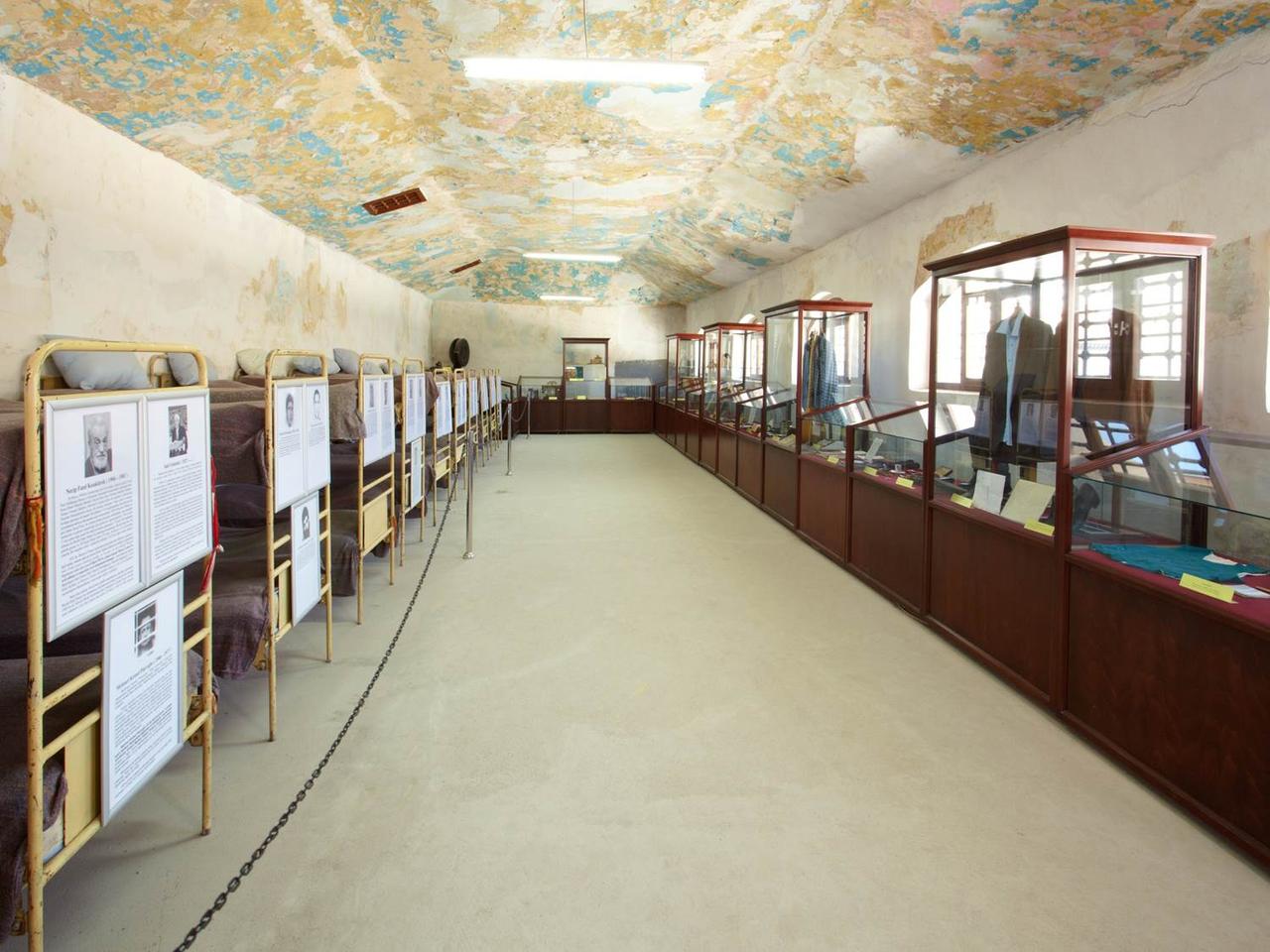
Ulucanlar Prison Museum Exhibition Area (Altındağ Municipality)
The prison’s bathhouse has also been restored and opened to visitors. The bathhouse was not merely a place for prisoners to bathe but has been reinterpreted as a space symbolizing the boundary between freedom and incarceration. The main building also houses an art gallery, which currently hosts various exhibitions and events.
The gallows used for executions within the prison is displayed in the museum grounds. Documents indicate that 18 individuals were executed on this gallows. Historically, executions were carried out in front of a tree known as “Ulu Kavak.” Today, the gallows has been relocated behind this tree and surrounded by iron railings. In 2004, a sign was added to the gallows to draw attention to the fact that the death penalty was abolished in Türkiye.
Near the gallows is another feature known as the “Memorial Tree.” Small aluminum plaques bearing the names and photographs of prominent individuals who were imprisoned here are attached to this tree. The Memorial Tree is regarded as a silent symbol of the historical events and personal stories that unfolded within the prison.
Ulucanlar Prison housed numerous politicians, journalists, writers, and poets who shaped Türkiye’s modern history. Among the documented individuals are Bülent Ecevit, Muhsin Yazıcıoğlu, Necip Fazıl Kısakürek, Deniz Gezmiş, Yılmaz Güney, Nazım Hikmet, and others.
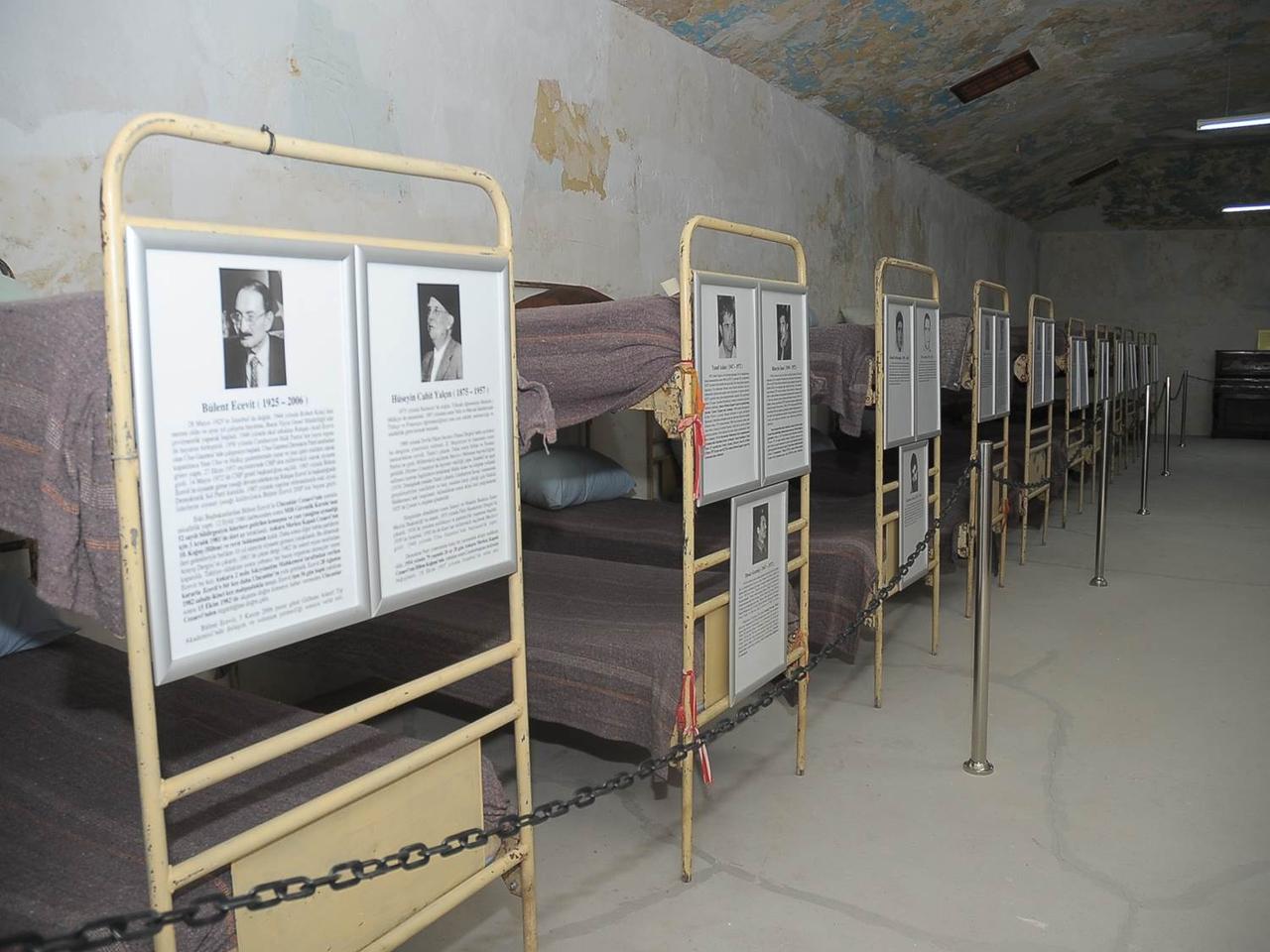
Famous Prisoners (Altındağ Municipality)
Personal belongings, documents, and photographs of these notable individuals are displayed in dedicated sections within the museum.
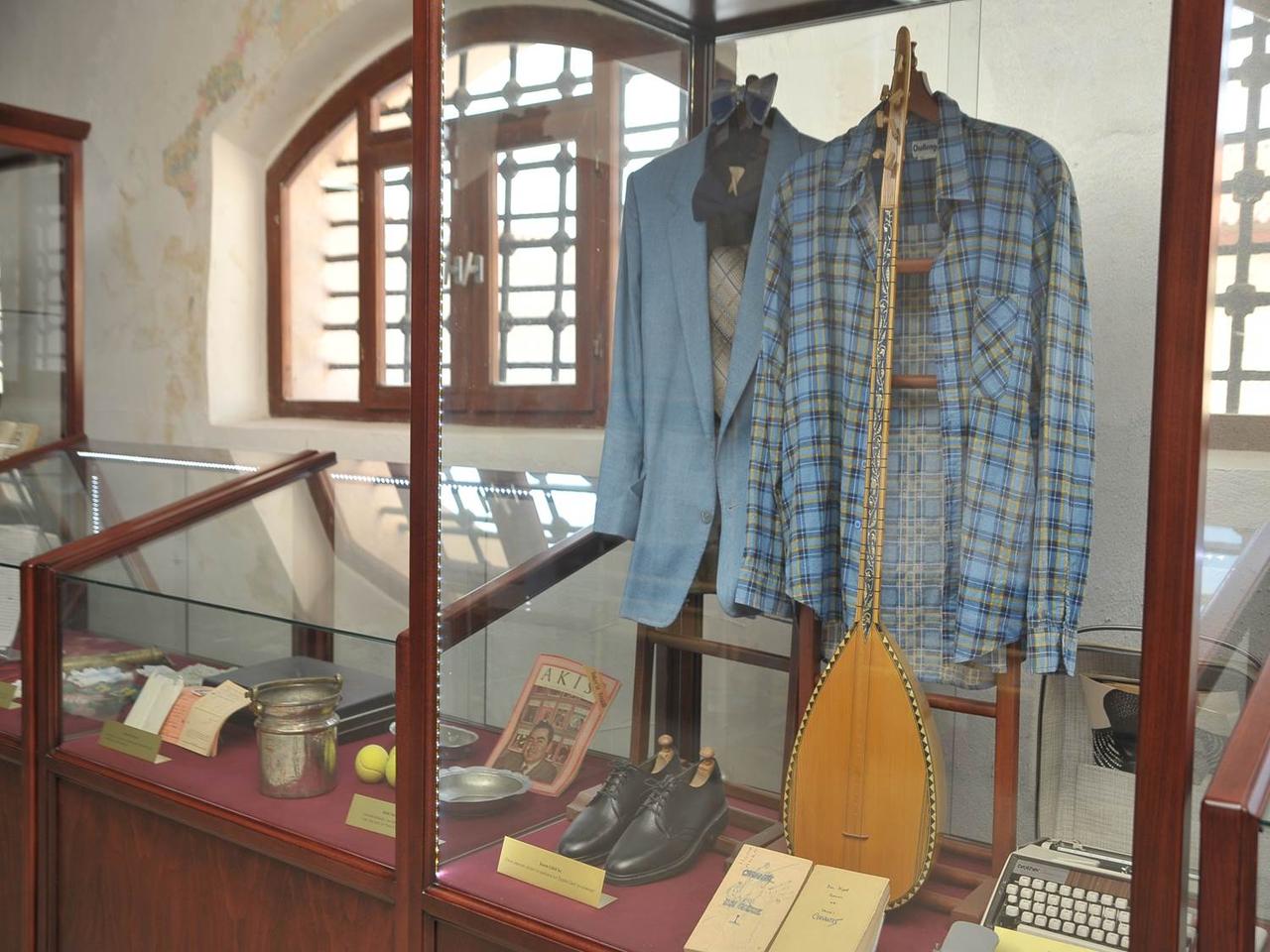
Artifacts Displayed Belonging to Famous Prisoners (Altındağ Municipality)
Ulucanlar Prison Museum is one of the examples of dark tourism, known in Türkiye as “hüzün turizmi” and internationally as “dark tourism.” The dramatic events, executions, and personal stories of famous prisoners have transformed the prison into both a historical and emotional site of visitation.
The museum is primarily visited by domestic tourists, but its organization draws inspiration from similar dark tourism sites abroad. It also aims to raise historical awareness among visitors through various artistic events and educational programs. Student visits and educational activities demonstrate that the museum fulfills not only a tourist function but also a cultural and educational one.
Akyurt Kurnaz, Hande, Alper, Kurnaz, and Ceren, Tatlıoğlu. "Hüzün Turizmi Destinasyonlarına Bir Örnek: Ulucanlar Cezaevi." *Avrasya Bilimler Akademisi Sosyal Bilimler Dergisi* (2017): 193–200. Accessed November 12, 2025.https://www.researchgate.net/profile/Ece-Giray/publication/334784306_Document/links/5d4144e4a6fdcc370a6f0fa4/Document.pdf#page=202
Altındağ Belediyesi. "Ulucanlar Cezaevi Müzesi." Accessed November 12, 2025.https://altindag.bel.tr/?ref=xranks#!ulucanlar_cezaevi_muzesi
Anadolu Ajansı. "1 Milyon Ziyaretçiden Ulucanlar'da Tarihe Yolculuk." YouTube. Accessed November 12, 2025.https://www.youtube.com/watch?v=HzMpf8appas
Bayram, İsmail, Serhan, Oral, Taşkın, Erdoğan, and Yusuf, Bayraktar. "Hüzün Turizmi Kapsamında Seyahat Eden Bireylerin Motivasyon Düzeylerinin İncelenmesi: Ulucanlar Cezaevi Müzesi Örneği." *Social Sciences Studies Journal (SSSJournal)* 7, no. 80 (2021): 1144-1155. Accessed November 12, 2025.https://sssjournal.com/index.jsp?mod=makale_tr_ozet&makale_id=60172
Türkiye Kültür Portalı. "Ulucanlar Cezaevi Müzesi - Ankara." Türkiye Kültür Portalı. Accessed November 12, 2025.https://www.kulturportali.gov.tr/turkiye/ankara/gezilecekyer/ulucanlar-cezaev-muzes

Date Opened as a Museum | 15 June 2011 | ||||||||
|---|---|---|---|---|---|---|---|---|---|
Location | Altındağ Ankara Türkiye | ||||||||
Original Function | Prison (between 1925 and 2006) | ||||||||
Year the Prison Opened | 1925 | ||||||||
Names After the Prison's Establishment | Ulucanlar Prison Museum Cebeci Detention Center Cebeci General Jail Ankara Jail Ankara Cebeci Civil Prison Ankara Central Closed Prison | ||||||||
Restoration Start Date | 2009 | ||||||||
Registration Status | Structure to be preserved by the Board for the Protection of Cultural and Natural Heritage | ||||||||
Tourism Type | Sadness tourism (Dark tourism) | ||||||||
Notable Individuals Held in the Prison | Fakir Baykurt Adnan Cemgil Ahmet Arif Bülent Ecevit Deniz Gezmiş Necip Fazıl Kısakürek İskilipli Âtıf Hoca Muhsin Yazıcıoğlu Nazım Hikmet Yılmaz Güney | ||||||||
No Discussion Added Yet
Start discussion for "Ulucanlar Prison Museum" article
Foundation and Historical Process
Architectural Features
Sections and Visit Stops
Gallows and Execution Area
Famous Prisoners
Museum and Dark Tourism