


This article was automatically translated from the original Turkish version.
+1 More
Uçhisar Castle
Location | Nevşehir/Uçhisar/Tekelli | ||||||||
|---|---|---|---|---|---|---|---|---|---|
Building Type | Natural rock fortress (carved out of volcanic tuff) | ||||||||
Height(s) | 350 metres The highest point in Cappadocia at an elevation of 1 | ||||||||
Date(s) | Settlement and defensive use after 2000 BCE | ||||||||
Purpose of Use(s) | and tunnels) shelters storage spaces residential area (containing numerous rooms Observation and defense | ||||||||
Feature(s) | panoramic views tunnels and staircases Over 100 rooms | ||||||||
Current Condition | UNESCO World Heritage List Open to visitors as a tourist site | ||||||||
Number of Visitors | 400,000 and above | ||||||||
Tourism Importance | One of the best viewpoints for hot air balloon tours in Cappadocia | ||||||||
Located at the heart of Cappadocia, Uçhisar Castle is one of the region’s most striking natural formations and historical defense centers. It stands out not only for its geological features but also for having hosted various civilizations throughout history. Today, the castle has become a major tourist destination and is recognized as one of Cappadocia’s iconic symbols due to its cultural heritage value and geographical position.
Uçhisar is a small settlement under the jurisdiction of Nevşehir Province. The castle, situated at the highest point of Cappadocia, lies at an elevation of approximately 1,400 meters. This elevation granted the castle strategic importance throughout history as an observation and defense tower. Its ability to easily monitor the surrounding valleys and routes led to its critical military and political role.
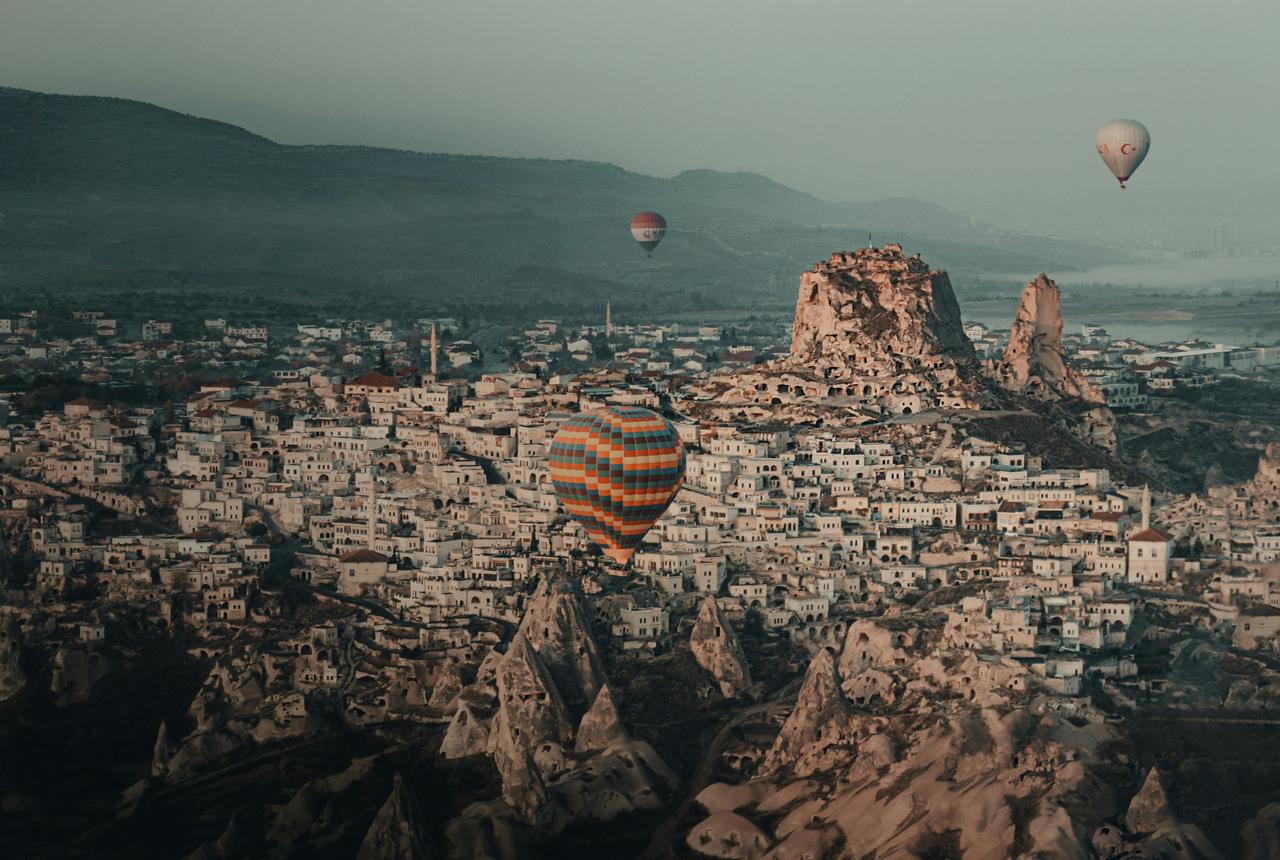
(Distant view of Uçhisar Castle) (Source: Unsplash)
The earliest traces of human settlement in the region date back to the Hittites (2000–1200 BCE). The Hittites established a powerful empire in Central Anatolia and controlled the lands of Cappadocia. Although the castle was not yet a fully developed defensive center during this period, the rocky formations were used as early shelters and protective habitats.
With the Roman Empire’s growing dominance in Anatolia, Cappadocia became a vital military and logistical hub. During this time, the castle functioned as an observation tower and refuge. Following the spread of Christianity, during the Byzantine era (330–1453 CE), the interior chambers and tunnels began to be used as monasteries and residential areas. The rock-carved churches still visible within Uçhisar today are a legacy of this period.
After the Battle of Manzikert in 1071, Turkic peoples gained control over the region. The Seljuks continued to use the castle for military purposes and established settlements around it. During the Ottoman period, although the castle gradually lost some of its strategic importance, it retained its role as an observation post and a safe refuge for the local population. As Cappadocia became more prominent for agriculture and trade within the Ottoman administrative structure, the castle’s military function diminished over time.
After the proclamation of the Republic, Uçhisar Castle gained significance as a historical monument and tourist attraction. Thanks to research and restoration efforts initiated in the 20th century, the castle was placed under protection and became one of the most visited tourist sites in Cappadocia.
Uçhisar Castle consists of a network of chambers and tunnels carved directly into the rock. The volcanic tuff composition of the cliffs is highly suitable for carving, resulting in numerous rooms, storage areas, refuges, and churches within the castle. Visitors who ascend to the highest point of the castle can enjoy a 360-degree panoramic view of Cappadocia’s unique landscape. This feature made the castle a multifunctional structure used for both defense and religious purposes.
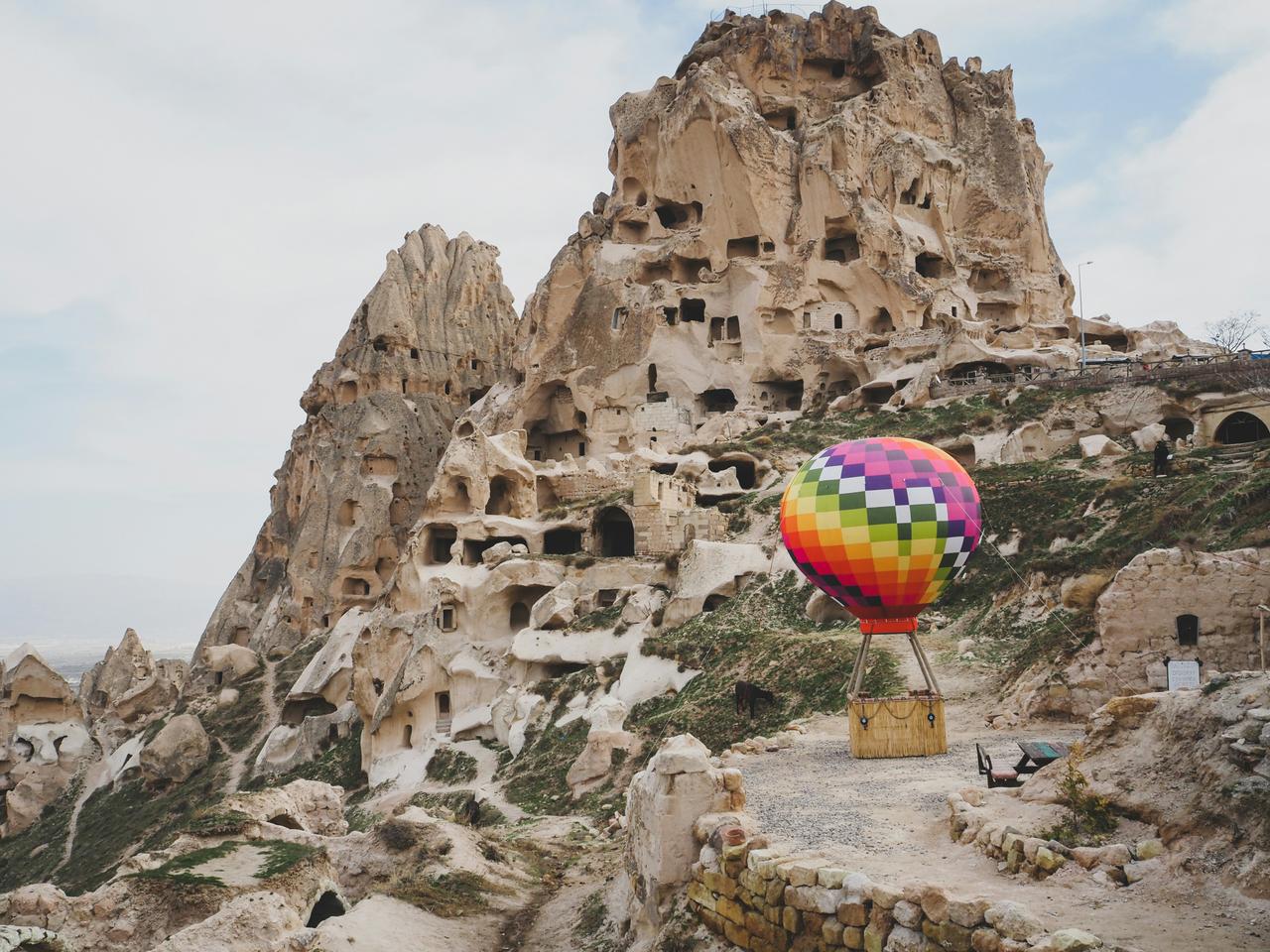
(General view of Uçhisar Castle from ground level) (Source: Unsplash)
In 1985, Uçhisar Castle was inscribed on the UNESCO World Heritage List along with other significant structures in Cappadocia. UNESCO has recognized and protected the castle for both its geological formation and its historical-cultural heritage.
In 2023, approximately 300,000 domestic and international tourists visited Uçhisar Castle. The following year, this number rose to around 472,000, marking a significant increase compared to the previous year.
Additionally, the number of visitors recorded between January and September alone reached 211,000, demonstrating strong tourist interest during the first three quarters of the year.
Uçhisar Castle is a summary of Cappadocia’s natural and cultural richness. Having sheltered various civilizations throughout history and serving both religious and military purposes, it has now become a cultural heritage site welcoming visitors from around the world. Protected by UNESCO, this castle is not only a symbol of the past but also a defining feature of the present.
Nevşehir Hacı Bektaş Veli Üniversitesi. “Uçhisar Yerleşmesinin Kapadokya Bölgesi İçindeki Konumu ve Kentsel Gelişimi.” Nevşehir Hacı Bektaş Veli Üniversitesi Akademik Arşiv. Accessed July 3, 2025. https://acikerisim.nevsehir.edu.tr/handle/20.500.11787/4537
T.C. Kültür ve Turizm Bakanlığı. “Uçhisar Kalesi.” *Kültür Portalı*. Accessed July 3, 2025. https://www.kulturportali.gov.tr/turkiye/nevsehir/gezilecekyer/uchsar-kales
Türkiye Statistical Institute (TÜİK). "Kültürel Miras ve Turizm İstatistikleri." *Türkiye İstatistik Kurumu Veri Portalı*. Accessed July 3, 2025.
Unsplash. “Uçhisar Castle Photos.” Unsplash. Accessed July 3, 2025. https://unsplash.com/s/photos/uchisar-castle
Uçhisar Municipality. “Uçhisar Tarihçe.” Uçhisar Municipality Official Website. Accessed July 3, 2025. https://www.uchisar.bel.tr/uchisar-tarihce/

Uçhisar Castle
Location | Nevşehir/Uçhisar/Tekelli | ||||||||
|---|---|---|---|---|---|---|---|---|---|
Building Type | Natural rock fortress (carved out of volcanic tuff) | ||||||||
Height(s) | 350 metres The highest point in Cappadocia at an elevation of 1 | ||||||||
Date(s) | Settlement and defensive use after 2000 BCE | ||||||||
Purpose of Use(s) | and tunnels) shelters storage spaces residential area (containing numerous rooms Observation and defense | ||||||||
Feature(s) | panoramic views tunnels and staircases Over 100 rooms | ||||||||
Current Condition | UNESCO World Heritage List Open to visitors as a tourist site | ||||||||
Number of Visitors | 400,000 and above | ||||||||
Tourism Importance | One of the best viewpoints for hot air balloon tours in Cappadocia | ||||||||
Geographical Location and Significance of Uçhisar Castle
Historical Development
Pre-Roman and Early Settlements (2000s BCE)
Roman and Byzantine Period (1st–11th century CE)
Seljuk and Ottoman Period (11th–20th century)
Republican Era and Uçhisar Today
Architectural Features and Construction Technique
UNESCO World Heritage Status
Importance in Tourism and Visitor Statistics