


This article was automatically translated from the original Turkish version.

(Generated by Artificial Intelligence.)
Types of Intelligence
According to Information Collection Method | Human Intelligence (HUMINT), Signals Intelligence (SIGINT), Imagery Intelligence (IMINT), Open Source Intelligence (OSINT), Technical Intelligence (TECHINT), Measurement and Signature Intelligence (MASINT), Cyber Intelligence (CYBINT), Financial Intelligence (FININT) | ||||||||
|---|---|---|---|---|---|---|---|---|---|
According to Scope | Strategic Intelligence, Operational Intelligence, Tactical Intelligence | ||||||||
Types of Intelligence, refer to the various branches of activities through which a state or institution collects raw information from diverse sources processes it analyzes and evaluates it to deliver a final product to decision makers in support of decision making processes concerning national security foreign policy economic interests and military operations. The term intelligence derived from Arabic is defined in the dictionary of the Turkish Language Association (TDK) as “newly acquired information news information gathering and intelligence collection.”【1】
However in technical terms intelligence refers to a processed product that has been endowed with meaning through analysis and synthesis beyond raw information. In Western languages it is rendered by the term intelligence which means “wit” or “reason” while in Russian it is expressed through a concept derived from the word for “trust.” The intelligence process fundamentally consists of three stages: information collection analysis and evaluation and finally dissemination and utilization. This process aims to reduce uncertainty and provide decision makers with strategic insights to gain an advantage.
Intelligence is classified at different levels according to its scope and purpose of use. This classification considers criteria such as the level of decision makers to whom the information is presented the time frame in which it is evaluated and the scale of its impact. These levels are grouped under strategic operational and tactical intelligence each of which seeks to meet the information needs of distinct target groups.
Strategic intelligence is the type of information used to determine broad and long term objectives. It is typically prepared for senior officials policymakers and state institutions responsible for decisions concerning national security foreign policy economic planning energy supply security and cyber defense. Such information contributes to shaping national future plans by analyzing the direction of potential threats emerging international trends and regional power balances. It also serves as a guide in areas such as alliance relationships defense industry investments and diplomatic orientations.
Operational intelligence is a type of information that bridges strategic planning and field implementation serving medium term objectives. It plays a crucial role in the preparation execution and evaluation phases of operations conducted by military units security organizations and crisis management units. Operational level intelligence aims to enhance operational success by assessing the dynamics threat levels existing actors and environmental factors of the area where an operation will take place. For example plans for cross border operations in a region or intervention scenarios against a cyber attack on critical infrastructure are developed based on this category of information.
Tactical intelligence is the type of information produced to meet the immediate needs of units operating in the field and used over short timeframes. In operational environments where timing and information are critical tactical intelligence provides up to date data on rapidly changing conditions such as the location of targets enemy movement patterns weather conditions communication disruptions or local population behavior. This information enhances situational awareness among field security forces facilitating more accurate and rapid decision making. The accuracy and timeliness of tactical intelligence have a direct decisive impact on the success of an operation.
This three tier classification demonstrates that intelligence is not merely an information gathering activity but requires the analysis of information at appropriate levels and its integration into decision support processes. Thus intelligence becomes a critical element both in determining national security strategies and in the successful execution of field operations.
Intelligence types classified by information collection methods are vital for a state’s security strategies military operations and policy decisions. This classification is based on the sources of information tools used and analytical techniques applied. Each intelligence discipline requires unique methods and areas of expertise and is therefore often used in complementary coordination with others.
Human intelligence refers to the acquisition of information through direct human sources and has been one of the most widely used intelligence types throughout history. It plays a decisive role in gathering information about intentions motivations and secret plans that are difficult to detect through technical systems. These activities are carried out by various human sources including official agents informants defectors assets covert operatives or voluntary individuals operating in the field. HUMINT is particularly important in areas such as political analysis understanding organizational structures and identifying ground realities in crisis zones.
Signals intelligence is based on the monitoring recording and analysis of signals transmitted through electronic communication systems. This includes telephone conversations radio broadcasts radar systems internet data and information transmitted via satellites. SIGINT is an effective tool for tracking the locations of military units diplomatic correspondence and cyber activities. Advanced decryption systems play a key role in interpreting such data enabling the content of encrypted messages to be deciphered.
Imagery intelligence relies on the interpretation of visual data collected through aerial and space platforms. Satellite images videos captured by unmanned aerial vehicles (UAVs) and high resolution photographs are the primary data sources in this field. Military unit deployments infrastructure conditions and movement of military equipment can be monitored through IMINT. When combined with geographic analysis techniques this type of data is classified as Geospatial Intelligence (GEOINT) and used in map based analyses.
Open source intelligence encompasses the systematic collection of data from publicly available platforms the verification of its accuracy and its transformation into meaningful information. Sources in this category include digital media news websites academic publications government reports social media posts and online forums. Due to its low cost ease of access and rich volume OSINT is increasingly becoming a strategic asset for both state agencies and the private sector.
Technical intelligence aims to obtain detailed technical information about weapons systems and technological equipment used by other states or threat actors. This information is typically gathered through physical examination of captured or observed equipment and systems on the battlefield. Data such as missile ranges radar frequencies or weak points in armored vehicles are evaluated under TECHINT and serve as the foundation for developing defense technologies.
MASINT is the process of detecting measurable data regarding the physical or chemical characteristics of targets using technical sensors and deriving meaningful signatures from this data. Acoustic waves electromagnetic signatures thermal signatures radioactive leaks and chemical substances are used in such analyses. For example detecting submarines through their acoustic signatures analyzing nuclear test signatures or identifying radar systems fall within the application areas of MASINT.
Cyber intelligence concerns the monitoring of cyber activities malicious software and threat actors in the digital environment. Activities in this field focus on tracking network traffic classifying malware analyzing attack techniques and identifying the identities of threat actors. Cyber intelligence is addressed separately at strategic operational tactical and technical levels. Social cyber intelligence which involves analyzing data obtained from digital platforms such as social media is also considered part of this discipline.
Financial intelligence is a discipline that targets the analysis of illegal financial activities and financial relationships. It is used to uncover funding sources of terrorist organizations detect money laundering operations and monitor the financial behavior of entities subject to economic sanctions. Bank transactions international fund transfers and suspicious financial activities form the core data for this type of intelligence. FININT has become a critical tool for national security economic stability and anti crime policies.
Each of these disciplines enables the generation of information from different sources and when used together they make it possible to conduct multidimensional in depth analyses. Modern intelligence structures can achieve more effective and comprehensive results by integrating these types.
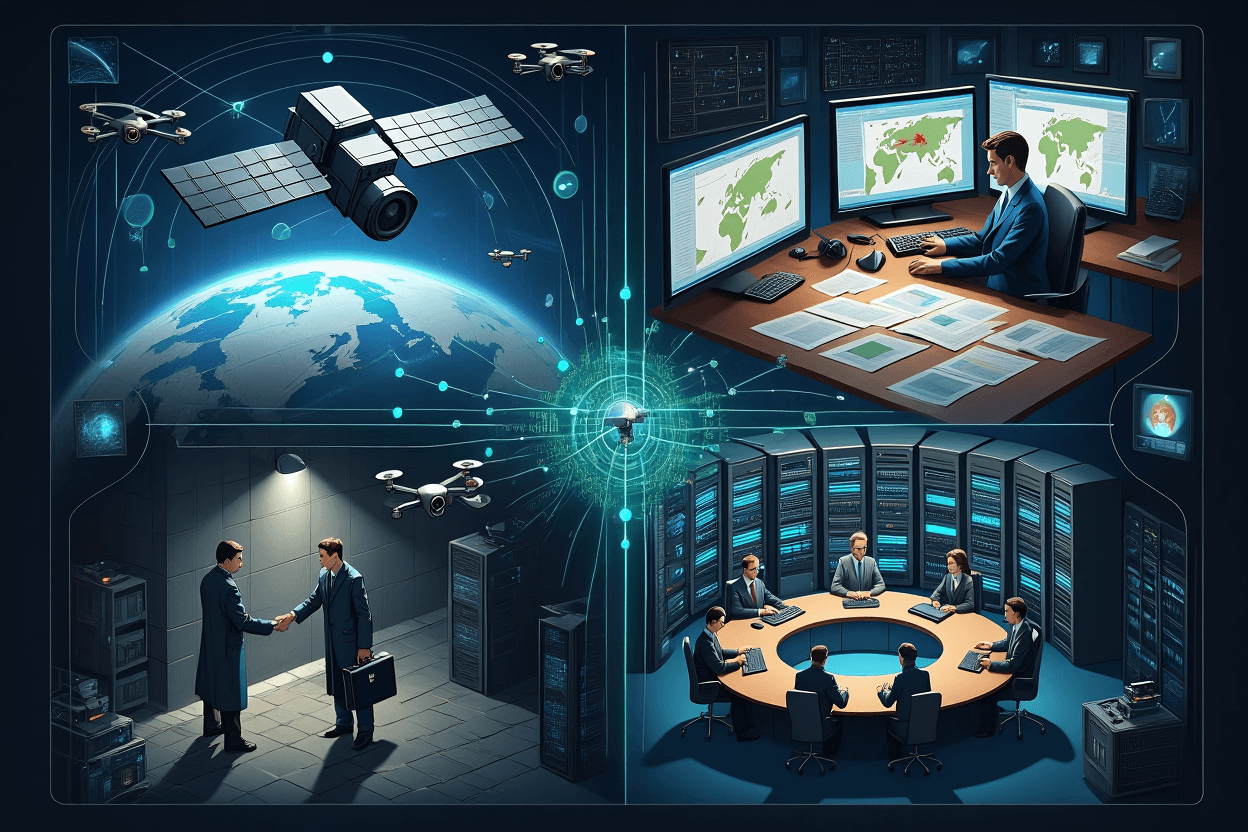
Types of Intelligence (Generated by Artificial Intelligence)
Counterintelligence refers to efforts by a state to protect its institutions strategic information infrastructure and human resources from foreign intelligence activities. Such activities aim to prevent espionage sabotage information leaks and psychological manipulation. Defensive measures include strengthening security systems implementing information security protocols and raising awareness among personnel while offensive counterintelligence focuses on detecting monitoring and neutralizing foreign agents. As Kazım Karabekir noted during the National Struggle years counterintelligence can serve not only as defense but also as strategic guidance and deception.【2】
Intelligence diplomacy refers to the use of intelligence services in secret communication and negotiation processes beyond traditional diplomatic tools. Such activities become prominent especially when official diplomatic channels are blocked crises intensify or direct relations between two countries are highly sensitive. Tasks such as conducting secret talks initiating mediation or transmitting sensitive messages on specific issues are carried out through intelligence services. Thus intelligence assumes a strategic function not only as a security instrument but also as a diplomatic tool.
The inherent secrecy of intelligence raises numerous legal and ethical issues. In democratic rule of law states the operational boundaries of intelligence agencies are defined by law and their activities are monitored through various mechanisms. Privacy of private life freedom of communication protection of personal data and fundamental human rights are the primary principles that must be observed in intelligence work. Exceeding legal authority engaging in arbitrary surveillance or unlawfully monitoring individuals constitutes a violation under both national legal frameworks and international human rights norms. Therefore intelligence organizations must conduct their activities within frameworks monitored by institutions such as parliaments special oversight committees or independent judicial authorities.
In modern states intelligence does not merely produce information; it also has multifaceted functions including safeguarding information using it for diplomatic purposes and ensuring its conduct in accordance with rule of law principles. This structure requires a delicate balance between security and freedom and represents a critical foundation for maintaining the legitimacy of intelligence within democratic systems.
Anadolu Ajansı. "İstihbaratın Değişen Doğası: İstihbarat Diplomasisi ve MİT." November 23, 2022. Accessed April 1, 2026. https://www.aa.com.tr/tr/analiz/istihbaratin-degisen-dogasi-istihbarat-diplomasisi-ve-mit/2745145
Dodonov, Aleksandr G., Dmitry V. Lande, Vitaliy V. Tsyganok, Oleh V. Andriichuk, Sergii V. Kadenko, and Anastasia N. Graivoronskaya. "Information Operations Recognition: From Nonlinear Analysis to Decision-Making." arXiv:1901.10876 [cs.OH], 2019. Accessed April 1, 2026. https://arxiv.org/abs/1901.10876
Kalkan, Duhan. "Terörle Mücadele Hukukunda İstihbaratın Yeri." *Kırıkkale Hukuk Mecmuası* 3, no. 2 (October 2023): 375–402. Accessed April 1, 2026. https://doi.org/10.59909/khm.1359923
Karaağaç, Yunus. "Stratejik İstihbarat Bağlamında Karşılaştırmalı Savaş Teorileri ve Stratejistler." Master's thesis, İstanbul Aydın Üniversitesi, 2017. Accessed April 1, 2026. https://acikarsiv.aydin.edu.tr/bitstream/11547/1563/1/STRATEJİK%20İSTİHBARAT%20BAĞLAMINDA%20KARŞILAŞTIRMALI%20SAVAŞ%20TEORİLERİ%20VE%20STRATEJİSTLER.pdf
Kuzucuoğlu, Alpaslan, and Yasin Şeşen. "Veri ve Bilgi Güvenliği Bağlamında İstihbarat Faaliyetleri - Intelligence Activities in the Context of Data and Information Security." *Library, Archive, and Museum Research Journal* 1, no. 1 (2021): 27–45. Accessed April 1, 2026. https://doi.org/10.29228/LAMRE.51218
Lowenthal, Mark M. *Intelligence: From Secrets to Policy*. 8th ed. Washington, DC: CQ Press, 2019. Accessed April 1, 2026. https://books.google.com.tr/books/about/Intelligence.html?id=Fk6YDwAAQBAJ
Mendil, Mustafa Onat. "İstihbaratın Dönüşümü: Artan Tehditler ve Enformatik Şoklar Teorisi." *İstihbarat Çalışmaları ve Araştırmaları Dergisi* 3, no. 1 (2024): 153–58. Accessed April 1, 2026. https://dergipark.org.tr/tr/pub/icad/issue/82933/1423919
Taslı, İlkut Taha. "Book Review: ‘İstihbarat 101’." *Diplomasi ve Strateji Dergisi* 4, no. 2 (2023): 259–69. Accessed April 1, 2026. https://dergipark.org.tr/en/download/article-file/3468665
[1]
“İstihbarat,” Türk Dil Kurumu, Güncel Türkçe Sözlük, Access date: 1 April 2025. https://sozluk.gov.tr/?ara=istihbarat.
[2]
Yunus Karaağaç "Stratejik İstihbarat Bağlamında Karşılaştırmalı Savaş Teorileri ve Stratejistler" (Master

(Generated by Artificial Intelligence.)
Types of Intelligence
According to Information Collection Method | Human Intelligence (HUMINT), Signals Intelligence (SIGINT), Imagery Intelligence (IMINT), Open Source Intelligence (OSINT), Technical Intelligence (TECHINT), Measurement and Signature Intelligence (MASINT), Cyber Intelligence (CYBINT), Financial Intelligence (FININT) | ||||||||
|---|---|---|---|---|---|---|---|---|---|
According to Scope | Strategic Intelligence, Operational Intelligence, Tactical Intelligence | ||||||||
No Discussion Added Yet
Start discussion for "Types of Intelligence" article
Classification of Intelligence by Scope
Strategic Intelligence
Operational Intelligence
Tactical Intelligence
Types of Intelligence by Information Collection Methods
Human Intelligence (HUMINT)
Signals Intelligence (SIGINT)
Imagery Intelligence (IMINT)
Open Source Intelligence (OSINT)
Technical Intelligence (TECHINT)
Measurement and Signature Intelligence (MASINT)
Cyber Intelligence (CYBINT)
Financial Intelligence (FININT)
Counterintelligence
Intelligence Diplomacy
Legal and Ethical Dimensions