


This article was automatically translated from the original Turkish version.
Stefan Zweig’s Twenty-Four Hours from a Woman’s Life is a profound novella that explores the complexity of the human psyche and emotional transformations. First published in 1927, it centers on a woman’s intense emotional experience within just twenty-four hours of her life, leading to a profound self-discovery. The story examines how an individual’s inner world and fleeting decisions can produce transformative effects on life. Zweig masterfully treats themes of personal passion, moral conflict, and the human confrontation with the self. Through detailed psychological analysis and fluid narration, he draws the reader into the characters’ emotional universe and invites deep reflection on human nature.
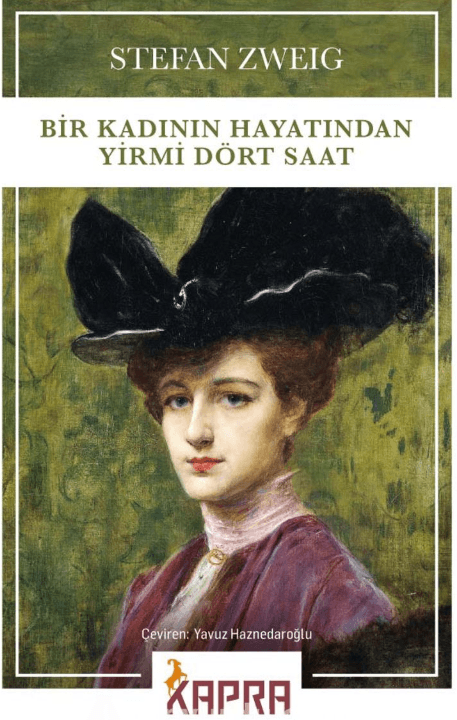
Twenty-Four Hours from a Woman’s Life
Twenty-Four Hours from a Woman’s Life opens with events taking place in a hotel. Among the guests, moral debates arise over the elopement of a young woman with a married man. These differing viewpoints provoke clashes and prompt individuals to articulate their own moral stances. At this time, Mrs. C., an elderly Englishwoman, joins the discussion by recounting a story from her own past. Her narrative offers the opportunity to evaluate the events from multiple perspectives and highlights the social and individual dimensions of the story.
As Mrs. C. tells her story, she transports the reader back years earlier to a day she spent in Monte Carlo. In a casino, the sight of a young man losing all his money and descending into emotional collapse deeply affects her. This moment reveals the fragility of the human spirit and the random nature of connections between individuals. Moved by a desire to help the young man, Mrs. C. takes action, and this decision becomes the beginning of a profound change in her life.
The few hours spent with the young man awaken emotions in Mrs. C. that had long been suppressed. Zweig skillfully portrays the impact of passion on the individual and how an emotional crisis can transform a person. As the woman develops complex feelings toward the young man, she experiences a conflict between her moral values and her own desires. These scenes reveal Zweig’s mastery of psychological depth in narration.
Despite Mrs. C.’s generosity, the young man is unable to overcome his addiction and is led to a tragic end. This outcome leaves a deep mark on Mrs. C. and compels her to question her own life and values. At this point, Zweig examines how individuals confront internal contradictions and the influence of moral principles on personal choices.
The story reveals that after this twenty-four-hour experience, Mrs. C. gains a new perspective on her own life. This transformation underscores the human capacity to rebuild oneself through learning from fleeting moments. Zweig masterfully conveys how individuals can draw meaning from their experiences and redirect the course of their lives.
Stefan Zweig. Bir Kadının Hayatından Yirmi Dört Saat. Çevirmen: Yavuz Haznedaroğlu, Kapra Yayıncılık, 2020.

No Discussion Added Yet
Start discussion for "Twenty-Four Hours from a Woman's Life (Book)" article
Content of the Book
Frame Narrative and the Beginning of the Event
Journey into the Past: The Impact of a Chance Encounter
The Awakening of Passion and Emotional Conflict
Tragic Consequences and Moral Inquiry
Rethinking One’s Own Life