


This article was automatically translated from the original Turkish version.
Türkiye National Football Team
Year of Foundation | 1923-04-23 | ||||||||
|---|---|---|---|---|---|---|---|---|---|
First Match | 1923-10-26 | ||||||||
First Victory | 1924-06-17 | ||||||||
First Tournament | 1924 Paris Olympic Games | ||||||||
FIFA Membership | 21 May 1923 | ||||||||
Greatest Achievement | 2002 FIFA World Cup – Finished in Third Place | ||||||||
EURO Achievement | 2008 European Championship – Semi-Final (Third Place) | ||||||||
Managing Institution | Turkish Football Federation (TFF) | ||||||||
Fan Group | Number 12 | ||||||||
Symbolic Stadium | Atatürk Olympic Stadium / New Adana Stadium | ||||||||
Official Website | https://www.tff.org | ||||||||
Türkiye Millî Futbol Takımı is the official national football team representing Türkiye in international men’s football competitions and is managed by the Turkish Football Federation (TFF). Established officially with the founding of the TFF in 1923, the team competes in the UEFA European Championship (EURO), the FIFA World Cup, and other international tournaments.
The Türkiye National Team is regarded not only as a sporting entity but also as a symbol reflecting the country’s sporting identity and representational strength on the international stage. At times, its performances have achieved notable successes that have drawn regional and global attention.
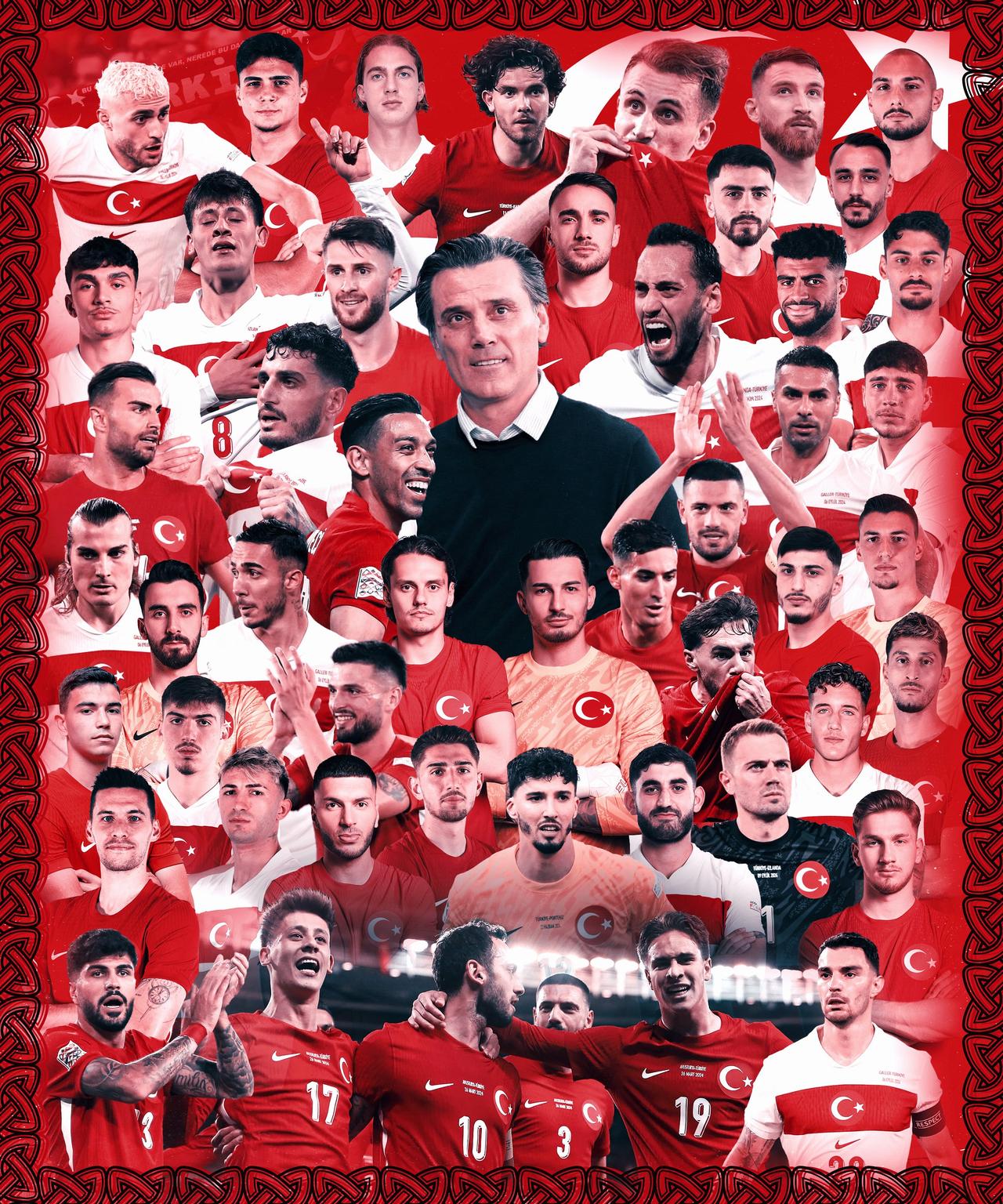
2024-2025 Sezonu İçin Açıklanan Türkiye A Millî Futbol Takımı Kadrosunun Tanıtım Görseli. (Millî Futbol Takımları X Resmî Hesabı)
The Turkish Football Federation was founded on 1923 during a meeting held at the Letafet Apartment under the chairmanship of Yusuf Ziya Öniş, initially under the name “Futbol Hey’et-i Müttehidesi.” Subsequently, an application for FIFA membership was submitted, and Türkiye was accepted as the 26th member of FIFA on 21 May 1923.
The first official international match was played on 26 October 1923, three days before the proclamation of the Republic, against Romania. The match at Istanbul’s Taksim Stadium ended in a 2–2 draw. Zeki Rıza Sporel, who scored the team’s first goals, entered history with this match.
The national team secured its first victory on 17 June 1924 against Finland. Zeki Rıza Sporel scored all four goals in the 4–2 win in Helsinki.
The national team experienced its first international tournament at the 1924 Paris Olympics. Scottish coach Billy Hunter was appointed as head coach. The match against Czechoslovakia ended in a 5–2 defeat, marking the team’s first match abroad.
At its first World Cup appearance in 1954 (Switzerland), Türkiye was eliminated in the group stage. After a 7–2 loss to Germany, the team achieved a 7–0 victory over South Korea. It was then eliminated after another 7–2 defeat to Germany in the play-off match.
For the first time, the national team advanced beyond the group stage of the UEFA EURO 2000 European Championship, reaching the quarter-finals. The 2–0 victory over Belgium is considered a historic turning point for the team. Türkiye was eliminated in the quarter-finals by Portugal.
The national team achieved one of its greatest successes in the 2002 FIFA World Cup under the management of Şenol Güneş. The team reached the semi-finals but lost 1–0 to Brazil, failing to qualify for the final. However, it defeated South Korea 3–2 to finish third in the tournament. This result elevated Türkiye into the top 10 of the FIFA rankings.
Türkiye made headlines at the UEFA EURO 2008 tournament co-hosted by Austria and Switzerland through dramatic last-minute comebacks. It advanced to the semi-finals after winning matches against Switzerland, the Czech Republic, and Croatia with late goals, but lost 3–2 to Germany and finished the tournament in third place.
Numerous footballers have made significant contributions to the Türkiye National Football Team throughout its history. These players have stood out through their individual talent, performances in international tournaments, and loyalty to the national jersey.
Some players who wore the national jersey for extended periods and achieved various successes include:
One of the players with over 120 international appearances, widely recognized internationally for his performance at the 2002 World Cup.
Noted for his role as a central playmaker, particularly during the UEFA European Championship qualifiers.
Scored crucial goals in UEFA EURO 2008 that helped Türkiye reach the semi-finals.
Served as the midfield engine of the team at the end of the 1990s and the beginning of the 2000s.
Served as team captain from the mid-2000s onward and was a key member of the UEFA EURO 2008 squad.
Represented the national team both as a young player and during his experienced years throughout a long career.
Shouldered the goal-scoring burden during the UEFA EURO 2020 qualifiers, playing a critical role in securing qualification for the tournament.
Recognized as one of the young talents of the national team in the 2020s.
The contributions of these players have significantly influenced the development of Türkiye’s international football identity.
Throughout its history, the Türkiye National Football Team has been led by both domestic and foreign head coaches, whose leadership has shaped the team’s organizational structure and playing philosophy.
One of the longest-serving head coaches of the national team. Terim, known as “The Emperor,” managed the team at tournaments such as UEFA EURO 1996, UEFA EURO 2008, and UEFA EURO 2016.
Historically remembered as the head coach who led Türkiye to third place in the 2002 FIFA World Cup.
Mustafa Denizli, Ersun Yanal, and Abdullah Avcı are among the domestic coaches who have served as head coach during various periods.
Sepp Piontek and Otto Barić, among other foreign head coaches, have played a significant role in helping Turkish football gain international experience.
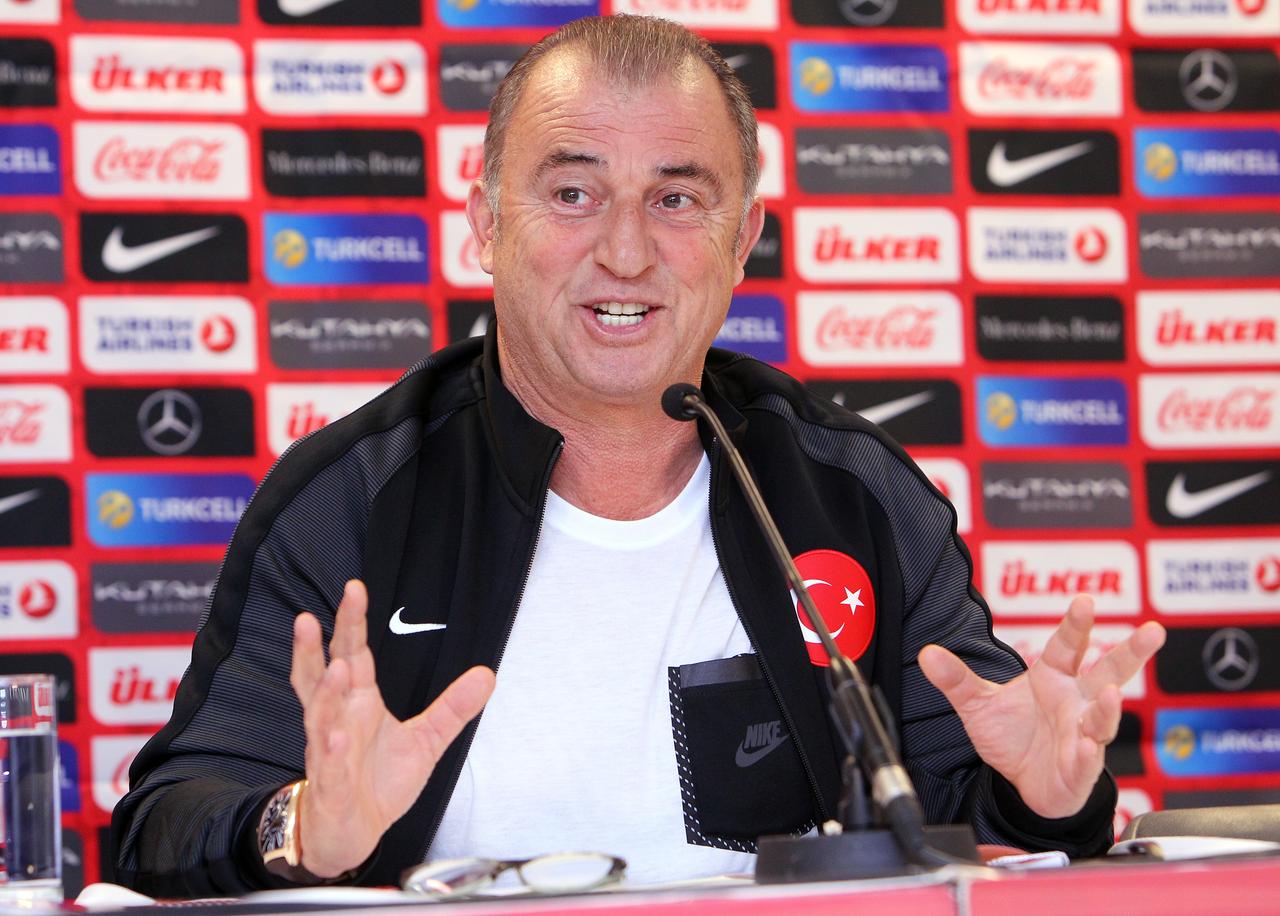
Fatih Terim’in Millî Takım Teknik Direktörlüğü Dönemine Ait Bir Basın Fotoğrafı (Türkiye Futbol Federasyonu – TFF)
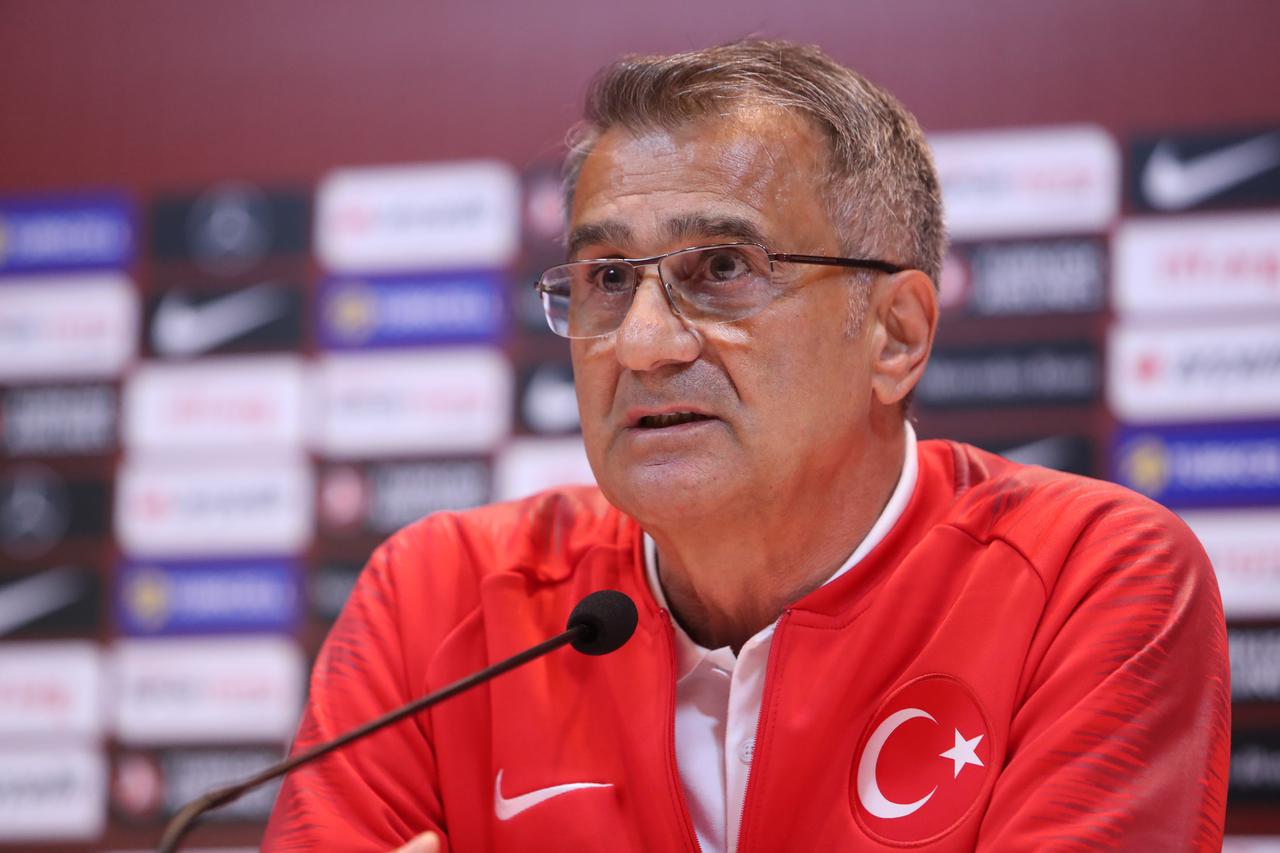
Şenol Güneş’in Millî Takım Teknik Direktörlüğü Dönemine Ait Bir Basın Fotoğrafı: (Türkiye Futbol Federasyonu – TFF)
Throughout its historical development, the Türkiye National Football Team has stood out not only for its sporting achievements but also for its symbolic role in shaping national identity and collective social memory. Just as the passionate support of fans on the pitch generates motivation, the sociological reflections beyond the stands have made the national team a powerful element deeply embedded in Türkiye’s social fabric. In particular, successes during international tournaments are regarded as rare dynamics that unite diverse socio-cultural groups through shared emotion. In this context, the Türkiye National Team is not merely a sports institution but a structure that embodies the tangible realization of concepts such as belonging, representation, and social cohesion.
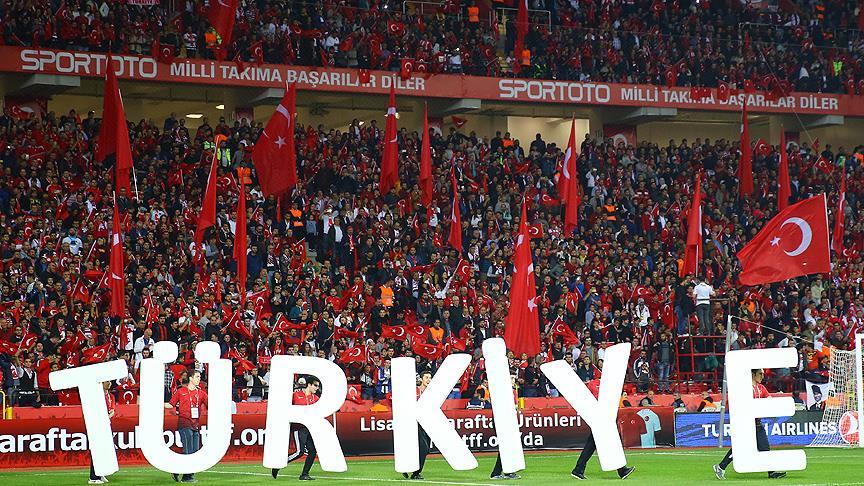
Türkiye Millî Takımı’nı Destekleyen Taraftarların Tribündeki Görüntüsü (Anadolu Ajansı)
Anadolu Ajansı. "Türkiye-Bosna Hersek Maçının Biletleri Satışta." Accessed May 7, 2025.https://www.aa.com.tr/tr/futbol/turkiye-bosna-hersek-macinin-biletleri-satista/1271049#
FIFA. "Türkiye." *fifa.com*. Accessed May 7, 2025.https://www.fifa.com/en/member-associations/turkiyeFIFA.
Milli Takımlar. "Türkiye A Millî Futbol Takımı." X (Twitter). Accessed May 7, 2025.https://x.com/MilliTakimlar/status/1903883215963599197.
Ministry of Youth and Sports. "Türk Futbolu İçin Çok Önemli Bir Yola Çıkıldı." gsb.gov.tr. Accessed May 7, 2025.https://gsb.gov.tr/tr/haber-detay/278770-turk-futbolu-icin-cok-onemli-bir-yola-cikildiT.C.-Genclik-ve-Spor-Bakanligi.
Türkiye Futbol Federasyonu. “A Millî Takım Tarihçesi.” tff.org. Accessed May 7, 2025.https://www.tff.org/default.aspx?pageID=310.
Türkiye Futbol Federasyonu. “Şenol Güneş, Basın Toplantısı Düzenledi.” tff.org. Accessed May 7, 2025.https://www.tff.org/default.aspx?pageID=202&ftxtID=32218.
Türkiye Futbol Federation. "Fatih Terim, Basın Toplantısı Düzenledi." tff.org. Accessed May 7, 2025.https://www.tff.org/default.aspx?pageID=202&ftxtID=24808.
UEFA. "Türkiye – Avrupa Elemeleri." uefa.com. Accessed May 7, 2025.https://www.uefa.com/european-qualifiers/teams/135--turkiye/UEFA.com

Türkiye National Football Team
Year of Foundation | 1923-04-23 | ||||||||
|---|---|---|---|---|---|---|---|---|---|
First Match | 1923-10-26 | ||||||||
First Victory | 1924-06-17 | ||||||||
First Tournament | 1924 Paris Olympic Games | ||||||||
FIFA Membership | 21 May 1923 | ||||||||
Greatest Achievement | 2002 FIFA World Cup – Finished in Third Place | ||||||||
EURO Achievement | 2008 European Championship – Semi-Final (Third Place) | ||||||||
Managing Institution | Turkish Football Federation (TFF) | ||||||||
Fan Group | Number 12 | ||||||||
Symbolic Stadium | Atatürk Olympic Stadium / New Adana Stadium | ||||||||
Official Website | https://www.tff.org | ||||||||
No Discussion Added Yet
Start discussion for "Türkiye National Football Team" article
Role and Significance
History
Foundation and Early Years (1923–1930)
First Victory
First International Tournament
International Tournaments
1954 FIFA World Cup
UEFA EURO 2000
2002 FIFA World Cup – Third Place
UEFA EURO 2008 – Third Place in Europe
Notable Players and Coaches
Player Profiles
Rüştü Reçber
Hakan Çalhanoğlu
Nihat Kahveci
Tugay Kerimoğlu
Arda Turan
Emre Belözoğlu
Burak Yılmaz
Arda Güler
Head Coaches
Fatih Terim
Şenol Güneş