


This article was automatically translated from the original Turkish version.
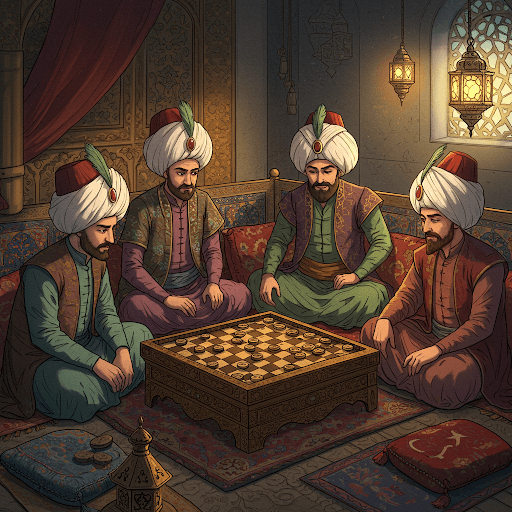
Turkish Draughts
Definition | A strategic board game played between two players. | ||||||||
|---|---|---|---|---|---|---|---|---|---|
Board | An 8×8 (64-square) checkerboard. | ||||||||
Pieces | 16 white and 16 black pieces; each player starts with 16 pieces. | ||||||||
Objective | To capture all of the opponent's pieces or render them unable to move. | ||||||||
Start | White pieces make the first move. | ||||||||
Türk Daması is a traditional strategy game played between two players. It is played on an 8×8 checkered board, with each player using 16 pieces (black and white). The objective of the game is to capture all of the opponent’s pieces or to render the opponent unable to make a move.Turkish Damasıis a game that can be easily learned by people of all ages due to its simple rules and rich strategic depth, while also offering mental and social benefits. This game, known internationally as Turkish Daması, has a deep historical and cultural heritage.
class=\
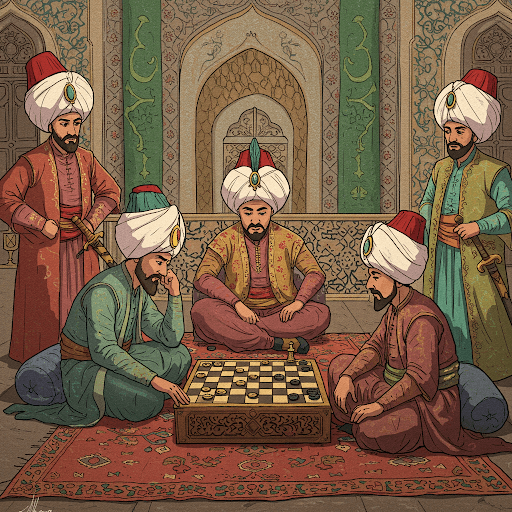
Turkish Daması is played on a 64-square (8×8) board. The board is a square area with equal-sized squares. The board features horizontal (left-right), vertical (up-down), and diagonal paths; however, diagonal moves are prohibited in Turkish Daması. At the start of the game, each player places their 16 pieces (white or black) on the second and third rows of their side, leaving two columns empty between them. White pieces make the first move.
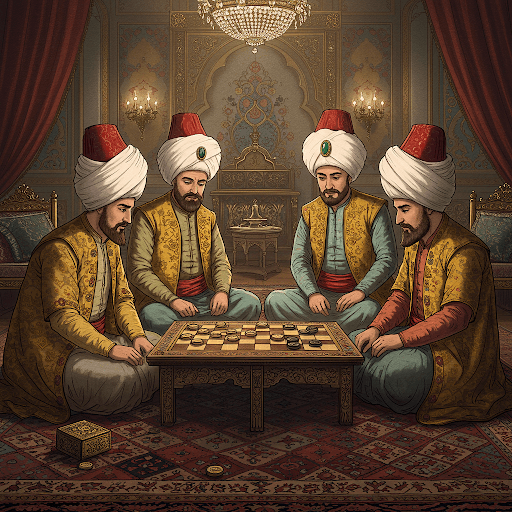
In Turkish Daması, pieces come in two types: yoğ taş (regular piece) and dama taşı (king piece). Yoğ taş can move only in three directions: left horizontally, right horizontally, and forward. Movement backward or diagonally is forbidden. When a yoğ taş reaches the opponent’s last row (the eighth row), it becomes a dama taşı. Unlike the yoğ taş, the dama taşı can move left, right, forward, and backward. It can leap over multiple squares in an “L” shape, but each time it makes such a move, it must capture at least one opponent piece. A dama taşı cannot reverse direction within the same row or column—for example, if it captured forward, it cannot move backward immediately.
class=\
If a player has the opportunity to capture a piece, they must do so on their first move.
If multiple capture options are available with equal numbers of pieces, the player may choose any.
When multiple capture sequences are possible, the sequence capturing the greatest number of pieces takes priority.
Once a piece is lifted from its square, it cannot be returned; it must be moved.
A yoğ taş that captures a piece and reaches the promotion rank continues capturing if additional captures are available; if it reaches the promotion rank without capturing, it becomes a dama taşı only after the opponent’s next move.
Although not mandatory, traditional courtesy rules observed among experienced players enhance the game’s elegance. For example, when requesting a piece, a player says “I need X pieces from you”; when promoting a piece to dama, players announce “Dama altı” or “Dama.” These customs enrich the social dialogue between players.
class=\
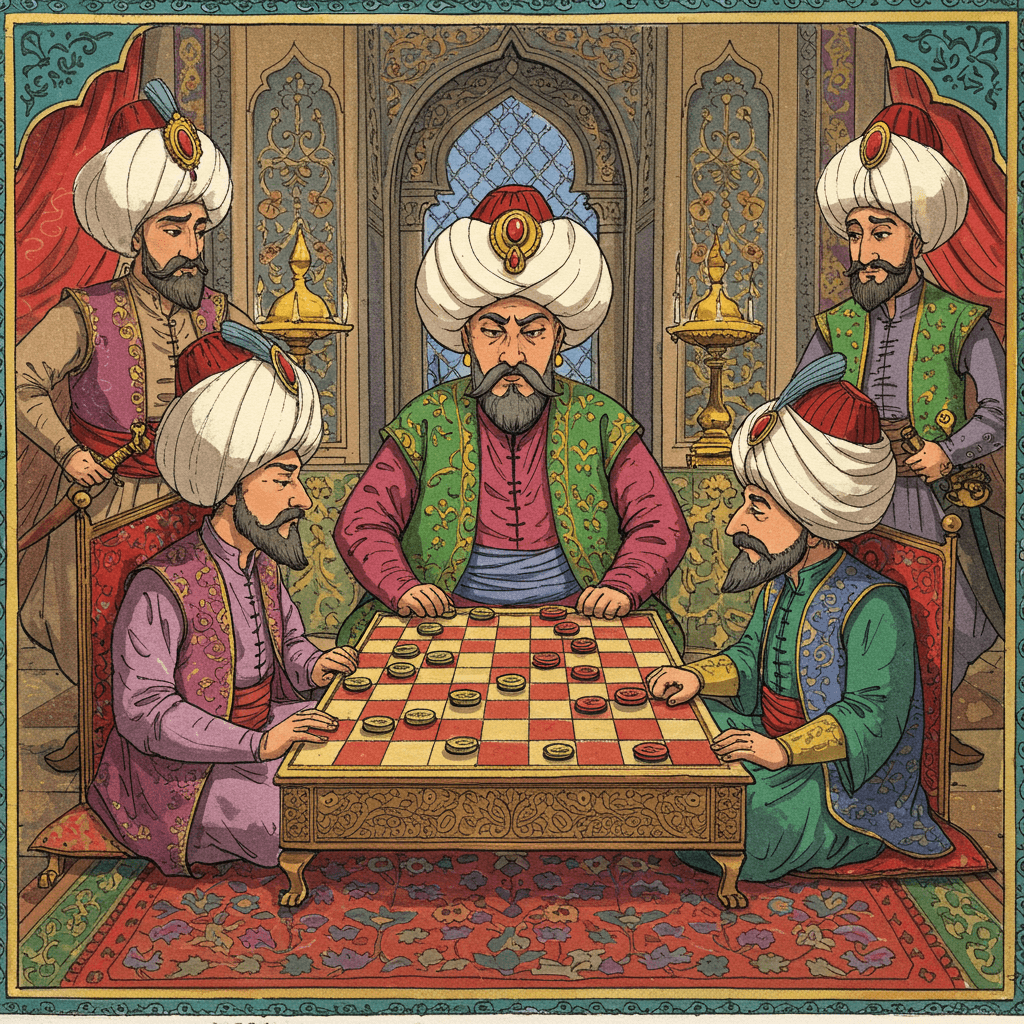
The goal in Turkish Daması is to capture all of the opponent’s pieces or to leave the opponent with no legal moves. The obligation to capture, positional advantage, and strategies involving the promotion of pieces to dama form the core of the game.
Victory: A player wins by capturing all of the opponent’s pieces or by leaving the opponent with no possible moves. If a player’s piece count drops to zero, they are eliminated and their opponent wins.
Draw: The game ends in a draw when each player has only one piece remaining and one player offers a draw which is accepted, or when the same position occurs three times.
Turkish Daması is easy to learn and offers the following benefits:
Strengthens memory.
Teaches strategic thinking.
Reinforces social values such as respect and honesty.
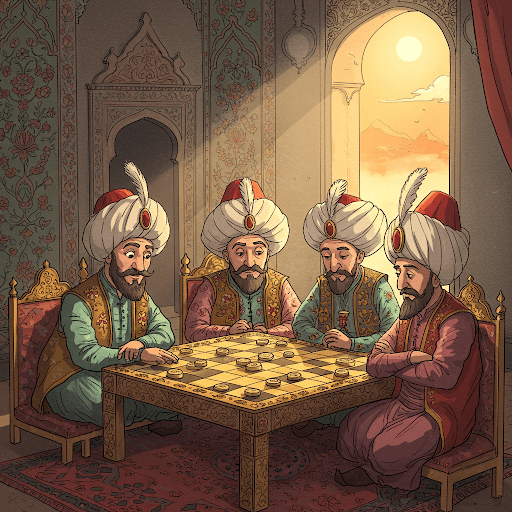
The origins of checkers date back to antiquity; it is believed to have emerged in the Afghanistan-India region and spread to the Middle East through the Persians, and later to Europe via the Crusades. Archaeological findings trace the game’s history as far back as 1600 BCE. Turkish Daması reached its golden age during the Ottoman Empire and became widespread across Anatolia, the Middle East, Eastern Europe, and North Africa. Ottoman dam masters were held in high esteem, and sultans such as Abdülaziz showed interest in the game, even appointing dam players to the palace. Today, Turkish Daması continues to exist as a cultural value but faces the risk of being forgotten due to insufficient recognition.
Although Turkish Daması shares the strategic depth ofchess, it stands out through its simpler rules. It has been played across broad segments of society, from traditional coffeehouse culture to harem life, and has developed a rich culture of terminology and techniques (for example, “Ayıbacağı,” “Makas Technique,” “Edirne Deadlock”). In this way, Turkish Daması holds significance both as an intellectual game and as a national heritage.
class=\
3M Akademi. "Türk Daması Nedir? Nasıl Oynanır?" Accessed April 2, 2025.https://3makademi.com/turk-damasi-nedir-nasil-oynanir/#:~:text=T%C3%BCrk%20Damas%C4%B1nda%20ama%C3%A7%2C%20ta%C5%9F%20alma,edebilen%20Dama%20Ta%C5%9F%C4%B1%20niteli%C4%9Fi%20kazanmakt%C4%B1r.
Turkish Draughts Federation. "Türk Daması Kuralları Tudaf v3." Türk Daması Federasyonu. Accessed April 2, 2025. chrome-extension://efaidnbmnnnibpcajpcglclefindmkaj/https://turkdamasi.org.tr/wp-content/uploads/2022/11/Turk_Damasi_Kurallari_Tudaf_v3.pdf.
Türk Daması Federasyonu. "Türk Daması Oyun Kültürü ve Türkiye’deki Dama Oynanan Kahvehanelerin İç Mekânlarının İncelemesi." Türk Daması Federasyonu. Accessed April 2, 2025. chrome-extension://efaidnbmnnnibpcajpcglclefindmkaj/https://turkdamasi.org.tr//wp-content/uploads/2020/09/Turk-Damasi-Oyun-Kulturu-ve-Turkiyedeki-Dama-Oynanan-Kahvehanelerin-Ic-Mekanlarinin-Incelemesi.pdf.

Turkish Draughts
Definition | A strategic board game played between two players. | ||||||||
|---|---|---|---|---|---|---|---|---|---|
Board | An 8×8 (64-square) checkerboard. | ||||||||
Pieces | 16 white and 16 black pieces; each player starts with 16 pieces. | ||||||||
Objective | To capture all of the opponent's pieces or render them unable to move. | ||||||||
Start | White pieces make the first move. | ||||||||
Board and Piece Arrangement
Game Rules and Moves
Basic Rules
Courtesy Rules
Objective and End of Game
Benefits
History