This article was automatically translated from the original Turkish version.
+2 More
Headquarters | Istanbul Türkiye | ||||||||
|---|---|---|---|---|---|---|---|---|---|
Main Base | Istanbul Airport | ||||||||
Founding Manager | Fesa Evrensev | ||||||||
Service Area | Domestic Routes International Routes | ||||||||
General Manager | Bilal Ekşi | ||||||||
Chairman of the Board | Prof. Dr. Ahmet Bolat | ||||||||
Number of Employees | 40,000+ | ||||||||
Fleet Size | 519 Aircraft | ||||||||
Number of Countries Served | 130+ Countries | ||||||||
Service Model | Special Flights (VIP / CIP) Scheduled Flights Charter Flights Cargo Flights | ||||||||
Area of Activity | Technical Maintenance Passenger Transportation Cargo Transportation Aviation Services | ||||||||
Foundation Date | 20 May 1933 | ||||||||
Official Name | Turkish Airlines Joint Stock Company | ||||||||
Turkish Airlines Joint Stock Company (THY A.O.), established under the framework of civil aviation activities in Türkiye, is an airline operator engaged in passenger and cargo transportation. The company operates within a corporate structure that encompasses not only air transport services but also related operational and commercial activities. Its operations can be monitored through publicly disclosed company information and corporate publications.
Turkish Airlines (THY) was established on 20 May 1933 under the Ministry of National Defense (Ministry of National Security) as the State Airlines Enterprise. At its founding, it operated with five aircraft and a total of 24 personnel (seven pilots, eight engineers, eight clerks, and one radio operator). Fesa Evrensev, one of Türkiye’s first pilots, was appointed as its first general manager. The company’s founding purpose was to regulate and develop air transport within Türkiye. Its initial flights operated on domestic routes and were later expanded to include other major cities within Türkiye and international destinations.【1】
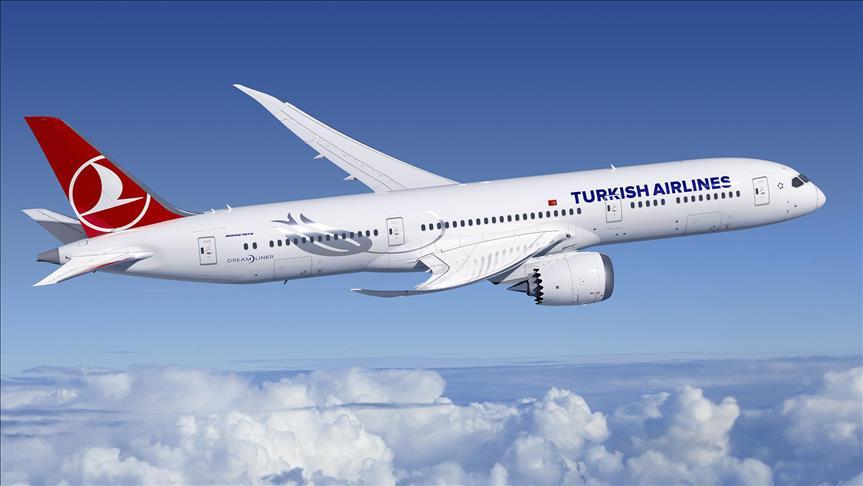
Turkish Airlines Aircraft (Anadolu Ajansı)
In 1947, THY operated its first international flight on the Ankara-Istanbul-Athens route. During the 1950s and 1960s, the company expanded its fleet and destinations while modernizing its corporate structure, establishing itself as a major player in the civil aviation sector.【2】
From the 1980s onward, THY prioritized fleet modernization and continued its growth in scheduled international air transport within Türkiye. During the 2000s, its global flight network expanded rapidly, and its operational capacity was strengthened through membership in Star Alliance and international partnerships.【3】
Turkish Airlines (THY) operates as a joint stock company. Its governance structure is organized through corporate bodies, with decision-making processes conducted via the General Assembly and the Board of Directors. THY’s shares are publicly available, and its ownership and partnership structure can be tracked within the framework outlined in official sources.【4】
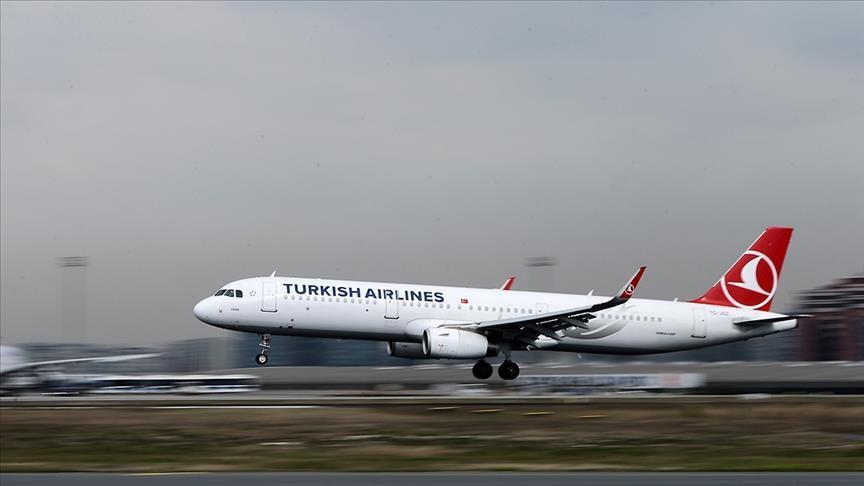
Turkish Airlines Aircraft (Anadolu Ajansı)
Turkish Airlines Joint Stock Company owns several subsidiaries and affiliated companies operating in various fields. These include THY Technical Inc., which provides technical maintenance services; THY DO&CO Catering Services Inc., which offers in-flight catering; TGS Ground Services Inc., which manages ground operations; and THY OPET Aviation Fuels Inc., which supplies aviation fuel. The company’s stakes in these subsidiaries may change directly or indirectly; it holds majority shares in some and operates others with partial independence. Its brand value is supported by revenues generated from domestic and international operations as well as advertising and sponsorship initiatives.【5】
Turkish Airlines (THY) primarily operates in passenger and cargo transportation. Its operations encompass both domestic and international flights, providing national and international transport services accordingly.
In addition, THY conducts commercial operations through maintenance and repair services, training activities, and its subsidiaries. The company’s corporate and organizational structure is designed to enable the coordinated execution of these diverse operational areas.
Turkish Airlines (THY)’s fleet consists of narrow-body and wide-body aircraft suited to different flight missions. Its wide-body aircraft, used for long- and medium-haul flights, include the Boeing 787-9 Dreamliner, Airbus A350-900, Boeing 777-300ER, Airbus A330-300, and Airbus A330-200. These aircraft are deployed on international routes for passenger transportation.
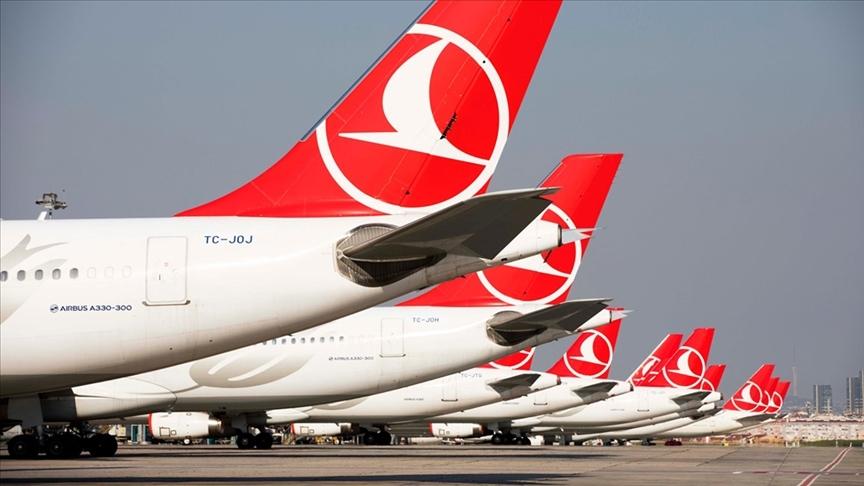
Turkish Airlines Aircraft (Anadolu Ajansı)
Narrow-body aircraft serving short- and medium-haul routes include the Airbus A321neo, Airbus A321-200, Airbus A320-200, Boeing 737-900ER, Boeing 737-800, Airbus A319-132/100, Boeing 737 MAX 9, and Boeing 737 MAX 8. These aircraft are used on both domestic and short- to medium-haul international routes.
This fleet diversity enables THY to schedule flights tailored to varying distance and capacity requirements. Additionally, the fleet is structured to meet both passenger and cargo transportation needs.【6】
Turkish Airlines maintains effective communication with its stakeholders during crisis periods in the air transport sector. The company organizes information processes with internal stakeholders (employees, management units) and external stakeholders (passengers, business partners, regulatory bodies) to preserve its corporate reputation and ensure operational continuity. These communication efforts under crisis management play a decisive role in maintaining service continuity and the uninterrupted execution of operational activities.
Turkish Airlines (THY) conducts its operations in accordance with global aviation standards and is a member of international organizations. The company is a member of the International Air Transport Association (IATA) and collaborates with airlines worldwide. Additionally, as a member of Star Alliance, THY is part of a global airline alliance and benefits from code-sharing and joint flight opportunities with other member carriers.
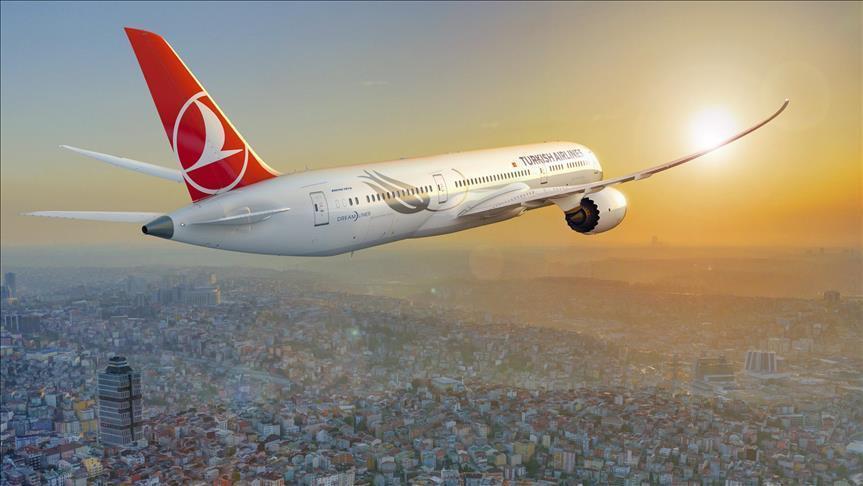
Turkish Airlines Aircraft (Anadolu Ajansı)
Turkish Airlines’ mission is to provide safe, high-quality, and accessible air transport services. Its vision is to become a globally preferred and respected airline. In this context, THY aims to continuously improve service quality, enhance operational efficiency, and operate in accordance with international standards.
Anadolu Ajansı. "Gelecek Yıl 6 Yeni Noktaya Uçacak: THY 88 Milyon Yolcu Taşımayı Hedefliyor." Accessed January 28, 2026.https://www.aa.com.tr/tr/ekonomi/gelecek-yil-6-yeni-noktaya-ucacak-thy-88-milyon-yolcu-tasimayi-hedefliyor/2773506
Anadolu Ajansı. "THY 7,4 Milyon Yolcu Taşıyarak Tarihinin En Yüksek Mayıs Ayı Performansını Kaydetti." Accessed January 28, 2026.https://www.aa.com.tr/tr/isdunyasi/ulastirma/thy-7-4-milyon-yolcu-tasiyarak-tarihinin-en-yuksek-mayis-ayi-performansini-kaydetti/680653
Anadolu Ajansı. "THY Finansal Teknolojiler A.Ş. Kuruldu." Anadolu Ajansı. Accessed January 28, 2026.https://www.aa.com.tr/tr/isdunyasi/ulastirma/thy-finansal-teknolojiler-as-kuruldu/681995
Anadolu Ajansı. "THY Hisselerinin Varlık Fonu’na Devri." Accessed January 28, 2026.https://www.aa.com.tr/tr/isdunyasi/ulasim/thy-hisselerinin-varlik-fonuna-devri/636011
Anadolu Ajansı. "THY’den Yurtiçi Uçuşlarda İndirimli Bilet Kampanyası." Accessed January 28, 2026.https://www.aa.com.tr/tr/isdunyasi/ulasim/thyden-yurt-ici-ucuslarda-indirimli-bilet-kampanyasi/693011
Gerçek, Arda Can. *Finansal Performans ve Marka Değeri İlişkisi: Türk Hava Yolları A.O. ve Pegasus Hava Taşımacılığı A.Ş. Örneği*. Master's thesis, Dokuz Eylül University, Institute of Social Sciences, 2019. Accessed January 28, 2026.https://avesis.deu.edu.tr/yonetilen-tez/3fe96289-f0d2-4b2c-b7c8-9f909725ef49/finansal-performans-ve-marka-degeri-iliskisiturk-hava-yollari-a-o-ve-pegasus-hava-tasimaciligi-a-s-ornegi
Kamuyu Aydınlatma Platformu (KAP). "Türk Hava Yolları A.O." Summary Information. Accessed January 28, 2026.https://kap.org.tr/tr/sirket-bilgileri/ozet/1107-turk-hava-yollari-a-o
Kuzu, Kürşat. “Havalimanı, Havaalanı, Uçak, Seyahat.” Pexels, photograph. Accessed January 28, 2026.https://www.pexels.com/tr-tr/fotograf/havalimani-havaalani-ucak-seyahat-8250524/
Sayın Madak, Sevim, and Zeynep Genel. “Havayolu Taşımacılığı Sektöründe Kriz ve Paydaş İletişimi: Türk Hava Yolları Örneği.” *Türkiye İletişim Araştırmaları Dergisi* 40 (2022): 196–214. Accessed January 28, 2026.https://avesis.ticaret.edu.tr/yayin/cb8dfb4f-0064-4dec-adf8-e2b58953fab0/havayolu-tasimaciligi-sektorunde-kriz-ve-paydas-iletisimi-turk-hava-yollari-ornegi
Turkish Airlines. "Hikayemiz." Turkish Airlines Basın Odası. Accessed January 28, 2026.https://www.turkishairlines.com/tr-tr/basin-odasi/hakkimizda/hikayemiz/
Turkish Airlines. "Star Alliance." Turkish Airlines Basın Odası. Accessed January 28, 2026.https://www.turkishairlines.com/tr-tr/basin-odasi/hakkimizda/star-alliance/
Turkish Airlines. “Filomuzla Tanışın.” Accessed January 28, 2026.https://www.turkishairlines.com/tr-tr/ucak-bileti/ucus-deneyimi/filo/
Yurtoğlu, Nadir. “Sivil Havacılık Sektörü İçerisinde Yer Alan Türk Hava Yolları’nın Tarihi Gelişimi (1933-1960).” *CTAD*, no. 23 (Spring 2016): 303–336. Accessed January 28, 2026.https://www.academia.edu/36712158/Sivil_Havac%C4%B1l%C4%B1k_Sekt%C3%B6r%C3%BC_%C4%B0%C3%A7erisinde_Yer_Alan_T%C3%BCrk_Hava_Yollar%C4%B1n%C4%B1n_Tarihi_Geli%C5%9Fimi_1933_1960_
Şekerli, Eyüp Bayram. “Kuruluştan Günümüze Türk Hava Yolları’nın Dönüşümüne Yönelik Bir İnceleme.” *İnsan ve Toplum Bilimleri Araştırmaları Dergisi* 10, no. 1 (2021): 849-876. Accessed January 28, 2026.https://dergipark.org.tr/tr/pub/itobiad/article/803271
[1]
Nadir Yurtoğlu, "Sivil Havacılık Sektörü İçerisinde Yer Alan Türk Hava Yollarının Tarihi Gelişimi (1933-1960)," CTAD 12, sy. 23 (Bahar 2016): 305, Son Erişim: 28 Ocak 2026, https://www.academia.edu/36712158/Sivil_Havac%C4%B1l%C4%B1k_Sekt%C3%B6r%C3%BC_%C4%B0%C3%A7erisinde_Yer_Alan_T%C3%BCrk_Hava_Yollar%C4%B1n%C4%B1n_Tarihi_Geli%C5%9Fimi_1933_1960_
[2]
A.e., s. 312. – s. 315.
[3]
Eyüp Bayram Şekerli, "Kuruluştan Günümüze Türk Hava Yolları'nın Dönüşümüne Yönelik Bir İnceleme," İnsan ve Toplum Bilimleri Araştırmaları Dergisi 10, sy. 1 (Mart 2021): 850, Son Erişim: 28 Ocak 2026, https://dergipark.org.tr/tr/pub/itobiad/article/803271
[4]
Kamuyu Aydınlatma Platformu (KAP), "Türk Hava Yolları A.O.," Özet Bilgiler, Son Erişim: 28 Ocak 2026, https://kap.org.tr/tr/sirket-bilgileri/ozet/1107-turk-hava-yollari-a-o
[5]
Arda Can Gerçek, Finansal Performans ve Marka Değeri İlişkisi: Türk Hava Yolları A.O. ve Pegasus Hava Taşımacılığı A.Ş. Örneği, Yüksek Lisans Tezi, Dokuz Eylül Üniversitesi, 2019, s. 105-108, Son Erişim: 28 Ocak 2026, https://avesis.deu.edu.tr/yonetilen-tez/3fe96289-f0d2-4b2c-b7c8-9f909725ef49/finansal-performans-ve-marka-degeri-iliskisiturk-hava-yollari-a-o-ve-pegasus-hava-tasimaciligi-a-s-ornegi
[6]
Turkish Airlines, “Filomuzla Tanışın,” Turkish Airlines, Son Erişim: 28 Ocak 2026, https://www.turkishairlines.com/tr-tr/ucak-bileti/ucus-deneyimi/filo/

Headquarters | Istanbul Türkiye | ||||||||
|---|---|---|---|---|---|---|---|---|---|
Main Base | Istanbul Airport | ||||||||
Founding Manager | Fesa Evrensev | ||||||||
Service Area | Domestic Routes International Routes | ||||||||
General Manager | Bilal Ekşi | ||||||||
Chairman of the Board | Prof. Dr. Ahmet Bolat | ||||||||
Number of Employees | 40,000+ | ||||||||
Fleet Size | 519 Aircraft | ||||||||
Number of Countries Served | 130+ Countries | ||||||||
Service Model | Special Flights (VIP / CIP) Scheduled Flights Charter Flights Cargo Flights | ||||||||
Area of Activity | Technical Maintenance Passenger Transportation Cargo Transportation Aviation Services | ||||||||
Foundation Date | 20 May 1933 | ||||||||
Official Name | Turkish Airlines Joint Stock Company | ||||||||
No Discussion Added Yet
Start discussion for "Turkish Airlines (THY)" article
Historical Development
Corporate Structure
Brands and Subsidiaries
Areas of Activity
Fleet Structure
Crisis Periods and Stakeholder Relations
International Memberships and Collaborations
Mission and Vision