


This article was automatically translated from the original Turkish version.
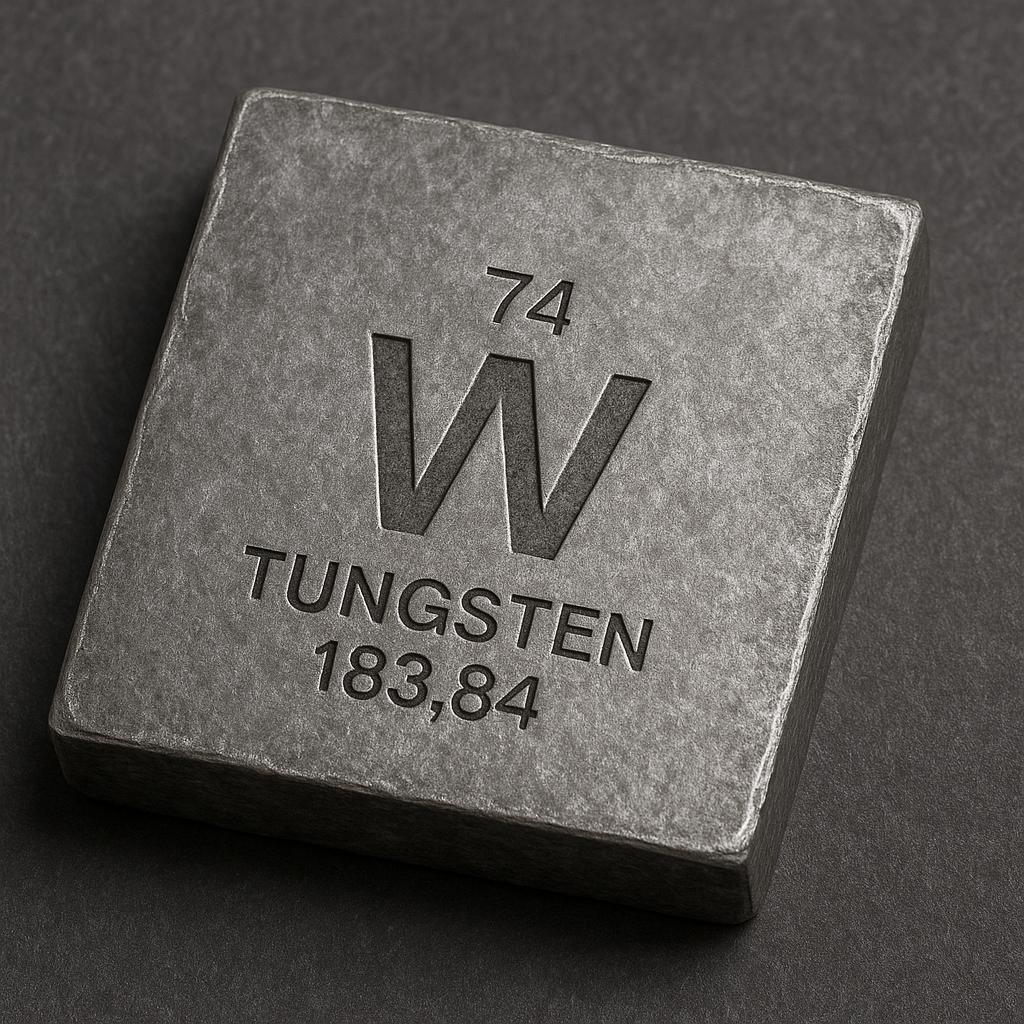
Tungsten (W)
Element Name | Tungsten | ||||||||
|---|---|---|---|---|---|---|---|---|---|
Symbol | W | ||||||||
Year(s) of Discovery | 1783 | ||||||||
Atomic Number | 74 | ||||||||
Atomic Weight | 183.84 u | ||||||||
Position in the Periodic Table | Period 6, Group 6 | ||||||||
Electron Configuration | [Xe] 4f¹⁴ 5d⁴ 6s² | ||||||||
Melting Point | 3422 °C | ||||||||
Boiling Point | 5555 °C | ||||||||
Density (at 20 °C) | 19.25 g/cm³ | ||||||||
Physical State (at 20 °C) | Solid | ||||||||
Color | Gray-White Metallic | ||||||||
Crystal Structure | BCC (Body-Centered Cubic) | ||||||||
Electrical Conductivity | Good Conductor | ||||||||
Magnetic Property | Paramagnetic | ||||||||
Natural Occurrence | In wolframite and scheelite minerals | ||||||||
Applications | Cutting Tools Armor-piercing projectiles X-ray tubes Defense and aerospace industry Light bulb filaments | ||||||||
Tungsten (symbol W) is a chemical element with atomic number 74 belonging to the group of transition metals. Its name is derived from the Swedish phrase “tung sten,” meaning “heavy stone.” It is located in group 6B of the periodic table and does not occur naturally in its free state; it is found only in compound minerals.
Tungsten is a chemically quite inert metal. It does not react with air or water at room temperature and dissolves only in certain strong acids. For example, while tungsten does not dissolve in hydrochloric or sulfuric acid, it dissolves in a mixture of nitric and hydrofluoric acid to form “tungstic acid” (H₂WO₄). This property gives tungsten high resistance to corrosive environments.
Pure tungsten has a bright gray-white color and is very dense (specific gravity of 19.25 g/cm³). Its melting point is 3422 °C, the highest of all metals. It becomes malleable at 1600 °C, allowing it to be drawn into wire. This high melting point makes tungsten the preferred material for high-temperature applications.
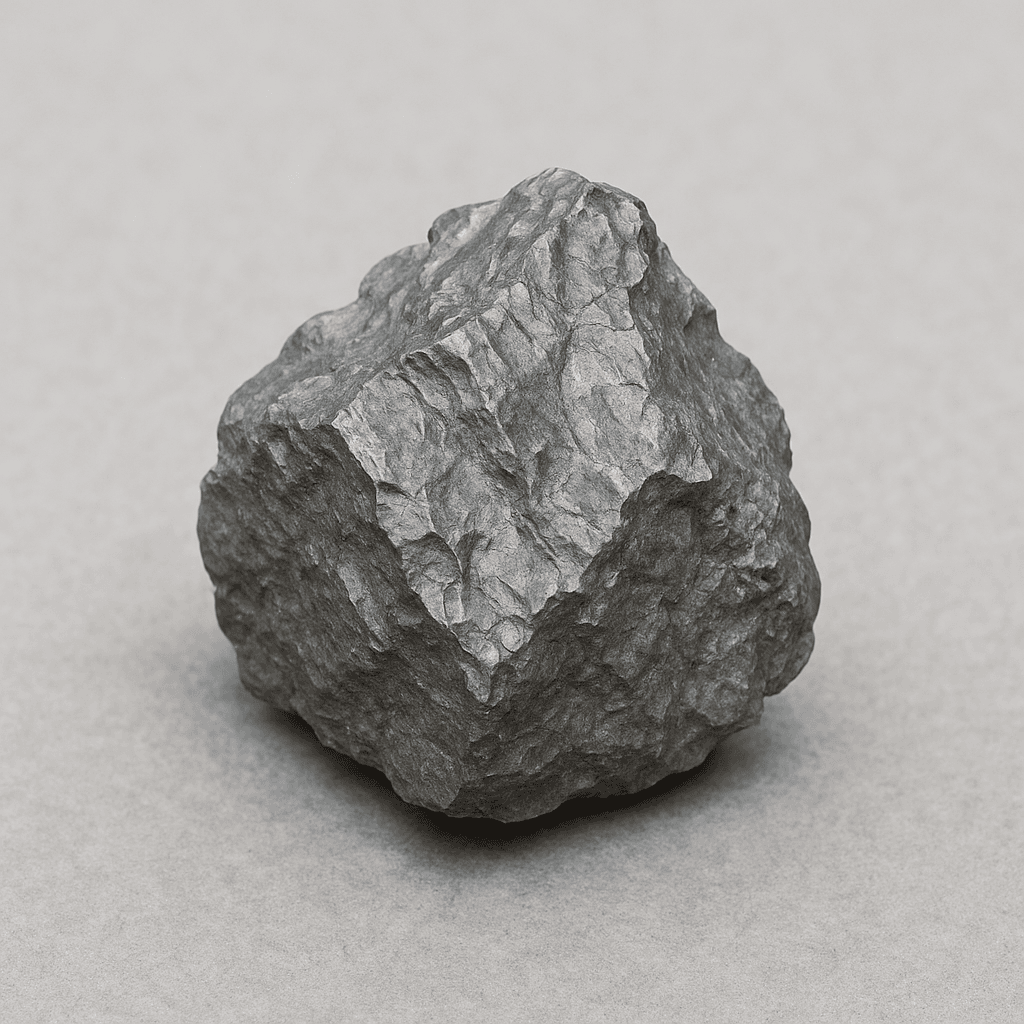
Tungsten Elementi (Yapay Zeka İle Oluşturulmuştur.)
The applications of tungsten are largely based on its physical and chemical durability. In particular, the industrial sector favors it for producing alloys resistant to heat, wear, and chemicals.
The most common use of tungsten is in steel production. Approximately 80% of global tungsten production is consumed in this sector. Steels containing 1% to 10% tungsten gain enhanced mechanical strength at high temperatures. Tool steels, high-speed cutting tools (milling cutters, lathe bits, drill bits, etc.), springs, and rifle barrels are manufactured from these alloys.
Tungsten carbide (WC), formed by tungsten and carbon, is one of the hardest materials used in industry. It is employed in cutting and abrasive tools, drill bits, and the cores of armor-piercing projectiles. Tungsten borides, formed with boron, also exhibit high hardness and chemical resistance.
Approximately 2–5% of tungsten is used in the electrical and electronics sector. It is preferred for filaments in incandescent lamps, X-ray tubes, radio valves, and atomic welding electrodes. This application is made possible by the metal’s high melting point and low vapor pressure.
Tungsten compounds are used as pigments in the production of paints and varnishes and, to a limited extent, in the textile industry for manufacturing water-resistant and heat-resistant fabrics.
Tungsten is distributed in low concentrations throughout the Earth’s crust. However, economically viable minerals are specific types with high tungsten content. The most common tungsten minerals are the wolframite group, scheelite, and rare tungsten elements.
Wolframite is an isomorphic series between iron wolframite (ferberite) and manganese wolframite (hübnerite). When the iron content increases, it is called ferberite; when the manganese content rises, it is called hübnerite. The color and physical properties of this mineral depend on the proportions of iron and manganese in its composition. It typically occurs as crystals ranging from dark brown to black. The crystal structure is generally prismatic, with specific gravities between 7.1 and 7.5.
Scheelite occurs in gray, yellow, and brown tones, sometimes as translucent crystals. It is commonly found with quartz, calcite, and other common minerals but is distinguished by its higher specific gravity and brittle structure. Its hardness ranges from 4 to 5.
Less commonly found tungsten minerals include tungstite, ferritungstite, and tungstenite. These are generally present in trace amounts alongside other minerals.
Tungsten minerals typically occur in association with other minerals. Wolframite can be found together with non-metallic minerals such as quartz, feldspar, topaz, fluorite, and calcite, as well as metallic minerals like arsenopyrite, molybdenite, chalcopyrite, and beryl.
Economically viable tungsten deposits are geological formations where the metal is concentrated above a certain threshold. Natural tungsten minerals generally contain 0.3% to 2.3% tungsten trioxide (WO₃). Ore enrichment processes are applied to make them suitable for industrial use.
These deposits typically form within quartz veins along the margins of granitic magmatic bodies. Ore veins can range in thickness from a few centimeters to several meters and extend for kilometers. Wolframite is the primary tungsten mineral in these deposits. Other minerals such as cassiterite, arsenopyrite, beryl, molybdenite, and pyrite may also be present within the veins.
These refer to mineralization occurring along numerous fine veins and fractures within or around granitoid rocks. They have large reserves but low ore grades and are suitable for simple and low-cost open-pit mining operations.
These form at contact zones between granitic magmas and carbonate rocks such as limestone. Scheelite is the primary tungsten mineral in these deposits. Mineralization may be irregular or layered. These deposits can sometimes contain reserves of tens of thousands of tons.
These form when tungsten minerals accumulate in secondary environments such as river and stream beds due to physical weathering and transport processes. These deposits typically consist of particles of wolframite and scheelite. Such deposits, enriched by fluvial processes, can be easily located at the surface.
Tungsten deposits are predominantly associated with granitic and volcanic rocks. They are commonly found along the margins of large granitic intrusions, in contact metamorphic zones, or in skarns. In these high-temperature and high-pressure environments, tungsten minerals crystallize alongside minerals such as quartz, mica, and feldspar.
Vein-type deposits develop in areas near the outer edges of granitic masses, where fracture and fault systems are dense. Hydrothermal fluids circulate through these zones, precipitating tungsten minerals. Stockwork deposits represent regions mineralized along more extensive and intensive fracture systems.
Skarn deposits form through metasomatic alteration at granite-limestone contact zones. These deposits typically have high grades and large reserves.
Tungsten exploration efforts are based on geological and mineralogical indicators. Prospectors search for black wolframite layers in quartz veins, while the presence of placer-type wolframite and scheelite particles in river and stream beds may indicate proximity to a deposit.
The following criteria should be considered during exploration activities:
Through geological mapping, magnetic surveys, geochemical analyses, and drilling, economically viable tungsten deposits can be identified.
Y.D. Kitaisky. "Tungstenin Özellikleri ve Kullanılışı." Tungsten Araştırması. Çeviren Aydın Keskin. Maden ve Metal Dergisi, Volume XII, Issue 4
İstanbul Maden İhracatçıları Birliği (İMİB). Tungsten Yataklarının Durumu, İşletmeciliği ve Geleceği. Istanbul: İMİB Yayını, 2020. PDF belge.

Tungsten (W)
Element Name | Tungsten | ||||||||
|---|---|---|---|---|---|---|---|---|---|
Symbol | W | ||||||||
Year(s) of Discovery | 1783 | ||||||||
Atomic Number | 74 | ||||||||
Atomic Weight | 183.84 u | ||||||||
Position in the Periodic Table | Period 6, Group 6 | ||||||||
Electron Configuration | [Xe] 4f¹⁴ 5d⁴ 6s² | ||||||||
Melting Point | 3422 °C | ||||||||
Boiling Point | 5555 °C | ||||||||
Density (at 20 °C) | 19.25 g/cm³ | ||||||||
Physical State (at 20 °C) | Solid | ||||||||
Color | Gray-White Metallic | ||||||||
Crystal Structure | BCC (Body-Centered Cubic) | ||||||||
Electrical Conductivity | Good Conductor | ||||||||
Magnetic Property | Paramagnetic | ||||||||
Natural Occurrence | In wolframite and scheelite minerals | ||||||||
Applications | Cutting Tools Armor-piercing projectiles X-ray tubes Defense and aerospace industry Light bulb filaments | ||||||||
Industrial Applications of Tungsten
Steel Industry
Carbide and Boride Alloys
Electrical and Lighting Industry
Chemical and Textile Industries
Tungsten Minerals
Wolframite Group
Scheelite
Rare Tungsten Minerals
Tungsten Ore Types and Deposits
Vein-Type Deposits
Stockwork (Network) Deposits
Skarn Deposits
Placer Deposits
Geological Setting of Tungsten Deposits
Tungsten Exploration Methods and Indicators