


This article was automatically translated from the original Turkish version.
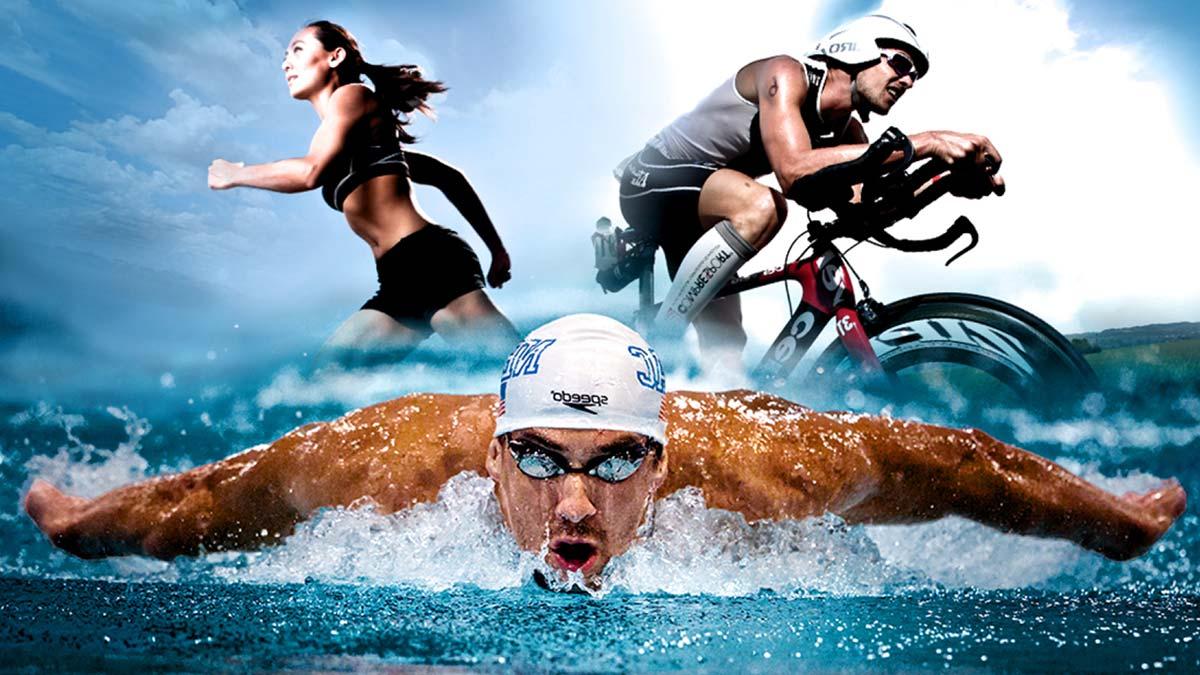
Triathlon is a multi-disciplinary sport that combines swimming, cycling, and running. It is fundamentally an individual sport, requiring extraordinary effort to push the athlete’s physical limits and is accessible to participants across various age groups.
Triathlon demands excellent levels of strength and endurance, and is highly susceptible to environmental conditions such as wind, rain, waves, and others. As a result, there is no concept of record-breaking like times. However, a total time is recorded, which can be compared with previous years’ results from the same event held at the same course under identical conditions.
class=\
On 25 September 1974, an event organized by the San Diego Track Club led to the emergence of modern triathlon. The event, designed as an alternative to grueling track training, consisted of a total of 6 miles running, 5 miles cycling, and 500 yards swimming. Forty-six participants took part, and organizers used car headlights to guide finishers after sunset.
Judy and John Collins participated in the first multi-sport event in San Diego. Several years later, they played an important role in organizing the first Ironman triathlon in Hawaii. A group of athletes were debating which event was the most demanding: the Waikiki Roughwater 3800-meter swim marathon, the Oahu Circuit 180-kilometer bike race, and the 42-kilometer 195-meter marathon run. To resolve the debate, they combined the three events. Thus, in February 1978, the Ironman races were born on Oahu.
Over the years, to increase participation and simplify organization, Ironman distances have been scaled down to more reasonable levels. With the establishment of the International Federation, the term Ironman was replaced with TRITHLON, meaning “triple sport.” However, events held at the original distances are still referred to as Ironman.
Triathlon made its Olympic debut in 2000 at the Sydney Games as the “opening sport.” Thus, triathlon, with millions of fans, quickly gained the recognition it deserved.
The main locations in Alanya, Erdek, Çeşme, and Sapanca host triathlon events in Türkiye. Additionally, every year competitions are organized by the Federation in Kızkalesi, Marmaris, Eğirdir, Çamyuva, Urla, and Istanbul.
Until June 2001, triathlon in Türkiye was under the jurisdiction of the Cycling Federation, after which it became an independent federation.
Today, in Europe, triathlon is the sport with the second-highest number of licensed athletes, after football. When considering that it is an individual sport, the significance of this number becomes even clearer.
In triathlon, transition refers to the process of switching between the three disciplines. It is often called the critical “fourth discipline” because it is where time can be easily lost or gained, ultimately affecting the race outcome. Every triathlon has two transitions, labeled T1 and T2.
T1: The first transition, known as T1, occurs after swimming. Triathletes exit the water and quickly remove their wet suits, goggles, and swim caps before mounting their bicycles. Athletes must ensure that their helmets are properly worn and secured before touching their bicycles. They then run to a mounting line with their bikes.
T2: Another transition, called T2, follows the cycling leg. Athletes must dismount at the dismount line and run back through the transition area to return their bicycles to the racks. After removing their bicycles, they are allowed to take off their helmets and put on their running shoes, preparing for the final discipline of the triathlon.
The length of transitions varies between races. In sprint and Olympic-distance races, athletes are typically permitted to leave their running shoes and helmets next to their bicycles. In longer races such as Ironman, athletes must store their gear in transition bags hung on hooks away from their bicycles.
Triathlon is an individual sport consisting of swimming, cycling, and running performed consecutively. It is contested in two main distances: sprint and Olympic.
Sprint: Swimming (750 m), Cycling (20 km), Running (5 km)
Olympic: Swimming (1500 m), Cycling (40 km), Running (10 km)
Ironman: Swimming (3800 m), Cycling (180 km), Running (42 km 195 m)
"What is a Triathlon?" Accessed March 2, 2025.https://www.tri247.com/beginner-triathlon/what-is-a-triathlon
Ironman. Accessed March 2, 2025.https://www.ironman.com/
Türkiye Triatlon Federation. Accessed March 2, 2025.https://www.triatlon.org.tr/triatlon-nedir-nasil-yapilir.html

Triathlon Disciplines
Swimming
Cycling
10-Meter Rule
Running
History of Triathlon
What is transition in triathlon?
What are the rules of triathlon?
What are the triathlon distances?